Descender Reading Order: Where to Start Jeff Lemire's Space Opera Comic
Jeff Lemire and Dustin Nguyen's Descender is a complete space opera in six collected volumes, followed by a three-volume sequel series, Ascender, that picks up ten years later with the same universe turned from science fiction to fantasy. There is one correct order and no branching: Descender 1 through 6, then Ascender 1 through 3. This path uses the bare trade convention — Descender, Vol. N — throughout; the hardcover Deluxe Edition collects the same material under different numbering, so pick one format and stay in it rather than mixing the two.
Start Here: The Robot Boy
BeginnerMeet Tim-21 and establish the premise — giant machines called Harvesters attacked the galaxy's core worlds, robots were outlawed in response, and one companion android woke up ten years late.
▸ Study plan for this stage
Pace: About a week. Each of the first three volumes collects five or six issues and runs roughly 130 to 160 pages, but Nguyen's watercolour pages read slower than conventional comic art because there are no hard inked borders doing the work of separating one moment from the next — allow an hour a volume a
- The premise, set in volume 1: planet-sized machines called Harvesters appeared over the core worlds of the United Galactic Council, killed on a scale nobody recovers from, and vanished. Robots were outlawed and hunted in retaliation, and Tim-21 is a companion android who slept through all of it and
- Tim-21 is not hunted because he is a robot but because his code matches the Harvesters', which makes him the only surviving lead on what they were. That is the engine of all six volumes.
- Dustin Nguyen's watercolour is not decoration. Colour carries the emotional register that dialogue is deliberately withholding, and the art frequently states things the script never does.
- Volume 2 fans the cast out with a flashback origin chapter for each — Telsa, Dr. Quon, Driller, Andy — which is Lemire's habitual structure: the single-character issue that reframes the present-day plot.
- Driller is the series' best invention and its most efficient character: a mining robot with three words of self-description who turns out to carry the book's argument about what machines are for.
- Volume 3 brings the robot resistance, the Machine Moon and Psius, and gives the first real answers about the Harvesters. It is the midpoint, and the volume that decides whether the mystery is paying out for you.
- The relationship between Tim-21 and Andy — a boy and the companion robot he grew up with, now an adult and a machine — is the emotional line every plot development is finally scored against.
- Underneath the space opera this is a book about grief and about whether a manufactured thing can be a brother; the genre furniture is real, but it is furniture.
- State precisely why Tim-21 is valuable to everyone pursuing him. What does his code have to do with the Harvesters?
- What happened between Andy and Tim before the series opens, and how does Lemire deliver that information rather than narrating it?
- What does Nguyen's watercolour do at the emotional peaks that line art would not, and can you point to a specific page?
- What is the Machine Moon, and what does Psius want from Tim-21?
- Volume 2 gives four characters a flashback chapter. Which of the four most changes how you read the present-day story, and why?
- Track Bandit, the robot dog, through all three volumes. Lemire uses him as a barometer — note where he is and who he is with at the end of each volume, and what that placement is telling you.
- Take one two-page spread from volume 1 and one from volume 3 and compare the palettes directly. Nguyen shifts colour with the story's temperature, and the change across the first half is measurable rather than impressionistic.
- Read Driller's flashback chapter in volume 2, then go back to his first appearance in volume 1 and decide whether the joke still reads as a joke.
- Write down every question volume 1 raises about the Harvesters, and tick them off as volumes 2 and 3 answer them. Whatever is still open at the end of volume 3 is exactly what the back half exists to close.
Next up: The mystery is now stated and partly answered; the back three volumes are the war it starts and the reveal the first half was built to deliver.
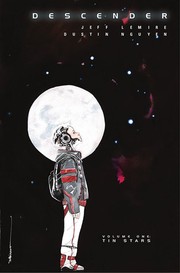
The only place to start. Tim-21 wakes alone on a mining colony and immediately becomes the most wanted object in the galaxy, and Nguyen's watercolour art does more of the emotional work than the script does.

The cast fans out and the flashback structure begins in earnest — each of the main characters gets an origin chapter. Read straight on; volume 1 is deliberately narrow and this is where the scope opens.

The robot resistance and the Machine Moon, and the first real answers about what the Harvesters were. The midpoint of the series and the volume that determines whether the mystery is paying off for you.
The Back Half
IntermediateFollow the series to its conclusion, through the war between organic and machine life and the reveal the first three volumes were built toward.
▸ Study plan for this stage
Pace: A week to ten days. Volumes 4 and 5 run about 130 pages each; volume 6 is the longest at roughly 160, collecting the final run of issues. The war material means more full-page and double-page composition, so these turn faster than the first three — but volume 6 carries the reveal the whole series wa
- Volume 4 is where the war between organic and machine life starts in earnest and the tone hardens; it trades entirely on attachments the first three volumes built, which is why it reads badly out of sequence.
- Dr. Quon's culpability is the series' moral thread: the scientist who built the technology and then spent the story avoiding what he knew about it.
- Telsa's arc — from a UGC officer executing a mission to someone who has to choose against the institution that sent her — is the most conventional character arc here and the one that gives the war chapters their point of view.
- The Harvesters' origin, delivered in volume 6, retroactively explains why Tim-21's code matters and reframes the entire first volume; Lemire plants it early enough that it is fair rather than arbitrary.
- Descender is a complete story with a real ending, not an ongoing series that stopped — which is rare enough in creator-owned comics to be worth noticing as a structural choice.
- The last pages of volume 6 are simultaneously an ending and the setup for Ascender, ten years on, so the closure is deliberately partial.
- Nguyen's colour work goes coldest here; the palette across volumes 5 and 6 is a different book from volume 1, and the shift is the art telling you how the war went.
- What are the Harvesters, and where in the first three volumes was the answer already visible?
- Is Quon redeemed by the end? Point to the page where the book decides.
- What does Telsa give up, and what does the story get from her giving it up rather than someone else?
- How does the ending treat the question of whether Tim-21 is a person? Does it answer it or refuse to?
- Volume 6 closes the story and opens another. What is deliberately left unresolved, and is that a flaw?
- Reread volume 1's opening sequence immediately after finishing volume 6 and mark every line that has changed meaning. The reveal is designed to survive that test.
- Follow Driller from volume 1 to the last page of volume 6 in a single pass, reading only his scenes. He is the clearest through-line in the series and the reread takes twenty minutes.
- Lay volume 1, volume 4 and volume 6 open at a comparable double-page spread and compare the three palettes side by side. Write one sentence on what Nguyen is doing with colour across the arc.
- Note where the story ends and where the epilogue begins in volume 6, then write down what you expect from a sequel set ten years later. Keep it, and check it against Ascender.
Next up: Descender is finished; Ascender picks the same universe up a decade later with the science fiction replaced by magic, and it assumes you have read every volume above.

The war starts properly and the tone hardens. Read in place — this volume trades on attachments the first three built, and lands badly out of sequence.

The penultimate volume, and the point at which the series answers its central question about the Harvesters' origin. Do not read a synopsis of this one first.
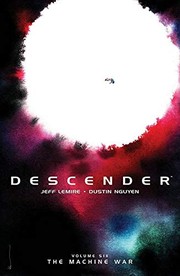
The conclusion, and a genuine ending rather than a hook — though it sets the conditions for Ascender. Finish Descender here before deciding whether to continue.
Ascender: The Sequel Series
IntermediateRead the follow-up, which takes the same universe ten years on and swaps the science fiction for magic, and see whether the shift works.
▸ Study plan for this stage
Pace: About a week. Ascender, Vol. 1 and Vol. 2 collect five issues each at roughly 130 pages; Vol. 3 collects the final stretch and runs closer to 180. Set aside the first sitting for reorientation — the series opens ten years after Descender ends, in a galaxy where magic has supplanted technology, and i
- The conversion from science fiction to fantasy is literal and in-world: technology stopped working and magic took its place across the same galaxy, with the same history behind it. This is not a genre reboot but an event inside the story.
- Mila, the daughter of Andy and Effie, is the new protagonist, and Bandit — the robot dog from the first series — is the connective tissue between the two books.
- Mother, the vampire witch who now rules, replaces the UGC as the thing the galaxy is organised around, and robots are hunted again under an entirely different justification.
- Nguyen's palette shifts with the premise — warmer, more organic, less of the cold blues that defined Descender — and the art is doing the genre change as much as the script is.
- Tim-21's return is the sequel's central withheld card, and what Ascender does with him is the reason to read it rather than to stop at volume 6.
- Volume 3 closes both series at once, which is why reading Ascender without Descender leaves most of its reveals inert rather than mysterious.
- The two series together are a single nine-volume story that changes genre at the halfway point, and that is the formal experiment worth reading them for.
- How does the story explain magic replacing technology, and does the explanation connect to the Harvesters?
- What does Mila know about the events of Descender, and what has been kept from her?
- What is Bandit's function in Ascender, and how is it different from his function in the first series?
- What does Mother want, and how does her regime compare with the UGC's treatment of robots?
- Having read all nine volumes: does the genre switch pay off, or is it a device?
- Before opening Ascender, Vol. 1, write down what you think happened in the ten-year gap. Then read, and mark where you were wrong — Lemire fills the gap in pieces and the guessing makes it visible.
- Compare a Nguyen page from Descender, Vol. 5 with one from Ascender, Vol. 2 and describe the palette difference in concrete terms. The art is carrying the genre change and it is easy to demonstrate.
- Read all of Bandit's appearances across the nine volumes in sequence. He is present in both series and is the only character who is, which makes him the cleanest way to see what the sequel is doing to the original.
- After Ascender, Vol. 3, write one paragraph on what the nine volumes are about, using no genre terms at all. If the sentence works, the switch was structural rather than decorative.
Next up: That is the complete story in trade format; the same material is collected in hardcover Deluxe Editions under different numbering, and Lemire and Nguyen's other collaborations are the obvious next thing if the pairing is what you came for.

Picks up a decade after Descender's ending, in a galaxy where magic has replaced technology and a girl named Mila is the new centre. It assumes you finished volume 6 and explains almost nothing — do not start here.

The middle volume, where the connection back to Descender's cast becomes explicit and the fantasy setting is given its rules. Nguyen's art shifts register with the genre.

The final volume, closing both series at once. Read last: it is an ending to nine books, not to three.
Discussion
Keep reading
Paths that share books, cover the same subject, or open a related topic.


