Suicide: The Best Books on Understanding and Preventing It, in Order
This path is built for the person trying to understand suicide or to help someone at risk of it — a clinician in training, a researcher, a teacher or manager who has been given responsibility they did not ask for, or someone who has lost a person and wants to understand what happened. It is a reading list about a field, not a crisis resource. If you or someone near you is in danger right now, a book is the wrong tool: contact a local crisis line or emergency service, and stay with the person if you can. Two things that the research is unambiguous about, and that are worth carrying through every book below. First, asking someone directly whether they are thinking about suicide does not plant the idea; the evidence says the opposite, and the question is the single most useful thing a non-specialist can do. Second, means safety is the intervention with the strongest evidence base of anything here — putting time and distance between a person and a lethal method saves lives, because suicidal crises are often short and highly method-specific. The books are ordered from clinical overview, through the founding theory, through first-person accounts, to what prevention actually consists of, and finally to the long historical and philosophical view and to the people left behind. None of them are instructional about method, and this path deliberately excludes anything that is.
The Clinical and Epidemiological Overview
IntermediateGet the shape of the evidence: who dies, at what ages, by what means, with what psychiatric and situational antecedents, and how weakly any of that predicts an individual case. By the end you should understand why risk-factor lists perform badly at the individual level, why means restriction works when prediction does not, and what Joiner's interpersonal theory proposes as the mechanism. Read this stage before any of the others — it is the framework the rest hangs on, and it corrects most of wha
▸ Study plan for this stage
Pace: Before any schedule: this is a reading list about a field, not a crisis resource. If you or someone near you is in danger right now, a book is the wrong tool - contact a local crisis line or emergency service, and stay with the person if you can. Two findings are worth carrying through every book be
- The epidemiological shape of suicide: which populations, at which ages, by which means, with which psychiatric and situational antecedents
- Why risk-factor lists perform badly at the individual level - a factor can be real across a population and near-useless for predicting one person
- Why means restriction works when prediction does not: crises are often short, and method substitution is far weaker than intuition suggests
- Joiner's interpersonal theory: the desire for death (thwarted belongingness and perceived burdensomeness) together with an acquired capability for lethal self-injury, and why all three components are required
- That asking directly does not plant the idea, which is the specific belief Joiner's Myths book is written to dismantle
- The distinction between an explanation of suicide and a prediction of it, which most public discussion collapses
- How much of what a general reader believes coming in - about impulsiveness, about selfishness, about warning signs - the evidence does not support
- Why do risk-factor checklists perform so poorly at predicting an individual case, even when every factor on them is genuinely associated with suicide across a population?
- State Joiner's three components. What does the theory predict about someone who has the desire but not the capability, and why does that prediction matter for prevention?
- Means restriction is the best-evidenced intervention in the field. What has to be true about suicidal crises for that to work, and what evidence supports it?
- Which specific beliefs does Joiner's Myths About Suicide dismantle, and what evidence does he offer against each?
- Jamison writes as both clinician and patient. Name one thing in her account that comes from the first role and one from the second, and say what each contributes.
- Write down everything you believed about suicide before starting, in a list. Then work through Joiner's Myths About Suicide and mark each belief as supported, unsupported or partly true with a qualification. Keep the list; it is the most honest measure of what this stage did.
- Take Joiner's three components and test the theory against the case material in Jamison. For three cases, say which components are visible in the account and which are not - including the cases that fit badly, which are the informative ones.
- Work through the epidemiological material in Jamison and write a one-page summary of the population-level picture, with the sources of the figures noted. Then write a single sentence on what that page tells you about a specific individual. The gap between the page and the sentence is the central lesson of the stage.
- Practise the direct question - out loud, in the exact words you would use. The research says the asking matters and the phrasing is less delicate than people fear, and the reason to rehearse it is that hesitation, not wording, is what stops it being asked.
Next up: With the epidemiology and the leading contemporary theory in place, the next stage goes back to the clinician who founded the field and to his account of what the suicidal state consists of from the clinician's chair.

The best single book on the subject and the correct first read: a clinical psychologist who is also a psychiatric patient, writing about suicide with the epidemiology, the psychiatry and the human material all in view. Jamison's own attempt is described in her memoir An Unquiet Mind, which is worth knowing about but is a bipolar memoir rather than a book about suicide.

The statement of the interpersonal theory — that suicide requires the desire (thwarted belongingness and perceived burdensomeness) together with an acquired capability for lethal self-injury. Currently the most influential theoretical account in the field, and the one whose predictions the later prevention research has largely been built to test.

The shorter, plainer companion, written to dismantle specific widespread beliefs — that suicide is selfish, impulsive in a trivial sense, or a matter of seeking attention, and that asking about it is dangerous. Read it immediately after the theory; it is the book to hand to someone who needs one book.
The Founding Clinical Account
IntermediateGo back to Edwin Shneidman, who founded suicidology as a field and whose central concept — psychache, unbearable psychological pain, as the proximate cause rather than depression as such — still shapes how clinicians talk to suicidal patients. By the end you should be able to state what Shneidman thought the clinician's actual task is: to reduce the pain enough to make the crisis survivable, rather than to predict or to argue. These are older books and the epidemiology in them is dated; read the
▸ Study plan for this stage
Pace: Four to five weeks for 413 pages, the shortest stage on the path and one of the most useful. Shneidman's The Suicidal Mind is 198 pages and comes first: his most accessible book, built from decades of case material and interviews, showing what suicidal people say about their own states. Two to three
- Psychache: unbearable psychological pain as the proximate cause, rather than depression as such - and what follows for how a clinician talks to a patient
- The clinician's actual task on Shneidman's account: reduce the pain enough to make the crisis survivable, rather than predict the outcome or argue the person out of it
- The ten commonalities as a description of the state rather than a risk instrument, and why that distinction is the whole point
- Suicide as a psychological event with a psychiatric context, not simply a symptom of a diagnosis - the claim that founded the field as separate from psychiatry
- What listening to the person's own account of their state gives a clinician that a structured assessment does not
- How Shneidman's framework and Joiner's theory relate: one describes the state, the other proposes a mechanism, and they are not competitors
- What does Shneidman mean by psychache, and what does the concept change about the clinical question you would ask a patient?
- If the task is to reduce pain rather than to predict risk, what does a good clinical conversation look like, and what does it avoid?
- The ten commonalities describe rather than predict. Why would using them as a checklist be a misuse of them?
- Shneidman argues suicide is a psychological rather than primarily psychiatric event. What is at stake in that claim - what does it change about who treats it and how?
- Set Shneidman's psychache beside Joiner's thwarted belongingness and perceived burdensomeness. Are these rival accounts or accounts at different levels? Defend your answer from both texts.
- Take three of the first-person accounts quoted in The Suicidal Mind and, for each, write down what the person says the pain is about. Then check whether that content appears anywhere in the risk-factor material from stage one. The mismatch between what predicts and what is actually experienced is Shneidman's contribution in a single exercise.
- Work through the ten commonalities as Shneidman sets them out in Comprehending Suicide and match each against the case material in The Suicidal Mind. Note which are visible in nearly every case and which are not - the framework was built from these cases, and seeing how well it fits them is a fair test of it.
- Write out the questions you would actually ask someone in distress if your goal were to understand their pain rather than to assess their risk. Then compare that list to the standard risk questions. This is the practical difference the stage exists to teach, and it belongs on paper rather than in the abstract.
- Mark every statistic Shneidman cites and check whether Jamison's more recent account agrees. The point is not to catch him out but to establish the habit of taking the clinical thinking from these books and the numbers from elsewhere.
Next up: Shneidman worked from what patients told him; the next stage reads two writers who describe the state from inside it, and is the one stage on this path some readers should skip.

Shneidman's most accessible book and the founding first-person clinical account: what suicidal people say about their own states, drawn from decades of case material and interviews. His later Autopsy of a Suicidal Mind takes a single case and works through it in exhaustive detail if you want the method demonstrated at length.

The collected statement of the framework — psychache, the ten commonalities of suicide, and the argument for treating suicide as a psychological rather than primarily psychiatric event. Read after The Suicidal Mind, as the systematic version of what that book shows case by case.
From Inside the Experience
IntermediateRead two first-person accounts by writers who came very close, both of whom set their own experience against the clinical and scientific literature rather than substituting for it. The purpose of this stage is calibration: to know what the state actually feels like from the inside, because the single most common failure in helping someone is assuming their reasoning resembles yours. Both books are frank about severe depression and suicidal states; if you are unwell yourself, this is the stage to
▸ Study plan for this stage
Pace: A warning before the schedule, and it is the reason this stage is placed where it is: both of these books are frank and sustained about severe depression and suicidal states. If you are unwell yourself, this is the stage to skip or to read with support, and skipping it costs you nothing on the rest
- What severe depression does to the capacity to imagine any future state different from the present one - Styron's central observation and the hardest thing for an outsider to credit
- The internal logic of the suicidal state: coherent from inside, and not reachable by the arguments that would persuade someone outside it
- The escape-from-self model as Bering presents it, and how it sits alongside Joiner's interpersonal theory rather than replacing it
- Why first-person accounts function as calibration for a helper rather than as evidence about causes
- The difference between a memoir written against the literature and one written instead of it, and why both of these are the first kind
- That the state is time-limited and survivable, which is what both authors are alive to say and the fact that connects this stage to means safety
- What does Styron say happens to the ability to conceive of the future, and why does that make reassurance about the future ineffective?
- Bering knows the research and describes his own episodes. Where does his experience fit the theories he reviews, and where does he report that it does not?
- How does the escape-from-self account differ from Joiner's, and are they describing the same thing at different levels?
- Having read both, what would you now not say to someone in this state that you might have said before?
- Both authors survived and wrote. What does that select for, and what does it mean for how much weight first-person accounts can carry as evidence?
- Read Styron once through, then a second time marking every sentence about the perception of time or of the future. The collection of those sentences is the stage's single most useful output and takes twenty minutes to assemble.
- Set Bering's account of his own episodes against Joiner's three components from stage one and note where they match and where Bering says explicitly that they do not. He is a psychologist reviewing a theory using himself as an awkward case, and following that argument is the exercise.
- Write down the things you would have instinctively said to someone in the state Styron describes, and beside each one, what these two books suggest it would land as. Then write what you would say instead, remembering that the direct question is well evidenced and the reassurance is not.
- Return to Shneidman's quoted patients from the previous stage and read them alongside Styron. Shneidman collected the state from outside and Styron reports it from inside; noting where the two descriptions converge is the best available check that the clinical account is faithful.
Next up: Understanding the state is not the same as knowing what to do about it, and the next stage moves to intervention - what the evidence actually supports, and what good care looks like.

The classic short memoir of a suicidal depression, and the most widely quoted description in English of what the state does to the capacity to reason about the future. Read it before the psychology below — it is the phenomenon the theories are trying to explain.

A research psychologist writing about his own suicidal periods alongside the current science, including Joiner's theory and the escape-from-self model. The rare book that is both a first-person account and a competent literature review, which is why it closes this stage rather than opening it.
What Prevention Actually Consists Of
IntermediateMove from understanding to intervention, and see what the evidence supports. Three things recur across these books and are worth stating outright: means safety, which is the best-evidenced intervention there is and is a conversation any non-specialist can have; direct, unembarrassed asking; and structured follow-up contact after a crisis. These are clinical texts written for practitioners — Jobes, Wenzel and Linehan assume professional training and supervision, and none of them is a manual for t
▸ Study plan for this stage
Pace: Three to four months for 1,207 pages, and the practical content of the path is concentrated here. Three things recur across these four books and are worth stating before you open any of them: means safety, which is the best-evidenced intervention there is and is a conversation any non-specialist can
- Means safety as the intervention with the best evidence, and what the conversation actually consists of - time and distance between a person and a method, agreed collaboratively
- Direct asking, and structured follow-up contact after a crisis, as the other two interventions that recur across all four books
- Why the prediction-and-risk-assessment model failed on its own terms, which is Bryan's argument and the reframing the stage turns on
- CAMS as a collaborative stance: the patient as co-assessor of their own drivers rather than the object of a risk rating
- Safety planning as a concrete written artefact, and the difference between it and a no-suicide contract, which the evidence does not support
- What dialectical behaviour therapy targets and why it has the strongest evidence for reducing attempts in high-risk patients
- The limits of a non-specialist's role: what you can do without training, what you should refer, and what you should ask a service to provide
- Reading a treatment manual as a lay reader - for the model of care it implies, not as instructions to follow
- What is Bryan's case that risk assessment has failed, and what does he propose that prevention be organised around instead?
- Describe a means-safety conversation in concrete terms. Who is it with, what does it ask for, and why is it collaborative rather than imposed?
- What does CAMS ask the patient to do that a standard risk assessment does not, and what is the rationale for that shift?
- What is in a safety plan, and why is it a different thing from a promise not to act?
- Linehan developed DBT out of her own severe suicidality. Does knowing that change how you read the treatment, and should it?
- You are not a clinician and someone has told you they are thinking about suicide. From these four books, what are the things you can actually do, and where is the boundary?
- Write out the means-safety conversation you would have, in full sentences, for a specific realistic situation. Then check it against Bryan's account of what makes such a conversation work. This is the single most transferable skill on the path and it should exist as words you have already said once.
- Work through a safety plan template as Wenzel presents it, filling it in for a hypothetical case from Jamison's or Shneidman's material. Doing it once shows you what information it needs and where the plan would fail without it.
- Take the CAMS framework in Jobes and map it onto Shneidman's psychache from stage two. Jobes is asking the patient to name their own drivers, which is Shneidman's question in an operational form; tracing that lineage is the clearest illustration of how the field moved from insight to procedure.
- For each of the four books, write one sentence naming what the author treats as the decisive evidence - a trial, a clinical caseload, an epidemiological pattern, a life. Then rank them by how much weight you would give each and say why. The stage contains a treatment manual, an argument, a protocol and a memoir, and reading them as equivalent would be a mistake.
- List the specific things you would ask a service to provide for someone you were worried about - follow-up contact, a safety plan, means-safety counselling, a treatment with evidence behind it. The stage goal says to read these books to know what to ask for; this exercise is that list, written down.
Next up: Prevention as clinical practice sits inside a society that has understood suicide as sin, crime, symptom and right by turns, and the final stage takes that longer view - and turns to the readers who came here because of a death.

The best current argument that the prediction-and-risk-assessment model has failed on its own terms, and that prevention should be built around means safety, access and crisis response instead. Start the stage here: it reframes what the other three books are for.
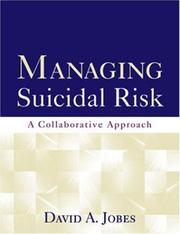
The manual for CAMS, the Collaborative Assessment and Management of Suicidality, which is the most widely adopted framework for working with a suicidal patient as a collaborator rather than an object of risk assessment. A clinical text, and the most directly practical book on the path.

The cognitive-behavioural treatment protocol specifically for suicidal patients, from the Beck tradition, including the safety planning that has since become standard practice. Read after Jobes for the alternative and complementary approach.

Linehan invented dialectical behaviour therapy, the treatment with the strongest evidence for reducing suicide attempts in high-risk patients, and this memoir reveals that she developed it out of her own severe suicidality as a young woman. Placed last because it is the human account of where the clinical apparatus above came from.
The Long View, and the People Left Behind
IntermediateClose with the sociological and historical view, and with the reality that most people who read about suicide are doing so because of a death. The argument in this stage is that suicide is patterned at the level of societies as well as individuals, and that how a culture has understood it — as sin, as crime, as symptom, as right — shapes what help looks like and what the bereaved are permitted to say. If you are reading this path because you lost someone, Fine's book is the one to start with rat
▸ Study plan for this stage
Pace: Eight to ten weeks for 948 pages, and the order is negotiable in one specific way. If you are reading this path because you lost someone, start with Fine's No Time to Say Goodbye rather than ending with it: 252 pages written for survivors of suicide loss by one, on the particular complications of th
- That suicide is patterned at the level of societies as well as individuals - stable rates within a society, systematic differences between them
- Durkheim's central observation that rates track social integration and regulation, distinguished carefully from his specific typology, which has not held up
- Why a social-level pattern makes prevention a public-health problem: population-level levers such as means availability, access to care and economic conditions
- How a culture's framing of suicide - as sin, as crime, as symptom, as right - shapes what help exists and what the bereaved are permitted to say
- Hecht's secular argument as a moral case openly offered as one, and what it can and cannot do that a clinical finding can
- The specific features of suicide bereavement: the unanswerable question, the stigma, and the guilt that is not proportionate to any actual causal role
- Why the path ends with the bereaved: for many readers that is the reason they came, and the field's literature is largely written for everyone else
- What is Durkheim's central observation, and what does its survival tell you when so much of his specific framework has not survived?
- If rates are socially patterned, which prevention levers operate at the population level rather than the individual one? Name three and say what evidence supports each.
- Hecht offers a moral argument rather than a clinical one. What is it, and where does it have force that an epidemiological fact would not?
- How has the framing of suicide changed across the history Hecht covers, and what did each framing permit or forbid for the people left behind?
- What does Fine say is specific to suicide bereavement as opposed to other grief? Which of those features could a friend actually do something about?
- Look back over the whole path. Which claims are well evidenced, which are theoretical, and which are moral or philosophical? Being able to sort them is the outcome this path is for.
- Read Durkheim's method rather than only his conclusions: for one of his comparisons, write down what he measured, what he compared it against, and what he could not control for. Then say which parts of his conclusion survive that limitation. It is the founding piece of quantitative social science and reading it as a piece of work rather than a monument is worth the effort.
- Take a present-day population-level pattern in suicide rates and ask what Durkheim's integration-and-regulation frame would say about it. Then ask what stage one's epidemiology would say. Where the two agree you have a robust finding; where they diverge you have located an open question.
- Write Hecht's argument out as a chain of premises and mark the point at which it stops being an empirical claim and becomes a moral one. She is explicit about this, and finding the seam is the reason her book is usable.
- Using Fine, write down the things people said to her and to the survivors she interviewed that helped, and the things that did not. Then write what you would say. Most readers of this path will one day need that paragraph and will not have time to compose it then.
- Return to the belief list you wrote at the start of stage one. Go through it a final time and mark what changed. Then write one paragraph on what you would now actually do if someone told you they were thinking about suicide - ask directly, address means safety, stay with them, get them to a service - which is the whole path reduced to the part that acts.
Next up: This closes the path. The natural next step is not another book but local training in a structured intervention, and the standing reminder that in an emergency the crisis line and the emergency service come before anything on this list.

A historian and poet's argument against suicide made on secular grounds — that we owe each other our future selves — set against the philosophical history of the question. Honest that it is a moral case rather than a clinical finding, which is what makes it usable.

The 1897 study that founded quantitative social science as much as it founded the sociology of suicide: rates that stay stable within a society and differ systematically between them, which Durkheim argued cannot be explained by individual psychology alone. His specific typology and several of his statistics have not held up, and the central observation — that suicide rates track social integration and regulation — is the reason prevention is a public-health question and not only a clinical one.
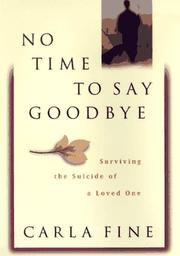
Written for survivors of suicide loss by one, and the book most often given to the bereaved: on the specific complications of this kind of grief, including the questions that cannot be answered. The path ends here because for many readers it is the reason they came.