If you or someone near you is in immediate danger, a book is the wrong tool: contact your local emergency services or a crisis line now, and stay with the person if you can. What follows is a reading list about a field, written for the person trying to understand suicide or to help someone at risk of it — a clinician in training, a researcher, a teacher or manager handed responsibility they did not ask for, or someone who has lost a person and wants to understand what happened.
Two findings are worth carrying through everything below, because they are the two things a non-specialist can act on. Asking someone directly whether they are thinking about suicide does not plant the idea; the evidence points the other way, and the question is the most useful thing most people are in a position to ask. And means safety — putting time and distance between a person in crisis and access to a lethal method — has the strongest evidence base of any intervention in this literature, because suicidal crises are often short and highly specific to method. Nothing on this path is instructional about method, and the path deliberately excludes anything that is. None of it substitutes for professional care.
The clinical and epidemiological overview
Start with Night Falls Fast. Kay Redfield Jamison is a clinical psychologist who is also a psychiatric patient, and this is the rare book that holds the epidemiology, the psychiatry and the human material in view at once. Her own attempt is described in her memoir An Unquiet Mind, which is worth knowing about but is a bipolar memoir rather than a book about suicide.
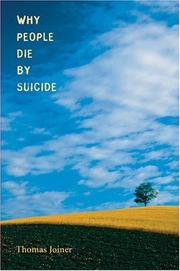
Why people die by suicide is Thomas Joiner's statement of the interpersonal theory: that suicide requires the desire — thwarted belongingness and perceived burdensomeness — together with an acquired capability for lethal self-injury. It is currently the most influential theoretical account in the field, and much of the later prevention research was built to test it.
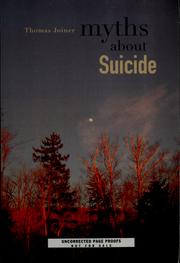
Myths about suicide is the shorter, plainer companion, written to dismantle specific widespread beliefs, including the belief that asking about suicide is dangerous. If you are going to read one book, read this one.
The founding clinical account
Edwin Shneidman founded suicidology, and his central concept — psychache, unbearable psychological pain, as the proximate cause rather than depression as such — still shapes how clinicians talk to suicidal patients. The suicidal mind is his most accessible book, drawn from decades of case material: what suicidal people say about their own states. Comprehending Suicide is the systematic version of the same framework, including the ten commonalities and the argument for treating suicide as a psychological rather than primarily psychiatric event. Read both for the clinical thinking; the epidemiology in them is dated.
First-person accounts
This stage is testimony rather than guidance, and it is the one to skip, or to read with support, if you are currently unwell. Both books are frank about severe depression and suicidal states.
Darkness Visible is William Styron's short memoir of a suicidal depression and the most quoted description in English of what the state does to a person's capacity to reason about their own future. Read it before the psychology, because it is the phenomenon the theories are trying to explain.
Suicidal is Jesse Bering, a research psychologist, writing about his own suicidal periods alongside the current science, Joiner's theory included. It is both a first-person account and a competent literature review, which is why it closes this stage rather than opening it.
What prevention actually consists of
Rethinking Suicide is Craig Bryan's argument that the prediction-and-risk-assessment model has failed on its own terms, and that prevention should be built around means safety, access and crisis response instead. Start the stage here: it reframes what the other three books are for.
The remaining three are clinical texts written for practitioners, and they assume professional training and supervision. Managing Suicidal Risk is David Jobes's manual for CAMS, the most widely adopted framework for working with a suicidal patient as a collaborator rather than an object of risk assessment. Cognitive therapy for suicidal patients is Amy Wenzel and colleagues on the Beck-tradition protocol, including the safety planning that has since become standard practice. Building a Life Worth Living is Marsha Linehan's memoir: she invented dialectical behaviour therapy, the treatment with the strongest evidence for reducing suicide attempts in high-risk patients, and she developed it out of her own severe suicidality as a young woman. Read these three to understand what good care looks like and what to ask for — not to attempt it yourself.
The long view, and the people left behind
Stay is Jennifer Michael Hecht's secular argument against suicide — that we owe each other our future selves — set against the philosophical history of the question. She is honest that it is a moral case rather than a clinical finding, which is what makes it usable.
On Suicide is Durkheim's 1897 study, which founded quantitative social science about as much as it founded the sociology of suicide. His specific typology and several of his statistics have not held up; the central observation, that rates track social integration and regulation, is why prevention is a public-health question and not only a clinical one.
No time to say goodbye was written for survivors of suicide loss by one of them, on the particular complications of this grief and the questions that cannot be answered. It sits last on the path, but if you are here because you lost someone, start with it instead. The full ordered path, with the stage goals and the reading notes, is at /paths/pt_ai_suicide-and-suicide-prevention.