Strangers and Brothers Reading Order: Where to Start
C. P. Snow wrote eleven novels between 1940 and 1970 narrated by the same man, Lewis Eliot, and then told his readers not to read them in the order he wrote them. His own recommended sequence is chronological by Eliot's life, and it is the right one: it opens with Time of Hope, the poor Midlands childhood that explains everything Eliot later wants, rather than with George Passant, which was published first but assumes you already know who Eliot is. This path takes Snow at his word and follows the author's order. One naming trap: the 1940 novel was originally published as Strangers and Brothers, then retitled George Passant when the sequence took that name for itself, so the two titles are the same book and reading both would mean reading it twice.
Start Here: Eliot's Own Life
IntermediateMeet Lewis Eliot as a provincial solicitor's clerk with ambitions he cannot yet name, and understand why Snow wanted this book read first even though he wrote it tenth.
▸ Study plan for this stage
Pace: 4–5 weeks, roughly 40 pages a day. Time of Hope is 416 pages, George Passant 334, The Conscience of the Rich 337. Before you start, settle the naming trap on your shelf: the novel published in 1940 as Strangers and Brothers was retitled George Passant once the sequence took that name, so if you own
- Lewis Eliot as narrator: a first-person observer who is also a participant, and who withholds as much about himself as he reveals about others
- Snow's recommended order is chronological by Eliot's life, not by publication — Time of Hope was written fourth and is placed first for a reason
- The Midlands provincial world of clerks, evening classes and the Bar examinations, and money as the constant unspoken pressure
- Eliot's mother's snobbery and his father's failure as the origin of an ambition Eliot can never name directly
- Sheila Knight and the first marriage: Snow's study of a man who chooses someone he cannot help, and knows it
- George Passant's generosity, his 'group' of young people, and the fraud trial that turns his liberating philosophy into a liability
- The March family in The Conscience of the Rich as the deliberate inversion — inherited Anglo-Jewish wealth as a trap, against Time of Hope's poverty as a spur
- Charles March's break with his father, and the theme that runs through all eleven novels: what a man will give up to be free of the people who made him
- Snow wrote George Passant first and told readers to read it second. What does Time of Hope supply that makes the trial in George Passant land differently?
- How much does Eliot tell you about his own feelings, and how much do you have to infer from what he notices about other people? Find one passage where the two diverge.
- What exactly is George Passant charged with, and what is the relationship between the offence and the philosophy he has been preaching to his group?
- Charles March and Lewis Eliot are both trying to escape their fathers. Describe the difference in what each has to give up, and what Snow thinks that difference means.
- Sheila is presented almost entirely from outside. Is that a limitation of the first-person method or Snow using it deliberately?
- Start an index card or spreadsheet for the sequence now, with one row per named character: first appearance, relationship to Eliot, occupation, and current status. Eleven novels over thirty years will make this indispensable by stage four.
- Write a 200-word summary of George Passant's defence in his own terms — not Eliot's assessment of it, but the argument Passant would make. Then note where Eliot's narration quietly undercuts it.
- Find the passage in Time of Hope where Eliot first decides to read for the Bar, and the passage in George Passant where Passant's influence on that decision is described. Copy both out and mark what each account leaves to the other.
- Snow published these three in 1940, 1949 and 1958. Read the opening chapter of each in publication order rather than chronological order, and write 250 words on what a first reader in 1940 would have found confusing about Eliot.
Next up: Eliot now has a profession, a failing marriage and a mentor in disgrace, which is the state in which he arrives at the Cambridge college that occupies the next two novels.

Snow's own choice of opener, and the right one: Eliot's childhood, his mother's snobbery, his climb toward the Bar and his disastrous first marriage. Published fourth but set earliest, it supplies the motive that every later novel takes for granted. Begin here rather than with the 1940 book.

The 1940 novel, published as Strangers and Brothers and retitled once the sequence claimed that name. Eliot's mentor, a generous provincial solicitor's clerk, is tried for fraud. Second in Snow's order — read after Time of Hope and Passant's hold over the young Eliot is legible instead of asserted.
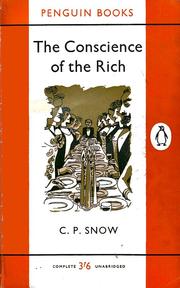
The Anglo-Jewish March family, and a son breaking with a father's money on principle. Third: it is the mirror of Time of Hope — inherited wealth as a trap rather than poverty — and Snow placed it here deliberately.
Cambridge
BeginnerMove into the college politics that made Snow's name, and learn to read his real subject — how decisions are actually taken by small groups of men in rooms.
▸ Study plan for this stage
Pace: 3 weeks. The Light and the Dark is 389 pages and The Masters 374. The Masters is the book most people read alone and the one worth reading slowly — its whole action is thirteen men talking in rooms, and losing track of who has committed to whom is fatal.
- Roy Calvert: brilliant orientalist, manic-depressive, and the sequence's most sympathetic and least explicable figure
- The college as a closed political system with a fixed electorate, which is why Snow could use it as a laboratory for how decisions are actually made
- The election in The Masters: Jago against Crawford, thirteen fellows, and a Master dying slowly in the Lodge upstairs
- Snow's real subject — not who wins, but the mechanics of commitment, canvassing, the withheld vote and the man who changes sides
- Personality against policy: Jago is the better man and the worse candidate, and Snow refuses to make that simple
- Eliot as narrator with a vote — the tension between the observer's detachment and the participant's stake
- The scientific-versus-humanist division inside the college, which is Snow's Two Cultures argument in fictional form a decade before he made it as a lecture
- Calvert's presence in The Masters, which only carries weight if you have read The Light and the Dark first
- Draw up the thirteen fellows in The Masters and their declared positions at the start. Which votes actually move, and what moves them — argument, obligation, dislike, or self-interest?
- Snow says repeatedly that Jago is the finer man. Does the novel agree with its narrator? Point to evidence on both sides.
- What does Roy Calvert's illness do in The Light and the Dark that his brilliance does not? Consider why Snow made his scholar an orientalist rather than a scientist.
- The Masters is frequently read as a standalone. Name three specific moments that are enriched by having read The Light and the Dark, and one that is actually obscure without it.
- How does Eliot handle his own vote — when does he commit, and how honest is he with the reader about why?
- Build a vote-tracking table for The Masters: thirteen rows, one column per stage of the election, and record each man's position as it shifts. Then write a paragraph identifying the single conversation that decides the outcome.
- Write 300 words arguing that the college election is a model of institutional decision-making in general, then 300 words arguing that it is not — that a self-electing body of thirteen dons is unlike anything else. Snow's whole later project rests on the first claim.
- Take one of Calvert's manic episodes and one of his depressive ones and set the passages side by side. Describe how Snow signals the shift without the vocabulary a modern novelist would use.
- Add every fellow of the college to the character index you started in stage one, with age, discipline and faction. You will need it again for The Affair.
Next up: The college has taught you to read Snow's real subject — small groups deciding things — which is the skill the Whitehall and atomic-project novels demand at national scale.
Roy Calvert, the brilliant, depressive orientalist, and the sequence's most sympathetic portrait. Fourth: it introduces the college that the next novel turns into a battlefield, and Calvert's presence in The Masters only works if you have met him.
The best-known book in the sequence and the finest thing Snow wrote: thirteen fellows elect a new Master while the old one is dying. Fifth. It can be read alone, and many people do, but after The Light and the Dark the votes have faces.
The War, and Home
BeginnerFollow Eliot out of Cambridge into Whitehall and the atomic project, and see Snow write the moral problem he actually lived through.
▸ Study plan for this stage
Pace: 3 weeks. The New Men is 311 pages, Homecomings 382. Read them in this order even though Homecomings resolves the marriage begun in Time of Hope — Snow's chronological sequence puts the bomb first, and the reason becomes clear when Eliot's private and official lives collide.
- Snow was a wartime scientific civil servant responsible for allocating scientists, and The New Men is the novel that career was for
- Martin Eliot: the younger brother who is a better scientist and a colder calculator than Lewis, and the sequence's clearest case study in ambition
- The English bomb project — Barford in the novel — and the moment of choice about whether to publicise a security failure or bury it
- Snow's argument that the moral question about the bomb was decided by men who never framed it as a moral question at all
- Homecomings as the direct sequel to Time of Hope: Sheila's death, Eliot's guilt, and the slow construction of a second life with Margaret
- Why the chronological order matters most here — read by publication date, Homecomings resolves a marriage the reader has not yet watched fail
- The bureaucratic novel: committees, minutes, the difference between a decision and a recorded decision, which Snow renders more precisely than any English novelist
- Eliot at forty as an established insider, which changes what he is able to observe and what he is now implicated in
- What choice does Martin make at the end of The New Men, and what does he get for it? Is Lewis's judgement of him fair?
- Snow shows the bomb decision being made administratively rather than ethically. Is that a criticism of the men involved, or a description of how such decisions are always made?
- Homecomings covers roughly the same years as The New Men from a private angle. Find two points where the two books touch and describe what each withholds.
- How does Eliot's second marriage differ from his first, in terms of what he wants rather than what he gets?
- Snow was himself a scientific administrator. Where in The New Men can you see the insider's knowledge, and where does the insider become an apologist?
- Reconstruct the Barford security episode as a timeline of who knew what and when, then write a one-page minute of the decisive meeting in the flat bureaucratic register Snow's characters would actually have used.
- Write 400 words on Martin Eliot as Lewis's opposite: same origins, same ambition, different scruples. Use two specific scenes.
- Read the last chapter of Time of Hope and the first chapter of Homecomings consecutively, ignoring the four novels in between. Note what Snow assumes the reader remembers after eleven years of publication gap.
- Update your character index with every Whitehall figure — Bevill, Rose, Getliffe — and mark which of them recur in Corridors of Power. The recurrence is most of the pleasure of the next stage.
Next up: Eliot and his contemporaries are now senior men with real power, which is the precondition for the two novels where Snow's argument about institutions becomes explicit.
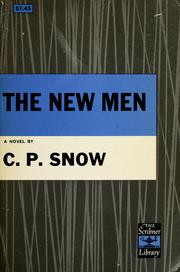
The English bomb project, and Eliot's brother Martin choosing between conscience and advancement. Sixth: Snow was a wartime scientific administrator, and this is the novel his career was for.

The direct sequel to Time of Hope — Eliot's first marriage ends and a second life begins. Seventh, and the reason the chronological order matters: read in publication order, this book resolves a marriage you have not yet seen fail.
Corridors of Power
BeginnerWatch Snow's men reach the top of English institutional life, and see the sequence's argument about power become explicit.
▸ Study plan for this stage
Pace: 3 weeks. The Affair is 390 pages, Corridors of Power 403. Reread your notes on The Masters before starting The Affair — it is the same college twenty years on and the pleasure is almost entirely in recognising who has risen.
- The Affair as deliberate mirror of The Masters: same college, same procedures, a case of scientific fraud instead of an election
- Donald Howard, who may be innocent and is certainly unlikeable, and Snow's insistence that justice for an unattractive man is the only kind that tests a system
- How the fellows who were young in The Masters have aged, and what twenty years of institutional life has done to each of them
- Corridors of Power: Roger Quaife, a minister attempting nuclear disarmament, and the destruction of a political career by a private scandal used as a weapon
- The phrase 'corridors of power', which Snow coined here and which entered the language faster than the book itself
- The Whitehall machinery in this novel is directly continuous with The New Men — the same permanent secretaries, the same committee habits
- Snow's thesis stated plainly by this point: important decisions are taken by small groups of men who know each other, and formal processes ratify what those groups have already settled
- The cost of the closed room: what it does well, and what it makes structurally impossible
- Compare the procedures in The Masters and The Affair. What has changed institutionally in twenty years, and what has not changed at all?
- Snow gives the accused in The Affair an unpleasant personality and a set of politics his colleagues detest. What is that device doing, and would the novel work if Howard were sympathetic?
- What actually destroys Roger Quaife — the policy, the scandal, or the way his allies calculate their own positions? Cite the meeting where it is decided.
- 'Corridors of power' is now a cliché. What did Snow mean by it that the cliché has lost?
- Across four novels, is Snow's account of how power operates an endorsement, a critique, or a description? Argue from the text, not from his reputation.
- Take your vote table from The Masters and build the equivalent for The Affair, then set them side by side. Write 300 words on which men have moved and what moved them.
- Write a one-page brief for Quaife's opponents: how would you destroy this minister, using only what is available inside the novel? Then compare it with how it is actually done.
- Pick any five characters from your index who appear in both stage two and stage four and write two sentences on each: where they were in 1937, where they are in 1959. This is the sequence's real payoff.
- Snow delivered The Two Cultures lecture in 1959, between these two novels. Read the lecture's opening pages and write 250 words on where its argument is already visible in The Masters and The New Men.
Next up: Snow's men have reached the top; the last two novels are about what it was for, and they close the circle back to the provincial town where the sequence began.
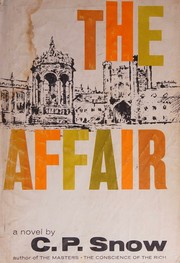
The Masters revisited twenty years on: the same college, a scientific fraud, an unlikeable man who may be innocent. Eighth — the pleasure is entirely in recognising who has risen and who has not.
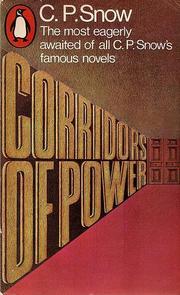
Westminster, nuclear disarmament, and a minister destroying himself. Ninth, and the novel that put the phrase into the language. The Whitehall machinery assumes The New Men.
The Long Ending
BeginnerFinish the sequence with its two darkest books, and see what Snow's forty-year narrator finally concludes.
▸ Study plan for this stage
Pace: 3 weeks. The Sleep of Reason is 461 pages and the hardest of the eleven to read; Last Things is 384 and deliberately quiet. Finish them without a long gap — Snow is closing a thirty-year structure and the effect depends on continuity.
- The Sleep of Reason returns to Eliot's home town and to George Passant, forty years and nine novels after his trial
- The murder trial, modelled on the Moors murders of 1965–66, and Snow's decision to write it while it was still recent
- Passant's philosophy of freedom traced to its worst possible conclusion — the circle opened in the second novel closed in the tenth, which is the strongest argument for the chronological order
- The title's Goya reference, and the question the novel actually asks: whether reason's withdrawal explains cruelty or merely names it
- Eliot's failing eyesight and the operation in Last Things, and a narrator who has spent eleven books observing confronting the loss of sight
- The generational handover: Eliot's son Charles and the politics of 1968, which Snow treats with more sympathy than his reputation suggests
- The deliberate quietness of the ending after ten novels of ambition, and what Snow means by placing renunciation there
- What the sequence finally argues: that public life is made of private motives, and that neither can be understood without the other
- How is George Passant implicated in The Sleep of Reason — legally, morally, and in the novel's judgement? Are those three the same?
- Snow wrote about the Moors case within three years of the trial. What does the closeness cost the novel, and what does it gain?
- Eliot spends eleven novels watching. What does Snow do with his blindness in Last Things, and is the symbolism earned or imposed?
- Charles Eliot's generation rejects almost everything his father built a career on. Does Snow present that as loss, as correction, or as simply the next turn?
- Having finished all eleven, state Snow's thesis about how decisions get made in one paragraph. Then name the novel that most complicates it.
- Write 500 words tracing George Passant from his trial in the second novel to his position in the tenth, using your character index. This is the single best test of whether the chronological order was worth following.
- List the eleven novels with their publication year and their internal chronological year in two columns. Then write a paragraph on which order you would recommend to the next reader, and why.
- Take the closing page of Last Things and the opening page of Time of Hope and read them consecutively. Write 250 words on what has actually changed in the narrating voice across thirty years of writing.
- Choose one theme — money, illness, ambition, or marriage — and trace it through all eleven novels in a single page of notes, one line per book. Snow's design only becomes visible at that altitude.
Next up: The sequence is complete; from here the natural moves are Snow's Two Cultures lecture, Anthony Powell's A Dance to the Music of Time as the rival English roman-fleuve, or Trollope's Palliser novels, which Snow openly took as his model.
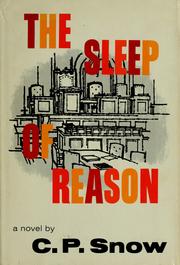
A murder trial modelled on the Moors case, set back in Eliot's home town with George Passant at the edge of it. Tenth: it deliberately closes the circle opened in the second novel, so the chronological order pays off here more than anywhere.
Eliot old, ill and handing over to his son. Eleventh and final — the sequence ends here, and after ten novels of ambition the ending's quietness is the point.