Stephen Graham Jones books in order: where to start
Stephen Graham Jones has published something over thirty books across twenty-five years, much of it from small presses, and the quality genuinely varies — so an ordered path matters more here than for most working horror writers. This one starts with the two novels that broke him out to a general readership, commits to the Indian Lake trilogy as the centrepiece, and only then goes back to the experimental small-press work, which is where his most interesting failures and a couple of his best books are.
Start here
IntermediateRead the two books that made his name, either of which works cold.
▸ Study plan for this stage
Pace: Two novels of exactly the same length, 320 pages each, 640 in all — a fortnight at an ordinary pace. Either works cold, so read whichever premise appeals and then read the other. The Only Good Indians is the more controlled book and the better test of whether this writer is for you: it turns on what
- Horror and the argument about Indigenous life made into the same mechanism rather than layered on each other
- The revenge structure inverted: the thing hunting the men has a case, and the novel takes it seriously
- Mongrels as a poverty novel wearing a werewolf premise — the transformation is the least of what it is about
- A child narrator used to withhold information the adults have, and how Jones keeps that fair
- Two entry points of identical length in two different registers, which is the honest shape of this bibliography
- Basketball, hunting and driving written as procedure — the specificity that grounds the supernatural material
- What did the four men actually do, and how does the novel apportion responsibility among them?
- How does The Only Good Indians make the pursuing figure sympathetic without excusing it?
- What does Mongrels' narrator not understand, and how does Jones let the reader see past him?
- Which of the two is the better novel, and does the answer depend on whether you want to be frightened?
- What do both books do with poverty that a horror novel is not required to do?
- In The Only Good Indians, note the point at which you stopped rooting for the men, and mark what caused it.
- Track the werewolf rules Mongrels establishes and where the family's folklore contradicts itself; the contradictions are characterisation.
- Write down one sentence of Jones's prose you had to reread, and work out whether the difficulty was syntax or withheld information — you will meet both again in the small-press books.
- Decide, before the next stage, whether you want the trilogy. It is the largest commitment on this path and this is the place to opt out.
Next up: Both books show Jones working a genre premise for something else; the trilogy is where he does it at three-book scale and about the slasher itself.
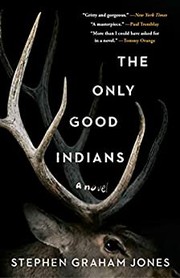
Four Blackfeet men hunted by what they did on a hunt ten years earlier. The obvious entry point: his most controlled novel and the one where the horror and the argument about Indigenous life are the same thing. Our catalogue record co-credits the Spanish translators and the audiobook narrator; the work is the 2020 novel.

A family of werewolves living in trailers and beat-up cars across the American South, narrated by a boy waiting to turn. The warmest book he has written and the best demonstration that the horror is a delivery system for something else. Its record also carries translator credits.
The Indian Lake trilogy
IntermediateCommit to the three-book sequence that is his major work. Read them in order; the second and third are unreadable out of sequence.
▸ Study plan for this stage
Pace: The centrepiece and the biggest commitment here: My Heart Is a Chainsaw is 416 pages and Don't Fear the Reaper 464 — 880 for the two — and our catalogue holds no page count for The Angel of Indian Lake, so treat its length as unrecorded, though it is the long closing volume. Budget two to three mont
- A protagonist who reads her own life through slasher-film grammar, and the question of whether the frame is insight or defence
- Genre literacy as characterisation — Jade's film knowledge is the novel's structure as well as her voice
- The final girl convention examined rather than deployed, and what the trilogy concludes about it
- A slow first third used as a load-bearing setup, not as a flaw to be tolerated
- Escalation across 880 recorded pages and a third volume, and what a trilogy can do that one book cannot
- The town as the actual antagonist, present from Chainsaw and confirmed later
- Is Jade's slasher framework a way of understanding her life or of avoiding it? The trilogy answers, but not immediately.
- What does My Heart Is a Chainsaw need its slow opening third for? Name three things it establishes.
- How does Don't Fear the Reaper change the rules the first book set, and is the change fair?
- What does The Angel of Indian Lake decide the sequence was about, and do you accept it?
- Why is the last volume the divisive one? Reconstruct the case against it as strongly as you can.
- Keep a list of every film Jade cites and what she uses each for. The list is the novel's argument in raw form.
- At the end of Chainsaw, write down what you think the trilogy is about; check it after each subsequent volume.
- Mark every point where the town chooses not to act, and see whether the pattern holds across all three books.
- Before starting The Angel of Indian Lake, reread the last chapter of Don't Fear the Reaper — the third volume assumes it completely.
Next up: After 880-plus pages of trilogy, the novellas show the same effects achieved in a hundred pages and make the economy visible.

Jade Daniels, a slasher-obsessed teenager in a lake town, narrating a real slasher through the grammar of the films. Slow for its first third on purpose, and the payoff depends on that patience.

Picks up years later with Jade returned. Faster and more brutal than Chainsaw, and it assumes you remember everything.

Closes the trilogy at length. The most divisive of the three and the one that decides what the whole sequence was about.
The novellas
IntermediateRead the two short books, which are the most efficient Stephen Graham Jones and a good test of whether the longer work is for you.
▸ Study plan for this stage
Pace: The shortest stage by a long way: 247 pages for both — Mapping the Interior 111 and Night of the Mannequins 136 — and each is an evening. This is the most efficient Stephen Graham Jones and the best low-cost test of whether the longer books are worth your time, so it also works as an entry point for
- Compression: 111 pages doing what the novels take 400 to do, and what has to be cut for that
- The unreliable narrator as a delivery mechanism rather than a twist, most nakedly in Night of the Mannequins
- Grief written without consolation, and the refusal to convert it into a lesson
- Novellas as the form where Jones's structural tricks are most visible because there is no room to hide them
- A domestic haunting where the poverty is as material as the ghost
- What does Mapping the Interior gain from being 111 pages rather than a novel?
- When did you realise what Night of the Mannequins' narrator was doing, and what tipped you off?
- How does Mapping the Interior handle the father — as a ghost, a memory, or a threat?
- Which of the two is the better piece of construction, separate from which you enjoyed?
- Do the novellas make the case that Jones is at his best short? Argue against your own first answer.
- Read Night of the Mannequins in one sitting, then immediately reread its first five pages and note everything you now read differently.
- Summarise Mapping the Interior's plot in three sentences, then list what the summary loses.
- Compare the ending of Mapping the Interior with the ending of The Only Good Indians and describe the two kinds of resolution.
- Write down which of the two novellas you would hand to someone with one evening, and why.
Next up: With the accessible work read, the small-press books are where Jones experiments without a commercial editor moderating him.

A boy sees his dead father moving through the house. Ninety pages, and it does more with Indigenous grief than most novels manage.

A prank escalates into something the narrator cannot stop explaining away. The nastiest structural trick he has pulled off and it takes an evening.
The small-press books worth hunting
IntermediateGo back to the experimental work. These are harder to find and much harder to read, and two of them are as good as anything above.
▸ Study plan for this stage
Pace: 1,052 pages across four — The Last Final Girl 216, Demon Theory 441, The Least of My Scars 183, Ledfeather 212 — and the hardest reading on the path, so budget six to eight weeks despite the modest total. These are not interchangeable. Demon Theory at 441 pages presents a horror-film trilogy as a no
- Formal experiment as the small-press freedom: screenplay grammar, footnote apparatus, fragmented chronology
- The footnote as a horror device in Demon Theory, where the apparatus is part of the fiction
- A slasher told in camera direction, which tests how much of the genre is purely visual convention
- Ledfeather's two time periods and the reservation as the subject rather than the setting
- The Least of My Scars as an experiment in a narrator with no redeeming access, and what a reader is left to do with it
- Reading an uneven bibliography deliberately: which experiments repay the effort and which are documents
- What does The Last Final Girl's present-tense camera grammar reveal about slasher convention?
- Are Demon Theory's footnotes doing narrative work, or are they the point in themselves?
- How does Ledfeather's fragmentation serve its subject rather than obscure it?
- What is The Least of My Scars for, and does it earn its bleakness?
- Which of these four would you defend to someone who only knows the Indian Lake trilogy?
- Read thirty pages of The Last Final Girl and write the same scene in ordinary past-tense prose; the comparison shows exactly what the form is doing.
- In Demon Theory, read one section ignoring the footnotes entirely, then reread it with them, and describe the difference.
- Map Ledfeather's two timelines by fragment and note where the novel lets them touch.
- Rank these four by how much the difficulty paid off, and write one sentence for the one you ranked last.
Next up: Having seen the experiments, the early and recent books close the arc between where the voice started and where it has arrived.

A slasher novel written in screenplay-adjacent present tense, all camera direction and hard cuts. Formally the most extreme thing he has done.
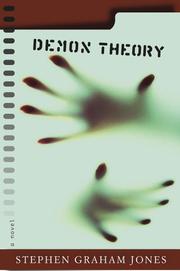
A horror-film trilogy presented as a novel with several hundred footnotes. Exhausting and genuinely unlike anything else; read it as an experiment, not a story.

A serial killer kept in an apartment by a patron who feeds him victims. His bleakest book by a distance, and the one to skip if the content is a problem.
The most literary novel here: a Blackfeet reservation across two time periods, told in fragments. Almost no horror at all, and frequently named his best by critics who do not read the genre.
The literary novels and the newest work
IntermediateFinish with the early experimental fiction and the most recent books.
▸ Study plan for this stage
Pace: Three books, and two lengths we hold: The fast red road 326 pages and Buffalo Hunter Hunter 442, with no page count recorded for Growing Up Dead in Texas. Six weeks or so. Read The fast red road first and expect hard going — it is the debut, a pop-culture-saturated Indian Country picaresque, and its
- A debut read last: which habits were present from the start and which were learned across the bibliography
- Autofiction with the author as investigator, and the different truth claim that makes
- Nested narration in Buffalo Hunter Hunter — a journal inside a journal — and how the frame controls what can be doubted
- Historical atrocity used as the engine of a genre novel, and the care that requires
- Fourteen books spanning debut to recent work, and what the shape of the career actually is
- Small-press and major-publisher work sitting side by side with no reliable quality gradient between them
- What in The fast red road already sounds like the author of The Only Good Indians, and what does not?
- How does Growing Up Dead in Texas handle the difference between what the author knows and what he can prove?
- What does the nested-journal frame of Buffalo Hunter Hunter make possible that a direct narration could not?
- How does the novel position the Marias Massacre — as cause, as context, or as subject?
- Across all fourteen books, is there a single Stephen Graham Jones, or several? Defend the answer with three titles.
- Read the first page of The fast red road and the first page of Buffalo Hunter Hunter at 442 pages and describe what a career changed at sentence level.
- In Buffalo Hunter Hunter, mark each layer of the nesting and note who is vouching for what at each level.
- Take Growing Up Dead in Texas and list the claims that are checkable against a public record and those that are not.
- Write the five-book path you would now recommend to a new reader, and name what you are leaving out of a bibliography of more than thirty.
Next up: This path covers fourteen of more than thirty books; the rest is small-press, uneven, and best chosen by which of the modes above you want more of.
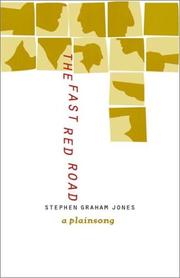
The 2000 debut, a pop-culture-saturated Indian Country picaresque. Hard going and useful for seeing where the voice started.

Autofiction about a cotton-gin fire in the town he grew up in, with the author as investigator. His most personal book and the least generic.
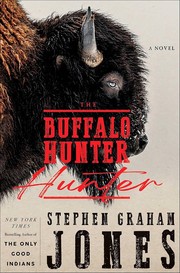
The 2025 novel: a vampire narrative nested inside a Lutheran pastor's journal, built around the Marias Massacre. His most formally ambitious recent work; our record files it without the leading article.