Slam Dunk Reading Order: Where to Start Takehiko Inoue's Basketball Manga
Slam Dunk is the sports manga people who do not read sports manga end up recommending, and it works in exactly one order: straight through from volume 1. Takehiko Inoue's basketball comic runs thirty-one volumes; this path covers the first thirteen — Hanamichi Sakuragi learning what a basketball is, through Shohoku's first real tournament — which is the stretch that decides whether you will read the other eighteen. It ends with the first volume of Real, the wheelchair-basketball series Inoue wrote next.
The delinquent who cannot play: volumes 1 to 5
BeginnerMeet Sakuragi and the Shohoku team, and see the comedy do the work of a rules explainer.
▸ Study plan for this stage
Pace: A week, and probably less. The five volumes come to 938 pages — 192, 190, 189, 182 and 185 — but that figure is misleading if you are used to prose: a Slam Dunk volume is mostly large panels, sight gags and basketball action, and it reads in thirty to forty minutes. One volume an evening is a leisur
- Comedy as the rules explainer: Sakuragi cannot do a layup, so every basic of the sport gets taught through his failure rather than through exposition
- The starting five as five distinct problems — Inoue assembles the team by giving each member a different reason to be difficult
- Sakuragi and Rukawa as a rivalry set in volume 2 that the series never resolves and never needs to
- Athleticism reframed from punchline to asset, a shift that begins in the first practice game rather than at the tournament
- Akagi and the captaincy giving the team a spine that does not depend on the protagonist
- The comedy-to-basketball ratio as a deliberate dial Inoue turns steadily across these five volumes
- What are the basic rules of basketball as this series teaches them, and which volume taught you each one?
- Why does Sakuragi join the basketball club, and how long does the series keep that reason as the engine of the plot?
- What does Akagi provide that Sakuragi structurally cannot, and why does the team need it before any tournament starts?
- Where does the first practice game stop being a joke, and what specific panel or sequence does that work?
- By the end of volume 5, is Shohoku a team? Argue it from what they do on court rather than from what anyone says.
- Keep a list of every basketball rule or term the first five volumes teach you and note how each one was delivered — a gag, a coach's line, or a panel with no words. The proportions are the series' method.
- Read volumes 1 and 2 in one sitting, then time yourself on volume 3. Knowing that a 189-page volume takes you well under an hour is what lets you plan the multi-volume game arcs later on.
- Pick the moment in volume 3 where Sakuragi's jumping is drawn as impressive rather than absurd, and compare the panel with an earlier one of the same action. Inoue changes almost nothing except framing.
- At the end of volume 5, write down what you expect each of the starting five to be good for. Keep the note — volume 7 will overturn one of your answers completely.
Next up: The team now functions, which is the precondition for the next stage, where the stakes stop being personal and Inoue commits to game-by-game storytelling.
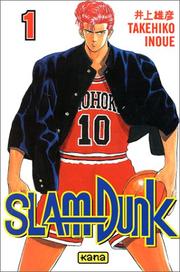
The only place to start. Sakuragi joins the basketball club for the worst possible reason and cannot do a layup, which lets Inoue teach the sport to the reader without a single expository panel.
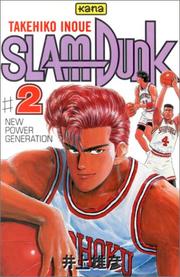
The rest of the starting five arrive and the rivalry with Rukawa is set. Read on immediately; volumes 1 and 2 are a single introduction split by page count.
The first real practice game, and the first time Sakuragi's athleticism is shown as an asset rather than a joke. The comedy-to-sport ratio starts shifting here.
Akagi and the captaincy come into focus, giving the team a spine that is not Sakuragi. Important groundwork for every later tournament arc.
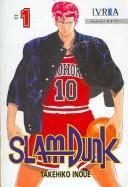
Closes the introductory movement with Shohoku finally functioning as a team. A reasonable place to check whether the series has hooked you — most readers find it has.
The prefectural tournament begins: volumes 6 to 9
BeginnerWatch Inoue switch from gag manga into sustained game-by-game storytelling without dropping the comedy.
▸ Study plan for this stage
Pace: Four to five days. Four volumes totalling 745 pages — 187, 183, 186 and 189 — which at this series' pace is a couple of long evenings if you let it be. One thing to arrange in advance: read volume 7 without knowing what happens in it. Mitsui's story is the most-cited sequence in the entire thirty-on
- Tournament structure as a story engine: elimination brackets give every game a consequence the practice matches could not have
- Mitsui's sequence and how Inoue earns a redemption arc inside a comedy without changing register awkwardly
- Miyagi and the completion of the roster — from volume 8 onward the cast is fixed and every later arc redistributes rather than adds
- The shift from gag manga to sustained sports storytelling, accomplished without dropping the comedy
- The art tightening in volume 9: body mechanics, court geography and sightlines drawn accurately for the first time
- Character revealed through how someone plays, which becomes the series' primary characterisation tool from here on
- What does the tournament format let Inoue do that the practice-game structure of volumes 1 to 5 could not?
- How does volume 7 make Mitsui sympathetic without excusing him, and how many pages does it actually spend doing it?
- What does Miyagi add to the team that changes how Shohoku can play, rather than just who is on the floor?
- Compare a game sequence in volume 6 with one in volume 9 — what specifically has changed in how the basketball is drawn?
- Does the comedy survive the shift into serious sports storytelling, and where can you point to it doing both at once?
- Read volume 7 in a single sitting with your phone away, and avoid looking the sequence up beforehand. This is the one volume on the path where spoiler avoidance materially changes the experience.
- Take one page of game action from volume 6 and one from volume 9 and describe the difference in panel layout, body proportion and where the reader's eye is sent. The tightening is measurable, not vague.
- Retrieve the note you wrote at the end of volume 5 about what each player is good for. Mark which prediction volume 7 destroyed.
- Diagram Shohoku's starting lineup as of volume 8 with each player's position and role. Keep it beside you for the Ryonan match, which is much easier to follow with the positions fixed in your head.
Next up: The roster is complete and the art has caught up with the ambition, which is exactly what the next stage needs — a single game stretched across four volumes.
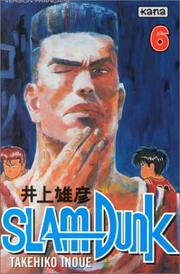
The tournament structure arrives and the stakes stop being personal. This is where the series commits to being about basketball.
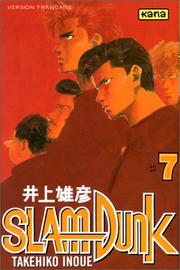
Mitsui's story — the single most-cited sequence in the whole run, and the reason Slam Dunk gets recommended outside sports fandom. Read it without spoilers if you can.
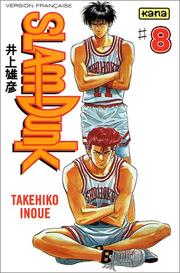
The consequences of volume 7 for the team's balance, and the first extended look at Miyagi. The roster is complete from here on.
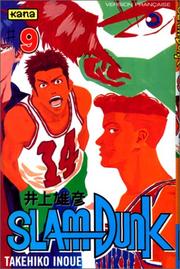
Shohoku's first serious opponent, and the first game Inoue draws as a genuine athletic contest rather than a comic set piece. The art visibly tightens.
Ryonan and the first real test: volumes 10 to 13
IntermediateRead a full multi-volume game and understand why Inoue's pacing is the thing people copy.
▸ Study plan for this stage
Pace: A week, and read it differently from the earlier stages. These four volumes total 745 pages — 187, 185, 189 and 184 — and they cover roughly forty minutes of game time between them. That ratio is the whole technique, and it collapses if you read in fragments: give volumes 10 and 11 one sitting each
- Elastic time: three or four volumes spent on forty minutes of play, and why the effect depends on uninterrupted reading
- Characterisation through tactics — Sendoh changes how Shohoku must play, and that adjustment is the character work
- Sakuragi's first sustained stretch of competent basketball, and the joke and the athlete occupying one body at last
- Momentum drawn rather than narrated: Inoue signals who is winning through posture, crowd and panel rhythm instead of the scoreboard
- The resolution-and-reset structure that turns the remaining eighteen volumes into a continuation rather than a fresh commitment
- Why this is the arc other sports manga copy: the pacing, not the plot
- How does Sendoh force Shohoku to change, and which specific adjustments do they make in response?
- Where in these four volumes does Sakuragi first make a genuinely good basketball decision rather than a lucky play?
- How does Inoue convey momentum swings without cutting to the scoreboard — name three devices he uses?
- Track the game clock across volumes 10 to 13. How much real time passes, and where does Inoue slow it down most?
- By volume 13, what has Shohoku learned as a team that they did not know at the end of volume 9?
- Read the Ryonan match without a break longer than a day, and note where you were tempted to stop. Those points are usually volume boundaries, which in serialised manga rarely fall on the story's joints.
- Track the score and the game clock through all four volumes and plot roughly how many pages each minute of play received. The distribution is Inoue's argument about which moments matter.
- Pick one exchange between Sakuragi and Sendoh and write down what it tells you about each player, using only what happens on the court. This is the series characterising through tactics.
- Decide at the end of volume 13 whether you are reading the remaining eighteen volumes, and write one sentence saying why. The volume is built to make that a real choice.
Next up: You have now read Inoue drawing basketball at the height of his comic register; the last stage shows you the same cartoonist and the same sport with the comedy removed.
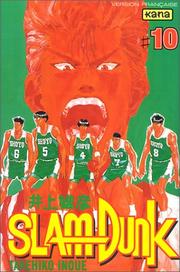
The Ryonan match begins, and with it the series' habit of spending three or four volumes on forty minutes of game time. Do not read this in fragments.
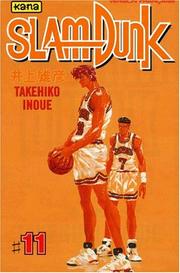
The middle of the game, where Sendoh forces Shohoku to change how it plays. The best demonstration in the run of how Inoue characterises through tactics.
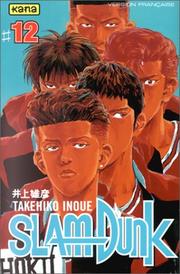
The endgame, and Sakuragi's first genuinely competent stretch of basketball. The joke and the athlete finally occupy the same body.
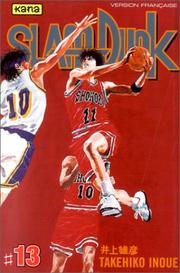
Resolution and reset — the point at which the remaining eighteen volumes become an obvious continuation rather than a commitment. If you are still reading here, finish the series.
Where Inoue went next
IntermediateSee what the same cartoonist does with the same sport once the comedy is stripped out.
▸ Study plan for this stage
Pace: One evening. REAL volume 1 is 224 pages, longer than any Slam Dunk volume here, and it reads more slowly for reasons that have nothing to do with length: the panels are denser, the linework is heavier and there are fewer visual jokes to carry you between beats. Read it after Slam Dunk rather than in
- The same sport and the same cartoonist with the comic register removed — what remains and what has to be replaced
- Inoue's line between Slam Dunk and REAL: heavier, more anatomical, closer to draughtsmanship than to cartooning
- Wheelchair basketball taken seriously as a sport rather than used as a metaphor
- Ensemble structure without a Sakuragi: no single comic engine to carry the reader through the setup
- How much of Slam Dunk's readability came from the gags, measurable only by reading a book that has none
- What does REAL have to do differently in its first volume because it has no comic protagonist to hook the reader?
- How has Inoue's drawing changed since Slam Dunk volume 13 — in line weight, faces, and how bodies are constructed?
- How does REAL present the sport itself: as adaptation, as equivalent, or as something else again?
- Which techniques from Slam Dunk survive into REAL unchanged, and which are visibly abandoned?
- After one volume, is REAL a better comic than Slam Dunk or a different one — and what would settle that question?
- Put a full-page game panel from REAL beside one from Slam Dunk volume 12 and list every difference in technique you can see. Do this before reading any commentary on the two series.
- Read REAL volume 1 in one sitting and note how long it took you compared with a Slam Dunk volume. The gap between 224 pages here and 189 there is far larger than the page counts imply, and knowing why is the point of the exercise.
- Write two paragraphs on what Inoue kept and what he discarded, using only these fourteen volumes as evidence. It is the closing argument of the whole path.
Next up: This is the end of the path: you have the first thirteen volumes of Slam Dunk in the only order that works, the checkpoint at volume 13 for the eighteen this path does not cover, and REAL as the measure of how far the same cartoonist moved.

Inoue's wheelchair-basketball series, begun after Slam Dunk ended, and the clearest evidence of how far his drawing and his interests moved. Read it after Slam Dunk, not instead of it — the contrast is most of the point.