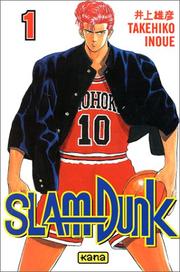
Start at Slam Dunk, Vol. 1. There is no other option worth discussing: Takehiko Inoue's basketball manga is a single continuous story told in publication order, and volume 1 is where Hanamichi Sakuragi joins the club for the worst possible reason and cannot do a layup. That premise is also the teaching device — the comedy explains the sport to a reader who does not know it, without a single expository panel.
The real questions are which edition you are buying and how far you need to read before you know. The series runs thirty-one volumes in its standard English release; this path covers the first thirteen, which is the stretch that decides it for most readers. Volumes fourteen to thirty-one are not in our catalogue, so treat the ordered list on the Slam Dunk path as the opening two thirds of a longer run rather than the whole thing.
Volumes 1 to 5: the delinquent who cannot play
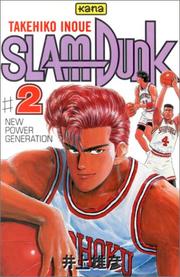
Slam Dunk, Vol. 1 and Slam Dunk, Vol. 2 are one introduction split by page count — read them together. The starting five arrive, the rivalry with Rukawa is set, and the register is broad slapstick built on Sakuragi's incompetence and his temper. Slam Dunk, Vol. 3 has the first real practice game and the first time his athleticism is played as an asset rather than a joke. Slam Dunk, Vol. 4 brings Akagi and the captaincy forward, giving the team a spine that is not Sakuragi. Slam Dunk, Vol. 5 closes the introduction with Shohoku functioning as a team, and it is a reasonable place to check whether the series has you.
Volumes 6 to 9: the tournament
Slam Dunk, Vol. 6 introduces the tournament structure and the stakes stop being personal. Slam Dunk, Vol. 7 contains Mitsui's story, the single most-cited sequence in the run and the reason the series gets recommended to people who have no interest in sport; read it unspoiled if you can. Slam Dunk, Vol. 8 deals with the consequences for the team's balance and gives Miyagi his first extended showing. Slam Dunk, Vol. 9 is the first game Inoue draws as a genuine athletic contest rather than a comic set piece, and the art visibly tightens.
Volumes 10 to 13: the Ryonan game
Slam Dunk, Vol. 10 opens a match that runs across four volumes — this is the series' defining habit, spending three or four books on forty minutes of game time. Slam Dunk, Vol. 11 is where Sendoh forces Shohoku to change how it plays, and the best demonstration in the run of characterisation through tactics. Slam Dunk, Vol. 12 is the endgame and Sakuragi's first competent stretch of basketball. Slam Dunk, Vol. 13 resolves and resets. If you are still reading at that point, finish the series.
Which edition, and a warning about ours
Pick one edition line and stay in it. The single-volume release numbers to thirty-one; other editions recombine the same chapters into fewer, larger books, so mixing them produces gaps or duplicates. Our own records are mixed on language: several volumes resolved to non-English editions, with French ISBNs on the volume 2, 3, 5, 7 and 9 records and Argentinian Spanish ones on volumes 8 and 11. The display titles are English but the books behind those ISBNs are not, so check the listing before you order.
Where Inoue went next
REAL vol. 1 is his wheelchair-basketball series, begun after Slam Dunk finished, and the clearest evidence of how far his drawing and his interests moved — the comedy is gone and the bodies are drawn with clinical seriousness. Our record for it carries a Brazilian ISBN, so the same caution applies. Read it after Slam Dunk rather than instead of it; the contrast is most of the point. More manga and comics orders are on Discover.
Ready to learn something deeply?
Build a reading path — free