Skulduggery Pleasant Reading Order: Where to Start
Derek Landy's series is read in publication order and in one straight line, because it is one of the very few long children's series where the events of book three genuinely cannot be recovered from a summary. There are two things a new reader needs to know. First, the opening volume is published under two titles — Skulduggery Pleasant in Ireland and Britain, Scepter of the Ancients in the United States — and they are the same book, so buying both is a common and avoidable mistake. Second, the series is divided into phases: books one to nine are Phase One and form a complete arc with a real ending; Resurrection restarts the series five years later as Phase Two with a partly new cast, and Until the End opens Phase Three. Phase Two is a legitimate re-entry point for a returning reader, but never a starting point. There are also short-story collections and a spin-off novel that sit outside the numbering; none of them are required.
Phase One, books one to four
BeginnerRead the opening quartet, where the partnership is formed and the series' real stakes appear
▸ Study plan for this stage
Pace: Five to six weeks for 1,501 pages — Skulduggery Pleasant at 368, Playing with Fire at 352, The Faceless Ones at 384, Dark Days at 397. These are children's fantasy with very short chapters and dialogue-heavy pages, so 70 to 80 pages an evening is normal and a week each is a comfortable pace. Read th
- The series is read in publication order in one straight line. It is one of the very few long children's series where the events of book three genuinely cannot be recovered from a summary.
- Book one has a twelve-year-old inherit her uncle's estate and his associate — a wisecracking skeleton detective — and the partnership is the whole engine of the series.
- The two-title problem is the single most practical thing to know: Skulduggery Pleasant and Scepter of the Ancients are one book with two covers.
- Playing with Fire introduces Baron Vengeous and sets out the magic system's rules in earnest. It is where a caper series starts building toward a war.
- The magic is discipline-based — Elemental, Adept, Necromancy — and Landy plays fair with the limits for fourteen books. Learning the rules in book two pays off repeatedly.
- The Faceless Ones changes the series permanently and ends on a loss that is never reversed. This is why nobody should read these out of order or from a plot summary.
- Dark Days introduces the character the entire remaining series turns on, which is why the third and fourth books function as one unit.
- Valkyrie Cain is twelve at the start and ages in something close to real time across the series. The books grow up with her, deliberately, and the later ones are not children's books in the way the first is.
- What does Skulduggery actually do that Valkyrie cannot, and what does she do that he cannot? The partnership is built on that division.
- How does the magic system work? State the disciplines and one limit on each from book two.
- What happens at the end of The Faceless Ones, and why does the series never undo it?
- Who is introduced in Dark Days, and what does that character make possible for the rest of the series?
- Landy writes jokes constantly. What are they doing structurally, beyond being funny?
- How old is Valkyrie in each of these four, and how does the writing change with her?
- Check which edition you have before starting. If the cover says Scepter of the Ancients, that is book one and you do not need Skulduggery Pleasant as well.
- Write down the rules of magic as they are stated in Playing with Fire. Landy holds to them and later books reward a reader who remembers.
- Keep a list of named characters and their allegiances from book two onward. The cast grows very large and Phase Two assumes all of it.
- Read books three and four across a single fortnight with nothing in between. That pairing is the series' most important join.
- After book four, note what you expect the series to be about. It is a good marker to check again at book nine.
Next up: The opening quartet establishes the partnership and the stakes; the second half of Phase One is where the tone changes and the arc is completed.

Book one, and the only starting point: a twelve-year-old inherits her uncle's estate and his associate, a wisecracking skeleton detective. Published in the United States as Scepter of the Ancients — same book, different cover, and the reason a lot of readers accidentally own it twice.

Book two, introducing Baron Vengeous and the magic system's rules in earnest. Read it second; it is where the series stops being a caper and starts building a war.
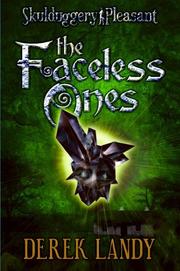
Book three, and the volume that changes the series permanently — it ends on something the books never take back, and it is the reason nobody should read these out of order or from summaries. Read it third and read book four soon after.
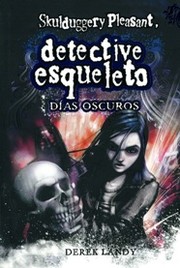
Book four, dealing directly with the consequences of the third and introducing the character the entire remaining series turns on. Catalogued with the series name in front of the title; read it fourth without a gap.
Phase One, books five to nine
BeginnerRead the second half of the original arc, which darkens steadily and ends properly
▸ Study plan for this stage
Pace: Ten to twelve weeks for 2,878 pages — Mortal Coil at 448, Death Bringer at 608, Kingdom of the Wicked at 606, Last Stand of Dead Men at 608, The Dying of the Light at 608. This is the longest stage on the path and the books nearly double in length from book five onward, so budget two weeks each rath
- Mortal Coil is where the tone shifts for good: the deaths start mattering and the jokes stop cushioning them. The series is still funny after this and the comedy stops being protective.
- Death Bringer deals with the Necromancers and the prophecy the books have circled since book four, and it is the structural hinge of Phase One.
- Kingdom of the Wicked opens into a parallel world and widens the scale considerably. It sets up the alliance politics that dominate the last two volumes and it matters again in Phase Two.
- Last Stand of Dead Men is an open war between the world's sanctuaries with a body count to match, and it ends mid-catastrophe. Stopping here is the worst available place to stop.
- The Dying of the Light resolves the arc begun in book one and was written as the conclusion of the series. Phase Two came three years later and was not planned from the start.
- The Valkyrie arc across these five is the real subject: a character who was told in book four what she might become, spending five books moving toward it.
- Landy is unusually willing to let consequences stand. Characters who die stay dead and choices are not walked back, which is what gives a comic children's series real weight.
- The page lengths tell their own story — 368 pages in book one, 608 in book six. The series expanded because its audience aged with it.
- What changes tonally in Mortal Coil? Find the specific scene where you notice it.
- What is the Death Bringer prophecy, and how long has the series been building it by the time it arrives?
- What does the parallel world in Kingdom of the Wicked add, and why does the series return to it later?
- Last Stand of Dead Men is a war novel for children. How does Landy handle mass death at this reading age?
- Does The Dying of the Light work as an ending? What does it resolve and what does it leave?
- Trace Valkyrie from book four to book nine. At what point does the series stop treating her as the hero?
- Note the page count of each volume as you go. The physical growth of the books matches the change in what they are willing to do.
- Keep a running list of deaths. It is grim and it is the clearest evidence for the argument that this series does not reset.
- After Death Bringer, write down what you think will happen to Valkyrie. Check it at the end of book nine.
- Read the last chapter of Last Stand of Dead Men and the first of The Dying of the Light in one sitting. The join is deliberate and unforgiving.
- At the end of book nine, decide whether you are continuing. The series was finished here and stopping is a genuinely complete reading.
Next up: Phase One ends properly, which makes the relaunch a distinct decision rather than a continuation — and it assumes every one of those nine books.
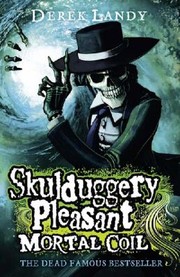
Book five, and the point at which the series' tone shifts for good — the deaths start mattering and the jokes stop cushioning them. Read it fifth.

Book six, on the Necromancers and the prophecy the series has been circling since book four. Structurally the hinge of Phase One.

Book seven, which opens out into a parallel world and widens the scale considerably. Read it seventh; it sets up the alliance politics that dominate the final two.

Book eight, and the longest — an open war between the world's sanctuaries, with a body count to match. Do not stop here; it ends mid-catastrophe.
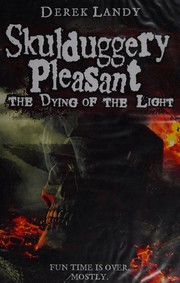
Book nine, and the conclusion of Phase One. It resolves the arc begun in book one and was written as the end of the series; a reader who stops here has read a complete story.
Phase Two
BeginnerRead the relaunch, and understand what it assumes you remember
▸ Study plan for this stage
Pace: Eight to nine weeks for 2,032 pages — Resurrection at 440, Midnight at 440, Bedlam at 592, Seasons of War at 560. Same pace as late Phase One, so about two weeks each, with Midnight the quickest of the four. Phase Two is as strictly sequential as Phase One and there is no entry point inside it. The
- Resurrection is book ten, set five years after Phase One, with a new teenage viewpoint character alongside the returning cast.
- It is the correct re-entry point for a returning reader and a bad entry point for a new one: everything it withholds is something Phase One already explained.
- The five-year gap is doing real work. Valkyrie is an adult, the consequences of book nine have had time to settle, and the series is no longer about a child learning a world.
- Midnight is tighter and faster than the book before it, driven by a straightforward abduction plot. It is the one Phase Two volume that works as a self-contained thriller.
- Bedlam is where Phase Two's larger design finally shows itself, which is why it should be read immediately before Seasons of War.
- Seasons of War is the longest book in the series and returns to the parallel world established in Kingdom of the Wicked, closing Phase Two at the series' bleakest point.
- Phase Two is measurably darker than Phase One, and it was not planned when Phase One was written. That accounts for both its ambition and its occasional strain.
- The new viewpoint character exists to reintroduce a world the returning reader already knows, which is a common relaunch device and works better here than most.
- What has happened in the five years between the phases, and how much does Resurrection tell you directly?
- What is the new viewpoint character for? Could Phase Two have been written without one?
- Midnight is the tightest Phase Two book. What has been stripped out to make it work?
- What is Phase Two's larger design, and at what point in Bedlam does it become visible?
- Why return to the parallel world in Seasons of War? What does it let the series do that the ordinary world cannot?
- Is Phase Two a continuation or a different series? Argue it with evidence from Resurrection.
- Reread the final chapter of The Dying of the Light immediately before Resurrection. Three years of real time between publications is a long gap for a reader to bridge unaided.
- List what Resurrection assumes you know and does not restate. It is a long list and it is the reason nobody should start here.
- Track the new viewpoint character's function across all four books. It changes, and noticing when is a good measure of how well the relaunch is constructed.
- Compare a chapter of book one with a chapter of Seasons of War. Same author, same character, and a completely different reading age.
- After Seasons of War, write one sentence on what the series is now about. It is not the answer you would have given after book four.
Next up: Phase Two ends at the series' bleakest point and hands straight over to a third phase that is still being written.

Book ten, published three years after the supposed finale and set five years after it, with a new teenage viewpoint character alongside the old cast. This is the re-entry point for a returning reader and a terrible entry point for a new one — everything it withholds is something Phase One explained.

Book eleven, a tighter and faster book than the one before it, driven by a straightforward abduction plot. Read it eleventh; Phase Two is as strictly sequential as Phase One.

Book twelve, and the volume where Phase Two's larger design finally shows itself. Read it after Midnight and immediately before Seasons of War.

Book thirteen, the longest in the series and the one that returns to the parallel world set up in Kingdom of the Wicked. It closes Phase Two and leaves the series at its bleakest.
Phase Three
BeginnerRead the opening of the current phase and see where the series is going now
▸ Study plan for this stage
Pace: One to two weeks. Our catalogue holds no page count for Until the End, which is a full-length volume in line with the rest of the later series rather than a short one, so plan a fortnight at the pace the last few books have set. It picks up directly from the end of Seasons of War, so read it immedia
- Until the End is book fourteen and the start of the third phase, picking up directly from where Seasons of War left the series.
- It is the current end of the main sequence, so a reader arriving here is caught up rather than finished. Plan for that rather than expecting a resolution.
- The main line is the only line that matters for the plot. The Maleficent Seven spin-off and the short-story collections are genuinely optional and skipping them costs nothing.
- That is unusual for a fourteen-book fantasy series and it is worth stating plainly, because most series of this length hide required material in side volumes.
- The phase structure is now the series' organising principle: nine books, then four, then the current run, each starting after a jump in time.
- Landy's method has held constant across all of it — short chapters, dialogue-driven scenes, jokes and consequences in the same paragraph — while the reading age has risen steadily.
- Anyone recommending the series should give three pieces of information: start with book one under either title, do not read out of order, and Phase One is a complete story if you want to stop.
- What does Until the End pick up from Seasons of War, and how quickly does it re-engage?
- What does the phase structure do for a very long series that straight numbering would not?
- Why does the side material not matter? Check one of the collections against the main line and confirm it.
- Fourteen books in, what has stayed constant in Landy's writing and what has changed?
- Would you recommend this series to a twelve-year-old? Answer with reference to a specific later volume rather than to the first.
- Read Until the End directly after Seasons of War with no gap. The two are a continuous piece of story.
- Write out the whole reading order in one list, with the two-title warning at the top. That list is the single most useful thing this path produces.
- Check one spin-off volume against the main sequence to confirm for yourself that it is optional. Taking that on trust is exactly how readers end up buying nineteen books.
- Decide where you would tell a new reader to stop, and be able to say why. Book nine and book fourteen are both defensible answers.
Next up: That closes the path — fourteen books in order, the two-title trap avoided, and the two honest stopping points named.

Book fourteen, and the start of the third phase, picking up directly from the end of Seasons of War. Read it last of the main line — and note that the side material, the Maleficent Seven spin-off and the short-story collections, sits outside this numbering and can be skipped entirely without losing the plot.
Discussion
Keep reading
Paths that share books, cover the same subject, or open a related topic.