Sinclair Lewis Reading Order: Where to Begin with the American Satires
The first American to win the Nobel Prize in Literature is now read almost entirely for one book about American fascism, which is the worst possible introduction to him. Lewis wrote five great satires in nine years, then declined for two decades. This path takes the great run in publication order, because they genuinely build on each other, puts It Can't Happen Here where it belongs rather than where the headlines put it, and treats the late novels as an optional tail.
The Two That Made Him
BeginnerRead the two novels that put small-town and business-class America into the language, and see Lewis's method: exhaustive documentary detail turned into satire without ever quite becoming caricature.
▸ Study plan for this stage
Pace: Seven to eight weeks. Both are long — Main Street runs past 450 pages and Babbitt is not much shorter — and both are episodic rather than plotted, so a fixed daily quota of 30 pages works far better than reading in bursts. Give Main Street four weeks and Babbitt three.
- Carol Kennicott's programme of reform and its serial defeats: a library, a theatre, a town plan, each proposed and each absorbed or ignored by Gopher Prairie
- The Village Virus, Lewis's name for the thing that happens to educated people who stay — stated in the novel and worth tracking as a diagnosis rather than a joke
- Documentary method: Lewis had a reporter's ear and transcribed real speech, real advertising and real club minutes, which is why the satire lands as recognition rather than as invention
- Will Kennicott as the novel's fairest treatment — competent, decent, entirely unreflective — and the fact that Lewis will not let Carol be simply right about him
- Zenith and the booster class in Babbitt: the luncheon clubs, the sales talk, the civic pride as a commercial product
- Babbitt's rebellion and its collapse, which is the tighter and better-constructed plot of the two and the reason Babbitt is the funnier book
- The word babbitt entering English, and what the coinage got right and wrong about the character Lewis actually wrote
- Main Street mapping the small town and Babbitt the city it aspires to be — the reason for reading them in this order
- Carol is right about Gopher Prairie and insufferable about it at the same time. Does the novel know that? Point to the scene that settles it.
- What is the Village Virus, in Lewis's terms, and who in Main Street has it worst?
- Babbitt rebels and returns. What exactly defeats him — the town, his friends, or something in himself?
- Lewis reproduces Zenith's advertising and club oratory at length. Is the reproduction the satire, or does he add anything to it?
- Compare Will Kennicott with George Babbitt as portraits of ordinary competence. Which is treated more generously, and why might that be?
- Keep a list of every reform Carol attempts and how each ends. The list is the plot of Main Street and reading it back is the fastest way to see the book's shape.
- Copy out one full page of Zenith booster oratory from Babbitt and write 150 words on what Lewis has done to it, if anything. This is the central technical question about him.
- Track Babbitt's friendship with Paul Riesling from first appearance to last, then write 200 words on why the novel needs it.
- After finishing both, write a 300-word account of what Lewis thinks is wrong with America in 1920, using only these two books and no later knowledge.
Next up: You now know the method and the two territories it mapped, which is what lets you see him turn the same documentary satire on institutions rather than on places.
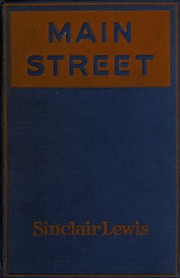
A college-educated woman marries a country doctor, moves to Gopher Prairie, Minnesota, and tries to civilise it. The book that made him famous overnight and the correct start: everything Lewis satirises later is first mapped here.
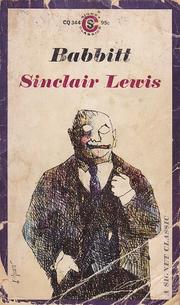
A prosperous realtor in the fictional city of Zenith has a small, doomed rebellion against his own conformity. Funnier and better constructed than Main Street, and it added a word to English. Read it second, because Zenith is the city Gopher Prairie aspires to be.
The Nobel Run
IntermediateFinish the great sequence, and watch Lewis turn the same documentary satire on science, religion and finally on an American abroad.
▸ Study plan for this stage
Pace: Ten to twelve weeks. Arrowsmith and Elmer Gantry are both substantial and each deserves three to four weeks at 30 pages a day. Dodsworth is shorter and faster and takes two. Read them in publication order — 1925, 1927, 1929 — because the tone genuinely changes across them.
- Arrowsmith's structure as a sequence of institutions — medical school, small-town practice, a public health department, a research institute — each of which offers Martin a compromise
- Gottlieb as the uncompromising scientist and the moral centre, and the fact that his purity is presented as costly rather than admirable in any easy way
- The plague sequence in St Hubert and the collapse of the controlled trial, which is the novel's hardest ethical passage and its finest
- Lewis's refusal of the 1926 Pulitzer for Arrowsmith, and what that refusal says about how he read prizes
- That Arrowsmith is the one book where Lewis admires his protagonist, which changes what the satire is aimed at — the institutions rather than the man
- Elmer Gantry's sincerity, which is the trap of the book: he is not a cynic, and a straightforwardly hypocritical Gantry would be far less damaging
- The scale of Elmer Gantry's reception — denounced from pulpits, banned in several cities — and its status as the most sustained single attack Lewis wrote
- Dodsworth as Babbitt taken seriously: a manufacturer in Europe, treated with sympathy rather than contempt, and the marriage examined rather than mocked
- At each institution Martin Arrowsmith joins, what is the specific compromise offered? List them and say which one he almost accepts.
- In the plague sequence, Martin abandons the controlled trial. Set out the case that he was right and the case that he was wrong, and note that the novel does not fully settle it.
- Gantry believes what he preaches. Why does that make the novel more damaging than a portrait of a fraud would be?
- Elmer Gantry attacks an institution; Arrowsmith admires a man inside one. Are these the same satire pointed in different directions, or two different books?
- Dodsworth is the gentlest of the five. Is the gentleness maturity or fatigue? Argue it from the prose, not the plot.
- Diagram Martin Arrowsmith's career as a chain of institutions with the price of admission to each. It fits on one page and it is the novel's architecture.
- Write 300 words on the St Hubert trial as an ethical problem, setting out both positions without adjudicating. Then note which way the novel leans and how you can tell.
- Find three passages where Gantry is entirely sincere and write two sentences on each about what the sincerity costs the people around him.
- Read the opening chapter of Dodsworth immediately after the closing chapter of Babbitt and write 200 words on what changed in Lewis's attitude to the businessman between 1922 and 1929.
Next up: Having read the great run in order, you can meet the political novels as the work of a satirist with a settled account of American character rather than as prophecy.
A doctor tries to stay a scientist against every commercial and institutional pressure, ending with a plague in the Caribbean. Lewis refused the Pulitzer for it. Read it third: it is the one book where he admires his protagonist, which changes what the satire is for.

A drunk, lecherous, wholly sincere revivalist rises through American Protestantism. It got him denounced from pulpits and banned in several cities, and it is the most sustained attack he ever wrote.
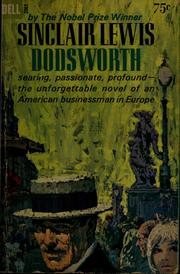
A retired car manufacturer and his social-climbing wife tour Europe and come apart. The gentlest and most humane of the five, and the right end to this stage because it is Babbitt taken seriously rather than mocked.
The Political Novels, in Context
IntermediateRead the two books Lewis is quoted for rather than read, with enough of his work behind you to see them as novels rather than as prophecies.
▸ Study plan for this stage
Pace: Five to six weeks. It Can't Happen Here is long and was written fast, which shows; three weeks at a brisk pace is right, and slowing down does not improve it. Kingsblood Royal is shorter and angrier — two weeks, and it repays being read attentively rather than quickly.
- Buzz Windrip as a Babbitt with a national platform: the folksiness, the sales talk and the club oratory of the earlier novels transposed into a presidential campaign
- Doremus Jessup as the reluctant resister — a small-town liberal newspaper editor, decent and ineffectual, and Lewis's honest assessment of his own class
- The Minute Men and the corporate structure of the regime, which Lewis works out in bureaucratic rather than melodramatic detail
- The speed of composition in 1935 and its visible costs: thin secondary characters, a rushed second half, and long stretches of exposition
- Why the novel belongs sixth and not first — read after Babbitt it is the political conclusion of the booster class, and read cold it is only a headline
- Kingsblood Royal's premise: a white banker in 1947 discovers a Black ancestor and refuses to conceal it, and the town's response is the book
- The dated language of Kingsblood Royal, which is a real obstacle and worth naming rather than excusing, alongside the fact that the novel was unusually direct for its moment
- The distinction between a novel that anticipates events and a novel that understands the people who would produce them — Lewis is much better at the second
- How does Windrip actually win? Follow the mechanism the novel gives rather than the outcome, and compare it with Babbitt's civic clubs.
- Doremus Jessup is brave late and slow early. Is Lewis criticising him, identifying with him, or both?
- It Can't Happen Here was written in a few months. Name three places where you can see it, and say whether any of them matter.
- Kingsblood Royal is angry and its language has dated badly. How do you weigh the two facts against each other? State both without resolving them prematurely.
- Reading these after the great five, which of Lewis's earlier characters would have joined the Minute Men? Defend the choice from the text.
- Write out Windrip's campaign promises as a list, then set them beside a page of Zenith booster oratory from Babbitt. The continuity is the argument for this reading order.
- Track Doremus Jessup's decisions chronologically and mark the point at which resistance becomes unavoidable for him. Write 200 words on why Lewis puts it there.
- Read the first fifty pages of Kingsblood Royal and write down what the novel assumes its 1947 reader believes. That reconstruction is most of the book's interest now.
- Write 400 words on whether It Can't Happen Here is a good novel, keeping the question separate from whether it was prescient. Most discussion of it collapses the two.
Next up: With the political work placed in its own career rather than in ours, the remaining books let you check the standard story of a great run and a long decline against the evidence.
A folksy senator is elected president and installs a fascist state, and a Vermont newspaper editor resists. Written fast in 1935 and it shows, but placed sixth rather than first it reads as the political conclusion of Babbitt rather than as a headline.
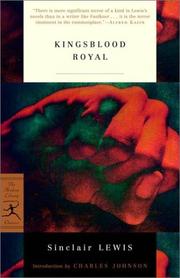
A white banker discovers he has a Black ancestor and refuses to hide it. Published in 1947, angry, dated in its language and remarkable for its moment. The best of the late novels and the strongest case that Lewis was still working.
The Completist Tail
IntermediateSample the early apprentice work and the long post-Nobel decline, and get a biography that explains both.
▸ Study plan for this stage
Pace: Eight to ten weeks. The Job is short and quick — two weeks. Ann Vickers and Cass Timberlane are both long and both slower going than the great five; allow two to three weeks each and give yourself permission to skim the interpolated marriage sketches in Cass Timberlane. Lingeman's biography takes th
- The Job as apprentice work: Una Golden building a career in New York business years before Main Street, with the documentary instinct already visible and the satire not yet formed
- Its standing as an early American novel about a woman's working life, taken more seriously as such now than it was at the time
- Ann Vickers as the first major post-Nobel novel and the point where the reporting begins to outrun the storytelling — a whole career in prison reform, thoroughly researched and structurally slack
- Cass Timberlane's interpolated sketches of other marriages, a device that shows Lewis reaching for structure and not finding it
- The commercial success of the late novels alongside their critical decline, which is the puzzle the biography exists to explain
- Lingeman's account of why a Nobel laureate was unfashionable before he died: the modernists' verdict on realism, the drinking, and the exhaustion of a documentary method that required constant new territory
- The distinction between a writer who declined and a writer whose method stopped being interesting to critics — a question the stage leaves genuinely open
- Reading The Job after Main Street, what is already present and what is missing? Be specific about technique rather than quality.
- Ann Vickers is well researched and slack. Is the research the cause of the slackness? Test it against Arrowsmith, which is also heavily researched.
- What are the interpolated marriage sketches in Cass Timberlane doing? Would the novel be better without them?
- Lingeman's subtitle calls Lewis a rebel from Main Street. On the evidence of the whole path, is rebel the right word?
- Was there a decline, or a change in what critics wanted? Set out both accounts using specific late novels before choosing.
- Read the first chapter of The Job and the first chapter of Main Street back to back and write 200 words on the difference in the sentences.
- Pick any thirty pages of Ann Vickers and mark every paragraph that is exposition rather than scene. The ratio is the case for the decline, in a form you can actually see.
- Read three of the marriage sketches in Cass Timberlane and write one sentence on each about what it adds. Where the answer is nothing, say so.
- After Lingeman, write 500 words assessing whether the standard story about Lewis holds up, citing at least one book from each stage of this path.
Next up: This is the end of the path. The natural next move is outward to the writers Lewis was measured against in his own decade — Dreiser, Cather and Dos Passos — where the argument about what American realism was for is easier to see than in any one career.
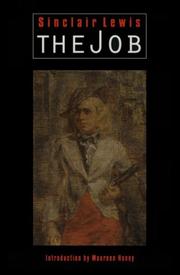
An early novel about a woman building a career in New York business, from long before the famous run. Unpolished, but it is the first sign of the documentary instinct, and an early feminist novel worth more attention than it gets.
A social worker and prison reformer across a whole career. The first major post-Nobel novel and the point where the reporting starts to outrun the storytelling.

A middle-aged judge marries a much younger woman, with interpolated sketches of other marriages. A late bestseller, much weaker than the great five, and included so you can see the decline for yourself rather than take it on trust.
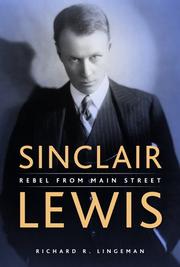
The modern biography, usually subtitled Rebel from Main Street. Read it last: it is very good on why a writer this successful was already unfashionable by the time he died.