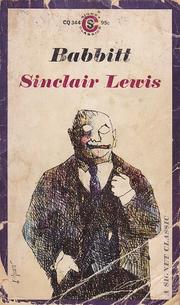
Start with Babbitt. It is funnier and tighter than Main Street, its satire has aged much better, and it did something odd and permanent — it put a word into the language for a personality type that had not previously had a name.
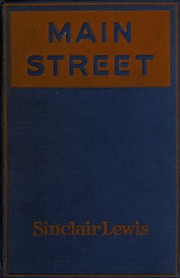
The conventional advice is to begin with Main Street, on the grounds that it came first and made him famous. It is the more historically important book and the harder one to start with: it runs long, its target is small-town conformity in a specific pre-war register, and its heroine's frustration is dramatised at a length that modern readers find punishing. Read it second, when you already trust the writer.
The great decade
Main Street is the assault on the myth of the wholesome small town, and its central insight — that the people enforcing conformity are not villains but neighbours who mean well — is why it still works when the period detail does not.
Arrowsmith is the medical novel and is the most idealistic thing he wrote: a scientist trying to do honest research inside institutions that reward almost anything else. Lewis was awarded the Pulitzer for it and declined it, publicly, on the grounds that prizes make writers tame. Many readers find this the most sympathetic of the novels because for once he likes his protagonist.
Elmer Gantry is the one that caused the most trouble. Its subject is a fraudulent evangelist, it was banned in several American cities and denounced from a great many pulpits, and it remains the most incendiary book in the list. It is also the least subtle — the satire has no doubt in it anywhere, which readers either enjoy or find wearing.
Dodsworth closes the decade and is the warmest. A retired manufacturer travels in Europe with a wife who wants to be somebody else, and Lewis for once observes rather than prosecutes. Several critics think it is his best-written novel even though it is nobody's idea of his most important.
After the decade
It Can't Happen Here is a fascist takeover of the United States, written quickly in the mid-1930s, and it gets revived every few years for obvious reasons. It should be read with the caveat that its revivals are political rather than literary: it is a hasty book, the characterisation is thin, and it is generally regarded as far weaker as a novel than the five that precede it. That does not make it uninteresting, but do not come to it expecting Babbitt.
Kingsblood royal is the late novel about a white banker who discovers Black ancestry and is destroyed by his town for it. It was brave in its moment and is genuinely uncomfortable now, and not only in the ways it intends — its handling of race, and much of its language, has dated hard. Read it as a document with a well-meant argument inside a frame that has not survived, or leave it.
The job is early work and worth more than its reputation: an office novel with a working woman at the centre, written before Lewis was famous. Ann Vickers and Cass Timberlane are from the long decline, and the standard critical view — which is not really contested — is that the late books repeat the earlier ones with less pressure behind them.
Sinclair Lewis by Richard R. Lingeman, published as Sinclair Lewis: Rebel from Main Street, is the modern biography and the best account of how a writer this dominant became this quickly unfashionable.
Where to stop
Babbitt, Main Street and one of Arrowsmith or Elmer Gantry is a full Sinclair Lewis for most readers. Add Dodsworth if you want the one where he is kind. He was the first American awarded the Nobel Prize in Literature, and the standard argument against that award — that he was a satirist of surfaces rather than a novelist of depth — is worth forming your own view on from the books rather than from the summary. The full ordered sequence is on the path below.
Follow the full ordered path here: Sinclair Lewis Reading Order: Where to Begin with the American Satires.