Sigrid Undset Reading Order: How to Read Kristin Lavransdatter and What Comes Next
Kristin Lavransdatter is three novels usually sold as one eleven-hundred-page brick, and Undset's second medieval cycle is barely known in English. This path reads the trilogy as the three books it is, then the modern novels, then the second cycle — which our catalogue holds only as a four-in-one omnibus.
Kristin Lavransdatter, in three
IntermediateRead the trilogy that won the Nobel, one volume at a time.
▸ Study plan for this stage
Pace: 10 weeks for roughly 1,100 pages, taken as three separate books rather than one brick. The Bridal Wreath is 337 pages and takes about three weeks; The Mistress of Husaby is 336 and takes three and a half, because it is the slowest and best of the three and its twenty years of marriage are meant to f
- The three volumes are one continuous life, not a series. The Bridal Wreath is the courtship, The Mistress of Husaby is the marriage, The Cross is the reckoning, and each is written in a different tempo to match.
- Kristin's defiance of her father and her betrothal for Erlend is the founding act, and the trilogy spends a thousand pages on its consequences without ever recanting it. Undset takes the passion entirely seriously and takes the cost entirely seriously.
- The Catholic framework is structural, not decorative. Undset converted while writing the cycle, and by The Cross penance, confession and pilgrimage are the machinery by which the plot resolves — a reader who treats them as period colour will find the ending inexplicable.
- Erlend is a real character rather than a mistake. He is charming, politically reckless, and consistently the person Kristin chose; the marriage is neither a punishment nor a romance.
- Lavrans, Kristin's father, is the moral centre the whole book measures itself against, and the long shadow he throws over the third volume is the reason the first volume's rebellion matters.
- The medieval detail is doing argumentative work. Undset was a serious scholar of the Norse Middle Ages, and the farm year, the legal customs and the inheritance rules are what make Kristin's choices costly rather than merely dramatic.
- The Black Death arrives at the end of The Cross, and Kristin's last act as a plague nurse is the answer to the question the whole cycle has been asking about self-will and its uses.
- The volume titles you are reading here — The Bridal Wreath, The Mistress of Husaby, The Cross — are the older English translation by Charles Archer and J. S. Scott. Newer editions call the first two The Wreath and The Wife, and the older version quietly softens some of the sexual passages. This is w
- Kristin breaks her betrothal to Simon for Erlend. On the evidence of The Bridal Wreath alone, is she wrong?
- The Mistress of Husaby covers twenty years and seven sons. What does Undset do with pace to make a marriage feel like a duration rather than a plot?
- Erlend loses Husaby through a political conspiracy. Is he punished by the novel for the politics, for the recklessness, or for neither?
- Kristin's pilgrimage to Nidaros is her attempt to settle an account. What does she believe she owes, and does the book agree with her accounting?
- By the end of The Cross, has Kristin's self-will been condemned, redeemed, or simply spent?
- Lavrans and Erlend are the two men the trilogy weighs. Which one does Undset think Kristin was actually formed by?
- Keep a genealogy as you read. Kristin's household, Erlend's kin, the seven sons and the farms attached to each name are not optional detail, and the third volume is very hard to follow without a sheet.
- Read the opening chapters of the older Archer and Scott translation you have here beside a sample of Tiina Nunnally's newer version, which is easy to find online. The archaic thee-and-thou of the older text is a stylistic decision that changes the book, and comparing two pages will tell you which Kristin you want to spend a thousand pages with.
- Mark every confession scene across the three volumes and read them in sequence at the end. They form Kristin's real autobiography and they are more honest than her narration.
- Track the farm year in The Mistress of Husaby — sowing, haymaking, slaughter, the winter — and note how Undset uses it instead of chapter breaks to move time.
- After The Cross, reread the first twenty pages of The Bridal Wreath, where Kristin is a child at Jørundgaard with her father. It is the single most rewarding reread in the cycle.
Next up: Having spent a thousand pages inside her mature medieval manner, the two earlier novels show you what Undset was doing before she found it — and how much of the fourteenth century was already there.
Volume one — Kristin defies her father and her betrothal for Erlend. Sold in newer translations as The Wreath; this is the older title and the one that resolves.

Volume two — the marriage, and what it costs across twenty years. The best of the three.
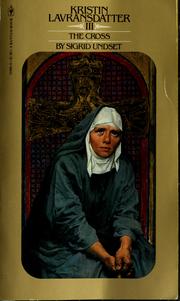
Volume three — age, plague and reckoning. Undset converted to Catholicism while writing the cycle and it shows most here.
The modern novels
IntermediateRead the contemporary fiction she wrote before the medieval books.
▸ Study plan for this stage
Pace: 5 weeks. Jenny is 305 pages and needs about three; it is a contemporary novel of 1911 and reads faster than the medieval books, but it darkens steadily and is better not rushed. Gunnar's Daughter is 241 pages and takes one to two — it is short, cold and deliberately unornamented, and it can genuinel
- Jenny is a novel about a woman's independence written in 1911 by a twenty-nine-year-old who had worked ten years as an office clerk. The scandal it caused in Norway was not about sex but about its refusal to reward its heroine's freedom.
- The Roman setting is a Norwegian tradition — the artists' colony abroad — and Undset uses it to strip away the social supports that would have held Jenny at home.
- Jenny's problem is not that she is prevented from living as she chooses; it is that choosing turns out not to be sufficient. That is the same problem Kristin Lavransdatter has, moved forward six hundred years.
- Gunnar's Daughter is a saga-pastiche, not a novel with saga furniture. It is written in the flat, external, unpsychological manner of the Icelandic sagas — actions and speech, almost no interiority — and the coldness is a technical achievement rather than an absence.
- Vigdis's story is a revenge that takes decades and consumes a generation, and the saga manner is what allows Undset to tell it without editorialising.
- Together these two show the two halves of what she later fused: Jenny supplies the modern psychological interior and Gunnar's Daughter supplies the medieval world and its ethics of obligation. Kristin Lavransdatter is what happens when both are running at once.
- Jenny is free in every sense her society recognises. What does the novel think is missing, and does it name it?
- Undset was later a Catholic convert. Is there anything in Jenny that anticipates that, or is it a genuinely secular book?
- Gunnar's Daughter gives you almost no access to what Vigdis feels. How does Undset make you feel it anyway?
- Compare Vigdis's revenge with any of Erlend's political misjudgements. What does the saga manner permit that the trilogy's manner does not?
- Which of these two books is the better preparation for Kristin Lavransdatter, and why?
- Read the first chapter of Gunnar's Daughter and count the sentences that report a thought rather than an action. Then do the same for the first chapter of The Bridal Wreath. The ratio is the distance Undset travelled.
- Find one paragraph in Jenny about work — painting, money, the apartment — and one in The Mistress of Husaby about running the farm. Undset's interest in what women actually do all day is constant across both worlds, and putting the two paragraphs together makes it visible.
- Note every point at which Jenny could still change course, and mark the last one. Arguing with yourself about where that page is is the best way to read this novel.
- Read a few chapters of any Icelandic saga alongside Gunnar's Daughter — Laxdæla or Njál's are the obvious ones and are freely available. Undset is imitating something specific and the imitation is much more impressive once you have heard the original.
Next up: You have now seen both of her registers separately and fused, which is what the second medieval cycle needs — it is Kristin's world again with the guilt moved to the centre.
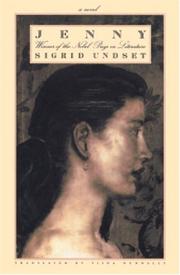
A Norwegian painter in Rome, and a novel about female independence that scandalised Norway in 1911.
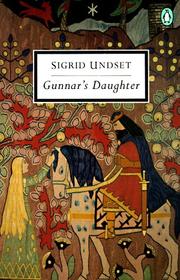
A short, cold saga-pastiche of vengeance in eleventh-century Norway. It reads like the Icelandic sagas rather than like a novel, deliberately.
The second cycle
IntermediateThe other medieval tetralogy, which almost nobody reads.
▸ Study plan for this stage
Pace: 10 to 12 weeks. The catalogue holds all four volumes — The Axe, The Snake Pit, In the Wilderness and The Son Avenger — as a single 994-page omnibus, so this is a Kristin-sized commitment in one binding with no natural stopping points printed in. Impose your own: read it as four books of roughly 250
- This is the Master of Hestviken cycle, Undset's other medieval tetralogy, and it is barely read in English. Buying the omnibus gets you the entire thing at once, which is the practical reason it is the edition to have.
- Olav Audunssøn and Ingunn are betrothed as children, and the cycle turns on a killing Olav commits and then conceals for the rest of his life. Where Kristin's sin is confessed and worked through, Olav's is withheld.
- The unconfessed sin is the engine. Four volumes of ordinary farm life, marriage, children and litigation are given their pressure by one thing the protagonist will not say aloud, and the length is what makes the withholding felt.
- It is darker and more theologically severe than Kristin Lavransdatter, and colder about its central character. Readers who loved Kristin for her vitality often find Olav unrewarding, and that reaction is a fair one rather than a failure of attention.
- The boy Eirik, whose paternity is the reason for the killing, grows up inside the cycle and becomes the second centre of it. The title of the fourth volume is a promise about him.
- Undset wrote this after her conversion rather than during it, and the difference shows: guilt here is not a stage on the way to grace but a permanent condition being described.
- The translation in this omnibus is the older English one by Arthur G. Chater, contemporary with the Archer and Scott Kristin. A modern retranslation exists under the Norwegian hero's name, Olav Audunssøn, in four separate volumes, if you finish this and want the same books in newer English.
- Olav could confess at almost any point across four volumes. Why does he not, and does Undset ever let him give a reason you believe?
- Ingunn is the least active protagonist in either cycle. Is she a failure of characterisation or a deliberate contrast with Kristin?
- Where does the cycle's centre of gravity shift from Olav to Eirik, and does the book survive the handover?
- Kristin dies nursing plague victims; Olav's ending is entirely different in kind. What are the two cycles each claiming about how a life is settled?
- Having read both tetralogies, which of them do you think is the reason the Nobel committee cited her work on medieval Scandinavia, and which is the better book?
- Before you start, write the four internal volume titles on the flyleaf with your intended dates. A 994-page omnibus with no external stopping points is the main reason people abandon this cycle, and imposing structure on it is a real intervention.
- Keep a note of every scene in which Olav comes close to speaking and does not. By the third volume that list is the plot.
- Read the opening of The Axe directly after the closing pages of The Cross. Both are Undset at full medieval strength within a few years of each other, and the tonal difference is immediate and worth naming for yourself.
- Set Ingunn beside Kristin on a single page — what each wants, what each is permitted, what each does with a bad marriage. This is the comparison the second cycle exists to invite.
- When you finish, write down which of the six novels on this path you would hand to someone who had never read her. Choosing between Kristin's first volume and the two short modern books is the useful argument to have with yourself.
Next up: This is the end of the path — you have read both medieval cycles and the early modern novels, which is more Undset than almost any English-language reader ever gets to.
The Master of Hestviken — a darker, guiltier companion to Kristin. Our catalogue holds all four volumes as a single omnibus record, so buying it gets you the whole cycle at once; be ready for the length.
Discussion
Keep reading
Paths that share books, cover the same subject, or open a related topic.