Sebastian Barry Reading Order: The Dunne and McNulty Families, in Sequence
Barry's novels follow two interlocking Irish families — the Dunnes and the McNultys — across a century, and publication order scrambles the family chronology badly. Each book stands alone, but reading them so the family history accumulates is a different and better experience. This path does that.
Start here
IntermediateBegin with the novel that won the Costa Book of the Year and reaches most readers.
▸ Study plan for this stage
Pace: 3 weeks for The Secret Scripture's 300 pages. That is deliberately slow for a book this size: Barry writes long, cadenced sentences that reward being heard, and the novel alternates two handwritten documents in two very different voices. About fifteen pages a day, and read Roseanne's testimony aloud
- The novel is two unreliable documents laid against each other — Roseanne McNulty's hidden testimony, written at nearly a hundred and concealed under a floorboard, and Dr Grene's own commonplace book. Neither is a correction of the other.
- The gap between the two accounts is the subject. Where they disagree about what happened to Roseanne, the novel is asking what an institution's paperwork is for.
- Father Gaunt is the hinge. The mechanism by which a woman is committed runs through clerical authority, a marriage annulled, and a village's willingness to agree — and Barry shows each link.
- Roseanne is a McNulty by marriage, which is the door into the whole family cycle. The name will recur across every later book on this path.
- The ending turns on a coincidence that a large number of readers refuse. Decide your own verdict on it before you read anyone else's, because it will shape how you read the later novels' fondness for the same device.
- Barry writes memory as unreliable at the level of the sentence, not just the plot. Roseanne revises herself mid-paragraph, and those revisions are where she is most truthful.
- Where in Roseanne's testimony do you first catch her being wrong about a fact, and does it change how you read the rest?
- What does Dr Grene's own record give the novel that Roseanne's alone could not?
- Father Gaunt believes he is acting well. Reconstruct his case in his own terms — what does the novel gain by making him coherent rather than a monster?
- The reveal at the end is either the point of the book or a contrivance grafted onto it. Which, and what specifically decided you?
- Roseanne's beauty is treated by the village as a fact about the village rather than about her. How does Barry stage that?
- Keep a two-column sheet as you read — Roseanne's version and Grene's version of the same events. By the halfway point the divergences are the plot, and you will want the record.
- Copy out one Roseanne paragraph and one Grene paragraph and read both aloud. The difference in sentence length and clause structure is how Barry keeps two hundred pages of alternating first person distinct.
- Note every date Roseanne gives and every date Grene gives. She is imprecise and he is not, and the mismatch is deliberate.
- Before starting the next stage, write down what you now know about the McNulty family. You will be adding to this sheet for the rest of the path.
Next up: Roseanne's story is bounded by an Irish institution; the next two novels follow Irishmen who left, and put on other people's uniforms.
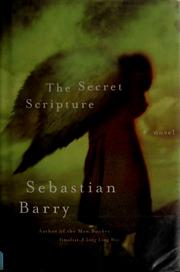
A hundred-year-old woman in a mental hospital writes her life while her psychiatrist investigates why she was committed. The two accounts do not match, and the gap between them is the book.
The wars
IntermediateRead the two novels about Irishmen fighting in other people's armies.
▸ Study plan for this stage
Pace: 5 weeks. A Long Long Way is 292 pages and takes about two — it moves, because trench narrative supplies its own momentum. Days Without End is 287 pages and needs three: Thomas McNulty's voice is a sustained dialect performance and reading it fast flattens it into mannerism. Roughly fifteen pages a d
- A Long Long Way puts Willie Dunne, a Dublin policeman's son, in a British uniform in 1914 and then sends him home on leave into the Easter Rising. The impossible position is the novel — he is on the wrong side in both countries at once.
- Willie's father is a Dublin Metropolitan Police officer, so the estrangement in the book is not abstract politics but a letter from a son to a father who cannot receive it.
- The men Willie fights beside are mostly Irish, and the novel restores a body of experience that Irish national memory spent a century declining to hold. That recovery is the book's argument.
- Days Without End is narrated by Thomas McNulty, an emigrant who survives the Famine crossing and ends up in the US Army in the Indian wars and then the Civil War — an ancestor of the family you met in The Secret Scripture.
- The love between Thomas and John Cole is stated without euphemism and without crisis, and Thomas's cross-dressing in the frontier saloon and later at Andersonville is presented as fact rather than as scandal. Reviewers were startled by the flatness of the telling; that flatness is the achievement.
- The same violence is described in the same voice whether it is done to Irishmen or by them to Sioux villages. Barry gives Thomas no exemption, and Winona's presence in the family is founded on a massacre he took part in.
- Both novels are about Irish soldiers in an empire's service, which is the pattern the whole cycle keeps returning to — exile as employment.
- Willie's letter home is the pivot of A Long Long Way. What exactly does he say, and why is it unforgivable to his father?
- What does the Easter Rising look like to a man on leave from the Western Front, and what does Barry gain by showing it from that angle rather than any other?
- Thomas McNulty's voice is grammatically loose and lexically strange. Find a sentence that would not survive being corrected, and say what would be lost.
- Days Without End does not treat Thomas and John's relationship as a problem to be resolved. What does it treat as a problem instead?
- Both books contain atrocity. Does the narration position you differently in the trench chapters than in the cavalry chapters?
- Mark the chapter breaks in A Long Long Way against the actual chronology of 1914 to 1918. Barry compresses and skips, and seeing where he skips shows what he thinks the war was about.
- Read the first three pages of Days Without End aloud. If the voice does not settle for you in that time, read them again — this book is unusually dependent on hearing it.
- Keep a running note of every place Thomas McNulty describes killing, and how many sentences he spends on it. The economy is the moral position.
- Add Willie Dunne and Thomas McNulty to your family sheet from stage one, with dates. The Dunne and McNulty lines are now both open and they will converge.
- Set Willie's account of Flanders beside Thomas's account of Andersonville. Both are prison-and-mud passages by the same author twelve years apart; note what changed in the prose.
Next up: Two family lines are now running, and the next stage fills in the men and women on either side of them — including the daughter Thomas and John raised.

An Irish volunteer in the British Army in 1914, caught between the Western Front and the Easter Rising at home. Booker-shortlisted, and the best novel about that impossible position.

Two Irish emigrants in the US Indian wars and the Civil War, in a love story told so plainly it took reviewers by surprise. Costa Book of the Year, and probably his finest book.
The family, forward and back
IntermediateFill in the McNultys and the Dunnes.
▸ Study plan for this stage
Pace: 7 weeks for roughly 850 pages. The Whereabouts of Eneas McNulty is 308 pages and takes about two and a half — it is early Barry and the prose is at its most ornate, which slows reading down whether you want it to or not. On Canaan's Side is 264 pages and reads in two; it is structured as seventeen d
- Eneas McNulty joins the Royal Irish Constabulary at precisely the wrong moment and is condemned for it by a boyhood friend. The sentence is not death but permanent exile, and the novel is what a life looks like when it cannot come home.
- Eneas is Roseanne's brother-in-law. Reading his book after The Secret Scripture converts a name in her testimony into a whole life, which is the effect the reading order exists to produce.
- On Canaan's Side is Lilly Bere, eighty-nine, in America, writing in the days after her grandson's death. She is a Dunne, sister to Willie of A Long Long Way, and she left Ireland under a death sentence carried over the ocean.
- Lilly's book is a suicide's countdown as well as a memoir, and knowing that from early on is how Barry wants it read — the tension is not whether but how much she can get down first.
- A Thousand Moons hands the narration to Winona, the Lakota girl Thomas McNulty and John Cole raised, and the shift is a deliberate correction: the daughter tells her own story in Tennessee after the war rather than being told.
- Winona's central problem is legal, not emotional — as an Indian she cannot testify, so an assault against her cannot be prosecuted through the courts. The novel is about what a person does when the law will not hold her evidence.
- Read across the three and the cycle's shape appears: the Dunnes and the McNultys are two families of people who leave, and each novel is a testimony written by someone with no other jurisdiction to file it in.
- Eneas is condemned by a friend rather than an enemy. What does Barry get from that choice that a faceless organisation would not have given him?
- Lilly Bere writes for seventeen days. What is the difference between what she records early and what she records at the end?
- Both Eneas and Lilly are exiles from the same period of Irish history for opposite-looking reasons. What do the two exiles have in common?
- Winona narrates A Thousand Moons in an English she learned from the two men who raised her. Where can you hear Thomas McNulty in her sentences, and where has she broken away?
- A Thousand Moons is a sequel to a book that was complete. What does it add, and does it cost Days Without End anything?
- Complete the family sheet: put every Dunne and every McNulty you have met across five novels onto one page with dates. Barry never supplies this and the accumulation is the whole reason for reading in this order.
- Reread the passages of The Secret Scripture that mention the McNulty brothers now that you have read Eneas's novel, and note how much Roseanne knew and did not say.
- Track how often Lilly Bere in On Canaan's Side refers to Willie. Then reread A Long Long Way's ending with her account in mind.
- Read the first chapter of A Thousand Moons directly against the last chapter of Days Without End and mark where Winona contradicts, softens or confirms Thomas's version of their household.
- Pick one event that appears in two different novels on this path and write both versions out side by side. Barry rarely gives the same fact twice without moving it.
Next up: You now hold the whole family across two centuries, which is exactly the equipment needed for the last novel — the one where the narrator's own account cannot be trusted at all.
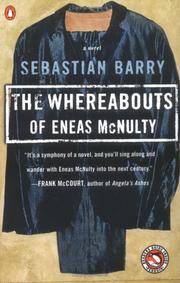
A man joins the Royal Irish Constabulary at the wrong moment and is exiled for it for the rest of his life.

Lilly Bere, eighty-nine years old and in America, writing in the days after her grandson's death.

The sequel to Days Without End, narrated by Winona, the Lakota girl the two men raised as their daughter.
The late novel
IntermediateFinish with the most recent and the darkest.
▸ Study plan for this stage
Pace: 3 weeks for Old God's Time, which is short but should not be read quickly. The narration drifts between present and memory without signalling the change, and readers who push through in two sittings routinely finish unsure what happened. About ten pages a day, with a note kept as you go, and expect
- Tom Kettle is a retired policeman in a rented annexe by the sea, and the novel opens as a quiet book about an old man's routine. It is not one.
- The case that two younger detectives bring him concerns clerical abuse, and the novel's subject is what institutional abuse does across a whole life rather than at the moment it happens.
- The narration is unreliable in a way the earlier books are not. Roseanne misremembers; Tom Kettle's mind reorganises. The disorientation is not a flaw in the prose, it is the condition being described.
- Time collapses on the page — a paragraph beginning in the present ends decades earlier without a break. Barry has been building toward this technique across the whole cycle and here it is the entire structure.
- This is the hardest thing he has written, both formally and in subject, and reading it last is not an accident of chronology. It requires you to already trust the voice.
- Set against The Secret Scripture, the pairing is exact: both are about an Irish institution that harmed a person and then documented the harm as care. Roseanne was on the receiving end of the paperwork; Tom Kettle spent a career producing it.
- At what point did you realise the narration could not be taken at face value, and what specifically gave it away?
- What did the police force do, or fail to do, about the case in Tom's past? State it as plainly as you can, then check whether the novel actually supports your version.
- Barry writes clerical abuse without dramatising it. What does the restraint achieve that a scene would not?
- Compare Tom Kettle's relation to his own memory with Roseanne McNulty's. Which of them is the novel more sceptical about?
- Having read the whole cycle, what does Barry think Ireland does with the people it has damaged?
- Keep a running timeline as you read, marking each shift out of the present. When it stops being possible to keep, note the page — that is the point the book takes over.
- Reread the opening chapter after finishing. Almost everything is already there, stated and unnoticed, and confirming that is the best defence against feeling cheated.
- Set the closing pages of Old God's Time beside the closing pages of The Secret Scripture and write a paragraph on how differently Barry handles an old person's reckoning fifteen years apart.
- Go back to the family sheet you have built across the path and decide where Tom Kettle belongs on it, or whether he belongs on it at all. Arguing that question with yourself is the last thing this reading order asks of you.
Next up: This is the end of the path — you have read the Dunnes and the McNultys across a century and in the order the family lived it rather than the order Barry published it.

A retired policeman is asked to look again at an old case involving clerical abuse. Slow and disorienting by design, and the hardest thing he has written.