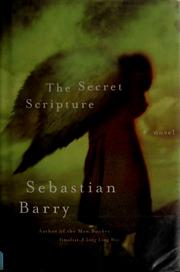
Start with Days Without End. The book people usually name first is The secret scripture, which won the Costa Book of the Year and was shortlisted for the Booker, and it is a fine novel — but it is also the one with the most contested ending, and it asks you to care about a family you have not met yet. Days Without End asks nothing. It opens in 1850s America with a famine emigrant named Thomas McNulty, moves at speed through the Indian wars and the Civil War, and carries a first-person voice so distinctive that readers who find Barry's lyricism too rich elsewhere tend to stay with this one to the end.
The second thing to know is that Barry's novels are not a series, and a reading order here is about which door to walk through rather than about spoilers. Almost every book takes a member of his own extended family — the Dunnes on his mother's side, the McNultys on his father's — and hands them a novel of their own. Characters recur, generations overlap, and a walk-on figure in one book narrates another. But there is no plot running between them and no numbers on the spines. You can genuinely read them in any order.
The one real sequence
A thousand moons is the exception: it is a direct sequel, narrated by Winona, the Lakota girl Thomas McNulty and John Cole take in, and it is set on the Tennessee farm where the first book leaves them. Read it second or not at all. It assumes you know what happened and does not recap.
The McNulty books
The whereabouts of Eneas McNulty was the first of the family novels, published in 1998, and it sets the pattern: a young man joins the Royal Irish Constabulary at the wrong moment, is condemned by the IRA, and spends the rest of his life circling home without being able to land. It is the most wandering of the books and the one that most rewards patience.
The secret scripture belongs to the same family — Roseanne McNulty, approaching a hundred, writing a hidden account of her life in a Sligo mental hospital while her psychiatrist reads the official file that contradicts it. It is the most widely read Barry and worth going in forewarned: the ending turns on a coincidence that a lot of readers find one too many, and knowing that in advance seems to help rather than spoil. The Temporary Gentleman, narrated by Eneas's brother Jack, sits here too but is not in our catalogue.
The Dunne books
A long long way follows Willie Dunne, eighteen, into the trenches of the First World War and then home on leave into the Easter Rising, caught between two loyalties that will not hold together. It was shortlisted for the Booker in 2005 and is the most conventionally gripping of the Dunne novels.
On Canaan's Side gives the same family its other voice: Lilly Bere, Willie's sister, eighty-nine years old on Long Island, telling her life across the seventeen days after her grandson's death. Annie Dunne, about another sister, is also missing from our catalogue; it is the quietest book he has written and the least essential.
Old God's Time, and an honest warning
Old God's Time stands slightly apart from the families. A retired Garda detective, nine months into retirement in a lean-to by the sea, is visited by two younger officers about an old case. The novel is about clerical child abuse and its long aftermath, handled directly rather than at a distance, and it is his bleakest book by a distance. It is a bad first Barry and a very good fifth one.
Where to stop
One book: Days Without End. Three: add A long long way and The secret scripture, which between them cover both families and both centuries. Everything after that is for readers who have decided they want the whole chronicle, and at that point the order stops mattering at all. If you want to see how these fit alongside other Irish novelists, browse the wider catalogue.
Follow the full ordered path here: Sebastian Barry Reading Order: The Dunne and McNulty Families, in Sequence.