Scott Westerfeld books in order: where to start with Uglies
Westerfeld's young-adult work splits into three self-contained blocks that share nothing but a sensibility: the Uglies dystopia, the Leviathan steampunk trilogy, and a set of contemporary and horror novels for older readers. This path reads Uglies straight through, settles where Extras belongs, then takes Leviathan as a complete second trilogy, and finishes with the standalones that suit teenagers rather than middle-graders.
The Uglies Trilogy, Straight Through
BeginnerRead the three books that make one continuous story, in the only order that works. ORDER CHOSEN: publication order, which here is also strict internal chronology — Tally's story is continuous and each book opens where the last one closed.
▸ Study plan for this stage
Pace: Two to three weeks for 1,191 pages — Uglies 432, Pretties 377, Specials 382 — and they should be read consecutively with as little gap as you can manage, because each opens where the last one closed and the emotional continuity is doing real work. Uglies is the longest and the slowest to start; the
- The premise: a compulsory operation at sixteen that makes everyone beautiful, and what else the surgery does
- Voice as a plot instrument — Pretties' altered diction is evidence about Tally's mind, not a stylistic slip
- The dystopia's actual argument: conformity enforced through desire rather than through force
- Tally as a protagonist who repeatedly changes sides, and how each book resets her allegiance
- The Specials as the third state of the same body, completing the physical-transformation logic the first book sets up
- Why the trilogy is designed to end at Specials and what a closed arc gives a series
- Name the exact point in Uglies where Tally learns what the operation really does, and count how many pages the book spends before that reveal.
- Pretties changes how Tally narrates. List five specific features of the new voice and say what each one tells you about her cognition.
- Tally switches sides at least three times across the trilogy. In each case, what actually changes — her information, her body, or her loyalties?
- The city controls its population without visible violence for most of the first book. What are the mechanisms, and which of them are recognisable outside the novel?
- Specials resolves the trilogy. Which of the questions raised in Uglies does it answer, and which does it leave alone deliberately?
- Copy out one paragraph of Tally's narration from Uglies and one from Pretties describing a comparable scene, and mark the differences in word choice — the change is measurable rather than impressionistic.
- Keep a one-line note per chapter in Uglies recording which side Tally believes she is on; the resulting list is the plot in its simplest form.
- Before starting Specials, write down what you expect the third body-state to cost her, then check the prediction against the book.
- List the rules of the city as the trilogy states them, and mark which ones are stated by a character with an interest in your believing them.
Next up: With Tally's arc closed, the next stage settles the question every reader of this series asks — what to do with the fourth book, which is a coda rather than a sequel.
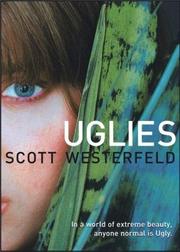
The starting point and the premise the whole series runs on: at sixteen everyone gets the operation that makes them beautiful, and Tally discovers what else it does. Begin here — nothing about the later books makes sense without it.

Second, and it picks up immediately after the first book ends. The narrative voice changes to match Tally's altered state, which is the trilogy's cleverest formal move and is invisible if you skip ahead.

Third, and the conclusion of Tally's arc. The trilogy was designed to end here — it resolves the questions the first two books raise, so treat it as the finishing line rather than the midpoint.
Extras, and Where It Fits
BeginnerUnderstand why the fourth Uglies book is separate rather than a sequel, and read it as the coda it was written to be.
▸ Study plan for this stage
Pace: A weekend, or four or five evenings for 425 pages. There is only one book in this stage and the whole point is when you read it, not how fast: after Specials, never before or instead of it, because it assumes you know how Tally's story ended and it is a commentary on that world rather than a continu
- A coda versus a sequel: what changes when a fourth book has a new protagonist and a settled world
- The reputation economy — social standing as a numeric, public, tradeable quantity — as the successor idea to compulsory beauty
- Why a new narrator in the same world is a stress test of how well the world was built
- The Japanese setting as a deliberate move away from the trilogy's unnamed American city
- What Extras assumes you already know, and how a reader would misread it cold
- Reading order versus publication order when a series is extended after its ending
- Extras was written three years after the trilogy ended. What in the book is visibly a response to how readers received Specials?
- The reputation economy replaces the beauty operation as the controlling mechanism. Which is the more convincing dystopia, and why?
- Aya is not Tally. What does the world look like from a narrator with no stake in the trilogy's events?
- If you had read Extras first, which specific plot points would have been spoiled and which would simply have been meaningless?
- Does this book improve the trilogy, extend it, or dilute it? Argue from a scene.
- Before reading, write one paragraph predicting what a post-Specials society would run on; compare it with the reputation economy the book actually builds.
- Track every reference in Extras to the events of the trilogy and mark whether each is a spoiler, an explanation, or an assumption — the proportions tell you exactly who the book was written for.
- Compare Aya's first three chapters with Tally's first three in Uglies and note how differently each narrator is introduced to her own world's rules.
Next up: The Uglies material is now complete; the next stage starts an entirely separate trilogy that shares nothing with it but the author's sensibility.

Added three years after Specials, set in Japan with a new narrator and a reputation economy instead of a beauty one. Read it only after finishing the trilogy: it assumes you know how Tally's story ended, and it is a commentary on that world rather than a continuation of it. Westerfeld's later Impostors quartet returns to the same setting, but its volumes do not resolve reliably in our catalogue, so they are not on this path.
The Leviathan Trilogy
BeginnerRead the alternate-history First World War trilogy as a complete second series — Darwinist fabricated beasts against Clanker walking machines — in publication order, which is also its chronology.
▸ Study plan for this stage
Pace: Three to four weeks for 1,505 pages — Leviathan 444, Behemoth 485, Goliath 576, so each volume is longer than the last and Goliath is the biggest book in the first three stages. Read in publication order, which is also the chronology. Do not read these as e-text if you can avoid it: Keith Thompson's
- The Darwinist and Clanker split: fabricated living machines against mechanical walkers, as two whole industrial philosophies rather than two armies
- Alternate history that diverges from a real 1914 — knowing where the real events sit is what makes the divergences legible
- Illustration as part of the text, not ornament
- The two-protagonist structure and how the books alternate between them before converging
- Istanbul in Behemoth as the point where the alternate history stops being scene-setting and starts rewriting events
- Tesla in Goliath as a real historical figure recruited into an invented plot, and what that costs in plausibility
- How this trilogy's ending compares with Specials — both were built to close
- State the Darwinist and Clanker technologies in one sentence each. Which side does the trilogy sympathise with, and where is the evidence?
- Which real 1914 events survive intact in Leviathan, and which are the first to change?
- Behemoth brings the Ottoman Empire in. What does the trilogy gain from a setting that is neither Darwinist nor Clanker?
- Pick three illustrations and say what each one tells you that the surrounding prose does not.
- Goliath introduces Tesla. Does a real inventor strengthen the alternate history or strain it?
- Read a short factual account of the July Crisis and the outbreak of war in 1914 before starting, then mark in Leviathan the first page where the novel's history and the real one part company.
- For each of the three books, list the fabricated beasts introduced and what each one replaces mechanically; the pattern is the Darwinist argument in concrete form.
- Study the illustration accompanying a machine's first appearance, then read the passage describing it, and note which details you got only from the picture.
- Chart the alternating point-of-view chapters across Leviathan and find the exact chapter where the two protagonists' storylines merge.
Next up: Two complete trilogies in, the next stage leaves series-building behind for the standalones and short series, which are pitched older and contain his sharpest writing about how teenagers actually talk.
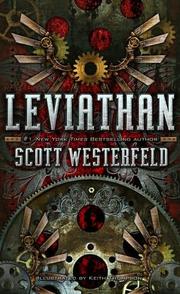
A 1914 where Britain engineers living airships and Austria builds walking war machines. Start the second trilogy here: it introduces both protagonists and the alternate-history rules, and Keith Thompson's illustrations are part of the design rather than decoration.
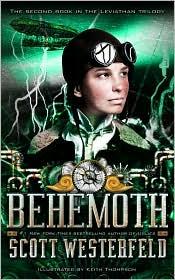
Second, moving the story to Istanbul and to the Ottoman entry into the war. It is where the alternate history stops being scene-setting and starts changing real events.

Third and final. It brings in Tesla and closes both character arcs; read it last for the same reason as Specials — the trilogy was built to end here.
The Contemporary and Horror Novels
IntermediatePick up the standalones and the shorter series, which are pitched older than Uglies and are where Westerfeld does his sharpest writing about how teenagers actually talk and think.
▸ Study plan for this stage
Pace: Three weeks for 1,151 pages across four books — So Yesterday 233, Peeps 312, The Last Days 287, The Secret Hour 319 — and they are noticeably shorter than anything in the last two stages, so this reads faster than its position suggests. The one fixed constraint is that The Last Days must follow Peep
- Cool-hunting in So Yesterday: trend propagation as an actual industrial process, and the direct line from it to the reputation economy of Extras
- Alternating factual and fictional chapters in Peeps, and what the real parasitology does to the vampire premise
- Companion novel versus sequel — The Last Days shares a world and a crisis with Peeps but not a protagonist
- The twenty-fifth hour in The Secret Hour as a closed-world premise, and the difference between a premise with rules and a premise with atmosphere
- Voice: these are the books where Westerfeld writes contemporary teenage speech rather than a constructed dialect
- Why these are pitched older than Uglies despite being shorter
- So Yesterday describes how a trend moves from innovator to mainstream. Restate the chain in your own words and test it against something you have watched happen.
- Peeps interleaves real parasitology with its plot. Does the science strengthen the horror or defuse it, and at which chapter did you decide?
- The Last Days assumes everything Peeps explained. Which specific pieces of knowledge would a reader arriving cold be missing?
- The Secret Hour builds a hard-ruled magic system. List the rules of the twenty-fifth hour as the book gives them and find the first place a rule is bent.
- Compare the dialogue in So Yesterday with the dialogue in Uglies. What is Westerfeld free to do here that the dystopian setting prevented?
- Read only the factual parasite chapters of Peeps in one sitting, then only the story chapters; the book is deliberately built so that both sequences hold together, and reading them apart shows how the argument is constructed.
- Diagram the trend-propagation chain from So Yesterday on one page and label each stage with an example from the novel.
- After The Last Days, list what it adds to the Peeps world that Peeps itself could not have covered from its own narrator's position.
- Write the rules of the twenty-fifth hour as a numbered list while reading The Secret Hour, and mark which are stated outright and which you inferred.
Next up: The last stage takes the two books aimed squarely at older teenagers and adults, where Westerfeld is not building a series premise at all.
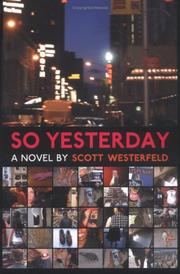
A cool-hunter for a shoe company and a missing-persons plot, written before Uglies. The best introduction to his non-genre voice, and the book that most obviously feeds the reputation economy of Extras.
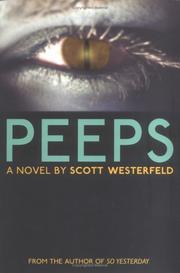
Vampirism as a parasitic disease, with alternating chapters of genuine parasitology between the story chapters. Notably nastier and more adult than Uglies — read it here rather than before.

The direct companion to Peeps, following a band in a New York collapsing from the same infection. Read straight after Peeps, which supplies all the biology it does not stop to explain.
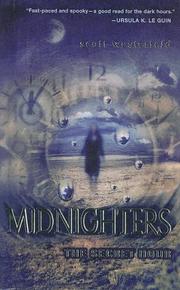
The first Midnighters book — a Oklahoma town with a twenty-fifth hour that only five teenagers can enter. Included as the entry point to that trilogy; the bare series title resolves only to a collected record, so this is the volume to search for.
For Older Readers
IntermediateFinish with the two later books aimed squarely at teenagers and adults, and see what Westerfeld does when he is not building a series premise.
▸ Study plan for this stage
Pace: Three weeks for 1,104 pages. Afterworlds is 608 pages, the longest book on the entire path, but it is effectively two interleaved novels of roughly equal length, so the practical unit is a chapter pair rather than a section — read one chapter of each strand at a sitting and the alternation stays leg
- Two novels in one volume: a debut novelist's year in New York publishing, interleaved with the novel she wrote
- What the alternation lets Westerfeld say about writing that neither strand could say alone
- The publishing industry as depicted from the inside — advances, edits, tours, and what a first novel actually involves
- Six-way point of view in Zeroes and the cost in intimacy that comes with it
- Powers that only function on crowds as a premise about collective behaviour rather than individual heroism
- Co-authorship with Margo Lanagan and Deborah Biancotti, and how a collaborative texture differs from the single-author books before it
- Afterworlds asks you to read a novel and its author's life simultaneously. Which strand did you find yourself skipping toward, and what does that say about the design?
- How accurate does the publishing strand feel, and which details could only have come from having lived it?
- The inner novel is deliberately a competent first novel rather than a great one. Where can you see Westerfeld holding it below his own level?
- Zeroes gives powers that require a crowd. What does that constraint rule out, and how does it change what a superpowered teenager can do?
- Can you detect the three authors in Zeroes? Point to a passage and say why.
- Read Afterworlds' two strands separately for one hundred pages each, then return to the alternating order; the pairing effects are only visible once you know what they would be without each other.
- Mark every place in Afterworlds where the outer novel's events change something in the inner one — that correspondence is the book's actual argument about writing.
- For Zeroes, track which of the six point-of-view characters gets the most chapters and whether that matches whose story it turns out to be.
- Write a one-paragraph reading recommendation covering all five stages: which of the three blocks — Uglies, Leviathan, or the older standalones — you would hand to a specific reader, and why.
Next up: This is the end of the path: two complete trilogies, a coda, and the older standalones — from here the natural continuations are the rest of the Midnighters trilogy after The Secret Hour and the remaining Zeroes books, both of which start from volumes read here.

Two interleaved novels: a teenager selling her first book in New York, and the paranormal novel she wrote. The most technically ambitious thing he has written and the best answer to anyone who thinks Uglies is all he does.

Co-written with Margo Lanagan and Deborah Biancotti, about six teenagers with powers that only work on crowds. Last because the collaboration gives it a different texture from everything else here, and it is a fair test of whether you want the rest of that trilogy.