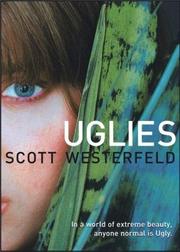
Start with Uglies (432 pages, 2005) and read the trilogy straight through. The premise carries everything: at sixteen everyone in Tally's city receives the operation that makes them beautiful, and Tally finds out what else the operation does. Publication order is also strict internal chronology here, and each book opens exactly where the previous one closed, so there is nothing to decide.
The one thing worth deciding is where Extras (425 pages, 2007) goes, and the answer is last of the four and not as a fourth instalment. It arrived three years after the trilogy ended, moves to Japan with a new narrator, and swaps the beauty economy for a reputation economy. It assumes you know how Tally's story finished and it comments on that world rather than continuing it. Read the trilogy as a trilogy, then read Extras as a coda if you want more of the setting.
The Uglies trilogy, straight through
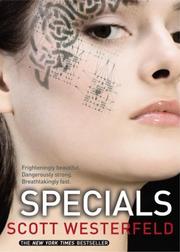
Uglies first. Pretties (377 pages, 2005) picks up immediately, and its narrative voice changes to match Tally's altered state — the trilogy's cleverest formal move, and completely invisible if you jump ahead. Specials (382 pages, 2006) closes her arc. The trilogy was designed to end there, so treat it as a finishing line rather than a midpoint.
Westerfeld's later Impostors quartet returns to the same world, but those volumes do not resolve reliably in our catalogue and are not on this path. That is a gap in what we can link, not a judgement on the books.
Leviathan is a separate trilogy
Leviathan (444 pages, 2009) shares nothing with Uglies except a sensibility, so you can read it before, after or instead. It is an alternate 1914 in which Britain engineers living airships from fabricated beasts and Austria builds walking war machines, and Keith Thompson's illustrations are part of the design rather than decoration. Behemoth (485 pages, 2010) moves to Istanbul and the Ottoman entry into the war, and is where the alternate history stops setting the scene and starts changing events. Goliath (576 pages, 2011) brings in Tesla and closes both character arcs. Publication order again equals chronology; again the trilogy was built to end where it ends.
The books pitched older
This is the part of Westerfeld's work readers miss, and it is where the writing about how teenagers actually talk is sharpest.
So Yesterday (233 pages, 2004) follows a cool-hunter for a shoe company into a missing-persons plot. It predates Uglies and is the clearest introduction to his non-genre voice; it also obviously feeds the reputation economy of Extras.
Peeps (312 pages, 2005) treats vampirism as a parasitic disease and alternates story chapters with chapters of real parasitology. It is noticeably nastier and more adult than Uglies, which is why it belongs here rather than earlier. The Last Days (287 pages, 2006) is its direct companion, following a band in a New York collapsing from the same infection, and it explains none of the biology because Peeps already did — read them back to back.
The Secret Hour (319 pages, 2004) opens the Midnighters trilogy: an Oklahoma town with a twenty-fifth hour that only five teenagers can enter. Search for it by this title rather than by the series name, which resolves only to a collected record. The two sequels are not in our catalogue.
For older readers still
Afterworlds (608 pages) interleaves two novels — a teenager selling her first book in New York, and the paranormal novel she wrote — and is the most technically ambitious thing he has done. Ignore the publication year our catalogue shows for it; the record carries an impossible date of 1887, which is a metadata error rather than anything about the book, and it is a recent novel.
Zeroes (496 pages, 2015) is co-written with Margo Lanagan and Deborah Biancotti and follows six teenagers whose powers only work on crowds. The collaboration gives it a different texture from everything else here, and it is a fair test of whether you want the rest of that trilogy — whose later volumes, again, are not in our catalogue.
Where to stop
If you came for the dystopia, stop after Specials. If you want the best of him rather than the most famous, read the trilogy and then go straight to Peeps and Afterworlds. The ordered list is at /paths/pt_ai_scott-westerfeld.