Sandor Marai Reading Order: Where to Start with the Rediscovered Hungarian Master
Marai was one of the most successful writers in Hungary in the 1930s and 40s, went into exile when the Communists took power, and was so completely erased at home that when Embers became an international bestseller in 2001 he had already been dead for twelve years. Because the translations arrived in whatever order publishers could license them, English publication order tells you nothing. This path uses the one book everybody starts with as a doorway, then reads the novels by what they demand of you, and ends with the two memoirs of the country he lost.
Start With Embers, and Know Why
BeginnerMeet Marai in the book that revived him, and learn the shape he returns to again and again: a long-postponed conversation in which one man does nearly all the talking.
▸ Study plan for this stage
Pace: One to two weeks. Embers is short — around 210 pages — and can be read in two or three sittings, which is close to how it should be read, since the whole novel is a single evening. Read it in as few sessions as you can manage; the accumulating pressure of one man talking is the book's entire method
- The situation: two old friends meet after forty-one years for one dinner and one enormous accusation, in a house kept ready for exactly this evening
- The monologue as form. One man does nearly all the talking and the other says almost nothing, so the reader is placed in the silent friend's position and made to judge
- Why this book first and not because it is the best. It is the purest — one room, two men, no subplot — and everything else in the path turns out to be a variation on it
- The Habsburg world dying offstage. The vanished empire is never the subject and is present on every page as the thing that made these two men possible
- A question the novel declines to answer. The accusation is made at enormous length and what actually happened is left where the reader must decide, which is a permanent feature of this writer
- Self-deception rather than nostalgia. The general has had forty-one years to construct an account of his life, and the novel is interested in the construction more than in the events
- How this book came to English readers. It became an international bestseller in 2001, twelve years after its author's death, following a near-total erasure at home — which is why English publication order tells you nothing about the work
- What is the general actually accusing his friend of, and how long does the novel take to say it plainly?
- Konrad barely speaks. What does his silence do to the reader's position?
- Does the novel tell you what happened on the hunt? Say what you believe and what in the text supports it.
- What has the general been doing for forty-one years, and what has that done to his account of himself?
- The empire is never the subject. Where is it nevertheless present, and what does it explain about both men?
- Note the page on which the general begins speaking and the page on which he stops. Write 100 words on what the proportion tells you about the book's design.
- Write 200 words summarising the friendship as Konrad might have described it, using only facts the general supplies. The gap between the two accounts is the novel.
- Mark every place where the general contradicts himself or revises something he said earlier. There are more than a first reading suggests.
- Write down, in one sentence, what you think the novel is about. Keep it — you will test it against three more novels.
Next up: You now know the shape this writer returns to, which means the next three books can be read as three different answers to the same problem rather than as three unrelated novels.

Two old friends meet after forty-one years for a single dinner and one enormous accusation. It is the right first book not because it is the best but because it is the purest: one room, two men, and the Habsburg world dying offstage. Everything else you read will be a variation on this.
The Core Run
IntermediateRead the three novels that show Marai's range beyond the chamber piece, and see him do the same interrogation of a life from three different angles: historical costume, a single afternoon, and three contradictory testimonies.
▸ Study plan for this stage
Pace: Seven to nine weeks. Casanova in Bolzano is around 300 pages; Esther's inheritance is short at around 150 and reads in a couple of sittings; Portraits of a marriage is the longest at around 380 pages and should be given three to four weeks. One practical warning before you buy: Casanova in Bolzano w
- Casanova in Bolzano as Embers in costume: an escaped seducer confronted by the husband of the woman he ruined, in a long confrontation that is the same scene relocated to the eighteenth century
- The point of the repetition. Reading the two adjacently confirms that the confrontation, and not the setting, is this writer's actual subject
- The husband's speech as the centre of gravity, which places the moral weight on the wronged party rather than on the legendary figure the book is named for
- Esther's inheritance as the most ruthless of the three: a con man returns to the woman he abandoned twenty years earlier, and she lets him take everything
- Complicity as the subject. Esther is not deceived so much as willing, which is why the book is about self-deception rather than about fraud
- Compression. Esther's inheritance does in 150 pages what Embers takes 210 to do, and reading it after the longer books shows how little is actually required
- Portraits of a marriage narrating one marriage three times from three people who agree about almost nothing, which is the most ambitious of the translated novels
- The formal step this represents: three monologues set against each other rather than one monologue with a silent listener, so the judging the reader was doing privately in Embers now has to be done in the open
- What does the husband in Casanova in Bolzano want, and is it the same thing the general in Embers wants?
- Why is the famous seducer the least interesting person in the novel named after him?
- Esther knows what is happening to her. Why does she let it happen? Answer in her terms.
- Which of the three narrators in Portraits of a marriage do you believe most, and what made you decide?
- Where do the three accounts in Portraits of a marriage agree? The overlap is small and it is the closest thing the novel offers to fact.
- Having read four novels, revise the one-sentence answer you wrote at the end of the previous stage. What changed?
- Write 200 words on the parallel between Casanova in Bolzano and Embers, naming the specific structural elements they share.
- For Esther's inheritance, list what Esther loses in order across the novel. Written out, the sequence is close to a plan she is following.
- Take one event in Portraits of a marriage described by more than one narrator and set the versions side by side in a table. Do not reconcile them.
- Write a fourth monologue for Portraits of a marriage from a character who does not get one. What you have to invent shows you what the novel deliberately withheld.
- Rank the four novels so far by how much you liked them and separately by how good you think they are. The two lists will differ, and the difference is worth a paragraph.
Next up: You have the mature novels; the last stage goes back to the writer before the style existed and forward into the exile that ended the career, and both explain what you have been reading.
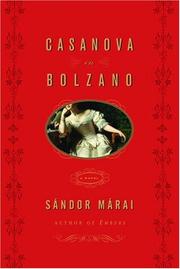
Casanova escapes the Venetian prison and is confronted by the husband of the woman he ruined. Read it second because it is Embers in fancy dress and confirms that the confrontation, not the setting, is the subject. Published in Britain as Conversations in Bolzano, which is the same novel in a different translation, so do not buy both.

A con man returns to the woman he abandoned twenty years earlier, and she lets him take everything. Short, ruthless, and the best demonstration of Marai's real subject, which is not nostalgia but self-deception.
The same marriage narrated three times by three people who do not agree about any of it. The most ambitious novel in translation and the natural fourth book, because it takes the single-voice monologue you have now read three times and sets the voices against each other.
Backwards to the Start, Forward Into Exile
IntermediateGo to the early novel and the two memoirs, and understand the historical break that made Marai's whole English-language career posthumous.
▸ Study plan for this stage
Pace: Eight to ten weeks. The Rebels is around 280 pages and reads more loosely than the mature novels. Memoir of Hungary, 1944-1948 runs around 430 pages and is the densest historical reading in the path. The exile memoir catalogued as Land, land!... is around 350 pages and should be read last and slowly
- The Rebels as an early novel — four schoolboys in 1918 inventing an elaborate private rebellion during the last summer of the war — looser and less controlled than anything that follows
- Reading juvenile work as evidence rather than as introduction. Placed at the end, The Rebels shows what the mature style added; placed first, it would simply look like a weaker book
- The private world the boys build, which is recognisably the same interest in constructed accounts of a life that drives all four novels, before the writer had a form for it
- Memoir of Hungary covering the years between the German occupation and the departure, written from exile — the factual account of how the world in Embers actually ended
- Elegy becoming reportage. The novels' mood of a vanished order reads very differently once you have the documented account of its destruction sitting behind it
- Land, land!... as the exile memoir proper: a writer leaving the only readership he had, in a language almost nobody outside Hungary reads
- The language trap as the central fact of the career. A Hungarian novelist in exile has no audience anywhere, which is the mechanism of the forty-year silence this whole path is a recovery from
- Erasure and rediscovery. He was among the most successful writers in Hungary before the Communist years, was removed from the record at home, and returned to print internationally only after his death — which is why the order of the English translations is close to random
- What are the boys in The Rebels rebelling against, and what have they built instead?
- Which elements of the mature novels are visible in The Rebels, and which are conspicuously absent?
- What does Memoir of Hungary say happened between 1944 and 1948 that made staying impossible?
- How does reading the memoir change your reading of Embers? Be specific about which passages.
- What did exile actually cost him, on the account in Land, land!...? Distinguish the material losses from the one that mattered.
- Having finished the path, revise your one-sentence answer a final time. Compare all three versions.
- Write 200 words comparing a passage of The Rebels with a passage of Esther's inheritance, focusing on sentence construction rather than on subject.
- Build a short timeline of 1944 to 1948 from the memoir, then mark on it where each of the novels was written or set. The two together are the career.
- After Land, land!..., reread the first ten pages of Embers and write a paragraph on what has changed.
- Write 300 words on what it means for a novelist's entire international reputation to be posthumous, drawing on the memoirs rather than on general reflection.
- Draw up your own reading order for a friend who has read only Embers, and justify every departure from the one you have just followed.
Next up: This is the end of the path — the novel that revived him, the core run, the early work and the two memoirs of the country he lost — and the natural next step is a reread of Embers, which stops being a chamber piece about two men once you know exactly what was ending outside the room.

Four schoolboys in 1918 spend the last summer of the war inventing an elaborate private rebellion. An early novel, looser than the others, and best read once you know the mature style it does not yet have.
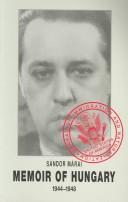
The years between the German occupation and his departure, written from exile. This is the factual account of how the world in Embers ended, and it makes the novels' elegiac register land as reportage rather than mood.

The exile memoir proper, and the last book to read: a man who wrote in a language almost nobody outside Hungary reads, walking away from the only readership he had. It explains the forty-year silence that this whole path is a recovery from. Catalogued as Land, land!...