Samuel R. Delany books in order: where to start
Almost everyone who bounces off Delany does it by opening Dhalgren first. This path is built to prevent that: the compact, dazzling early novels come first, so that by the time you reach the 800-page one you already know what Delany does with sentences and why the difficulty is the content rather than an obstacle to it. After Dhalgren the path moves through the Neveryon sword-and-sorcery cycle and the late science fiction, then finishes with Delany writing directly about his own life and craft.
The compact early novels
BeginnerRead the short, fast books Delany wrote in his early twenties and see the linguistic obsession arrive fully formed.
▸ Study plan for this stage
Pace: 435 pages for all three — Babel-17 193, The Einstein intersection 155, Empire star 87 — which is less than half of Dhalgren on its own and the entire reason this stage exists. Two weeks, unhurried. Read them in the order given and do not rush Empire star: at 87 pages it is designed to be read twice,
- Language as the thing that builds the perceiver, stated most plainly in Babel-17 and assumed everywhere after
- Myth re-enacted by beings who do not understand it, which is The Einstein intersection's structure as well as its plot
- Empire star's looping form, where the narrative's knowledge of itself is the subject
- Delany's poets, singers and criminals as the recurring professions of people who work on language
- Difficulty as content rather than obstacle — the first idea this path is built to install
- How much a novel can carry at 155 pages, and what that implies about the 879-page one waiting at stage three
- In Babel-17, what does the language actually do to the people who learn it, and how does Delany dramatise a change in thought?
- Which human myths is The Einstein intersection re-enacting, and what does the re-enactment get wrong on purpose?
- What changes on a second reading of Empire star, and what does that tell you about how Delany builds information?
- What do these three share that a reader could use as a key to the later work?
- Why start with Babel-17 rather than the shorter Empire star?
- Read Empire star twice, back to back, and write down five things the first reading could not have known. That list is the method the rest of the path uses.
- In Babel-17, mark every passage where a character's perception shifts and check whether the prose style shifts with it.
- Keep a note of every named artist, poet or performer across the three books; the profession is not incidental and the list becomes useful in Dhalgren.
- Copy out one sentence from The Einstein intersection you had to read twice, and work out exactly which grammatical choice made it hard.
Next up: You can now read Delany's sentences at speed, which is the prerequisite for watching him take a conventional form apart in the space operas.

Start here. A poet-linguist decodes a language that is also a weapon — Delany's core idea, that language builds the perceiver, in its clearest and shortest form. Under 200 pages and it won the Nebula.
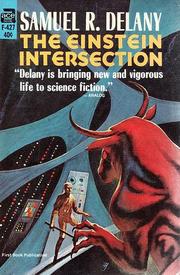
Aliens re-enacting human myth in the ruins we left. Denser than Babel-17 and the first book where Delany's structural games are doing the emotional work.

A novella built as a Mobius strip, designed to be re-read the moment it ends. The best possible short demonstration of Delany's interest in how a narrative knows what it knows.
The last of the space opera
IntermediateRead the two books where Delany takes conventional science-fiction forms as far as they will go before he abandons them.
▸ Study plan for this stage
Pace: Two short novels, 368 pages — Nova 224 and The ballad of beta 2 at 144 — and a week to ten days. Nova is the most straightforwardly enjoyable book on this path and can be read fast; The ballad of beta 2 is slighter and is here as a demonstration rather than as a novel you will love, so half a week i
- The grail quest imported into space opera, with the Tarot as an explicit structuring device rather than decoration
- An economics of energy underneath the adventure, worked out well enough to constrain the plot
- The text as evidence: The ballad of beta 2 makes a scholar reconstruct meaning from a corrupted document, which is what Delany asks his readers to do
- Genre convention being used at full strength immediately before being abandoned
- Nova's crew as a working demonstration of Delany's interest in labour and craft
- How does Nova use the Tarot — as structure, as characterisation, or as a joke about determinism?
- What is the economic premise of Nova, and where does the plot depend on it holding?
- In The ballad of beta 2, what does the student get wrong, and how does Delany let the reader see it first?
- Why is Nova described as the last Delany novel that behaves? Name the conventions it keeps.
- What would Dhalgren look like to a reader who came to it straight from Nova, and what would they be missing?
- List the space-opera conventions Nova satisfies and mark which of them Dhalgren later refuses. Keep the list; you will use it in the next stage.
- Reconstruct the folk song in The ballad of beta 2 from the fragments as they appear, before the novel finishes doing it for you.
- Compare Nova's opening page with Babel-17's and describe how much more confident the later prose is, in specific terms.
- Write a paragraph predicting what a Delany novel four times the length of Nova would be like, then seal it until you finish stage three.
Next up: With the conventional forms mastered and exhausted, Dhalgren becomes a decision rather than a failure to plot.

A grail quest as interstellar space opera, with the Tarot and a working economics of energy underneath. The most purely entertaining Delany novel, and the last one that behaves.

An early short novel about a student reconstructing a folk song from a generation ship. Slight next to Nova, and the clearest statement of Delany's method: the text is the evidence.
Dhalgren
BeginnerTake on the long one, now that the earlier books have taught you how to read it.
▸ Study plan for this stage
Pace: One book, 879 pages, and the only stage on this path that is a single title — deliberately, because it needs the room. Two months is realistic; three is fine. Do not schedule it against a deadline. The novel begins and ends mid-sentence and loops, nothing is explained, and the standard advice is the
- The loop: the last sentence completes the first, so the book has no outside and no origin point
- Bellona as a city severed from the country around it, with time, geography and weather all unreliable
- Refusal of explanation as an argument about what novels owe their readers, not as obscurity for its own sake
- The Kid as a protagonist with no stable memory, name or authorship — including of the book you may be reading
- The notebook sections, where the text visibly comments on and corrupts itself
- Why 879 pages is the necessary length: the effect is cumulative and depends on duration
- How the earlier five books prepare you — every technique here appears in miniature in Empire star or The ballad of beta 2
- What does the loop structure do to the question of when the novel is set?
- Who wrote the notebook, and what evidence does the text offer for each possible answer?
- Which of Delany's earlier techniques appear here at full scale, and which are new?
- What is gained by leaving the catastrophe that isolated Bellona unexplained?
- Is the length necessary, or is that a defence of a book that resists editing? Argue from a specific section.
- Which parts of the novel did you resist, and did the resistance turn out to be about the book or about your expectations?
- Keep a reading journal, dated, with page numbers — Dhalgren is a book about unreliable records, and your own record of reading it becomes part of the experience.
- When you reach the end, read the first two pages again immediately and confirm the join for yourself rather than taking it on report.
- Take the list of conventions Nova satisfied and mark each one Dhalgren declines, with a page reference.
- Track one recurring image — the chains, the scorpions, the two moons — through the whole novel and see whether it ever stabilises.
- Open your sealed prediction from stage two and compare it with what you actually got.
Next up: Having read the book Delany's later work is always answering, the post-Dhalgren novels read as continuations of one argument rather than as unrelated departures.

The 800-page novel of Bellona, a city cut off from America, that begins and ends mid-sentence in a loop. Nothing is explained and that is the argument. Read it here, not first — Babel-17 and Nova are what make its refusals legible rather than merely frustrating.
After Dhalgren: Triton and Neveryon
BeginnerFollow Delany into the ambiguous heterotopia and into the sword-and-sorcery cycle he used as a theoretical laboratory.
▸ Study plan for this stage
Pace: The longest stage by total: 1,343 pages across four — Trouble on Triton 312, Tales of Nevèrÿon 264, Neveryóna 399, Stars in my pocket like grains of sand 368. That is more than Dhalgren, but split four ways and much easier going, so six to eight weeks at one book a fortnight. Read Trouble on Triton
- Trouble on Triton as an argument with Le Guin's The Dispossessed, and the meaning of its 'ambiguous heterotopia' subtitle
- A protagonist who cannot be satisfied by a society engineered to satisfy anyone, and why Delany makes him unlikeable
- Sword and sorcery repurposed as a theoretical laboratory for the invention of money, writing and slavery
- The Neveryon diacritics as a running joke about textual transmission and scholarly authority
- Stars in my pocket's information culture, its pronoun system, and what the unwritten sequel leaves suspended
- Appendices, framing documents and invented scholarship as load-bearing parts of the text rather than jokes appended to it
- What is ambiguous about the heterotopia of Trouble on Triton, and to whom?
- How does the Neveryon cycle use a fantasy setting to make an argument that a realist novel could not?
- What do the framing devices and appendices claim about who is telling these stories?
- In Stars in my pocket like grains of sand, what does the pronoun system change about how you read the characters?
- Does the missing sequel damage the book, or has it become part of what the book is?
- Which of these four is closest to Dhalgren in method, and which is furthest?
- Read The Dispossessed's opening chapter alongside Trouble on Triton's, if you have it to hand, and identify the specific claim Delany is contesting.
- Track the invention of money across Tales of Nevèrÿon story by story and write the sequence out as an argument in four steps.
- Note every appendix, epigraph and framing document across the four books and decide, for each, whether the novel works without it.
- In Stars in my pocket, mark the point at which the withheld sequel becomes structurally obvious, and note what you were expecting instead.
Next up: The fiction has now made its arguments implicitly across ten books; the nonfiction is where Delany states them outright.
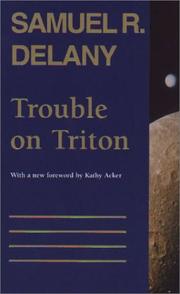
Published as Triton and now catalogued under the fuller title; subtitled An Ambiguous Heterotopia, and written directly against Le Guin's The Dispossessed. A society that can give its protagonist anything, and a protagonist who is impossible to satisfy.
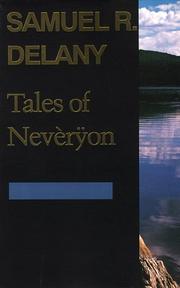
The first Neveryon book: sword and sorcery as an essay on the invention of money, writing and slavery. Note the diacritics in the series name, which are Delany's own joke about textual transmission.
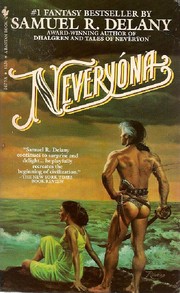
The second volume, a full novel rather than linked tales. Open Library also holds a later record under the unaccented spelling; this is the same work, so take one edition and do not buy both.
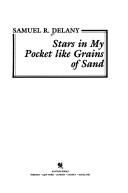
The late masterpiece and the most emotionally direct of the science fiction. Its promised sequel was never finished, which readers should know going in.
Delany on Delany
BeginnerFinish with the nonfiction, which is where the theory behind everything above is stated in the first person.
▸ Study plan for this stage
Pace: 1,054 pages of nonfiction across three — The motion of light in water 411, Times Square Red, Times Square Blue 221, About writing 422. Six weeks, and unlike the fiction these can genuinely be read in fragments: the memoir is episodic, Times Square Red is two essays, and About writing is letters and
- A memoir as the key to the fiction: the material conditions under which the early novels were actually written
- Contact versus networking — the distinction Times Square Red, Times Square Blue is built on and the policy argument that follows from it
- Delany writing as a participant and advocate rather than a neutral observer, in both the memoir and the essays
- The craft advice in About writing, and how directly it explains decisions the novels never explain
- Science fiction as a reading protocol rather than a subject matter, which is the theoretical claim underneath the whole career
- The gap between what a writer says he is doing and what the books do, tested here against the ten works of fiction above
- What in The motion of light in water changes how you read Babel-17 and The Einstein intersection?
- What is the difference between contact and networking as Delany defines it, and does the argument depend on the specific place?
- Where in About writing does Delany explain something you had already worked out from the fiction, and where does he contradict your reading?
- Is the memoir a reliable account? Delany raises the question himself — how does he handle it?
- Having read the nonfiction, would you now recommend a different starting novel than Babel-17?
- Take three passages from About writing and match each to a specific technique you noticed in Dhalgren or Stars in my pocket.
- Reread the first ten pages of Babel-17 immediately after the memoir and note what the biographical context adds and what it flattens.
- Summarise the contact-versus-networking argument in your own words in one paragraph, then test it against a place you know.
- Write the reading order you would now give a new Delany reader, and state explicitly where you would put Dhalgren and why.
Next up: This path covers thirteen books; the remaining fiction, criticism and the later Neveryon volumes are best chosen from here by which of the three modes — early compression, post-Dhalgren argument, or nonfiction — you want more of.
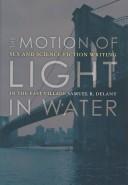
The memoir of the East Village in the 1960s: a Black, gay, dyslexic teenager writing science fiction and living a life the field had no vocabulary for. The single most useful book for understanding the novels.
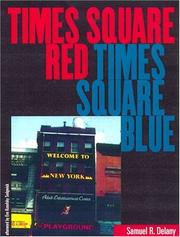
Two essays on the gentrification of Times Square and what was destroyed with it. Not science fiction at all, and the best short argument for Delany as a major American essayist.
Letters and essays on craft, and the natural last stop: Delany explaining, in plain terms, the decisions the fiction makes without explanation.