Ryu Murakami Reading Order: The Other Murakami, and Where to Start
Readers looking for Haruki Murakami find Ryu Murakami by accident and are unprepared for what they get: violence, sex and social disgust, delivered flatly. He is a major writer and not a gentle one. This path starts with the two short, controlled novels, then the debut that made him notorious, then the long books — with a plain warning attached, because several of these are genuinely extreme.
Start here: the controlled ones
BeginnerMeet the method at its tightest, where the horror is structural rather than decorative.
▸ Study plan for this stage
Pace: 2 weeks, one novel a week. In the Miso Soup is 209 pages and Piercing 192, so this is barely 400 pages — but do not read them back to back in a weekend. Give In the Miso Soup its own week, because the long central scene in the omiai bar is the point at which most readers decide whether they are cont
- The narration is flat on purpose. Kenji in In the Miso Soup describes an atrocity in the same register he uses for a menu or a train fare, and that refusal to modulate is the technique — the horror is in the levelness, not in the adjectives.
- Frank is a diagnostic instrument, not a villain to be solved. His monologues about American emptiness and Japanese emptiness are the argument of the book, and Kenji keeps half-agreeing with them.
- Kenji sells access to Japan to foreigners for a living. His job is the novel's thesis in miniature: intimacy priced by the hour, in a district built for exactly that.
- Piercing is built as a mechanism. Kawashima plans, Chiaki plans, and the chapters alternate between two people preparing for an encounter with mutually incompatible scripts — the suspense is structural, not withheld information.
- Both narrators were damaged as children and both books say so plainly rather than saving it as a revelation. Murakami is not writing mysteries about why people are like this.
- The endings deflate rather than climax. In the Miso Soup ends at a shrine at dawn and Piercing ends in something close to farce, and in both cases the anticlimax is doing the moral work.
- In the omiai bar scene, at what point does Kenji stop naming objects and start abstracting? What does Murakami gain by holding the plain inventory as long as he does?
- Frank says several things about Japan that Kenji cannot refute. Which one lands hardest, and why does giving the killer the good arguments make the book stronger rather than weaker?
- Piercing alternates between Kawashima and Chiaki. What does each of them believe is about to happen in that hotel room, and where do the two plans first touch?
- Both novels open with a man contemplating violence and both end without the catharsis the setup promises. What is being withheld, and is it withheld from the character or from you?
- Kenji is a guide and Kawashima is a new father. How do these two ordinary social roles carry the disgust the books are actually about?
- Read the omiai bar sequence in In the Miso Soup twice — once for what happens, once tracking only Kenji's verbs. Note how many are passive or observational while he is standing in the room.
- Mark every one of Frank's monologues in In the Miso Soup with a page number, then read only those passages in sequence. They form a short essay; decide whether Murakami endorses it.
- Read Piercing's Kawashima chapters straight through, skipping Chiaki's, then read Chiaki's alone. Compare that experience to the interleaved version and work out what the alternation adds.
- Keep a one-line note after each book on how the violence was framed — as spectacle, as consequence, or as tedium. You will use this list when you reach Coin Locker Babies and Audition, and it is the fairest test of whether the extremity is doing work.
Next up: Having seen the method at its most controlled, you can now read the notorious 1976 debut as an early, wilder version of the same flat gaze rather than as shock for its own sake.
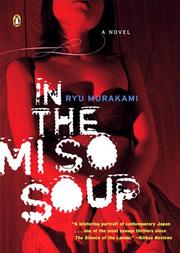
A Tokyo nightlife guide takes an American tourist through the sex districts and slowly realises what his client is. Short, controlled, and the best entry point. Contains extended graphic violence.
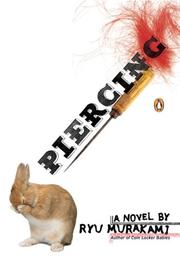
Two damaged people and a hotel room, told as a tightening mechanism. Even shorter, and the clearest demonstration that the violence is doing work rather than being enjoyed.
The debut
IntermediateRead the book that made him famous at twenty-four, and understand why it was a scandal.
▸ Study plan for this stage
Pace: 2 weeks. Almost Transparent Blue is only 128 pages but it has no plot to carry you, so read it in three or four short sittings rather than one — it exhausts on the sentence level. Sixty-Nine is 192 pages and goes down in two evenings; put it immediately after, because the pairing is the entire point
- Almost Transparent Blue is a sensory log, not a narrative. Scenes accrete and dissolve, the drugs and the sex and the American airbase are recorded at the same pitch as the weather, and nothing is arranged into consequence.
- The base is the second character. The proximity of American servicemen to Japanese teenagers is the whole social situation of the book, and Murakami never editorialises about it.
- It won the Akutagawa Prize in 1976 when he was twenty-four and sold enormously, which is the fact that makes it a document as much as a novel — it is the record of what a national literary establishment was willing to crown and appalled to have crowned.
- Sixty-Nine is warm, funny and affectionate, and it is written by the same man. It is set in 1969 in a naval-base town, and the schoolboy barricade and festival are staged to impress a girl rather than to change the world.
- Sixty-Nine is the proof that the bleakness elsewhere is a decision. Read it as evidence in an argument, not as light relief.
- Both books are autobiographical in setting — Fussa near Yokota in one, Sasebo in the other — and both are about Japanese teenagers living beside an American military presence. That is the same subject handled two ways, twelve years apart.
- Almost Transparent Blue has no plot. What holds it together instead, and does it hold?
- How is the American airbase used differently in Almost Transparent Blue and in Sixty-Nine? Which of the two is angrier about it?
- The blue fragment that gives the book its title arrives at the end. What has been made of it, and does it earn its position?
- Sixty-Nine is a comedy about revolt with no political content. Is that a criticism of the book, of the era, or of neither?
- If Sixty-Nine had been the debut, what would you now expect from the rest of his career?
- Read twenty consecutive pages of Almost Transparent Blue and list every sensory detail without interpreting any of it. That list is what the book is; decide whether an unarranged list can be a novel.
- Read Sixty-Nine's closing pages, where Murakami addresses the reader about how to live, straight after finishing Almost Transparent Blue. The tonal distance between them in one sitting is the most useful thing in this stage.
- Set the two teenage narrators side by side on one page — what each wants, what each fears, what each finds funny. They are roughly the same age in roughly the same kind of town.
- Go back to the two novels from stage one and ask which of them Almost Transparent Blue most resembles in method. The answer tells you what he kept from 1976 and what he learned to control.
Next up: You now have both extremes of the range, which is exactly what the long novels need from you — they run the flat gaze and the comic energy through the same book at full length.
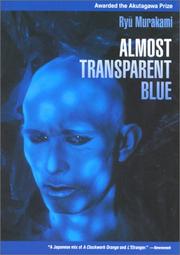
Drugs and sex among young Japanese near a US airbase. It won the Akutagawa Prize in 1976 and appalled a large part of the Japanese literary establishment. Plotless by design; read it as a document.
The outlier — a genuinely funny, affectionate comedy about a 1969 high-school rebellion, and proof that the bleakness is a choice rather than a limitation.
The long books
IntermediateTake on the ambitious novels, where the social argument is explicit.
▸ Study plan for this stage
Pace: 4 weeks. Coin Locker Babies is 393 pages and takes three of them at about twenty pages a day — it sprawls and the middle sags, so a steady daily pace beats sprint-and-stall. Popular Hits of the Showa Era is 192 pages and about a week, and reading it after Coin Locker Babies rather than before keeps
- Coin Locker Babies has an explicit social argument: two boys abandoned in station lockers as infants grow up owing Tokyo nothing, and the novel treats their revenge as legible rather than pathological.
- Kiku and Hashi split the book between them — the athlete and the singer, the body and the voice — and the structure keeps cutting between two lives that were the same life until they were found.
- The imagined toxic quarter of the city and the poison the boys hunt are science-fictional devices in a realist novel. Murakami does not apologise for the mix and it is the closest he gets to allegory.
- The lost mother is the engine of the plot and is never allowed to become a redemption. Anyone reading it as a search-for-origins story will be left holding nothing at the end, which is intended.
- Popular Hits of the Showa Era is a pure escalation machine: a group of aimless young men and a group of middle-aged divorced women trade reprisals until the weaponry becomes absurd, and each side is treated with exactly equal contempt and affection.
- The karaoke in Popular Hits is not decoration. The songs date the characters, mark the generational fault line the war is being fought across, and give the book its title and its joke.
- Coin Locker Babies gives Kiku and Hashi opposite escapes — sport and pop music. What does each escape cost, and which of the two does the novel think is worse?
- Where does the book stop being realist? Name the page or the scene, and say whether you accepted the shift.
- The novel is often called his best and it is also his baggiest. Which of those is the more accurate description of the middle third?
- In Popular Hits of the Showa Era, both sides escalate. Is the book satirising the young men, the women, or the reader who is enjoying it?
- Compare the violence in Popular Hits with the violence in Piercing. One is played for laughs and one is not — what changes technically to make that difference?
- Chart the alternation in Coin Locker Babies — one line per chapter, Kiku or Hashi — and see where the pattern breaks. The breaks are where the plot turns.
- Track the word for the poison every time it appears in Coin Locker Babies and note who is speaking. It shifts from rumour to substance to programme, and the shift is the plot.
- Look up the Showa-era songs named in Popular Hits as you meet them and listen to one. The generational gulf the novel is built on is inaudible otherwise.
- Reread the final fifty pages of Coin Locker Babies immediately after finishing them and decide whether the ending is an ending or a detonation. Write down your answer before reading anyone else's.
- Return to the framing note you kept in stage one on how each book frames its violence, and add these two. The list now spans comedy, mechanism and apocalypse from a single writer.
Next up: With the ambitious novels behind you, you can judge whether one more book at his narrowest and nastiest register is worth your time — which is the only honest way to approach the last stage.
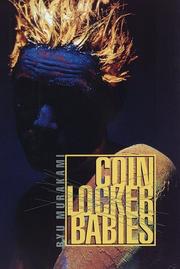
Two boys abandoned in station lockers grow up to take revenge on Tokyo. His most ambitious novel and the one most often called his best.
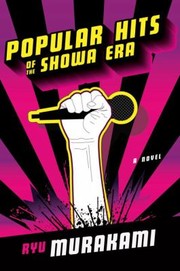
A gang of aimless young men and a group of middle-aged women escalate into open warfare. Absurd, funny and brutal in about equal measure.
The specialist end
IntermediateOne more, for readers who have found the register bearable.
▸ Study plan for this stage
Pace: 1 week. Audition is 193 pages and the first two thirds are quiet enough to read in two sittings; the last thirty pages are not, and are better read in daylight with something else planned afterwards. This stage is genuinely optional — if the earlier books have been a strain rather than a discovery,
- Audition is a slow book with a violent coda, and the proportion is the design. Most of it is a lonely widower and his well-meaning film-producer friend behaving plausibly.
- The fake audition premise is a satire of courtship before it is a horror premise: a man interviews women for the role of wife and the novel takes the metaphor at face value.
- Aoyama's decency is what makes the book work. He is not punished for cruelty; he is punished for a small, ordinary, socially sanctioned deception.
- The novel is far more famous through Takashi Miike's 1999 film than on its own, and the two are not the same object — the film front-loads dread that the prose withholds.
- Compared with In the Miso Soup, the horror here is domestic rather than civic. The critique has moved from the sex trade and the tourist economy indoors, into marriage.
- This is the narrow end of the range, not the summit. It is worth reading because it isolates one Murakami move at full strength, not because it is his best novel.
- Aoyama's deception is mild by any standard of the earlier books. Why does the novel treat it as sufficient cause?
- The last section changes register abruptly. Is that a failure of construction or the same anticlimactic instinct you saw in Piercing running in reverse?
- How does Yamasaki Asami's account of herself in the interviews read on a second look, once you know the ending?
- Having now read seven of his books, where does Audition sit — and would you have recommended it to yourself at stage one?
- Reread the first audition scene after finishing the novel and mark every detail that was already available to Aoyama. The book plays fair; confirm it.
- Watch the Miike adaptation after reading, not before, and note the one structural change it makes to the timeline. It is the clearest available lesson in what prose withholding does that film cannot.
- Set Audition beside In the Miso Soup — both 1997, both about a lonely man and a stranger — and write a paragraph on what moving the setting from Kabukicho to a suburban apartment does to the argument.
- Finish your framing-of-violence list from stage one, then use it to write your own three-book recommendation for the next reader. Deciding which three, and what warning you would attach, is the real end of this path.
Next up: This is the end of the path — you have the full range, from the affectionate comedy of Sixty-Nine to the sprawl of Coin Locker Babies, and you know which of his registers you would return to.

A widower stages fake film auditions to find a wife. Filmed famously by Takashi Miike; the novel is quieter for longer and worse at the end.