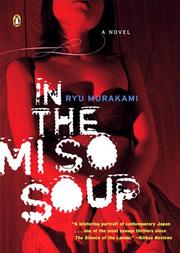
Start with In the Miso Soup. A Tokyo nightlife guide takes an American tourist through the sex districts and slowly works out what his client is. It is under 200 pages, the structure is tight, and it shows the method at its most controlled.
Two facts before the reading order, because both change what you should do next. The first: this is not Haruki Murakami. Readers arrive at Ryu Murakami by accident, expecting cats and jazz records, and get violence, sex and social disgust delivered flatly. He is a major Japanese novelist and a completely different one. The second is a plain statement about the books rather than about you: several of these novels contain extended, graphic violence, described in detail. In the Miso Soup has a sustained massacre sequence at its centre. Piercing is built around a planned assault. Audition ends in prolonged torture. Coin Locker Babies and Almost Transparent Blue carry drug use, sexual violence and self-destruction throughout. That is what the books are; it is not incidental, and no reading order removes it.
Start here: the controlled ones
In the Miso Soup first, for the reasons above.
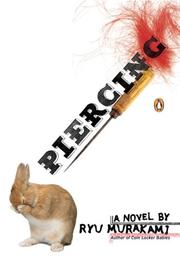
Piercing second. Two damaged people and a hotel room, told as a mechanism that tightens page by page. It is even shorter, and it is the clearest demonstration that the violence in these novels is doing structural work rather than being enjoyed — the book is far more interested in what the two characters cannot say than in what happens.
The debut, and the outlier
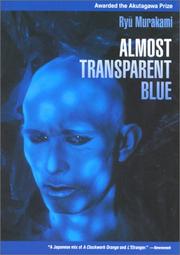
Almost Transparent Blue made him famous at twenty-four. Drugs and sex among young Japanese near a US airbase, and it won the Akutagawa Prize in 1976, appalling a large part of the Japanese literary establishment in the process. It is plotless by design. Read it as a document of a moment rather than as a novel, or you will wonder what you are supposed to be following.
Sixty-Nine is the outlier and the reason to keep going. A genuinely funny, affectionate comedy about a 1969 high-school rebellion — barricades, a film festival, a girl. It contains none of what the other books contain, and it is proof that the bleakness elsewhere is a choice rather than a limitation. If the violence is more than you want, this is the one book here you can read anyway.
The long books
Coin Locker Babies follows two boys abandoned as infants in station lockers who grow up to take revenge on Tokyo. It is his most ambitious novel and the one most often called his best, and it is long and sprawling in a way the short novels are not.
Popular Hits Of The Showa Era sets a gang of aimless young men against a group of middle-aged women and escalates into open warfare between them. Absurd, funny and brutal in roughly equal measure, and the closest he comes to writing a farce.
The specialist end
Audition is a widower staging fake film auditions to find a wife. Takashi Miike's film is famous; the novel is quieter for much longer and then goes further at the end. Take it only if the register has proved bearable.
Where to stop
In the Miso Soup and Sixty-Nine together give you both halves of him in about 500 pages, and a great many readers should stop there. Readers who want the ambitious novel go on to Coin Locker Babies. Audition is the last thing to read, not the first, whatever the film's reputation suggests. See the Ryu Murakami hub.
Follow the full ordered path here: Ryu Murakami Reading Order: The Other Murakami, and Where to Start.
Ready to learn something deeply?
Build a reading path — free