Rurouni Kenshin Reading Order: Where to Start and What Order to Read the Manga In
Nobuhiro Watsuki's Rurouni Kenshin is read straight through in publication order: the Tokyo arc, the long march to Kyoto against Shishio, and the Jinchu arc that finishes Kenshin's story. This path follows that spine and deliberately leaves out the later side stories and sequels, which add nothing to a first reading and dilute the ending.
Tokyo: volumes 1 to 4
BeginnerMeet Kenshin as a wanderer with a reversed blade, and learn the Bakumatsu backstory the rest of the series never re-explains.
▸ Study plan for this stage
Pace: Four or five days. These four volumes total 816 pages — 208, 200, 200 and 208 — which is a standard single-volume manga run and reads in roughly forty minutes a volume; a volume an evening is unhurried. Read volumes 1 and 2 back to back, since they are one introduction. The pace is genuinely episodi
- The reversed blade and the vow against killing — the premise every later arc is built to attack
- The Bakumatsu backstory introduced lightly in these volumes and assumed heavily thereafter
- The Kamiya dojo as a fixed base, and why the series needs somewhere for Kenshin to come back to
- The cast assembled by volume 2 and essentially unchanged for two hundred chapters
- The Battosai as a separate person Kenshin used to be, first shown properly in volume 3
- The Meiji government as an active force rather than a backdrop, from volume 4 onward
- What exactly is Kenshin's vow, and what are its stated limits?
- What does the series tell you about the Bakumatsu in these four volumes, and how much does it assume you already know?
- How does volume 3 present the Battosai — as a memory, a capability, or a person — and which of those does the series settle on?
- Why does Watsuki put comedy and lethal violence in the same chapters, and where does it work least well?
- What changes when the Meiji government becomes an active participant rather than a setting?
- Write down the vow as the series states it in volume 1, in Kenshin's own terms. Keep it — you will test it against volume 8 and again against volume 12.
- Note every historical reference in volumes 1 to 4 and mark which are explained and which are dropped in passing. The unexplained ones are the series' assumption about its Japanese readership, and worth looking up once rather than repeatedly.
- Pick one chapter that swings between a gag and a killing and describe how Watsuki manages the transition on the page — panel size, spacing, and where he places the reader's eye.
- At the end of volume 4, list the cast and what each is for. The Kyoto arc adds many names and this baseline makes them easier to place.
Next up: The premise, the cast and the historical frame are set; the next stage takes the series out of episodic chapters and into a single sustained campaign.

The correct starting point and a near-perfect first volume: Kenshin's arrival at the Kamiya dojo establishes the vow against killing that every later arc attacks. The historical setting is introduced lightly here and assumed heavily later.
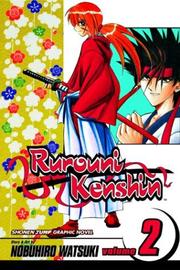
Sanosuke arrives and the cast settles into the shape it keeps for two hundred chapters. Read on directly; volumes 1 and 2 are one introduction.
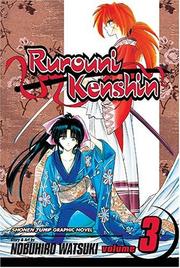
The first serious antagonist arc and the first real look at what the Battosai was. The tonal split between comedy and violence that defines the series is set here.
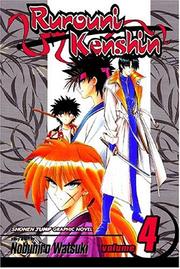
Closes out the early Tokyo stories and introduces the Meiji government as an active force. A sensible checkpoint before the series lengthens its arcs.
The road to Kyoto: volumes 5, 6 and 8
IntermediateWatch the series shift from episodic chapters into a single sustained campaign.
▸ Study plan for this stage
Pace: Two to three weeks, with one volume to source yourself. Volumes 5 and 6 are ordinary single volumes at 200 and 211 pages — forty minutes or so each, a volume an evening unhurried. Volume 7 has no single-volume English record we can link, so buy it separately before you start this stage; volume 8 ope
- Saito Hajime as the moment the past stops being backstory and walks into a room
- The shift from episodic chapters into long-form serialisation, and what it demands of the reader
- Shishio's organisation laid out as a political programme rather than as a villain's scheme
- Stakes moving from personal to national, and why the arc feels earned rather than merely escalated
- Hiko, the Hiten Mitsurugi succession, and the clearest statement in the series of what the no-kill vow costs
- Edition conventions: single volumes against three-in-one collections, and the necessity of staying in one scheme
- What does Saito's arrival change that a new antagonist alone would not have?
- How is Shishio's programme presented, and how much of its logic does the series allow to be persuasive?
- What does Hiko tell Kenshin about the technique and its succession, and how does that reframe the vow you wrote down in the first stage?
- Where does chapter-to-chapter structure visibly change, and what does Watsuki gain and lose by it?
- Why does Kenshin leave Tokyo rather than defend it, and what does the series make of that choice?
- Check your edition before starting. If a volume runs to several hundred pages it is a collected edition holding roughly three original volumes; note the mapping so that this path's volume numbers still find the right chapters.
- Take the vow as you wrote it down in stage 1 and rewrite it after the Hiko sequence in volume 8. The two versions should not be identical.
- Build a chart of Shishio's organisation as it is revealed — names, roles, capabilities. The Juppongatana are introduced faster than they can be absorbed and the Kyoto assault assumes you have them straight.
- Read volume 5 in one sitting and note where the episodic structure last holds. That page is the hinge between the two halves of the series.
Next up: Kenshin is trained, Shishio's organisation is legible and the forces are converging on Kyoto, which is the assault the next stage covers.
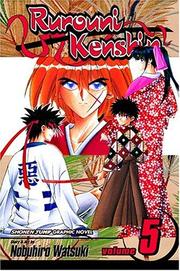
Saito Hajime's introduction, the point at which the past stops being backstory and starts walking into rooms. The Kyoto arc effectively begins here.

Kenshin leaves Tokyo, and Watsuki commits to a long-form structure for the first time. Chapter-to-chapter pacing changes noticeably; expect a slower, denser read.

Kenshin's training under Hiko and the Hiten Mitsurugi succession — the series' clearest statement of what the no-kill vow actually costs.
Kyoto: volumes 9, 10 and 12
IntermediateRead the assault on Shishio's stronghold, the sequence most readers come to the series for.
▸ Study plan for this stage
Pace: Two weeks, with a second supply problem. Volumes 9 and 10 run to about 190-200 pages each — volume 9's record carries no page count, but it sits in the same VIZ single-volume run — and volume 12 is 200. Volume 11 exists in our catalogue only as a Japanese-language edition, so it is not on this path:
- The Juppongatana introduced properly, each built as an argument against a specific one of Kenshin's principles
- Volume 9 as the last quiet volume, and the function of calm immediately before an extended battle
- The assault structured as a sequence of parallel duels rather than as a single battle
- The Shishio confrontation as the emotional peak of the series, and what it does with the vow
- The catalogue gap at volume 11 — a hole in what this path can link, not a jump the story makes
- Resolution that costs something, and the difference between defeating an antagonist and answering him
- Which of Kenshin's principles does each of the Juppongatana test, and which of them lands the hardest?
- What does volume 9 spend its length on, and why does the arc need that before the fighting starts?
- How does the Shishio confrontation resolve, and does it uphold the vow, suspend it, or redefine it?
- What does the assault's parallel-duel structure allow that a single massed battle would not?
- Is Shishio answered or only defeated? Point to the specific pages that settle it.
- Source volume 11 before starting this stage. Check your library system or a bookshop; volume 12 is unreadable cold and this is the one preparation the stage genuinely requires.
- Keep your Juppongatana chart from the previous stage open and annotate each entry as its duel resolves: which principle was tested and what the outcome cost.
- Read volume 12 in a single sitting with no summaries, reviews or wiki pages beforehand. This is the volume the whole series has been building toward and it is easy to spoil accidentally.
- Immediately after volume 12, reread the first chapter of volume 1. Judge whether the ending of the arc is consistent with the vow as originally stated, or whether the series quietly moved it.
Next up: Kyoto resolves the public, political half of Kenshin's past; the final stage turns to the private debt it left behind.

The Kyoto forces assemble and the Juppongatana get their proper introduction. The last quiet volume before an extended battle sequence.
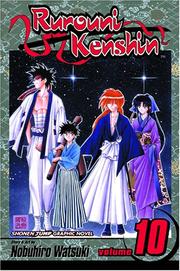
The assault begins in earnest. Note the jump after this volume: volume 11 has no English record we can link — the only catalogue entry is a Japanese-language edition — so read it from your own copy or a library before volume 12.
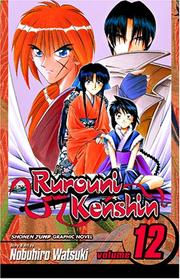
The Shishio confrontation and its resolution, which is the emotional peak of the entire series. Do not read summaries of this volume in advance.
After Kyoto, and the Jinchu arc: volumes 13 and 14
IntermediateFollow the turn from public history to Kenshin's private debt, and know where the story properly ends.
▸ Study plan for this stage
Pace: Two or three evenings. Both volumes are 192 pages, 384 in total, and they read at ordinary single-volume pace — under an hour each. Volume 13 is deliberately slower than what precedes it: the aftermath of Kyoto and a return to Tokyo, with the scale reset on purpose. Read it as the breather it is rat
- Deliberate deceleration after a climax, and why volume 13 is structure rather than filler
- The turn from public history to private debt as the organising move of the Jinchu arc
- Kenshin's Bakumatsu past arriving personally rather than politically
- Where a first reading should stop, and the argument for excluding the sequels and side stories
- The spine of the series in retrospect: Tokyo, Kyoto, Jinchu, and nothing else required
- What does volume 13 accomplish that the series could not have skipped, given how little happens in it?
- How does the Jinchu arc's antagonist differ in kind from Shishio, and what does that difference let the story examine?
- Which events from volumes 1 to 4 does volume 14 retrieve, and were they planted or repurposed?
- What does the shift from political to personal stakes do to the vow, one last time?
- Having read the spine, what is the case for and against continuing into the later side stories and sequels?
- Take the two versions of Kenshin's vow you wrote in the first and second stages and write a third after volume 14. Three statements of one principle across fourteen volumes is the clearest map of the series' argument.
- Read volume 13 without skimming and list what it sets up. Almost everything on that list pays off inside the Jinchu arc, which is the answer to whether it is filler.
- Write down what you expect the Jinchu arc to conclude, based only on volume 14. Keep the note if you go on to finish the series independently — this path stops here by choice.
- Draw the full reading order as you experienced it, including where volume 11 had to come from and which of your volumes were collected editions. It is the single most useful thing to hand to the next reader.
Next up: This is the end of the path: the Tokyo arc, the Kyoto campaign, the opening of the Jinchu arc, one supply gap named honestly, and a deliberate stop before the material that dilutes it.
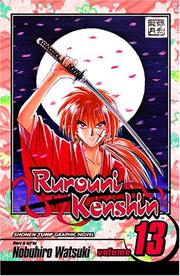
The aftermath of Kyoto and the return to Tokyo, where the series resets its scale deliberately before the final arc. A necessary breather rather than filler.
The beginning of the Jinchu arc, in which Kenshin's Bakumatsu past comes for him personally rather than politically. From here the remaining volumes run to the series' real conclusion — this path stops at the point where the final arc's shape is clear.