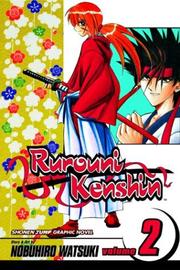
Start with Rurouni Kenshin, Vol. 1 and read in publication order. There is no chronological alternative worth arguing about here: Nobuhiro Watsuki wrote one continuous story — the Tokyo chapters, the long campaign to Kyoto against Shishio, and then the Jinchu arc that settles Kenshin's past — and the flashbacks are placed where they are on purpose. Volume one is a near-perfect opening: a wanderer with a reversed-edge sword arrives at the Kamiya dojo, and the vow against killing that every later arc attacks is established in the first hundred pages.
The thing that actually goes wrong for readers is buying the books, so handle that first. Rurouni Kenshin has been published in English as single volumes and as three-in-one omnibus editions, and the omnibus editions renumber from one. An omnibus volume 3 is not single volume 3 — it holds three different singles entirely. Mixing the two systems produces a shelf that looks complete and is not. Pick one convention and stay in it. This path follows the single volumes, and an earlier version of it linked omnibus editions covering completely different content, which is the mistake being warned against.
Two gaps in our catalogue
Two volumes on this path are missing, and both need sourcing separately.
Volume 7 has no single-volume English record in our catalogue at all. Rurouni Kenshin Volume 8 opens directly on the consequences of what volume 7 sets up, so skipping it leaves a real hole rather than a cosmetic one — get it from a library or a second-hand copy before you read volume 8.
Volume 11 exists in our catalogue only as a Japanese-language edition. Same instruction: source an English copy separately, and slot it between Rurouni Kenshin, Vol. 10 and Rurouni Kenshin, Vol. 12, which are the two volumes on either side of the series' single biggest confrontation.
Tokyo: volumes 1 to 4
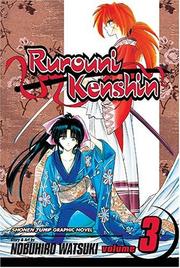
Rurouni Kenshin, Vol. 1 and Rurouni Kenshin, Vol. 2 (208 and 200 pages) are one introduction, so read them together — Sanosuke arrives in the second and the cast settles into the shape it keeps for the next two hundred chapters. Rurouni Kenshin, Vol. 3 (Rurouni Kenshin), filed with that redundant parenthetical in our catalogue, brings the first serious antagonist arc and the first real look at what the Battosai was; the split between broad comedy and sudden violence that defines the series is set here. Rurouni Kenshin, Vol. 4 (208 pages) closes the early Tokyo stories and brings the Meiji government in as an active force.
The road to Kyoto: volumes 5, 6 and 8
Rurouni Kenshin, Vol. 5 introduces Saito Hajime, the point at which Kenshin's past stops being backstory and starts walking into rooms. Rurouni Kenshin, Volume 6 (211 pages) is where Kenshin leaves Tokyo and Watsuki commits to long-form structure for the first time; expect the pacing to slow and thicken. Then the gap at volume 7, and Rurouni Kenshin Volume 8, which covers the training under Hiko and the Hiten Mitsurugi succession — the clearest statement in the whole series of what the no-kill vow actually costs.
Kyoto: volumes 9, 10 and 12
Rurouni Kenshin Volume 9 assembles the Kyoto forces and properly introduces the Juppongatana; it is the last quiet volume before a very long battle sequence. Rurouni Kenshin, Vol. 10 (192 pages) begins the assault. Then the gap at volume 11, and Rurouni Kenshin, Vol. 12 (200 pages), which resolves the Shishio confrontation and is the emotional peak of the series. Avoid summaries of it.
Where this path stops
Rurouni Kenshin, Vol. 13 (192 pages) is the deliberate reset after Kyoto, and Rurouni Kenshin, Vol. 14 opens the Jinchu arc, in which Kenshin's Bakumatsu past comes for him personally rather than politically. This path stops there, with the final arc's shape clear. The series itself runs considerably further in the single-volume numbering, and the later side stories and sequels are deliberately left off — they add nothing to a first reading. The ordered list, with the gaps marked, is at /paths/pt_ai_rurouni-kenshin.