Rudyard Kipling Reading Order: Where to Begin, and What to Do About the Politics
Kipling is read as a children's writer, dismissed as the poet of empire, and very rarely read whole — which means the two verdicts are usually reached without the evidence. This path starts with the Indian stories that made his name at twenty-three, moves through the books written for children, and builds toward Kim, a novel that is both unmistakably an imperial romance and far too interested in India to sit comfortably as one. The verse, the later stories and the autobiography come last, where the case for and against him has to be argued rather than assumed.
Start Here: The Indian Stories
BeginnerRead the short fiction that made Kipling famous before he was twenty-five, and see the technique — extreme compression, a knowing narrator, an ending that lands like a slap — that everything else is built on.
▸ Study plan for this stage
Pace: Two to three weeks. Plain Tales from the Hills is around 280 pages but it is forty separate stories, most of them under two thousand words, so three or four a sitting is the right pace and reading it straight through like a novel blunts it. The Man Who Would Be King is a single long story of about f
- Extreme compression as Kipling's foundational technique: a full social situation, a reversal and a verdict inside two thousand words
- The knowing narrator — a man about town who has already heard the story and is telling you what it means as he tells it
- The Anglo-Indian world of Plain Tales: Simla in the hot season, the civil service, the cantonment, and adultery as the recurring engine of plot
- That none of this was written for children and none of it is softened, which is the fact most first-time readers of Kipling are unprepared for
- The Man Who Would Be King's structure — Dravot and Carnehan set out to make themselves kings of Kafiristan, succeed, and are destroyed by the success
- The ending as a slap: Kipling's habit of withholding the decisive fact until the last line, and how often that fact is a cruelty
- Kipling's age when this was written, and what a newspaper deadline does to prose — the compression is partly a working condition rather than only an aesthetic
- Take any three stories from Plain Tales and describe the shape they share. Where does the reversal come, and how many words does Kipling spend on setup before it?
- What does the narrator of Plain Tales know that you do not, and what is the effect of him letting you feel that gap?
- Is The Man Who Would Be King admiring of Dravot and Carnehan, contemptuous of them, or something the story keeps deliberately unsettled? Argue from the ending rather than from the middle.
- What in these stories is India, and what is the Anglo-Indian community talking about itself? Try to name a story that is genuinely about Indians rather than about the British among them.
- Having read only this stage, what would you expect Kipling's politics to be? Write the answer down; the later stages will test it.
- Pick the shortest story in Plain Tales and count the words Kipling spends on exposition before the situation is fully established. Then attempt the same compression on a situation of your own in 800 words.
- Make a two-column list as you read: stories whose sympathies you can locate confidently, and stories where you cannot. The second column matters more than the first for everything that follows.
- After The Man Who Would Be King, write 300 words on what the story says about conquest, quoting the two or three lines you are relying on. Keep it; you will reread it after Kim.
- Read one Plain Tales story aloud. Kipling wrote for the ear even in the newspaper work, and the sentence rhythms are not audible on the page alone.
Next up: The compression, the narratorial knowingness and the interest in codes of conduct are all fully formed here, which is why the children's books read very differently once you have met them first.
The right first Kipling. Forty short stories written for an Anglo-Indian newspaper, most of them under two thousand words, about soldiers, civil servants and adultery in Simla. Nothing here is written for children and nothing is softened.

The great long story: two adventurers set out to make themselves kings of Kafiristan and succeed, briefly. Read second. It is the most concentrated thing he wrote about the psychology of conquest, and it is not admiring.
The Books for Children
BeginnerRead the work that fixed his reputation, and hear how much of it is really about law, belonging and who is permitted to be one of us.
▸ Study plan for this stage
Pace: Four to five weeks for four short books totalling under 650 pages. The Jungle Book and The Second Jungle Book should be read back to back with no gap — the Mowgli arc completes only across the pair, and the non-Mowgli stories in each are easy to skip if read separately. Just So Stories should be rea
- The Law of the Jungle as Kipling's central preoccupation in miniature: a code that confers belonging and punishes the outsider, stated as natural fact
- That The Jungle Book is a collection, not a Mowgli novel — Rikki-Tikki-Tavi and The White Seal are doing related work on the same themes
- Mowgli's real subject: a boy who belongs to neither the pack nor the village, and is finally expelled by both, which The Second Jungle Book completes and the first book only sets up
- Red Dog and Mowgli's departure as the darkest material Kipling wrote for children, and the tonal distance between the two Jungle Books
- Just So Stories as pure prose rhythm — origin fables tuned by reading aloud to his own children, and the most technically enviable sentences in his work
- Captains Courageous as an apprenticeship novel: a spoiled boy is put to work on a Grand Banks schooner and is remade by learning a trade, which is Kipling's most persistent moral plot
- Competence and initiation as the values these books actually promote, and how easily that shades into a politics in the later work
- State the Law of the Jungle in your own words. Who does it protect, who does it exclude, and on what grounds?
- Why must Mowgli leave? Answer using both Jungle Books, and say whether the expulsion reads as tragedy, as necessity, or as vindication of the Law.
- Just So Stories has been described as the one book of Kipling's that needs no defence. Reading it carefully, is that true, or is it simply the one whose assumptions are least visible?
- What exactly does Harvey learn in Captains Courageous, and what does Kipling think learning a trade does to a person that nothing else can?
- These are the books that fixed Kipling's reputation as a children's writer. On the evidence, is that a fair description of what they are doing?
- Read three Just So Stories aloud at full length. Then take a paragraph and mark the repetitions, the beats and the direct addresses to the listener; the prose is engineered and the engineering is visible once you look.
- Chart Mowgli's memberships across both books — pack, village, jungle, human — with the point at which each is granted and revoked. One page. It is the clearest map of Kipling's belonging theme available.
- Take the Law of the Jungle passages and rewrite them as a set of numbered rules. Then ask which of them you would accept, and note where the disagreement starts.
- After Captains Courageous, write 200 words on the sentence in it that most clearly states Kipling's view of work. Quote it exactly.
Next up: You now have the code, the outsider and the apprenticeship in place, which is precisely the material Kim reassembles into a novel that will not resolve into a single verdict.
Not the film. A collection of stories, only some about Mowgli, held together by an obsession with the Law of the Jungle — read it and the connection to the Indian stories is immediate.
The darker sequel, containing Mowgli's departure from the pack and Red Dog. Read straight after the first; the Mowgli arc only completes across the pair.
Origin fables written to be read aloud, and the best pure prose rhythm in his work — the sentences were tuned on his own children. Fourth in the order, and the one book here that needs no defence of any kind.
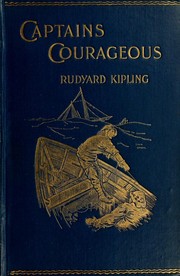
A spoiled rich boy falls off a liner and is put to work on a Grand Banks fishing schooner. A short, unfashionable novel about learning a trade, and the natural bridge from the children's books to the adult fiction.
Kim
IntermediateRead the novel everything else has been preparing for, and confront the difficulty directly: a book that loves India far too specifically to be reduced to propaganda, written by a man who was in fact a propagandist.
▸ Study plan for this stage
Pace: Four to five weeks. Kim is under 300 pages but is the slowest reading in Kipling's work, dense with Indian vocabulary, unglossed place names and a plot that hides its own shape for a hundred pages. Read the introduction to a good annotated edition before you start, use the glossary, and give the Gra
- Kim's double apprenticeship: to a Tibetan lama on a spiritual quest, and to imperial intelligence work, with the novel refusing to make him choose cleanly
- The Grand Trunk Road sequence as the book's real achievement — India rendered with a specificity that no propaganda requires and no summary survives
- The Great Game as plot device and as the book's imperial content, present continuously and never quite made the point
- The identity question: an orphaned Irish boy who passes as Indian, whose recurring cry is a question about what he is
- Edward Said's reading, printed as the introduction to the standard edition, which argues the imperial case and the aesthetic case at once — and the fact that the argument is best encountered inside the book rather than instead of it
- Stalky and Co as the other side of the same coin: an account, written from inside, of how the men who administered the empire were manufactured at school
- The nastiness of Stalky, which is genuine and deliberate, and its awkward relation to the warmth of Kim
- That our catalogue's record for Stalky uses the spelled-out form of the title; the ampersand form of the search returns a different volume
- Kim asks what he is more than once. What answers does the novel offer, and does it endorse any of them?
- The lama's quest and the Great Game occupy the same book. Are they in competition, in harmony, or simply adjacent? Point to the chapter where you think the novel decides — or declines to.
- Said's introduction makes a case both for the novel's imperialism and for its greatness. Which parts of his case do you find best supported by the text, and which least?
- What does Kim know about India that Plain Tales from the Hills does not? Be specific about kinds of knowledge, not just quantity.
- Stalky and Co shows the schooling that produced the imperial administrator. Read against Kim, does it undercut the earlier novel, explain it, or neither?
- Keep a glossary of your own as you read Kim — every unglossed term you have to infer, with your inference and then the annotated edition's gloss. The gap is a measure of how much the novel assumes.
- Map the Grand Trunk Road journey with the people met at each stage and what each is a representative of. Kipling is systematic about this and it is invisible without the map.
- Read Said's introduction after finishing the novel rather than before, then write 500 words responding to one specific claim in it, agreeing or disagreeing with textual evidence.
- Return to the 300 words you wrote about conquest after The Man Who Would Be King. Revise it in the light of Kim, and mark what you changed.
- Pick the single most uncomfortable scene in Stalky and Co and write a paragraph on what Kipling appears to want you to feel about it, and what you do feel.
Next up: With the Indian work complete and the argument about it fully open, the later books show what Kipling became once India was behind him and the losses had started.
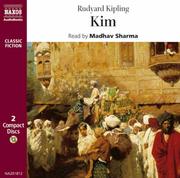
An orphaned Irish boy on the Grand Trunk Road, apprenticed both to a Tibetan lama and to imperial espionage. Read it sixth, with the earlier stories behind you. Edward Said's introduction to the standard edition argues both sides of the case better than any summary can, and the novel survives the argument.

Boarding-school stories drawn from his own schooling, and much nastier than the genre suggests — an account of how imperial administrators were manufactured, written from inside. Uncomfortable in ways that make it a good companion to Kim. Search the spelled-out form; the ampersand form returns the wrong volume.
The English Books and the Later Stories
IntermediateFollow Kipling after he left India and settled in Sussex, where the subject becomes English history and, after 1915, grief.
▸ Study plan for this stage
Pace: Five to six weeks. Puck of Pook's Hill and Rewards and Fairies are around 200 and 265 pages and should be read as a pair, in that order, over three weeks. Debits and Credits runs to about 415 pages of short stories and needs the remaining time and a slower pace — these are among the most compressed
- The Sussex turn: after leaving India, Kipling's subject becomes English history and the land itself, addressed through two children meeting figures from the past in their own field
- The Puck books' argument about continuity — a Roman centurion, a Norman knight, and the recurring theme of holding a frontier at personal cost
- That both Puck books are formally children's books doing adult work, and that Rewards and Fairies is markedly the stranger and sadder of the two
- If as a poem embedded in a story in Rewards and Fairies, and what it means to read it in its narrative context rather than as a poster
- The death of his son John at Loos, whose body was never found, as the fact standing behind Debits and Credits
- The Gardener and A Madonna of the Trenches as the strongest counter-evidence to a reading of Kipling as the poet of triumph — both are about grief, concealment and what cannot be said
- Kipling's late technique of the withheld fact, now turned to devastating rather than cruel ends: the final sentence of The Gardener as the clearest case in English of a story reorganising itself in one line
- What do the Puck books say about who has a claim on England, and how does that sit beside what Kipling wrote about who belongs in the jungle or the pack?
- Read If inside Rewards and Fairies rather than on its own. What does the story around it do to the poem?
- In The Gardener, what does the last line change, and how far back through the story does the change reach?
- Debits and Credits was written by a man who had lost a son in a war he had publicly supported. Where in these stories can you locate that, and where would you be reading it in?
- Do the post-war stories revise the earlier Kipling, or do they simply reveal a register that was always available to him?
- Read The Gardener twice in one sitting. Second time through, mark every sentence that means something different than it did an hour ago. This is the best available demonstration of what Kipling's method could do at full strength.
- List the historical periods visited across both Puck books, with what each visitor is there to demonstrate. The pattern is an argument, not a tour.
- Take A Madonna of the Trenches and write 400 words on what is actually happening in it — the story is deliberately hard to state plainly, and stating it plainly is the exercise.
- Compare a Plain Tales ending with the ending of a Debits and Credits story. Both withhold. Write 200 words on what changed in the twenty-odd years between them.
Next up: Having read the grief and the English work, you can turn to the verse and the autobiography — the two places where the public argument about Kipling is actually fought, and now you have the evidence to enter it.
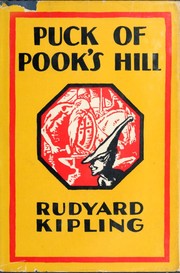
Two children meet figures from the English past in their own field — a Roman centurion, a Norman knight. Superficially a children's book and actually an argument about continuity and the cost of holding a frontier.
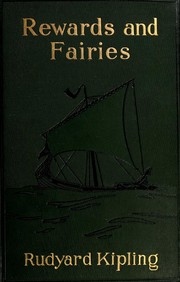
The sequel to Puck, and the volume containing the poem If. Read the pair together; this one is markedly the stranger and sadder of the two.
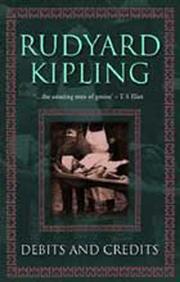
Post-war stories, written after his son John was killed at Loos and never found. The Gardener and A Madonna of the Trenches are among the finest short stories in English, and nothing about them is triumphalist. This is the strongest answer to anyone who has only read the imperial verse.
The Verse and the Life
IntermediateFinish with the poetry the argument about Kipling actually turns on, and with his own guarded account of himself.
▸ Study plan for this stage
Pace: Four to five weeks. Barrack-Room Ballads is around 200 pages of verse and should be read slowly and aloud — twenty pages a sitting at most, since the dialect fights silent reading. The Light That Failed is a short novel of about 250 pages and can be finished in a week. Something of Myself, published
- The music-hall dialect of the Barrack-Room Ballads and what it does: soldiers' voices, in their own idiom, addressed to a public that used them and despised them
- Tommy as a direct attack on civilian hypocrisy, and the difficulty of holding that alongside the poems that celebrate what those soldiers were sent to do
- Danny Deever's technique — a hanging narrated entirely through a dialogue of question and answer, with the fact arriving by inference
- Gunga Din as the single hardest case in the book, admired and indicted in roughly equal measure ever since, and best argued with directly rather than through summaries of the argument
- The Light That Failed as evidence of a limitation: a war artist going blind, generally judged a failure, and useful for showing what the long form did to a writer built for compression
- Something of Myself as a guarded, partial witness, and the significance of its omissions — the death of his daughter, the politics, most of the private life
- That Kipling's reputation has been argued about for over a century without settling, and that the verse is where most of the argument happens because it is where the politics are most explicit
- The distinction, worth holding to the end, between what a writer believed and what a work does
- Read Tommy and Gunga Din back to back. What does each poem ask you to feel about its subject, and can both attitudes be held by the same author at the same time?
- Danny Deever tells you what has happened without ever saying it. Reconstruct how, line by line — and then say why the technique matters for a poem about an execution.
- The dialect poems put working-class soldiers' voices in print at a time when little else did. Is that a democratic act, a ventriloquism, or both? Argue from specific poems.
- Why did the long form defeat Kipling in The Light That Failed and not in Kim? Name two concrete differences.
- What does Something of Myself leave out, and what would you have to read elsewhere to fill each gap?
- Having finished the whole path: state the strongest case for Kipling and the strongest case against him, each in 200 words, before saying anything about your own view.
- Read six ballads aloud, including Tommy, Danny Deever and Gunga Din. The dialect is unreadable silently and fully legible spoken; this is not optional for this stage.
- Take Gunga Din and write out, line by line, what the speaker says about Din and what the poem invites you to think of the speaker. The two columns diverge, and where they diverge is the whole controversy.
- Write the two 200-word cases from the last question above, then a third paragraph naming the single piece of evidence from this path that most complicates your own position.
- Go back to the prediction about Kipling's politics you wrote in the first stage. Mark what was right, what was wrong, and which book changed it.
- List everything Something of Myself omits that you now know about from the other books, and write a sentence on why you think each was left out.
Next up: This is the end of the path. The natural continuation is outward to the writers who answered him — the anti-imperial fiction that took Kim as its target, or the modern critics whose arguments you are now equipped to judge rather than inherit.

The soldier poems in music-hall dialect, including Tommy, Danny Deever and Gunga Din. Catalogued as Barrack-room ballads and other verses. The verse that made him a public property and the verse that has cost him most since — read it and argue with it directly.

His first novel, about a war artist going blind, and generally judged a failure. Worth reading late as the clearest evidence of what he could not do — the long form defeated him until Kim.
The posthumous autobiography, published as Something of Myself for My Friends Known and Unknown. Notable as much for its omissions — the death of his daughter, the politics — as for what it says. The last stop, and a deliberately partial witness.