Start with The man who would be king. It is a novella, readable in an evening, and it contains the entire Kipling problem in compressed form: two British adventurers set themselves up as gods in Kafiristan, and the story is at once a thrilling adventure and a merciless account of what imperial self-belief does to the people who hold it.
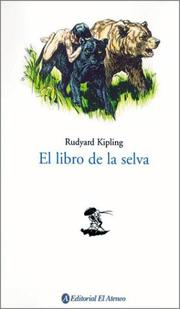
The obvious entry is The Jungle Book, which most people half-know from a film that bears little resemblance to it. It is a fine book and a misleading introduction — it sends readers toward a children's writer who mostly did not exist. If you want the Anglo-Indian world instead, Plain tales from the hills is the alternative first stop: forty short sketches of the colonial administration, written when he was barely into his twenties and already unnervingly observant.
The children's books
The Jungle Book and The Second Jungle Book are usually sold together and were written as a pair; the Mowgli stories are only about half of each. Just So Stories is the read-aloud book and holds up better than almost anything else in the list, because its subject is the sound of a sentence.
Captains Courageous is the American sea novel and the weakest of the group — a moral fable about a spoiled boy that creaks. Stalky and Co, published as Stalky & Co., is the school book, and it is the one modern readers find hardest: it is a celebration of cruelty as training for empire, and it is not ironic about it.
The masterpiece
Kim is the book. It is a picaresque about an Irish orphan on the Grand Trunk Road, moving between a Tibetan lama's spiritual quest and the intelligence work of the Great Game, and it is the most generous thing Kipling wrote about India — which is exactly why it is also the most contested. Edward Said read it as a novel that cannot imagine India outside British administration, however much it loves the country. Others argue its double allegiances are genuinely unresolved rather than concealed. Both readings are alive in the criticism, and Kim is a better novel for supporting them.
The English books and the late stories
Puck of Pook's Hill and Rewards and fairies are the English-history stories written for children, and the second contains the poem people quote at graduations. Barrack-room ballads and other verses is the soldier verse — the dialect ballads that made him famous and that critics have been embarrassed by ever since.
Debits and credits is where the late Kipling lives, and it is the part of the work most readers never reach. His son John was killed at Loos, and the post-war stories are darker, more compressed and formally stranger than anything earlier. Several critics consider them his best writing.
The light that failed is the first novel and it does not work; two different endings were published, which tells you enough. Something of myself for my friends known and unknown is the posthumous autobiography and is notable mostly for what it declines to discuss.
The argument
Kipling supported the British Empire, wrote the poem that gave the phrase the white man's burden its currency, and held views about race and rule that are not retrievable as irony. This is not disputed. What is disputed is what follows from it. George Orwell called him a jingo imperialist and morally insensitive in the same essay in which he insisted Kipling could not be dismissed and that the people who sneered at him had produced nothing comparable. Said read him as a great artist wholly inside imperial ideology. Others argue the fiction is more divided against itself than the public verse suggests. That disagreement is live, it is serious, and this article is not going to settle it — but reading the books is the only way to have a view worth holding.
Where to stop
The man who would be king, Kim, Just So Stories and a selection of the late stories is a full Kipling for most readers. The complete ordered sequence is on the path below.
Follow the full ordered path here: Rudyard Kipling Reading Order: Where to Begin, and What to Do About the Politics.