Conan books in order: where to start with Robert E. Howard
Howard never wrote Conan in a sequence, and for fifty years the paperbacks made it worse: L. Sprague de Camp and Lin Carter reordered the stories into a fake biography, rewrote Howard's prose, and inserted pastiches under his name. The single most useful decision a new reader makes is to read the restored texts instead. This path reads Howard's Conan in the modern restored collections, then his other heroes, then the far wider Howard — horror, desert adventure, historical fiction — and finishes with a biography that corrects most of what people think they know about him.
Start here: the restored Conan
BeginnerRead Howard's Conan stories as he wrote them, in the three-volume restored sequence, and skip the de Camp era entirely.
▸ Study plan for this stage
Pace: 1,262 pages across three volumes — The coming of Conan 480, The Bloody Crown of Conan 366, The Conquering Sword of Conan 416 — but these are collections of stories, not novels, so they read in short sessions. One or two stories an evening covers the stage in about six weeks. The exception is The Blo
- Restored text versus the de Camp-era paperbacks, and why the difference is editorial rather than a matter of taste
- Composition order against the invented in-world chronology the paperbacks imposed
- The Hour of the Dragon as Howard's only Conan novel, and what the longer form changes about his pacing
- Frontier pessimism as Howard's actual theme — civilisation as a thin, temporary crust — fully developed in the late stories
- Red Nails and Beyond the Black River as the peak, and what they do that the earlier stories do not
- Conan as a variable character rewritten for each story rather than a consistent biography
- What changes when the stories are read in composition order rather than as a life story?
- How does The Hour of the Dragon differ in structure from the short stories around it, at 366 pages of collection built around one novel?
- Where in the three volumes can you see Howard's prose improving, and in what specific respect?
- What is the argument of Beyond the Black River, stated as a proposition rather than a plot?
- Is Conan a consistent character across the run? Point to two stories that contradict each other.
- Keep a one-line note per story recording where Conan is in his life as that story presents him. The contradictions in your own list are the case against the invented chronology.
- Read The Phoenix on the Sword, then read the Kull story it was rewritten from when you reach the next stage, and mark every change.
- Take one paragraph of description from an early story and one from Red Nails and compare them sentence by sentence.
- Check the copyright page of whatever edition you are holding and confirm the texts are attributed to Howard alone; this is the single most useful thing a new reader can do.
Next up: With Conan read as Howard wrote him, the other series characters show how much of what people credit to Conan was actually Howard's method.

The first volume of the modern restored Conan, printing the stories in the order Howard wrote them from pure Howard texts. Note for buyers: our catalogue record under this title is the older 1953 Gnome Press collection of the same name — the edition to look for is the Del Rey trade paperback, whose contents are the unedited originals.
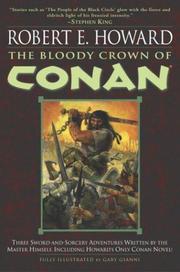
The second restored volume, containing The Hour of the Dragon — the only full-length Conan novel Howard wrote, published in paperback for decades under the title Conan the Conqueror. Reading it inside this collection avoids buying the same story twice.

The third and last restored volume, with Red Nails and Beyond the Black River — the late stories where Howard is writing at his absolute peak and the frontier pessimism is fully developed.
Howard's other heroes
BeginnerLeave Conan. Howard created several other series characters, two of them better written than the one he is famous for.
▸ Study plan for this stage
Pace: 879 pages across three — The Savage Tales of Solomon Kane 414, Kull 207, Bran Mak Morn 258 — and a month at the same story-an-evening pace. Kull at 207 pages is the shortest volume on the path and can be read in a weekend. Read Solomon Kane first: it is the strongest of the three and the character m
- Solomon Kane's motivation as compulsion rather than heroism, which makes him a bleaker construction than Conan
- Kull as the prototype Conan was rewritten from, and the specific story that was recycled
- Bran Mak Morn and Worms of the Earth, widely rated Howard's single best story, and the horror mode it works in
- Howard's repeated structure of a doomed people and a king who cannot save them
- Why three separate heroes were needed — each carries a different one of Howard's obsessions
- What drives Solomon Kane, and how does the text avoid making it simple righteousness?
- How does The Phoenix on the Sword differ from the Kull story it was built from, and what does the change tell you about what Howard wanted from Conan?
- What makes Worms of the Earth work as horror rather than as adventure?
- Which of these three characters carries the frontier pessimism most clearly?
- Is Conan the best of Howard's heroes, or the most marketable? Argue from these 879 pages.
- Read the two versions of the recycled story back to back and list every substantive change, not just the names.
- Write one sentence stating what each of the three characters is unable to escape. The three sentences together are Howard's worldview.
- Note where Solomon Kane's Africa is doing narrative work and where it is functioning purely as an exotic backdrop; the distinction is the honest way to read these stories.
- Rank the three volumes and defend the ranking against the received opinion that Conan is the main event.
Next up: Having read all the sword and sorcery, the non-fantasy collections show how small a fraction of Howard's work it actually was.

The complete Solomon Kane: a Puritan avenger wandering Africa and Europe. Bleaker and stranger than Conan, and the character most Howard readers end up preferring.
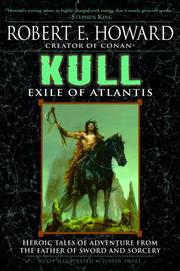
Kull of Atlantis, the brooding king Howard invented before Conan and drew on for The Phoenix on the Sword. Our record for this title is an older Kull collection; the contents are Howard's.
The Pictish king and Worms of the Earth, generally rated Howard's finest single story. Our record here is likewise an earlier Bran Mak Morn collection.
Beyond sword and sorcery
IntermediateRead the four-fifths of Howard's output that has nothing to do with fantasy — where the range and the craft are.
▸ Study plan for this stage
Pace: The heaviest stage on the path: 2,012 pages across four collections — The horror stories of Robert E. Howard 523, El Borak and Other Desert Adventures 559, Sword Woman and Other Historical Adventures 578, The Black Stranger 352. Two to three months at a story or two an evening; there is no need to r
- The proportion problem: four-fifths of Howard's output is not fantasy, and the reputation rests on the fifth that is
- Weird fiction written alongside the Lovecraft circle, and what Howard does differently within the shared mode
- El Borak as pure kinetic action with no supernatural machinery at all — the clearest view of Howard's plotting
- Dark Agnes and the unresolved argument about how Howard wrote women
- Texas and the American frontier as the real subject that the invented Hyborian one is a translation of
- Racial fear as a load-bearing element in specific horror stories rather than a stray attitude in otherwise neutral work
- What does Howard's weird fiction do that his Lovecraft-circle contemporaries did not?
- How does El Borak's action writing differ from Conan's, given that neither has a supernatural safety net?
- Is Dark Agnes a genuine departure or a variation on Howard's usual protagonist wearing a different name?
- Reading The Black Stranger, how much of Conan turns out to be Texas with different scenery?
- Where in the horror stories is the racial content structural to the plot, and where is it description that could be cut? The distinction matters for how you read them.
- Pick one El Borak story and one Conan story of similar length and diagram the action beats of each. The similarity is the point.
- After The Black Stranger, list every element of the frontier material that reappears in Beyond the Black River.
- Write a paragraph on Dark Agnes that neither claims Howard as a feminist nor dismisses the character, using only what the stories do.
- Read Pigeons from Hell and then one of the volume's more overtly racial stories and write down what distinguishes them as craft, separately from what distinguishes them morally.
Next up: With the range established, the samplers and the biography let you see the career whole rather than genre by genre.

The Lovecraft-circle weird fiction, including Pigeons from Hell. It also contains the racial ugliness that a serious reader has to confront rather than skip; several stories are unpleasant on exactly that axis.
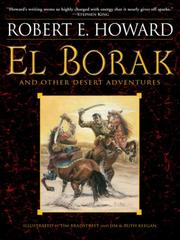
Francis Xavier Gordon in Afghanistan and Arabia. Howard's most purely kinetic action writing, with none of the supernatural machinery.
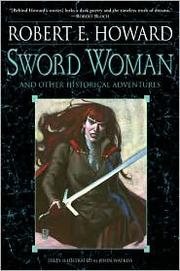
Dark Agnes de Chastillon and the historical fiction, including Howard's crusader stories. Sword Woman is the reason people argue about whether Howard was a proto-feminist or an accident.

The Bison Books collection of Howard's American frontier writing, edited from the original manuscripts. The clearest evidence that Texas, not Cimmeria, was his real subject.
The career in one shelf, and the life
IntermediateFinish with the career-spanning samplers and the biography that replaced the myth.
▸ Study plan for this stage
Pace: 1,464 pages across three — Crimson Shadows: The Best of Robert E. Howard, Volume One 528, its companion second volume 544, and Mark Finn's biography Blood and Thunder at 392. About six weeks. Two practical notes. The two Best of volumes are samplers spanning every genre, so expect substantial overla
- The sampler as a career-shaped object, and what a best-of includes that a genre collection cannot
- Overlap management — how to read two samplers after four thematic collections without rereading a thousand pages
- Finn's biography as an argument against an earlier biographer who was also an editor of Howard's texts, which is why the textual and biographical disputes are the same dispute
- Regional writing: Howard as a Texas author who used fantasy settings, which is Finn's central claim
- A short working life and an enormous output, and what that rate explains about the unevenness
- The difference between a corrective biography and a neutral one — Finn is arguing a case and says so
- What do the two Best of volumes include that the thematic collections do not, and what do they leave out?
- How does Finn's account change the way the frontier stories read?
- The textual editing and the biographical portrait came from the same hand — how should a reader weigh that when assessing either?
- Having read 5,617 pages, is Howard a fantasy writer who also wrote other things, or a pulp generalist remembered for one series?
- Which three volumes would you keep, and what does that choice say about which Howard you actually value?
- Before starting the samplers, list the stories you have already read; then read only the remainder, and note what the editors chose that you would not have.
- Take one claim Finn makes about Howard's life and check it against a story you have read, marking whether the story supports it.
- Write the reading order you would hand to a new reader, and say explicitly whether you would tell them to start with Conan at all.
- Assemble your own one-volume best-of table of contents from everything on this path, capped at fifteen stories, and justify three of the inclusions.
Next up: The path stops at thirteen volumes; anything further means the letters, the poetry, or the boxing and western stories that none of these collections cover.

The first of the two Best of Robert E. Howard volumes, spanning every genre he worked in. Expect overlap with the collections above — it is a sampler, not a supplement.
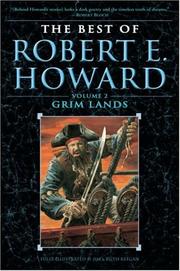
Our catalogue resolves this title to Volume Two of the same two-book set, also published as Grim Lands, covering the later work. Grim Lands alone does not resolve in our catalogue, so this is the record for it.

Finn's biography, and the corrective. It dismantles the de Camp-authored image of Howard as a stunted mother-fixated recluse and puts him back in the Texas oil-boom culture he actually wrote out of. Read last.