Richard Wagner: The Best Books to Read, in Order
Wagner wrote the most influential operas of the nineteenth century, an enormous quantity of prose about what they meant, and — as documented fact, published under his own name — a viciously antisemitic essay, Das Judenthum in der Musik, which he reissued and expanded rather than retracted. Whether and how that antisemitism enters the music itself is a genuine, unresolved argument among serious scholars, and this path is built to give you both: the fact, which is not in dispute, and the interpretive question, which is. It runs from a listener's entry point through the operas, into the philosophy Wagner absorbed and the philosophy people have read out of him, then into the antisemitism and its afterlife, and finishes with the life and the Bayreuth institution.
Getting in
BeginnerWagner is difficult to start with — the works are long, the prose is turgid and the reputation is loaded. Establish what the operas are, why people give them fifteen hours of their lives, and that the antisemitism is a documented part of the record you will have to deal with rather than an accusation to weigh.
▸ Study plan for this stage
Pace: Six to seven weeks. Berger's Wagner without fear is 454 pages, opera by opera, genuinely funny and assuming nothing; four weeks, and read the chapter on whichever work you are about to hear rather than working straight through. It is written for someone about to attend or listen for the first time a
- The scale of the works and what it demands: a Wagner opera runs three to five hours and the Ring runs four evenings, so listening is a scheduled commitment rather than something done in the background.
- Music drama as Wagner's own term for what he was making — continuous musical texture rather than separated numbers, with the orchestra carrying the argument.
- The basic shape of the canon: the early operas, the middle period through Lohengrin, then the Ring, Tristan, Meistersinger and Parsifal.
- Berger's practical approach, which is to tell you what happens, what to listen for and where the difficulties are, rather than to explain what it all means.
- Magee's framing of the central interpretive problem, which is not whether Wagner was an antisemite but whether the antisemitism is present in the works themselves.
- That the question above is genuinely disputed among serious scholars, in print and in good faith, and that stage four is where you will read both sides at full strength.
- Millington's function on this path: a factual reference for dates, works, personnel and the Bayreuth chronology, so that the interpretive books can be read without stopping to check the record.
- Name the ten canonical stage works in order of composition and say roughly what each is about.
- What does Wagner mean by music drama, and how does it differ from the number opera he was reacting against?
- What is Magee's position on whether the antisemitism can be heard in the works, and what is he careful not to claim?
- Which opera does Berger recommend as a first encounter, and what is his reasoning?
- What is documented about Wagner's published antisemitism, as distinct from what is argued about its presence in the music?
- Listen to one complete act of one opera with Berger's chapter open beside you. Stop after the act rather than pushing on; the point is to finish something.
- Read Magee's chapter on the antisemitism twice, once for his argument and once tracking only what he treats as established fact. The two readings should give you different lists.
- Use Millington to build a one-page chronology of the works, the political events around them, and the Bayreuth dates. Keep it beside you for the whole path.
- Write down, before stage four, what you currently think about whether an artist's published views can be present in works that do not state them. Date it.
Next up: With one act heard and the shape of the canon in place, the operas themselves become the reading rather than the background.

A genuinely funny practical guide for someone about to attend or listen to a Wagner opera for the first time, opera by opera, with the plots explained without reverence. Start here; it assumes nothing and it will get you through Act II of Tristan.
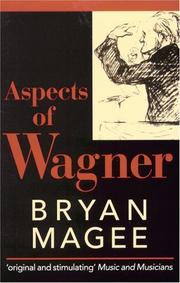
A short book of essays covering the music dramas, the influence, and — in a chapter that has been argued over since 1968 — the antisemitism and the question of whether it can be heard in the works. The best possible second book: it raises the hard question early and does not pretend to close it.
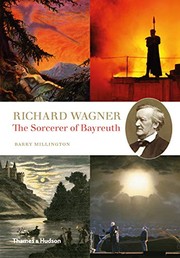
Millington's 'The Sorcerer of Bayreuth' — a well-illustrated modern life-and-works by the editor of the standard Wagner reference, straightforward where the subject invites overheated writing. Our record shows the bare title; use it as the reliable factual spine for everything that follows.
The operas
IntermediateWork through the stage works themselves, ideally alongside recordings. Learn what a leitmotif actually is and is not, read a libretto in full, and meet the most famous political reading of the Ring — written by a socialist playwright who thought it was about capitalism until Wagner's ending stopped cooperating.
▸ Study plan for this stage
Pace: Four to five months for 1,215 pages, and this stage does not work without recordings. Newman's Wagner nights is 724 pages — published in Britain under that title and in America as The Wagner Operas — and is the opera-by-opera guide tracing plots and principal motifs in detail; it is still the standa
- What a leitmotif actually is: a recurring musical idea associated with a character, object or notion, transformed rather than merely repeated, and used to say things the staged action does not.
- What a leitmotif is not. The published motif-labelling guides came largely from others, the labels are interpretive, and treating the technique as a dictionary of fixed meanings misrepresents how the music works.
- The Ring as a single argument across four evenings, in which the ending has to answer the bargain struck in the first scene of Das Rheingold.
- Reading a libretto as a text: Wagner wrote his own, in a deliberately archaic alliterative verse, and the repetitions and narrations are structural rather than lazy.
- Shaw's allegorical reading — Alberich's renunciation of love for power as industrial capitalism, the gods as a governing class — and its genuine explanatory reach across the first three operas.
- Where Shaw breaks down, which he says himself: Götterdämmerung reverts to something closer to grand opera and does not deliver the political conclusion his reading requires.
- Newman's method of tracing motifs through a work in sequence, which is a listening exercise rather than an analytical claim and is the most useful thing on the path for a new listener.
- That a strong interpretation which fails on part of the evidence is still worth reading, because watching where it fails teaches you what the work actually does.
- Define a leitmotif and give two examples of one being transformed rather than repeated. What does the transformation say?
- Summarise the Ring's plot as a single causal chain from Alberich's theft to the final immolation.
- What does reading the libretto give you that following surtitles does not?
- State Shaw's allegory precisely, then say exactly where and why Götterdämmerung defeats it.
- Where do Newman's motif labels look like description and where do they look like interpretation? Find an example of each.
- After hearing and reading one complete opera, what does the orchestra tell you that the characters do not?
- Listen to Das Rheingold in one sitting with Newman open, marking each motif as it first appears. Then listen again without the book and see how many you catch.
- Read one scene of the Ring libretto aloud. The verse is built for sound and the reason for its oddity becomes obvious immediately.
- Take Shaw's reading and test it scene by scene through Die Walküre, marking where it fits and where it strains. Then do the same for Götterdämmerung and watch it collapse.
- Pick one motif and follow every appearance across the cycle, noting what has changed about it each time. This is the single exercise that teaches the technique.
- Write a one-paragraph account of what the Ring is about, then check it against the last ten minutes of Götterdämmerung. Most first answers do not survive.
Next up: Wagner changed the Ring's ending after reading a philosopher, which is a good reason to find out what he was reading.
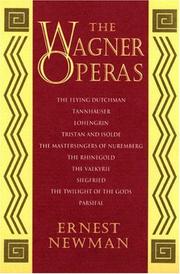
Newman's opera-by-opera guide, published in Britain as 'Wagner Nights' and in America as 'The Wagner Operas', tracing the plots and the principal motifs in detail. Still the standard companion after seventy years, and the book to have open while listening.

The libretto of the four-opera cycle in English, which is worth reading as a text rather than following in surtitles — the alliterative verse and the repetitions are choices, not padding. Our record displays it without the leading article; several translations exist and Stewart Spencer's is the one most often recommended.
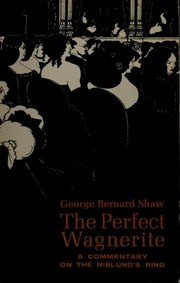
Shaw's 1898 reading of the Ring as an allegory of industrial capitalism, with Alberich as a factory owner — brilliant, tendentious, and openly baffled by Götterdämmerung, which refuses to fit. Read it after the libretto so you can watch a great critic argue with the evidence.
The ideas
BeginnerWagner read Feuerbach, Schopenhauer and Nietzsche, and changed the Ring's ending after Schopenhauer. Understand what he took from them and where later philosophers have found more in the works than he put there, keeping the two questions separate.
▸ Study plan for this stage
Pace: Two months for 654 pages, and the two books do opposite things. Magee's Wagner and philosophy is 398 pages and takes four to five weeks; it is the full-length study of the philosophical formation — the Feuerbach years, the Schopenhauer conversion of 1854 and its effect on the Ring, and the collapse
- Feuerbach's influence on the early conception of the Ring: religion as human projection, and an ending in which human love rather than divine order settles matters.
- The Schopenhauer conversion of 1854 and what it changed — the will as the ground of suffering, renunciation rather than fulfilment as the resolution, and a rewritten ending for a cycle already partly composed.
- That the Ring's text was written before the philosophy that reshaped its meaning, so the finished work carries two incompatible schemes at once. This is a documented compositional fact and it explains a great deal of the interpretive difficulty.
- Tristan as the most direct Schopenhauerian work, in which desire and its extinction are the subject rather than a theme.
- The Nietzsche relationship: early advocacy, the break, and the later polemics, with Nietzsche's changing position being about Wagner's cultural role as much as his music.
- Kitcher and Schacht's question, which is what a life can be worth without gods, and their reading of the cycle as working toward an answer through successive failures.
- The difference between influence and interpretation. What Wagner took from Schopenhauer is a historical question with evidence; what the Ring argues is a philosophical question that does not require his agreement.
- What did Wagner take from Feuerbach, and which parts of the Ring's text reflect it?
- What specifically changed after 1854, and what does it mean that the text was already written?
- How is Tristan Schopenhauerian in a way the Ring is not?
- Trace the Nietzsche relationship from advocacy to attack. What was the break actually about?
- What do Kitcher and Schacht argue the Ring concludes, and what evidence in the work supports it?
- Separate two claims: what Wagner intended and what the work argues. Where on this path have you seen them run together?
- Read the final scene of Götterdämmerung against Magee's account of the two endings, and identify which philosophy the text supports and which the music supports.
- Take Kitcher and Schacht's central claim and test it against Wotan's scenes across the cycle. Their argument stands or falls on him.
- Read a short passage of Schopenhauer on the will alongside the Tristan prelude. The connection is not subtle and hearing it once is worth a chapter of commentary.
- Write out Nietzsche's objections to Wagner in his own terms, then decide which are about the music and which about the culture around it.
- Return to the one-paragraph account of the Ring you wrote in stage two and revise it. Note which philosopher your revision is now leaning on.
Next up: The next stage is the part of the record that no philosophical reading can go round.
Magee's full-length study of the philosophical formation — the Feuerbach years, the Schopenhauer conversion of 1854 and its effect on the Ring, and the collapse of the friendship with Nietzsche. Published in the United States as 'The Tristan Chord', which is a separate record for the same book, so do not buy both.
Two philosophers work through the Ring as a sustained argument about how to live without transcendent meaning, taking the drama seriously as thought rather than as illustration. Read it after Magee: it is what happens when philosophers read Wagner rather than reading what Wagner read.
The antisemitism, and what to do with it
BeginnerTwo things are true at once here and both belong in your reading. The fact is settled: Wagner published Das Judenthum in der Musik in 1850, republished it under his own name in 1869, and returned to the theme repeatedly in his prose. The interpretive question is genuinely open: scholars disagree, in print and in good faith, about whether the antisemitism is encoded in the works themselves — in Mime, Beckmesser, Alberich — or whether that reading projects the prose onto the music. Read the primar
▸ Study plan for this stage
Pace: Four to five months for 1,824 pages, the longest stage on the path, and its structure is deliberate. Read the primary text first: Judaism in music and other essays is 432 pages in English translation, collecting the essay with other prose from the same years, and it takes four weeks. It is read in f
- The documented record: the 1850 publication, the 1869 republication under his own name with an added afterword, and the recurrence of the theme across his prose writings.
- What the essay actually claims, which is worth knowing exactly rather than approximately, because both sides of the interpretive argument build from its specific assertions about language, music and imitation.
- Katz's historical method: situating the writings among their nineteenth-century German contemporaries, which establishes both how conventional and how extreme they were.
- Katz's caution about the scores, which is a methodological position — that a documented prose view does not by itself demonstrate encoding in a dramatic work.
- Weiner's evidence: voice type, physical gesture, speech patterns and bodily description in the characterisation of Mime, Beckmesser and Alberich, read against contemporary antisemitic caricature.
- The shape of the disagreement. Katz and Weiner are not disputing the prose; they disagree about what counts as evidence that a stage character encodes a stereotype.
- The afterlife as a separate question again. Ross shows the works taken up by Zionists, by antisemites, by modernist novelists and by the Nazi state, which means reception cannot settle authorial content.
- The Israeli performance ban and the Bayreuth appropriation as the two points where this ceases to be an academic question and becomes a matter of what gets played and where.
- What does the 1850 essay assert, in its own terms? Set out its claims without paraphrasing them into someone else's summary.
- What did the 1869 republication add, and what does republishing under his own name signify that the anonymous first printing did not?
- How does Katz place Wagner among his contemporaries, and what does that comparison establish?
- What is Weiner's evidence for encoding in the works, and which of his readings do you find strongest and weakest?
- State precisely where Katz and Weiner disagree. It is not about the prose — what is it about?
- Ross declines to reach a verdict. Is that a failure of the book or the honest result of tracing the reception?
- Read the essay in full and write a one-page summary of its claims. Then compare your summary with how three later writers characterise it.
- Take one character Weiner discusses and read his analysis alongside the libretto and a recording. Decide independently whether the evidence he cites is in the work or in the reading.
- Build a two-column table of Katz's and Weiner's arguments on the same points, with the evidence each cites. The table is the state of the field.
- Follow one strand of Ross's reception history — the Zionist reading, or the Nazi appropriation — from beginning to end and note what each group needed Wagner to be.
- Return to the dated note you wrote in stage one about whether an artist's views can be present in works that do not state them. Revise it now, and keep both versions.
Next up: The man who wrote all of this also built an institution to perform it in perpetuity, and both his account of himself and his family's stewardship are part of the same record.
The essay itself, in English translation, alongside other prose from the same years — the primary document, and the only way to judge any argument about it. Read it before the scholarship, because the secondary literature summarises it in very different ways depending on the case being made.

A leading historian of European antisemitism places Wagner's writings precisely in their nineteenth-century context, and concludes that the prose is unambiguous while remaining cautious about reading it into the scores. The most historically disciplined book in this stage.
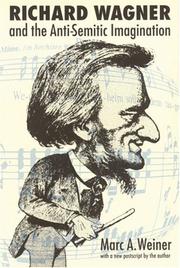
The strongest scholarly case for the opposite conclusion: that antisemitic caricature is embedded in the works themselves through voice type, gesture and bodily imagery. Read it directly against Katz — this pairing is the argument, and it has not been settled.
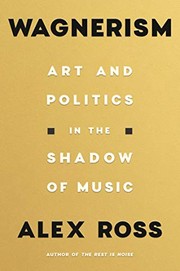
Ross traces Wagner's afterlife across a century and a half of art and politics, from Baudelaire and Willa Cather to Theodor Herzl to the Nazi appropriation and the Israeli performance ban. It refuses to deliver a verdict, and that is why it belongs last here: it shows that the argument has been fought by people with everything at stake in it.
The man and the institution
BeginnerClose with the life at length and the theatre he built to house the work. Both books here should be read with the previous stage still active, because Wagner's own account of himself and the family's later stewardship of Bayreuth are both interested parties in the argument.
▸ Study plan for this stage
Pace: Two and a half months for 997 pages, read with the previous stage still active, because both books here are by interested parties. Wagner's My Life is 428 pages, dictated to Cosima and covering the life to 1864; four weeks, and read it as a document about how he wanted to be understood rather than a
- My Life as an authorised self-presentation, dictated rather than written, to an audience Wagner had in mind, and stopping in 1864 before the Bayreuth years.
- Its characteristic evasions — money, debts, patrons and the circumstances of several relationships — which are the places to read it hardest.
- Cosima's role as amanuensis and later as the custodian of the Bayreuth institution, which makes her a participant in the record rather than a neutral transcriber.
- Newman's reaction against hagiography as his explicit motive, and what that does to his handling of the same episodes.
- The Bayreuth project itself: a purpose-built theatre with a covered orchestra pit and a darkened auditorium, designed to change how an audience receives a work.
- The festival as an institution with a family in charge of it for generations, which is why its history intersects directly with the twentieth-century politics of stage four.
- The patronage of Ludwig II of Bavaria as the material condition without which none of it happens, and the discomfort that produces in accounts written from either side.
- How to use a partisan autobiography and a corrective biography together: the first for what he wanted claimed, the second for what can be documented.
- Where is My Life demonstrably evasive, and what does Newman establish about those same episodes?
- What does Wagner's autobiography want the reader to conclude about him, and by what means?
- What was architecturally new about the Bayreuth theatre, and what was it designed to do to the audience?
- What was Newman reacting against, and how does that shape his handling of Wagner's character?
- How does the Bayreuth family stewardship connect to the reception history in the previous stage?
- Having read both, which parts of the life would you now describe as documented and which as contested?
- Take three episodes from My Life and find Newman's account of each. Note what Wagner omits, and what the omission was doing.
- Read Wagner's account of the Ludwig patronage and then reconstruct the finances from Newman. The discrepancy is the clearest single lesson in reading autobiography.
- Find a photograph or plan of the Bayreuth auditorium and work out what each design decision was for, then compare with a conventional opera house.
- Trace the Bayreuth festival's leadership across generations and set it against the timeline of the twentieth-century events Ross covers.
- Write the two-paragraph account of Wagner you would now give someone — one paragraph on the works, one on the record — and check every clause against a source.
Next up: The path ends with the works, the documented record and the unresolved argument all held at once, which is the only honest position available on this composer.
Wagner's autobiography, dictated to Cosima and covering his life to 1864 — self-serving, evasive about money and about several people, and indispensable for exactly that reason. Read it as a document about how he wanted to be understood.

Newman's four-volume biography, still the standard factual account and written in explicit reaction against the hagiography that surrounded Bayreuth in his lifetime. Our record is the first volume; it is a commitment, and it is the book that established most of what is now simply known about the life.