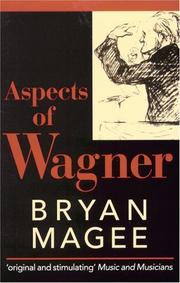
Start with William Berger's Wagner without fear, a practical and often funny guide, opera by opera, for someone about to sit through one for the first time. It assumes nothing and it will get you through the second act of Tristan. Then Bryan Magee's Aspects of Wagner, 112 pages of essays that raise the hard questions early rather than saving them for an appendix.
One fact belongs in the first paragraph rather than a footnote. Wagner published an antisemitic essay, Das Judenthum in der Musik, in 1850 under a pseudonym, reissued and expanded it under his own name in 1869, and returned to the theme repeatedly in his prose. That is documented and not in dispute. What is in dispute, among serious scholars arguing in print and in good faith, is whether that antisemitism is encoded in the music dramas themselves. This path gives you the primary text and both sides of that argument, and does not pretend to settle it.
Getting in
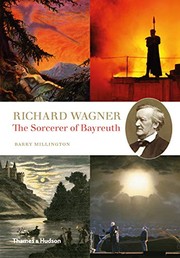
After Berger and Magee, Barry Millington's book is the reliable factual spine. Millington edits the standard Wagner reference and this is a well-illustrated modern life-and-works, straightforward on a subject that invites overheated writing; our catalogue shows it under the bare title Richard Wagner, and it is the volume subtitled The Sorcerer of Bayreuth.
The operas
Ernest Newman's Wagner nights is the opera-by-opera companion, 724 pages tracing plots and principal motifs, published in the United States as The Wagner Operas. Seventy years on it is still the book to have open while listening.
Read a libretto in full. Ring of the Nibelung is the four-opera cycle in English, 340 pages, and it repays being read as a text rather than followed in surtitles: the alliterative verse and the repetitions are choices. Our record displays it without the leading article, and several translations exist — Stewart Spencer's is the one most often recommended.
Then Shaw. The Perfect Wagnerite is his 1898 reading of the Ring as an allegory of industrial capitalism, with Alberich as a factory owner. It is brilliant, tendentious, and openly baffled by Götterdämmerung, which refuses to fit the thesis. Read it after the libretto so you can watch a great critic argue with his own evidence.
The ideas
Magee's Wagner and philosophy is the full-length study of the philosophical formation: the Feuerbach years, the Schopenhauer conversion of 1854 and what it did to the Ring's ending, and the collapse of the friendship with Nietzsche. It was published in the United States as The Tristan Chord, which is a separate record for the same book, so do not buy both. Kitcher and Schacht's Finding an Ending is what happens when philosophers read Wagner rather than reading what Wagner read: the Ring taken as a sustained argument about living without transcendent meaning.
The antisemitism, and what to do with it
Read the primary document first. Judaism in music and other essays is the 1850 essay in English translation alongside other prose from the same years, 432 pages. Read it before the scholarship, because the secondary literature summarises it very differently depending on the case being made.
Then the two arguments, deliberately paired. Jacob Katz's The DARKER side of genius — the odd capitalisation is our record's — places the writings precisely in their nineteenth-century context; Katz was a leading historian of European antisemitism, and he treats the prose as unambiguous while remaining cautious about reading it into the scores. Marc Weiner's Richard Wagner and the anti-Semitic imagination makes the strongest scholarly case for the opposite conclusion: that antisemitic caricature is embedded in the works through voice type, gesture and bodily imagery, in Mime, Beckmesser and Alberich. Read them against each other. That pairing is the argument, and it has not been settled.
Alex Ross's Wagnerism comes last for a reason. It traces the afterlife across a century and a half — Baudelaire, Willa Cather, Theodor Herzl, the Nazi appropriation, the Israeli performance ban — and it declines to deliver a verdict. What it shows instead is that the argument has been fought by people with everything at stake in it.
The man and the institution
Wagner's autobiography, My Life, was dictated to Cosima and covers his life to 1864. It is self-serving and evasive, and indispensable for exactly that reason: read it as a document about how he wanted to be understood. Newman's The life of Richard Wagner is the four-volume standard, written in explicit reaction against the hagiography around Bayreuth; our record is the first volume, so the catalogue is one quarter of the work rather than all of it.
The staged version, with every record dated and measured, is on the Wagner reading path.