Dalziel and Pascoe books in order: where to start with Reginald Hill
Reginald Hill wrote twenty-four Dalziel and Pascoe novels across forty years, and the series he ended is barely the same animal as the one he started. This path reads them in publication order because the change IS the story: a competent 1970 police procedural slowly acquires literary allusion, unreliable narration, and a genuine tragic register. Stage one is the workmanlike beginning, stage three is the leap, and stage four is where Hill becomes one of the best British novelists of his generation who happened to be filed under crime.
Where to start: the early procedurals
BeginnerMeet Dalziel and Pascoe as Hill first conceived them and see the ordinary competent series he began with, so the later transformation is legible.
▸ Study plan for this stage
Pace: Three short novels — 256, 271 and 287 pages, 814 in all — and the lightest stage on the path. Two books a month is the cadence that carries a fourteen-novel run without turning into a chore, and at that rate this stage takes about six weeks. It is also the stage most likely to make you quit, because
- Dalziel and Pascoe as a deliberate class-and-education pairing, already fully formed in the 1970 debut rather than developed over books
- The procedural template Hill starts inside: a closed suspect list, interview scenes, and a solution delivered near the end
- Yorkshire treated as a specific social place rather than as atmosphere
- Pascoe's private life built up here mainly so that later novels have something to damage
- The distance between what these three books do and what the series is famous for — the gap is the thing the path is measuring
- What does Dalziel do in A clubbable woman that a conventional detective of 1970 would not?
- How does An advancement of learning use its campus setting to make an argument about class and education rather than just to supply suspects?
- Why does Ruling passion have to be read before the 1980s novels?
- Which passages in these three books already sound like the later Hill, and which are period procedural furniture?
- After 814 pages, what has Hill established that a standalone crime novel could not?
- Start a one-line note per novel recording what you learn about Ellie Pascoe. Keep it for the whole path; by the fourth stage that list is the emotional ledger the late books draw on.
- Mark the first passage in A clubbable woman where Dalziel is genuinely unpleasant rather than comic, and flag it to return to at the end of the path.
- Count the literary quotations and allusions in Ruling passion — there are very few. Count again in A killing kindness and note the change.
- Before starting stage two, write down the one thing you would change about these books. Hill changed most of them, and your list is how you will notice.
Next up: You now hold the template Hill built for himself, so the 1980s novels register as him testing its walls rather than as ordinary sequels.

The 1970 debut and the correct starting point. It is a conventional procedural with an unconventional double act already fully formed, and reading it first means you watch Hill outgrow his own template rather than being told he did.
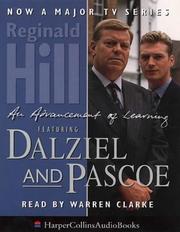
The second book, and the first sign of Hill's real interests: a campus setting, an argument about class and education, and a plot that cares as much about who these people are as who did it.
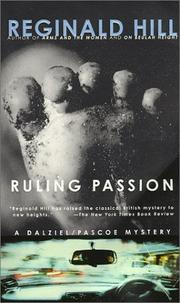
Pascoe's book. His friends are murdered, and Hill uses it to establish the private life that every later novel will keep damaging. Read before the 1980s books, which assume it.
The 1980s: the series finds its voice
IntermediateWatch Hill start experimenting with structure and tone while still working inside the procedural, and see Dalziel deepen from comic grotesque into something harder to dismiss.
▸ Study plan for this stage
Pace: 829 pages across three novels of near-identical length — 269, 280 and 280 — so the load is flat and two a month remains comfortable. Slow down for Under world: the mid-1980s miners' strike is its actual subject, not its backdrop, and it puts the police on the side a reader who has spent five books e
- Quotation and borrowed voice as Hill's recurring device, rehearsed at short length here and run at book length twenty years later
- Structural withholding: Deadheads declines to confirm whether there is a crime at all, and the refusal is the design
- The series acquiring a politics, with Under world putting an industrial dispute rather than a puzzle at its centre
- Damage made permanent — what Under world does to the Pascoe marriage is never repaired
- Dalziel moving from comic grotesque to a man whose judgement the books take seriously
- What does Deadheads gain by leaving its central question unresolved, and what does it cost?
- In A killing kindness, who is speaking when the quotations appear, and why does the answer matter to the solution?
- How does Under world position Dalziel and Pascoe differently with respect to the strike?
- Which of these three could have been written by the author of A clubbable woman, and which could not?
- Where in this stage does the prose first stop sounding like genre writing?
- After Deadheads, write the case you would put to a jury against the suspect, then write the case for coincidence. Hill's refusal to choose between them is the technique to notice.
- Keep the list of quotations from A killing kindness by source; Dialogues of the Dead at stage four runs the same game at full length and the list is worth having.
- Read Under world's strike material against whatever you already believed about that dispute, marking the places where the novel is arguing rather than reporting.
- Reread the opening chapter of Ruling passion after finishing Under world and note what has happened to the Pascoes in between.
Next up: Hill has now tried structure, politics and borrowed voice one at a time, and Bones and silence is where he uses all three at once.
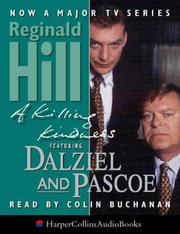
A serial-killer plot that Hill uses to play with quotation and voice — an early rehearsal for the literary games that drive Dialogues of the Dead twenty years later.
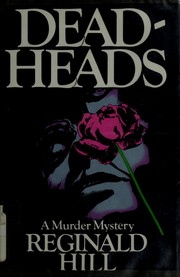
The one where the structure carries the joke: a suspect who may simply be extraordinarily lucky. Hill withholds certainty on purpose, which is the trick the late books are built on.
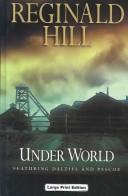
The miners' strike lands in Yorkshire and the series acquires a political spine. It also does real damage to the Pascoe marriage, which the later novels never repair.
The leap into ambition
IntermediateRead the three books where Hill stops writing crime novels that are also good and starts writing good novels that contain crimes.
▸ Study plan for this stage
Pace: The page count jumps: 430, 320 and 375, so 1,125 pages against the previous stage's 829, and Bones and silence and The wood beyond are genuinely denser than the count suggests because each runs a second body of text alongside the investigation. Budget six to eight weeks rather than holding the earli
- The parallel-text structure: a second body of writing — a medieval play cycle, a soldier's papers — running against the modern investigation
- Pastiche as argument, with Pictures of Perfection borrowing Austen's shape to show how far the crime novel will stretch
- Historical braiding in The wood beyond, where a First World War strand becomes a claim about inherited guilt rather than a flashback
- Dalziel cast as God in the mystery play, and what that does to a character originally built as a grotesque
- The point at which detection stops being the reason to keep reading
- Length as a signal: 430 pages for Bones and silence against 256 for the debut is Hill claiming room he did not previously take
- What does the mystery-play production in Bones and silence let Hill say that the investigation alone could not?
- Is Pictures of Perfection a crime novel? Defend either answer from its structure rather than its content.
- How do the two timelines in The wood beyond comment on each other rather than merely alternate?
- Why is this the stage Hill's admirers point to when they call the series literature?
- What has Hill given up in exchange, measured against the tightly plotted 1980s books?
- In Bones and silence, note every place the play text and the investigation touch. The pattern of those contacts is the novel's argument in miniature.
- List the Austen conventions Pictures of Perfection reproduces and the two or three it deliberately breaks.
- Read the historical chapters of The wood beyond consecutively, skipping the modern case, then read the modern case alone. Note what each loses without the other.
- Reread the first chapter of A clubbable woman straight after finishing Bones and silence — 256 pages of plain procedural against 430 of something else. That comparison is the whole path in five minutes.
Next up: The elegiac tone and the double-text method are both now in place, which is precisely the equipment On Beulah Height and Dialogues of the Dead assume.
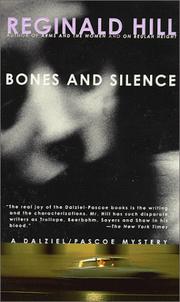
The Gold Dagger winner and the acknowledged turning point. A medieval mystery-play production runs alongside the investigation, and Dalziel plays God — literally. Start counting the series as literature here.

A Jane Austen pastiche with almost no crime in it at all. Hill wrote it to prove the form would stretch, and it stretches. Some readers find it slight; it is the most purely enjoyable book in the run.
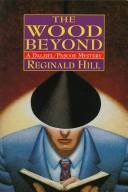
Pascoe's great-grandfather in the trenches, braided with a present-day case. The First World War strand is Hill working at full novelistic strength and sets up the elegiac register of what comes next.
The two peaks
IntermediateRead the three novels that are the reason to take this series seriously, and understand why Hill's admirers argue about which is best.
▸ Study plan for this stage
Pace: The heaviest stage here by a wide margin: 1,462 pages, more than stages one and two combined, with Death's jest book alone at 558. Dialogues of the Dead and Death's jest book are one story split across two volumes — 1,022 pages together — so schedule them as a single book and do not leave months bet
- Grief displacing detection as the engine of a crime novel, with the investigation kept as scaffolding
- The drowned village surfacing in a drought as a literalised return of the past
- Wordplay-driven plotting in Dialogues of the Dead, where the puzzle is textual rather than physical
- The unreliable document — journals, letters, a narrator with motives — as Hill's most formally daring move
- Why Death's jest book cannot function as a standalone sequel, and what its 558 pages are actually completing
- The argument among Hill's readers about which of the two peaks is the better novel, and what each side is valuing
- What is actually under investigation in On Beulah Height, and at what point does the reader realise it?
- How does Dialogues of the Dead make the reader complicit in the killer's game?
- Which narrator in Death's jest book do you trust least, and on what textual evidence?
- Why do Hill's admirers disagree about which of these is his best, and whose case do you find stronger?
- What in the eleven earlier novels is load-bearing for On Beulah Height, such that reading it first would not work?
- Keep a running list of the Dialogues as they appear, with your reading of each, and compare it at the end against what the solution requires them to mean.
- Mark every point in On Beulah Height where a character mishears, mistranslates or misremembers. The novel is assembled out of them.
- Read the last twenty pages of Dialogues of the Dead and the first twenty of Death's jest book in one sitting, to see exactly where one novel was cut into two.
- Return to the Ellie Pascoe notes you began at stage one and check them against where she stands at the end of Death's jest book.
Next up: Having seen how far Hill could take the form, the late novels become a question about how he chose to leave it.

Widely considered his masterpiece: a drowned Yorkshire village, a drought exposing it, and a decades-old disappearance surfacing with it. Grief, not detection, is the subject. Do not read it first — its power depends on knowing these people.
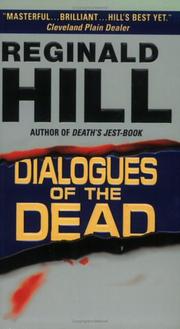
The other peak, and the opposite mode: a killer who writes literary dialogues, a plot built out of wordplay and unreliable text. It has a direct sequel, so read them together.
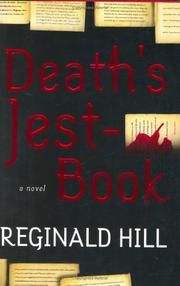
The second half of Dialogues of the Dead, published separately and genuinely incomplete without it. Hill's most formally daring book — journals, letters, and a narrator you cannot trust.
The late books
IntermediateFinish the series and see how Hill chose to end it, including the novel that puts Dalziel himself in the balance.
▸ Study plan for this stage
Pace: Two novels, 416 and 365 pages, 781 in all — a much lighter stage after the 1,462 of the peaks, and readable in a month. Death Comes for the Fat Man, published in the United States as The Death of Dalziel, opens with a bomb and keeps Dalziel unconscious through much of its length; Midnight Fugue conf
- Absence as a structural device: a series lead removed from most of his own book, and the series asked what it was resting on
- Terrorism and the security state entering a run built on Yorkshire policing
- The single-day constraint in Midnight Fugue, and what real-time pressure does to Hill's habitual digressions
- Ending without a summing-up as a deliberate choice rather than an accident of Hill's death
- Which of the late methods are genuine innovations and which have hardened into habit
- What does Death Comes for the Fat Man discover about the series by taking Dalziel out of it?
- How does the near-real-time structure of Midnight Fugue change what Hill is able to include?
- Is Midnight Fugue a satisfying last book, and what would an explicit summing-up have cost?
- Where would you tell a new reader to stop, and on what grounds?
- Across the fourteen novels on this path, what changed most — the prose, the structure, or the moral seriousness?
- Read the first chapter of A clubbable woman and the first chapter of Midnight Fugue back to back, listing the differences in sentence length, point of view and tone.
- Write a 200-word case for the single novel you would hand to someone who will read exactly one Hill, then test it by asking whether that book works without the others.
- Take the ten Dalziel and Pascoe novels this path leaves out, decide which stage each belongs in, and defend one of those placements in writing.
- Revisit the passage you flagged in stage one where Dalziel is first genuinely unpleasant, and reread it after Death Comes for the Fat Man.
Next up: The path stops at fourteen of the twenty-four; the ten it omits are best filled in around the stages above rather than read as a block at the end.
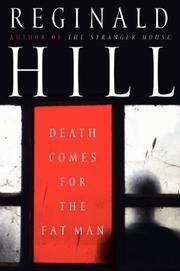
A bomb nearly kills Dalziel and the book spends much of its length with him unconscious. Hill uses the absence to ask what the series has been resting on. Published in the US as The Death of Dalziel.
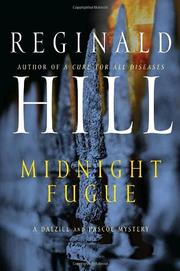
The last novel, unfolding across a single Sunday in something close to real time — a formal constraint Hill sets himself at the very end. Not a summing-up, which is its own kind of honesty.