Rachel Cusk Reading Order: The Outline Trilogy and Where to Start
Cusk's career splits cleanly into before and after Outline, and readers who begin with the early novels or the memoirs meet a genuinely different writer. The Outline trilogy is the reason most people arrive, and it must be read in order — the method accumulates. This path does that first, then works backwards.
Start here: the trilogy, in order
IntermediateRead the three books that changed what her fiction does. Order is not optional here.
▸ Study plan for this stage
Pace: 3-4 weeks, one book a week at roughly 250 pages each. Read them in order and close together: the method accumulates, and the effect weakens badly if you leave months between them.
- Faye characterised only by what she elicits from other people
- The monologue delivered to a listening narrator as the trilogy's basic unit
- Negative space: the narrator defined by what she withholds about herself
- Transit moving into the narrator's own circumstances for the first time
- Kudos closing the argument about who is entitled to tell a story
- Autofiction without confession
- What do you actually learn about Faye across the three books, and by what route?
- Where does Transit differ from Outline in how much the narrator will say?
- What is the trilogy arguing about narrative authority?
- What is the effect of the closing image of Kudos?
- Why does the order matter, given that the books share no plot?
- Count the pages of Outline in which Faye speaks in her own right, and write down what she says
- Read the Athens flight conversation and the final conversation of Kudos on the same day
- Take one monologue and mark every point where the listener's presence becomes visible
- Write down what you know about Faye's marriage after each of the three books and compare the three lists
Next up: Having read the method at full strength, the memoirs show the first person it was built to escape.

A novelist teaching in Athens listens while other people talk about themselves, and is characterised entirely by what she elicits. The narrator's near-absence is the technique.

The same narrator renovating a London flat. The self that Outline withheld begins, fractionally, to appear.

Literary festivals and a Europe arguing with itself. The trilogy's argument about narrative closes here.
The memoirs
IntermediateRead the non-fiction that got her savaged and that explains where the method came from.
▸ Study plan for this stage
Pace: About 2 weeks, one a week. Both are short, at 213 and 160 pages, and both are harder going than the trilogy, so do not read them in a single run.
- Motherhood written without gratitude, and the reviews that followed
- Divorce written without self-exculpation, and the worse reception
- Public hostility as the context for the trilogy's technique
- The first person under attack, and what that does to a writer
- Classical framing in Aftermath, including the Oresteia
- Non-fiction that shows where the method came from
- What specifically did A Life's Work refuse to say that readers expected it to say?
- How does Aftermath handle blame, and where does it place its narrator?
- What in these two books is the trilogy reacting against?
- Do the two memoirs use the same first person?
- Is the hostility they attracted about the books or about the subject?
- Read a contemporary review of A Life's Work alongside its first chapter
- Mark every first-person judgement in Aftermath and ask what Outline would have done with the same material
- Reread the opening of Outline after finishing Aftermath; the withdrawal reads as a direct response
Next up: With the memoirs read, the early fiction can be seen for what it is: the same intelligence still working inside an inherited form.
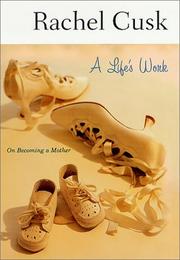
On becoming a mother, and the book that drew genuinely vicious reviews for refusing to be grateful.
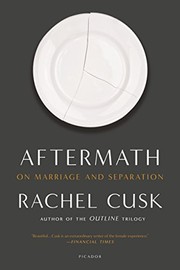
On her divorce, and the one that drew worse. The hostility these two provoked is part of why Outline is written the way it is — she has said as much.
The early fiction
IntermediateThe conventional novels, which read very differently in hindsight.
▸ Study plan for this stage
Pace: About a week for 256 pages. Arlington Park covers a single day across several households, so read a household at a time rather than by chapter count.
- One suburban day, several women, conventional third person
- The same intelligence operating inside an inherited novel form
- Rage held under a domestic surface
- Free indirect style, which the trilogy abandons entirely
- Reading a before book after the after books
- Weather and setting doing structural work across the households
- Whose consciousness does the novel enter, and how does it move between them?
- What does the third person allow Cusk to do that Faye's method cannot?
- Where does the prose already sound like Outline?
- Is anything genuinely lost when she gives this form up?
- How does the book handle the same subject the memoirs treat directly?
- Take one paragraph of free indirect narration and rewrite it as a monologue delivered to Faye
- Compare the party scene here with a festival scene in Kudos
- Lay out the day's timeline and note where the households intersect
Next up: With the before and the after both read, the most recent novel can be judged as a genuine third position rather than a return.
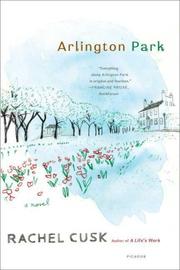
A day in the lives of several women in a London suburb. Recognisably the same intelligence in a much more traditional form.
After the trilogy
IntermediateFinish with the most recent novel.
▸ Study plan for this stage
Pace: Two or three evenings for 184 pages. It is addressed throughout to a listener called Jeffers, and reads best in long sittings that keep the address continuous.
- The address to Jeffers as a return to a named listener
- The Mabel Dodge Luhan source and its account of hosting D. H. Lawrence
- The painter L, and the guest who ruins the host
- Art, marsh landscape and the second place of the title
- First person restored, but not made confessional
- M as a narrator who is present in a way Faye never is
- Who is Jeffers, and what does addressing him do to the telling?
- What does M want from L, and what does she get instead?
- How does knowing the Luhan source change what the novel is doing?
- Is this a return to the pre-Outline mode or a development past it?
- Where does the novel side with M, and where does it quietly refuse to?
- Read her note on the Luhan source and then reread the first chapter
- Compare M's narration with Faye's: both first person, opposite postures
- List the moments L is cruel and decide each time whether the novel agrees with M's account of it
Next up: Having read the trilogy, the memoirs and the novels on either side of them, her essays and criticism are the remaining part of the work.

A woman invites a famous painter to stay, with catastrophic results. Loosely drawn from Mabel Dodge Luhan's memoir of D. H. Lawrence, and the strangest thing she has written.