Puppetry: The Best Books to Read, in Order
Puppetry is two crafts that have to be learned together: building a figure that can move, and moving it so an audience forgets you are there. This path starts with puppets you can make from foam and fabric this weekend, moves to the standard practical manuals covering hand, rod, marionette and shadow figures, then to performance — focus, breath, weight, eye line — and closes with the history and theory that explain why an object pretending to be alive has held audiences for three thousand years.
Build something that moves
BeginnerMake three or four working puppets from cheap materials, get a mouth to open on the beat of a word, and learn what a puppet needs structurally before worrying about what it looks like
▸ Study plan for this stage
Pace: Three to four weeks, and only 256 pages across the three books, because these are project books you work from rather than read. Materials before you start: socks, paper bags and card for the first weekend; then upholstery foam, contact adhesive, fleece, felt, dowel and wire for the second. A craft k
- Mouth mechanics: the hinge, the palate, and getting the mouth to close on the consonant rather than after it
- Hand position inside a puppet, and how it determines what the figure can and cannot do
- Foam carving and fleece skinning as the standard route to a soft puppet head
- The four figure families — glove, rod, marionette, shadow — and what each demands of the performer
- Structure before appearance: a puppet that moves badly cannot be rescued by a good face
- Arm rods and controls as the point where building and performing meet
- What makes a mouth open on the beat of a word rather than half a beat late?
- What does a puppet need structurally before any decision about how it looks?
- Which of the four figure types suits what you actually want to perform, and what does Currell say it costs?
- What can Kennedy's foam-and-fleece construction do that a sock cannot, and what does it demand in return?
- Which of your first puppets is hardest to hold for ten minutes, and what in its build is responsible?
- Build three Henson projects in a weekend and perform the same sentence with each; write which one carried it and why.
- Carve and skin one foam head from Kennedy, then compare its mouth action against your best sock puppet.
- Make one arm-rod puppet and one glove puppet of similar size and try the same gesture with both.
- Read Currell's survey and write a one-paragraph case for the figure type you are going to build in the next stage.
Next up: With rough puppets in your hands and a figure type chosen, you are ready to build to a drawing rather than by improvisation.

Written for children and better than that sounds: Henson's projects use socks, paper bags, envelopes and foam, and every one teaches a real principle about mouth mechanics or hand position. The fastest way to get a working puppet in your hand tonight.
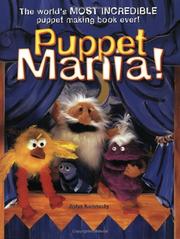
The step up in materials — foam carving, fleece skinning, arm rods, moving eyes. Kennedy performs professionally and builds like it, so this is where a sock puppet becomes something you would put on a stage.

Published as An Introduction to Puppets and Puppet-Making. Currell surveys every figure type — glove, rod, marionette, shadow — in one short volume, so you can choose which tradition to go deeper in before committing to a manual.
The practical manuals
BeginnerWork from a full reference on construction, stringing, jointing and stagecraft, and be able to build a marionette or a rod puppet to a drawing rather than by improvisation
▸ Study plan for this stage
Pace: Three to six months, and this is a stage you live inside rather than finish. 691 pages across the three, but none of them is a read-through. David Currell's The complete book of puppetry (206 pages) is the standard English-language manual and is deliberately slow going: keep it open on the bench and
- Jointing: which joints a figure needs for the movement you want and which only add weight
- Stringing patterns and the control bar as a system — where each string attaches and what it governs
- Building to a drawing, with proportions decided before any material is cut
- Weight and balance in a marionette, and why a heavy hand reads as a gesture
- Booths, bridges and sightlines: what the audience can see of you and how the staging hides it
- Lighting a puppet stage, which is not lighting an actor
- Which joints does a walking marionette need, and what does each one contribute?
- How does a control bar translate the operator's wrist into the figure's movement?
- What does Currell's later book change or add about staging that the Complete Book does not cover?
- Where does Batchelder's older construction method differ from Currell's, and which would you use?
- What sightline problem does a booth solve and what problem does it create?
- Draw a full-size figure before building it, then build to the drawing and record every place you departed from it.
- String one marionette to Currell's pattern, then deliberately rehang two strings and observe what breaks.
- Build a simple booth or bridge and check the sightlines from three seating positions, including a low one.
- Take one construction problem and solve it twice — once Currell's way, once Batchelder's — and keep the better solution.
Next up: A well-built figure is only half the craft; the next stage is the half most self-taught puppeteers never get to.

The standard English-language manual, and still the most complete on construction detail — control bars, stringing patterns, jointing, staging and lighting. Slow going by design; treat it as the reference you work beside rather than read through.
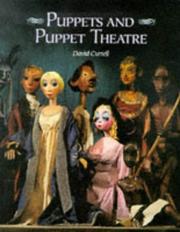
Currell's later and better-illustrated volume, stronger on the theatre side — booths, bridges, sightlines and how a show is actually mounted. Read it after the Complete Book, which it updates rather than replaces.
A 1947 handbook that has never quite been superseded on hand and rod puppet construction, from a period when the craft was taught in workshops rather than books. Placed here as the historical counterweight to Currell's method.
Performance
IntermediateManipulate a puppet so it appears to breathe, look and think — eye focus, weight, stillness, the timing of a head turn — and understand how a company is built around that skill
▸ Study plan for this stage
Pace: Two to three months of rehearsal, with 777 pages of reading spread thinly across it. Larry Engler and Carol Fijan's Making puppets come alive (192 pages) is the working text and should be read in short sections that you immediately rehearse — focus, breath, weight, the timing of a head turn. A chapt
- Focus: where the puppet is looking, and why an audience reads that as thought
- Breath — the small idle movement that makes a still puppet alive rather than dead
- Weight, and why a puppet that lifts a light object badly destroys the illusion instantly
- Stillness as an active choice that reads as attention
- Working to a monitor, and the reversal of everything your body expects
- The difference between a moving object and a character, which is the whole subject
- How does a puppet establish focus, and what happens to the audience when focus drifts?
- Why does stillness read as attention rather than as absence?
- What did performing to camera require that stage puppetry did not, on Jones's account of the Muppets?
- How do you show a puppet thinking rather than reacting?
- What are the three most common manipulation faults in your own recorded rehearsal?
- Record thirty seconds of your puppet doing nothing but breathing and looking, then watch it back and mark every moment it dies.
- Perform the same short speech twice, once with the puppet's eye line corrected to the audience and once not, and compare on video.
- Practise picking up and putting down three objects of different weights until the weight reads on camera.
- Take one technique Jones describes from Henson's monitor work and apply it to a rehearsal, then write what changed.
Next up: Once you can make a figure appear to think, it is worth knowing what three thousand years of other people doing the same thing found out.
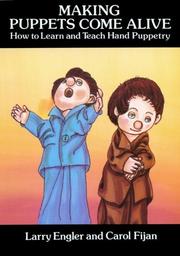
The best book in English on manipulation as opposed to construction: how a puppet establishes focus, how it breathes, why stillness reads as attention. This is the stage most self-taught puppeteers skip and the one that separates a moving object from a character.
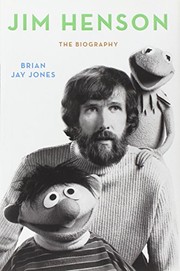
A serious biography that is also the clearest account of how a puppet performance is built for a camera — monitor work, eye line, the technical inventions behind the Muppets. Read it for the working method, not the nostalgia.
History, theory and the uncanny
IntermediatePlace your own work inside a global tradition — bunraku, wayang, Punch, the European marionette theatre, contemporary object theatre — and be able to argue about why an inanimate figure moves an audience
▸ Study plan for this stage
Pace: Two to three months, and the four books demand different treatment. Bil Baird's The art of the puppet (251 pages) is heavily pictorial — an illustrated world history written by a master puppeteer — so schedule it as looking rather than reading, a few long sessions covering shadow theatre, bunraku, P
- Bunraku's three-operator convention and what it assumes about the audience's attention
- Shadow theatre and wayang as complete traditions with their own dramaturgy, not simplified puppetry
- Punch as a survival with a documented performance history and a violent repertoire
- Object theatre and animated form as they are practised now, which is Francis's subject
- Puppetry used for political and experimental work rather than for children, on Bell's cases
- The uncanny: why an inanimate figure moving reads as alive and as wrong at the same time
- What problem does bunraku's operator convention solve that a hidden puppeteer does not?
- Which solutions from other traditions in Baird would work for a problem in your own build?
- What does Francis mean by treating puppetry as a branch of theatre, and what follows for how a show is written?
- What did American companies in Bell's account use puppets to say that actors could not?
- What is Gross's explanation for the puppet's unsettling effect, and does it match your own experience of performing one?
- Watch a recording of a bunraku performance and a wayang performance, then read Baird on both and write what the books added that watching did not.
- Take one technical solution from a tradition in Baird — a joint, a control, a screen — and prototype it.
- Apply Francis's dramaturgical framing to a short piece you have performed and rewrite it as a script rather than a routine.
- After Gross, perform your best puppet for someone who has not seen it and ask them what unsettled them; write down whether Gross predicted it.
Next up: The path ends here: from this point the work is a company, a repertoire, or a single tradition studied in the language it is performed in.
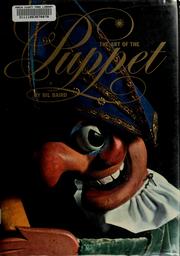
The illustrated world history, written by a master puppeteer rather than an academic, covering shadow theatre, bunraku, Punch and the European marionette stage. Heavily pictorial — read it for the range of solutions other traditions found to problems you have already met.

The contemporary theory book: Francis treats puppetry as a branch of theatre with its own dramaturgy, and covers object theatre and animated form as they are practised now. The bridge from craft to the modern professional stage.

A scholarly history of twentieth-century American puppetry — Bread and Puppet, the avant-garde, television — that shows the form repeatedly used for political and experimental work. Read it after Francis, whose framework it fills in with cases.

Resolves in the catalogue simply as Puppet. Gross is a literary critic writing on why the puppet unsettles us — Kleist, Kafka, Punch, the marionette as a figure for the soul. The right last book: no technique in it at all, and it changes how you look at everything you have built.