Start with The Muppets make puppets. It is written for children, it is 112 pages, and it is still the fastest way to have a working puppet in your hand tonight — Cheryl Henson's projects use socks, paper bags, envelopes and foam, and every one of them teaches a real principle about mouth mechanics or hand position. Read a construction manual first and you will spend a week on a head that cannot say a word convincingly.
That is the logic of the whole order here. Puppetry is two crafts that have to be learned together: building a figure that can move, and moving it so an audience forgets you are there. Almost every book on the shelf teaches one and assumes the other, so the sequence matters more than the individual choices.
Build three or four things that move
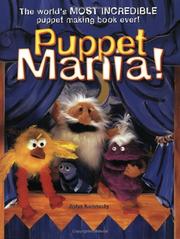
After Henson, step up materials with John E. Kennedy's Puppet Mania — foam carving, fleece skinning, arm rods, moving eyes. Kennedy performs professionally and builds like it, so this is where a sock puppet becomes something you would put on a stage. Then take David Currell's An introduction to puppets and puppet-making, a short survey of every figure type — glove, rod, marionette, shadow — so you can pick which tradition to go deeper in before committing to a full manual.
The reference manuals
The complete book of puppetry is the standard English-language manual and still the most complete on construction detail: control bars, stringing patterns, jointing, staging, lighting. It is slow going by design. Treat it as the book you work beside rather than read through. Currell's later Puppets and Puppet Theatre is better illustrated and much stronger on the theatre side — booths, bridges, sightlines, how a show is actually mounted — and updates rather than replaces the earlier volume, so read it second.
Alongside them sits The puppet theatre handbook, a 1947 book by Marjorie Batchelder that has never quite been superseded on hand and rod puppet construction, from a period when the craft was taught in workshops rather than from books. Two records on this path carry their author's name inverted in our catalogue — Batchelder's and John Bell's — which is a cataloguing artefact rather than anything about the books.
Manipulation, which is the stage most people skip
Larry Engler and Carol Fijan's Making puppets come alive is the best book in English on manipulation as opposed to construction: how a puppet establishes focus, how it breathes, why stillness reads as attention. This is the difference between a moving object and a character, and it is where most self-taught puppeteers stall. Follow it with Brian Jay Jones's Jim Henson: the Biography, a serious 585-page life that doubles as the clearest published account of how a puppet performance is built for a camera — monitor work, eye line, the technical inventions behind the Muppets. Read it for the working method rather than the nostalgia.
History, theory and why an object unsettles us
Bil Baird's The art of the puppet is the illustrated world history, written by a master puppeteer rather than an academic, covering shadow theatre, bunraku, Punch and the European marionette stage. It is heavily pictorial; read it for the range of solutions other traditions found to problems you have already met. Penny Francis's Puppetry is the contemporary theory book, treating the form as a branch of theatre with its own dramaturgy and covering object theatre as it is practised now. John Bell's American Puppet Modernism fills that framework in with cases — Bread and Puppet, the avant-garde, television — and shows the form repeatedly used for political and experimental work.
End with Kenneth Gross's Puppet, catalogued under that bare title. Gross is a literary critic, there is no technique in it at all, and it is about why the puppet unsettles us: Kleist, Kafka, Punch, the marionette as a figure for the soul. It changes how you look at everything you have built, which is why it comes last rather than first.
The full sequence, with the stage goals and a study plan for each, is at /paths/pt_ai_puppetry.