Poul Anderson books in order: where to start
Poul Anderson published for fifty years and wrote two more or less separate bodies of work: rigorous hard science fiction, often built around one physical idea followed to its conclusion, and Norse and medieval fantasy written in a deliberately archaic register. Readers who bounce off him usually started in the wrong half. There is no compulsory order — almost everything stands alone — so this path picks the two best entry points, then walks each strand outward, and only afterwards enters the two long future histories that people mistakenly try to start with. The Technic History in particular is a fix-up of stories written over decades and reprinted in several incompatible orders, so the stage below reads it in internal chronology rather than by publication.
Where to Start
BeginnerRead the three books that show what Anderson is for, one from each of his modes, and work out which strand you want to follow.
▸ Study plan for this stage
Pace: Two to three weeks for around 575 pages. These are short novels by modern standards and all three can be read in a sitting or two each. Tau Zero (192 pages) first, then Brain Wave (176 pages), then The Broken Sword (208 pages) — and leave a day between the second and third, because the change of reg
- Anderson's characteristic method in the science fiction: take one physical premise, refuse to soften it, and follow it to wherever it goes. Tau Zero is the purest example — a ship that cannot decelerate, time dilation taken to its limit, and no authorial rescue.
- The same method applied to biology and society rather than physics produces Brain Wave, where the interesting material is not the premise but the consequences: what happens to institutions, to work, to animals, and to people whose identity was built on being clever.
- The two halves of the bibliography are genuinely separate. Readers who bounce off Anderson have usually started in the wrong one, which is why this stage samples both before committing you to either.
- The Broken Sword is written in a deliberately archaic register drawn from Norse saga — flat, fatalistic, and indifferent to the interiority a modern novel would supply. That is a technique, not a limitation, and it is the register the fourth stage returns to.
- The contrast the path is set up to make: The Broken Sword and The Fellowship of the Ring appeared in the same year and are utterly unlike each other. Anderson's elves are cruel, his fate is inescapable, and there is no consolation at the end.
- Anderson wrote for fifty years and almost everything stands alone. There is no compulsory order, which means the sequencing questions on this path are about what makes him readable rather than about continuity.
- Hard science fiction as a mode is on display here as an argument about honesty: the pleasure is watching a writer decline the escape hatches his premise offers him.
- In Tau Zero, at what point does the physical premise stop being a plot device and start being the subject of the novel? Identify the passage.
- Brain Wave changes everyone at once. Which of its consequences did you find genuinely thought through, and which are asserted rather than worked out?
- Describe the prose of The Broken Sword in technical terms. What does the saga register let Anderson do, and what does it cost him?
- Compare how the two hard science fiction novels handle character. Are the people instruments of the premise, and does that damage the books or is it the form working as intended?
- After three books, which strand do you want to follow — the physics, or the Norse fantasy — and what specifically in the reading decided it?
- While reading Tau Zero, keep a note of every point where a lesser writer would have introduced a rescue, and what Anderson does instead.
- List the consequences of Brain Wave's premise that Anderson develops, then add three he does not. Judging what a premise-driven novel leaves out is the core skill for reading him.
- Copy out one paragraph of The Broken Sword and one from Tau Zero and mark the differences in sentence length, vocabulary and access to interior thought. The same author wrote both.
- Write a hundred words on which of the three you would hand to a friend who had never read Anderson, and why that choice depends on the friend rather than on the books.
Next up: Having seen Anderson serious in both modes, the next stage shows what happens when he applies the same engineering logic to material he is enjoying himself with.
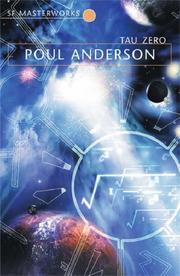
The standard recommendation and the best single argument for him: a starship that cannot decelerate, relativistic time dilation taken to its limit, and a crew who must live with it. Start here if you want hard SF — one idea, followed honestly to the end of the universe.

His first novel and still one of his best premises: Earth leaves a field that has been suppressing intelligence, and every mind on the planet — human and animal — gets sharper overnight. Short, and read second because it shows the same method as Tau Zero applied to biology and society instead of physics.
The other entry point, and the one to start from if you came for fantasy: a bleak Norse-saga novel of changelings, elves and a cursed blade, published the same year as The Fellowship of the Ring and utterly unlike it. Read the 1954 text if you have the choice; Anderson revised it in 1971 and most readers prefer the original.
History, Magic and Comedy
BeginnerFollow the lighter strand, where Anderson applies engineering logic to fantasy and medieval settings, and see the humour that the hard SF novels mostly hide.
▸ Study plan for this stage
Pace: Two to three weeks for around 625 pages. The High Crusade (192 pages) is a two-sitting book and the fastest read on the path. Three Hearts and Three Lions (179 pages) is similarly short. Operation Chaos (256 pages) is a fix-up assembled from separate stories, so it reads better in the units it was w
- The recurring joke of this stage is a serious method: Anderson treats magic, feudal politics and alien technology as systems with rules, and then lets competent people exploit the rules. The comedy comes from rigour, not from silliness.
- The High Crusade inverts the standard first-contact story by giving the technological advantage to the aliens and the initiative to the humans. What makes it work is that the fourteenth-century characters are not stupid — they are simply working from a different model of the world and reasoning well
- Three Hearts and Three Lions supplies furniture that later fantasy took wholesale: the Law and Chaos axis as a cosmological structure, the paladin, and a troll that regenerates unless burned. Reading it before the later fantasies shows where the genre's defaults came from.
- A Danish engineer dropped into a Carolingian world is Anderson's standing device — the technically-minded modern protagonist who solves fantastic problems by asking what the mechanism is. It is the same move as the hard science fiction, with the physics swapped out.
- Operation Chaos treats magic as an engineering discipline with licensing, professional bodies and military applications, which is the fullest version of the systems-building joke.
- A fix-up is a novel assembled from previously published stories, and it reads unevenly by construction — repeated exposition, tonal shifts, episodic structure. Recognising the form here prepares you for the Technic History, which is a fix-up sequence on a much larger scale.
- Anderson's humour is dry and structural rather than verbal. It sits in the situations and the deadpan competence of the characters, and it is easy to miss if you are reading fast.
- What makes The High Crusade funny rather than merely clever? Point to a specific scene and say where the comedy is actually generated.
- How do the medieval characters in The High Crusade reason about the alien technology, and where is Anderson careful to keep them intelligent rather than credulous?
- Identify three elements of Three Hearts and Three Lions that later became genre standards. What did Anderson do with them that his imitators dropped?
- How does the Law versus Chaos axis differ from a good versus evil axis, and what kinds of story does it make possible?
- Where does Operation Chaos show its origin as separate stories, and does the seam damage it?
- For The High Crusade, list every rule Anderson establishes about the alien technology and check whether any later plot development breaks one. He is unusually disciplined about this.
- Write a page on Three Hearts and Three Lions as a source document for later fantasy, naming the specific inheritances and one thing later writers took without its original justification.
- Take the magic system of Operation Chaos and write out its rules as a technical specification. If it can be specified, that is the joke made explicit.
- Read one chapter of The High Crusade immediately after a chapter of Tau Zero and describe the difference in what Anderson is asking his prose to do.
Next up: You now know both of Anderson's registers well enough to enter the long future history that most readers wrongly try to start with, and to read it in the order that makes it a single arc.

An alien scoutship lands in fourteenth-century England and the local baron captures it. Deadpan, fast, and the most purely enjoyable book he wrote — read it directly after the openers as a palate cleanser.

A Danish engineer is thrown into a Carolingian world of Law and Chaos. Historically important as well as fun: its troll, its paladin and its Law-Chaos axis fed directly into early Dungeons and Dragons, so read it before the later fantasies to see where the furniture came from.

A fix-up set in a modern America where magic is an engineering discipline, complete with a werewolf reservist and a witch. Placed third because the joke lands hardest once you have seen Anderson do rigorous systems-building straight.
The Technic History
IntermediateRead Anderson's main future history in internal chronological order — the merchant era of the Polesotechnic League, then the decadent Terran Empire of Dominic Flandry — and see one civilisation's rise and decline across two very different protagonists.
▸ Study plan for this stage
Pace: Six to eight weeks for roughly 950 pages plus The Man Who Counts. Read strictly in the order given, which is internal chronology rather than publication order — this sequence has been reprinted in several incompatible arrangements, and the arc only works one way. The Man Who Counts and Trader to the
- The Technic History is a future history: one civilisation followed across centuries through different protagonists, with the setting rather than any character as the continuous element. Reading it in internal chronology rather than publication order turns a set of stories into an arc of rise and dec
- The Polesotechnic League era runs on trade. Contact between species happens because someone wants to sell something, and Anderson leaves the ethics of that uncomfortably open rather than resolving them.
- Nicholas van Rijn is the merchant as protagonist — greedy, crude, and consistently the most competent person present. The Man Who Counts is his introduction and is often reprinted as War of the Wing-Men, which is the same book.
- The Earth Book of Stormgate is framed as an in-universe anthology compiled centuries after the events. That framing is the first structural signal that the League era is being looked back on rather than lived in, which is the hinge of the whole sequence.
- The Ythrians are Anderson's most sustained attempt at a genuinely non-human intelligence with its own economics and ethics, and they are the reason The People of the Wind can present a war with no wrong side.
- The People of the Wind is the pivot: the young Terran Empire against the Ythrian Domain, with Anderson refusing to make either party the villain. Read before Flandry, because it establishes what the Empire has become.
- Dominic Flandry is the tonal opposite of van Rijn — an intelligence officer serving an empire he knows is dying, whose successes buy time rather than win anything. That shift from expansion to holding action is the point of reading the sequence in this order.
- Fix-up construction again: the sequence was written over decades, so continuity is retrofitted and some stories fit awkwardly. Treat the inconsistencies as an artefact of composition rather than a puzzle to solve.
- What does the Polesotechnic League actually value, and where does Anderson allow the trading ethic to look bad without saying so?
- Van Rijn is repeatedly the smartest person in the room while being personally unappealing. What is Anderson doing with that combination?
- How does the in-universe framing of The Earth Book of Stormgate change the way its stories read, and what would be lost if the frame were removed?
- In The People of the Wind, reconstruct the case for the Terran Empire and the case for the Ythrian Domain in their strongest forms. Which one does the novel let you conclude is right?
- How does the sequence's mood change between van Rijn and Flandry, and which specific book marks the turn?
- Where can you see the seams of decades of composition — retrofitted continuity, shifted assumptions, repeated exposition — and does any of it damage the arc?
- Keep a running timeline of the Technic sequence as you read, marking each book's position and the state of the League or Empire at that point. It is the only practical defence against the reprint chaos.
- Write a one-page profile of Ythrian society from The Earth Book of Stormgate and The People of the Wind — economics, ethics, social structure — using only what the texts state.
- Compare the opening chapter of Trader to the Stars with the opening of Ensign Flandry and describe how Anderson signals which era you are in before any plot happens.
- Take one League-era story and one Flandry-era story dealing with a similar problem, and note what the difference in available options says about the civilisation between them.
- Draft the argument for reading the sequence in publication order instead, then say why you would still recommend internal chronology to a new reader.
Next up: The future history shows Anderson working at length; the last stage shows him at his most ambitious in each of his two modes, including the book most readers name as his best.

The first Nicholas van Rijn novel and the correct start to the Technic sequence: three humans stranded on a hostile world with nothing but a fat merchant's talent for negotiation. Often reprinted under the title War of the Wing-Men, which is the same book.
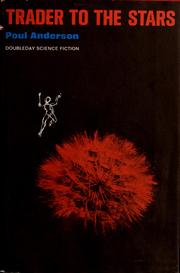
Three van Rijn novellas that establish how the Polesotechnic League actually works — trade as the engine of contact, with the ethics left uncomfortably open. Read after The Man Who Counts, which introduces the man himself.

The big League collection, framed as an in-universe anthology compiled centuries later. It fills in the Ythrians and the wider setting, and its framing device is the first sign that the League era is being looked back on rather than lived in.

The hinge novel: a war between the young Terran Empire and the Ythrian Domain, with Anderson refusing to make either side wrong. Read it before Flandry, because it explains what the Empire has become and why.
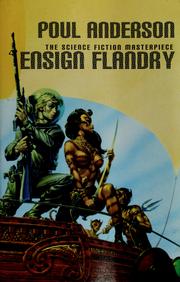
Dominic Flandry's first outing, and the start of the sequence's second half — an intelligence officer serving an empire he knows is dying, buying time rather than winning. The tone shift from van Rijn is the point of reading them in this order.
The Norse Strain and the Long Books
IntermediateRead Anderson at his most ambitious in each mode: the saga retellings written in his hardest style, and the late novels that stretch a single idea across millennia.
▸ Study plan for this stage
Pace: Five to seven weeks for around 1,425 pages. Hrolf Kraki's Saga (275 pages) is short but slow, because the saga voice resists skimming — a week and a half. The Time Patrol (621 pages) is a collection and should be read a story at a time over two to three weeks rather than straight through. The Boat o
- Hrolf Kraki's Saga is a straight retelling of the legendary Danish material that shares sources with Beowulf, told in a plain saga voice with no fantasy softening — no interiority, no consolation, and violence reported rather than dramatised.
- The saga register is a deliberate technical constraint, and reading it after The Broken Sword lets you see Anderson using the same voice for a legend he is transmitting rather than a story he invented. War of the Gods and Mother of Kings continue this strand.
- The Time Patrol stories are where Anderson's two competences finally meet: his genuine historical reading and his science fiction discipline, applied to agents preserving a timeline. The history is not backdrop — it carries the plots.
- Time travel here is treated as a system with rules and costs, which is the same method as the magic in Operation Chaos and the physics in Tau Zero. Anderson is consistent about this across fifty years.
- This volume is a collected edition, and an earlier selection is also catalogued as The Guardians of Time; one purchase covers the core stories.
- The Boat of a Million Years takes a single premise — a handful of people who do not age — and uses it to write historical fiction and hard science fiction inside one book, moving from the Phoenicians to interstellar flight.
- The immortality premise solves a structural problem: it gives Anderson continuous characters across the historical span he has spent a career reading about, which is why the book reads as a summation rather than a departure. Genesis and Harvest of Stars go further into the far future.
- The recurring Anderson subject visible across this stage is duration — what survives, what is preserved, and what it costs to hold a line against time. It is the same subject as the dying empire, in a different key.
- What does the saga voice of Hrolf Kraki's Saga withhold that a modern novel would supply, and what does the withholding achieve?
- In the Time Patrol stories, how does Anderson use historical detail — as texture, as constraint, or as the actual engine of the plot? Find an example of each.
- What are the rules of time travel in the Patrol stories, and where does Anderson accept an awkward consequence rather than legislate it away?
- How does The Boat of a Million Years handle the transition from historical episodes to speculative ones, and does the joint hold?
- Looking back across all four stages, what is Anderson's persistent subject? Make the case from the books rather than from biography.
- Which of the two halves of his bibliography do you now think is the stronger, and what would a reader who disagreed point to?
- Read a chapter of Hrolf Kraki's Saga alongside a passage of Beowulf in any translation and note what Anderson has kept, dropped and modernised.
- For three Time Patrol stories, write down the historical period, what Anderson clearly knows about it, and where the story would collapse if the history were wrong.
- Map The Boat of a Million Years as a timeline of episodes and mark which characters carry across each gap. The structure of the book becomes visible immediately.
- Write 300 words recommending an entry point to Anderson for three different readers — one who wants physics, one who wants fantasy, one who wants history — and justify each from books you have now read.
- Assemble your own onward list from the titles named across this path — War of the Gods, Mother of Kings, Genesis, Harvest of Stars — and decide which strand you are actually going to continue.
Next up: That closes the path: both halves of a fifty-year bibliography, the future history read as one arc rather than a pile of reprints, and the late novel that puts the historian and the hard science fiction writer in the same book.

A straight retelling of the legendary Danish saga that shares source material with Beowulf, in a plain saga voice with no fantasy softening. The natural next step after The Broken Sword; if it works for you, War of the Gods and Mother of Kings continue the strand.
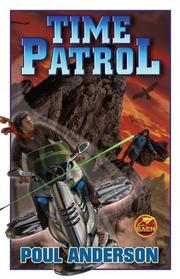
The time-travel stories, where his historical reading and his SF discipline finally meet: agents preserving a timeline through periods Anderson clearly knows in detail. This resolves as a collected volume, and an earlier selection is also catalogued as The Guardians of Time — one purchase covers the core stories.
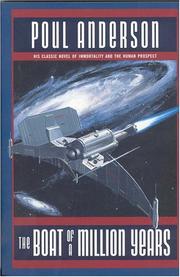
His late masterpiece and the right book to finish on: a handful of accidental immortals traced from the Phoenicians to interstellar flight, which lets him write historical fiction and hard SF in one book. For more of his late work, Genesis and Harvest of Stars go further into the far future.