Peter Straub books in order: where to start
Straub is the horror writer for people who care about structure. Almost every one of his books is a story about someone telling a story, and the pleasure is in watching the frame collapse. Start with Ghost Story, which is his best-known book and also his most elegantly built; then the two novels around it, then the early work, then the Blue Rose sequence, which is where he stops writing horror and starts writing something harder to name.
Start here
IntermediateRead the three books of Straub's first major period and get the method — nested narration, an old crime, a town that knows.
▸ Study plan for this stage
Pace: Five to six weeks for 1,557 pages — Ghost Story at 507, Shadowland at 480 and Floating Dragon at 570. Read them in that order. Ghost Story is the slowest of the three to start and the most rewarding to finish; give it a hundred pages before deciding. All three are horror novels with sustained violen
- Straub's method, which the whole path is about: almost every book is a story about someone telling a story, and the pleasure is in watching the frame collapse. Ghost Story states this openly — four old men who meet to tell each other stories until one turns out to be true.
- The nested narration in Ghost Story is the structure to understand first. Stories inside stories, unreliable tellers, and a reader who has to reconstruct the actual event from several partial accounts.
- The literary lineage is explicit rather than incidental. Straub is working through Hawthorne and Henry James here, and the ghost-story tradition he is drawing on is a nineteenth-century American one. Recognising that is why the book has lasted where its contemporaries have not.
- The buried-crime structure: a town, an old wrong, and a present-day reckoning. This is the armature of nearly everything Straub wrote, and once you have seen it in Ghost Story you will see it in every later stage.
- Shadowland is the most purely enjoyable of the three — two boys at a boarding school and a summer with a stage magician who is more than a stage magician — and it shows the fairy-tale machinery running under the horror.
- Magic and storytelling as the same thing. Shadowland makes the equation explicit: the magician's craft and the novelist's are treated as one, which is the thematic key to the later books.
- Floating Dragon is the excessive one — a Connecticut suburb, a chemical spill and a recurring evil, all at maximum volume. It is the least controlled of the three, and it matters because it shows what Straub was reacting against when he wrote the Blue Rose books.
- Reading these three in order gives you a writer testing the limits of the commercial horror novel and then finding them unsatisfactory. The next two stages are what he did about it.
- Map the nested narratives in Ghost Story. Who is telling what to whom, and at what point does the outermost frame become unreliable?
- Where does Straub signal his debt to James and Hawthorne? Give two specific instances rather than the general resemblance.
- State the buried-crime structure as a template. Now fill it in for Ghost Story and for Floating Dragon, and note where each departs from it.
- In Shadowland, what is the equation between magic and storytelling actually claiming? Is it a metaphor or a plot mechanic?
- Floating Dragon is the least controlled of the three. Name three specific ways in which control is lost, and say whether any of them is a deliberate effect.
- On the evidence of these three, what problem is Straub going to need to solve next?
- Diagram Ghost Story's frames on one page — who narrates each section and what each narrator could not have known. The diagram is the reading.
- Keep a running list of every story-within-a-story across the three novels. By the end of the path it will be the argument that this is one continuous project rather than a career of separate books.
- Write a paragraph on Floating Dragon's excesses and another on what a disciplined version of the same novel would look like. Straub effectively wrote that disciplined version later.
- Note which of the three you enjoyed most and which you thought was best. If the answers differ, that difference is worth holding on to for the Blue Rose stage.
Next up: You have the mature method at full volume; the early novels show the same writer working small, quietly, and much closer to James.

The obvious and correct starting point. Four old men in upstate New York tell each other stories until one of them turns out to be true. Straub is openly working through Hawthorne and James here, and the structure is the reason the book has lasted where most 1979 bestsellers have not.

Two boys at a boarding school and a summer with a stage magician who is not only a stage magician. The most purely enjoyable Straub, and the one that shows the fairy-tale machinery under the horror. Read it second.
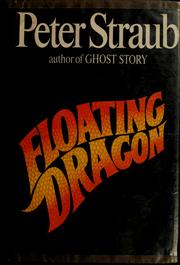
The excessive one — a Connecticut suburb, a chemical spill and a recurring evil, all at maximum volume. It is the least controlled book of the three and worth reading precisely because it shows what Straub was reacting against when he wrote Koko.
The early novels
IntermediateSee the quieter, more Jamesian writer who existed before Ghost Story made him a bestseller.
▸ Study plan for this stage
Pace: Two to three weeks for 576 pages — Julia at 288 and If You Could See Me Now at 288. Both are short and both are quiet, and after the previous stage the change of scale is abrupt. Read Julia first. Neither is difficult, but they reward slow reading in a way Floating Dragon does not: the effects are a
- Julia is Straub's first supernatural novel: a bereaved woman alone in a London house, with a persistent ambiguity about whether anything supernatural is occurring at all. That ambiguity is the technique he never fully abandoned.
- The Jamesian question — is the haunting real or is the narrator's mind producing it — is genuinely unresolved here rather than resolved late. Notice how Straub keeps both readings live to the last page.
- This is a smaller, more restrained writer than the one in stage one, and knowing that the quiet novelist came first changes how you read the excesses of Floating Dragon.
- If You Could See Me Now: a man returns to a Wisconsin farming town twenty years after a girl drowned. It is the clearest early version of the buried-crime structure, stripped of the machinery Ghost Story wraps around it.
- The returning outsider is a recurring Straub figure — someone who left, comes back, and finds the town has agreed on a version of events. He uses it in the Blue Rose books too.
- Small-town complicity as the actual horror. In both early novels the supernatural element is secondary to what the community has decided not to say, and that priority holds across the whole career.
- Julia was filmed under the title Full Circle, which is worth knowing if you go looking for it under one name and find the other.
- In Julia, list the evidence for a supernatural explanation and the evidence for a psychological one. Does Straub tip the balance at any point?
- How does Straub sustain ambiguity for a whole novel without it becoming a trick? What does he refuse to do?
- If You Could See Me Now uses the buried-crime structure with almost no apparatus. What does the bare version reveal about how the structure works?
- What does the returning-outsider figure allow a novelist to do that a resident protagonist could not?
- Having read the early novels after the famous ones, which stage now looks like the anomaly in Straub's career?
- Read Julia twice — once for the story, once tracking only the ambiguity, marking every passage that supports each reading. The second pass is where the book actually is.
- Compare the town in If You Could See Me Now with the town in Ghost Story. Write a paragraph on what the larger book adds and what it loses.
- Take one scene from Julia and rewrite it in the register of Floating Dragon. The exercise makes the range of one writer's technique concrete.
- Predict, before starting the Blue Rose books, which of these two modes Straub will take forward. Check the prediction after Koko.
Next up: The restrained early manner and the elaborate later one are both in play; the Blue Rose sequence is where Straub combines them and abandons the supernatural almost entirely.
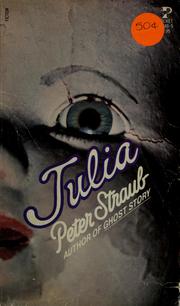
His first supernatural novel: a bereaved woman alone in a London house, and an ambiguity about whether anything supernatural is happening at all that Straub never fully abandoned. Filmed as Full Circle.
A man returns to a Wisconsin farming town twenty years after a girl drowned. Small-scale and restrained, and the clearest early version of the buried-crime structure that Ghost Story and the Blue Rose books both use.
The Blue Rose books
IntermediateRead the sequence Straub considered his real achievement, and follow how it moves from crime novel to a book about the impossibility of writing one.
▸ Study plan for this stage
Pace: Two to three months for 2,431 pages — Koko at 635, Mystery at 548, The Throat at 704 and The Hellfire Club at 544. Read the first three in order; they are a sequence and The Throat depends on both predecessors. The Hellfire Club follows as a coda. This is the most demanding stage on the path and the
- Koko relocates Straub's subject from ghosts to history: four Vietnam veterans hunting a fifth, with almost nothing supernatural in it. The horror is what men did and saw, and the move is deliberate rather than a genre experiment. It won the World Fantasy Award.
- Tim Underhill, introduced here, is the sequence's central figure and eventually its narrator — a novelist inside the novels, which is how Straub gets the frame-and-teller problem directly into the plot.
- Mystery reads as a standalone and is the most conventionally satisfying of the three: a Caribbean island, a boy, an old unsolved killing, with Underhill only at the edges. It is doing setup work that is invisible until The Throat.
- The Throat is where the sequence becomes what it was for. Underhill narrates, the Blue Rose murders are finally addressed, and the novel keeps turning over the question of who is entitled to tell the story. Do not read it first.
- The trilogy's real subject is the impossibility of writing a crime novel honestly — the investigation keeps discovering that the act of narrating is part of the crime. That is the idea the whole path has been circling.
- The three books are formally unlike each other: a manhunt thriller, a coming-of-age mystery, and a metafictional reckoning. Recognising them as one sequence despite that is most of the work of this stage.
- The Hellfire Club sits adjacent to the Blue Rose material — a kidnapping, a literary hoax and a country house — and is more of a straightforward thriller. Read it after The Throat as a coda; it is less demanding, which is welcome at that point.
- The literary-hoax plot of The Hellfire Club is Straub returning to the same theme from a different angle: authorship, attribution, and who owns a story.
- What does Koko gain by having no supernatural element? Would the novel work with one?
- Trace Tim Underhill across the three books. How does his role change, and what is the effect of his becoming the narrator?
- Mystery reads as a standalone. What is it actually setting up, and when did you realise?
- In The Throat, what is the novel claiming about who gets to tell a story? Point to the passages where the claim is made rather than implied.
- State the case that the Blue Rose books are Straub's real achievement. Then state the case for Ghost Story. Which do you hold and why?
- How does the literary hoax in The Hellfire Club relate to the concerns of the trilogy proper?
- Keep a Blue Rose chronology as you read — the historical murders, the Vietnam material, the present-day investigations — since the three novels present these events out of order deliberately.
- After Mystery, write down what you think it contributed to the sequence. Revise the note after The Throat. The revision is the point.
- Take one passage of The Throat where Underhill discusses his own writing and analyse what it is doing to the surrounding narrative.
- Compare the buried-crime structure here with its bare form in If You Could See Me Now. Write a page on what twenty-four hundred pages add to a structure that worked in under three hundred.
- Decide, before starting, whether The Hellfire Club belongs to this stage or to the next. Defend your answer after reading it.
Next up: Straub has taken the frame-and-teller problem as far as a crime sequence allows; the late novels take it further by making the unreliability structural rather than narrated.
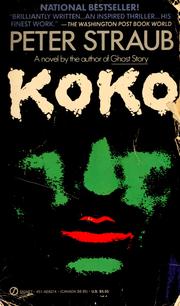
Four Vietnam veterans hunt a fifth. It won the World Fantasy Award and contains almost nothing supernatural — Straub deliberately relocating his subject from ghosts to what men did and saw. The entry point to the trilogy.
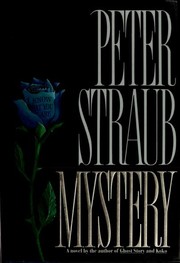
A Caribbean island, a boy, an old unsolved killing, and Tim Underhill from Koko appearing at the edges. It reads as a standalone and is the most conventionally satisfying of the three.

The book the other two were building toward, and the best thing Straub wrote. Underhill narrates, the Blue Rose murders are finally addressed, and the novel keeps turning over the question of who gets to tell the story. Do not read it first.
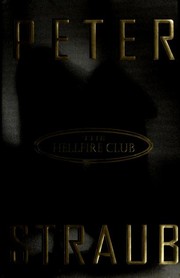
A kidnapping, a literary hoax and a country house, sitting adjacent to the Blue Rose material. Read it after The Throat as a coda; it is more of a thriller and less demanding, which is welcome at this point.
Later Straub
IntermediateFollow the late novels, which are formally the strangest work in his catalogue.
▸ Study plan for this stage
Pace: Six to eight weeks for 1,433 pages — Mr. X at 520, Lost Boy Lost Girl at 325 and A Dark Matter at 588. Read them in that order, which is also the order of increasing formal strangeness. Lost Boy Lost Girl is much the shortest and the most direct; the other two are the hardest reading on the path in
- Mr. X is an overt Lovecraft pastiche wrapped around a doubled-identity story, and it is the point at which Straub begins writing about literary influence itself rather than merely exhibiting it. It won a Bram Stoker Award.
- Pastiche as subject. When a writer this concerned with narration writes in another writer's voice, the borrowed voice becomes part of the plot rather than an homage.
- Lost Boy Lost Girl brings Tim Underhill back and is the most emotionally direct thing Straub wrote — short, spare, and with the machinery almost entirely stripped away. It also won a Bram Stoker Award.
- Grief as the engine. The late books are markedly more interested in loss than the early ones, and Lost Boy Lost Girl is where that is clearest.
- A Dark Matter is the fullest statement of the idea running under the whole path: a ritual in a Wisconsin meadow reconstructed decades later from five incompatible accounts, none of which can be reconciled with the others.
- The incompatible-accounts structure is the endpoint of a career-long argument. Ghost Story had unreliable tellers, The Throat had a narrator interrogating his own authority, and A Dark Matter simply refuses to adjudicate.
- In the Night Room continues the Lost Boy Lost Girl story if you want it, and is worth knowing about even though this stage does not require it.
- A Dark Matter is the right novel to finish on. It is not his best book and it is his most complete statement, which are different things and worth distinguishing.
- What does Mr. X do with Lovecraft beyond imitating him? Where does the pastiche become an argument?
- Lost Boy Lost Girl is the most emotionally direct of Straub's novels. What has he removed to achieve that, and what is lost with it?
- In A Dark Matter, are the five accounts genuinely irreconcilable, or does the novel favour one? Argue from the text.
- Trace the unreliable-narration problem from Ghost Story through The Throat to A Dark Matter. What is the trajectory?
- Is A Dark Matter a better novel or a more complete statement of Straub's concerns? Distinguish the two judgements.
- For A Dark Matter, tabulate the five accounts against the events they describe and mark every contradiction. The table is what the novel is about.
- Read one chapter of Mr. X alongside a Lovecraft story and note what Straub keeps, what he exaggerates and what he refuses.
- Write a page on Lost Boy Lost Girl's economy — what a three-hundred-page Straub novel can and cannot do compared with a seven-hundred-page one.
- Return to the list of stories-within-stories you began in stage one and complete it through the late novels. That list is the evidence for treating this as one project.
Next up: The novels are done; the last stage covers the shorter fiction, where a good deal of Straub's best writing is, and places the two books written with Stephen King.
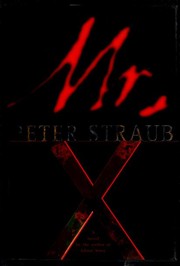
An overt Lovecraft pastiche wrapped around a doubled-identity story, and a Bram Stoker Award winner. The point where Straub starts writing about influence itself.
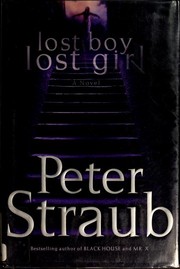
Catalogued as 'Lost boy lost girl'. Tim Underhill returns; a boy vanishes; the novel is short, spare and the most emotionally direct thing Straub did. Won the Bram Stoker Award.
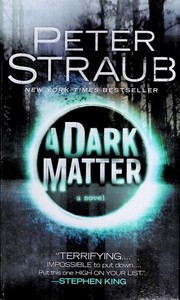
A 1960s ritual in a Wisconsin meadow, reconstructed decades later from five incompatible accounts. It is the fullest statement of the idea running under everything else on this list, and the right novel to finish on. In the Night Room continues the lost boy lost girl story if you want it.
Short fiction and the collaborations
IntermediateCover the novellas, which are where a lot of Straub's best work is, and place the Stephen King books.
▸ Study plan for this stage
Pace: Three to four weeks for 1,248 pages — Interior Darkness at 479 and The Talisman at 769. Read the collection first and in pieces rather than straight through; short fiction read continuously flattens. The Talisman is a long, loose novel best read as a break rather than as a culmination. A buying note
- Interior Darkness is the career-spanning selected stories, including The Juniper Tree and Bunny Is Good Bread, and it supersedes the earlier collections Houses Without Doors and Magic Terror for a new reader. If you read one collection, read this one.
- A good deal of Straub's best work is at novella length. The compression suits a writer whose effects depend on withholding, and several of these are stronger than the novels around them.
- The Juniper Tree and Bunny Is Good Bread are the two most often cited, and both deal with the abuse of children — the recurring subject the Blue Rose books approached at novel length.
- Reading the stories after the novels lets you see the same structures at small scale: the nested telling, the buried crime, the narrator who cannot be trusted about his own childhood.
- The Talisman, co-written with Stephen King, is a genuine collaboration rather than a King novel with a guest. A boy walks across two Americas, and the book is longer and looser than Straub alone.
- Distinguishing the two hands is a legitimate reading exercise and also a trap — the collaboration is thoroughly mixed, and confident attributions of particular passages are usually wrong.
- The Talisman sits outside the main line of Straub's work. It is a quest fantasy, not a story about storytelling, and placing it at the end rather than in sequence reflects that.
- Black House, the sequel, continues the story and connects to King's own larger sequence. The catalogue holds it inside the omnibus with The Talisman, so buy deliberately if you want it.
- Take The Juniper Tree and describe its structure. Which of the novels does it most resemble in method?
- What does the novella length allow Straub to do that the novel does not? Give a specific effect that depends on brevity.
- How does the treatment of childhood in the short fiction compare with the same material in the Blue Rose sequence?
- Read fifty pages of The Talisman and try to attribute passages to each author. Then read fifty more and assess how confident you should have been.
- Where does The Talisman sit in Straub's career — an excursion, an influence, or an anomaly? Defend the choice.
- Having finished the path: what is Peter Straub actually writing about, in one sentence?
- Read Interior Darkness a story at a time over several weeks, writing a two-line note on each: what is told, who tells it, and what the telling conceals.
- Pick the single best story in the collection and write a paragraph defending the choice against the two next-best.
- Read The Talisman as a break from the analysis and enjoy it. Then write one paragraph on why it does not fit the pattern of everything else on this path.
- Write the final artefact of the whole path: a one-page reading guide to Straub — where to start, what to skip, which sequence is the real achievement, and which book to finish on.
- Return to the frames diagram you drew for Ghost Story in stage one and see whether you would draw it differently now. Almost certainly you would.
Next up: This is the end of the path: the famous novels, the quiet early ones, the Blue Rose sequence Straub thought was his real work, the formally strange late books, the short fiction and the King collaborations, all read as one continuous argument about who is telling the story.

The career-spanning selected stories, including The Juniper Tree and Bunny Is Good Bread. If you read one collection, read this one — it supersedes the earlier Houses Without Doors and Magic Terror for a new reader.
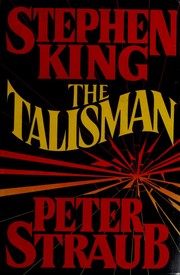
Co-written with Stephen King, and a genuine collaboration rather than a King book with a guest. A boy walks across two Americas; it is longer and looser than Straub alone. Its sequel Black House is catalogued only inside a two-novel omnibus with this book, so buy carefully if you want it separately.