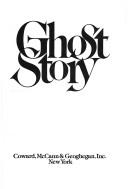
Start with Ghost story. Four old men in upstate New York tell each other tales until one of them turns out to be true, and it is both the book Straub is known for and the cleanest demonstration of his method — a story about people telling a story, with the pleasure lying in watching the frame collapse. The alternative entry people suggest is the Blue Rose trilogy, which is the better body of work and completely the wrong place to begin, because its whole effect depends on knowing what kind of novel it is refusing to be.
Straub does not have a single spine. He wrote mostly standalone novels, one loose trilogy, one late pair, two collaborations with Stephen King and a large amount of short fiction, and he died in 2022, so the catalogue is closed. The useful question is not what order but which group, so here is the grouping.
The first major period
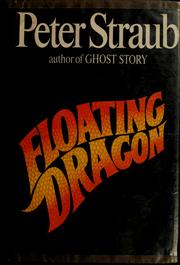
Ghost story is 1979 and openly working through Hawthorne and Henry James, which is why it has lasted where most bestsellers of that year have not. Shadowland is two boys at a boarding school and a summer with a stage magician who is not only a stage magician; it is the most purely enjoyable book he wrote and shows the fairy-tale machinery under the horror. Floating dragon is the excessive one — a Connecticut suburb, a chemical spill, a recurring evil, everything at maximum volume. It is the least controlled of the three, and worth reading because it shows what Straub was reacting against a few years later.
The early novels
Julia was his first supernatural novel: a bereaved woman alone in a London house, with a permanent ambiguity about whether anything supernatural is happening at all. It was filmed as Full Circle. If you could see me now has a man return to a Wisconsin farming town twenty years after a girl drowned — small-scale, restrained, and the clearest early version of the buried-crime structure he used for the rest of his career.
The Blue Rose books
This is the sequence Straub considered his real achievement, and the one place where order genuinely matters. Koko has four Vietnam veterans hunting a fifth; it won the World Fantasy Award and contains almost nothing supernatural, because he was deliberately relocating his subject from ghosts to what men did and saw. Mystery is a Caribbean island, a boy and an old unsolved killing, with Tim Underhill at the edges; it reads as a standalone and is the most conventionally satisfying of the three. The throat is the book the other two were building toward and the best thing he wrote — Underhill narrates, the Blue Rose murders are finally addressed, and the novel will not stop asking who is entitled to tell the story. Do not read it first.
The Hellfire Club sits adjacent to that material: a kidnapping, a literary hoax and a country house. Read it after The throat as a coda, where its lighter thriller register is welcome.
Late Straub
Mr. X is an overt Lovecraft pastiche wrapped around a doubled-identity story, a Bram Stoker Award winner, and the point where he begins writing about literary influence itself. Lost boy lost girl is short, spare and the most emotionally direct thing he did, with Underhill returning; it also won a Stoker, and its story continues in In the Night Room. A Dark Matter reconstructs a 1960s ritual in a Wisconsin meadow from five incompatible accounts, and is the fullest statement of the idea running under all of it. It is the right novel to finish on.
Short fiction and the King books
Interior Darkness is the career-spanning selected stories, and supersedes the earlier collections Houses Without Doors and Magic Terror for a new reader. A lot of Straub's best work is at novella length, so do not treat this as optional.
The talisman was co-written with Stephen King and is a genuine collaboration rather than a King novel with a guest — a boy walking across two Americas, longer and looser than Straub alone. It was published in 1984; the year on our catalogue record for it is wrong. Its sequel, Black House, is held here only inside a two-novel omnibus with The talisman, so buy carefully if you want it on its own.
More horror reading orders are on Discover.
Follow the full ordered path here: Peter Straub books in order: where to start.