Osamu Tezuka Reading Order: Where to Start With the Godfather of Manga
Osamu Tezuka drew for forty years and left something like 150,000 pages, so the honest problem with him is not where he is good but where a new reader can get in without drowning. The usual advice — start with Buddha — puts a seven-hundred-page religious epic in front of someone who has never read him, and it loses people. This path starts instead with Black Jack, the episodic medical stories that are the easiest Tezuka to pick up and put down, then takes the early work that built the industry, then Buddha, and finishes with the late adult manga most readers do not know exists. Two things to know before buying. Tezuka in English is not one numbered series but several separate works with separate numbering, so this path treats each as its own run and stays inside one edition of each: the Vertical Black Jack, the Dark Horse Astro Boy, the arc-titled Buddha volumes, and the standalone books. And Phoenix — his career-long masterwork, and by reputation his best — does not resolve to a usable English record here under any form tested, so it is named and not listed. A path without Phoenix is not a complete Tezuka; it is the Tezuka you can actually buy.
Start With the Outlaw Surgeon
BeginnerGet used to Tezuka's line, his tonal whiplash and his cartoon-faces-in-serious-stories habit, in the format where none of it requires commitment.
▸ Study plan for this stage
Pace: Two to three weeks for a little under a thousand pages - Black Jack Vol. 5 is 320 pages, Vol. 6 is 336 and Vol. 7 is 336 - and a volume goes down in two or three evenings because each is a set of twenty-page self-contained cases rather than a continuous story. Note where this stage starts and why: t
- The episodic contract: a case, a fee, an operation and a twist, in twenty pages, repeated - and how much variation Tezuka gets out of a fixed container
- Black Jack himself as a deliberately unexplained figure, whose backstory is dispensed in fragments across dozens of stories rather than established at the start
- The recurring moral shape: the patient who deserves nothing being saved, the respectable person being refused, and the fee as the mechanism that makes the judgement visible
- Tezuka's cartooning as a system - the round, rubbery figures rendering surgery, mutilation and grief without the register collapsing
- Panel-to-panel storytelling under extreme compression: a life established, threatened and resolved inside twenty pages
- The star system, Tezuka's habit of reusing a stock company of character designs across unrelated works, which begins to be visible once you have read three volumes
- Why an episodic series is the right entry to a cartoonist with a hundred and fifty thousand pages behind him - you can stop at any point and lose nothing
- What is the fee actually for, narratively? What would change if Black Jack worked without charging?
- Take three consecutive stories and identify the point in each where the case stops being medical. Is it always in the same place?
- How does Tezuka draw a body in extremity without abandoning the cartoon style, and what does the style let him do that realism would not?
- What do you actually know about Black Jack's past after three volumes, and how was each piece delivered?
- Which of the stories in these volumes would not work at forty pages, and which would be better?
- Take one twenty-page story and break it down panel by panel on paper: how many panels, how many pages before the patient appears, where the turn falls, how many panels the ending gets. Then do the same for a second story and compare. Tezuka works to a very tight structural template and it is legible after two examples.
- Keep a list of every fragment of Black Jack's own history that appears across the three volumes, with the story it appeared in. By the end you will have assembled a backstory the series never tells you directly, which is the technique the whole run depends on.
- Pick the story in these three volumes that ends somewhere strangest relative to where it began, and write a paragraph on how the swerve was prepared. There is almost always a planted panel two-thirds of the way in.
- Note every character design that looks like it belongs to someone else - a face that seems to have wandered in from another book. Tezuka's star system is one of the odder things about his catalogue, and starting the list here means you will spot the repeats in every later stage.
Next up: Black Jack is late Tezuka working at the top of a form he invented; the next stage goes back to the work that built the industry in the first place.
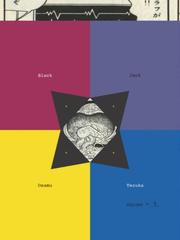
Short, self-contained cases about an unlicensed surgeon who charges impossible fees and keeps a private moral code — the most accessible door into Tezuka there is. It starts at volume five for a catalogue reason, not a story one: this is the seventeen-volume Vertical edition, whose earlier volumes have no record here, and the series is deliberately episodic, so any volume is a legitimate first volume.
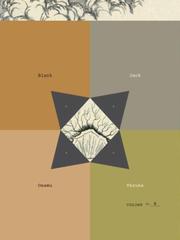
More of the same, which is the point — the format only reveals itself over three or four volumes, as you notice how often a twenty-page medical melodrama ends somewhere much stranger than it began.
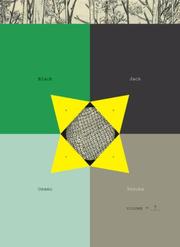
Enough Black Jack to know whether Tezuka is for you. If these worked, everything later on this path will; if they did not, nothing later is more approachable.
The Work That Built the Industry
IntermediateRead the early Tezuka that invented the conventions everyone after him inherited, and see him as a postwar author rather than a children's cartoonist.
▸ Study plan for this stage
Pace: Two weeks for about 780 pages. Astro Boy Vol. 1 is 224 pages and Vol. 2 is 208, and this is the Dark Horse English edition, which runs to twenty-three volumes and opens with Tezuka's own framing introductions - so unlike Black Jack, start at volume one here. Several later volumes of that edition hav
- The Astro Boy premise as it actually is rather than as remembered: a robot built to replace a dead child, and a creator who rejects him for failing to grow
- Robot rights as the series' running political subject, explicit rather than implied by volume two, and its relation to postwar Japanese anxieties about technology and occupation
- Tezuka's authorial introductions in this edition, in which he comments on his own decades-old work, and what they show about how he regarded it
- Princess Knight and the invention of shojo conventions - the large eyes, the interiority, the romance structure, the gender-swap plot - and the fact that one book established a whole strand of the medium
- The same drawing vocabulary serving a boys' science-fiction serial and a girls' fairy-tale romance, which is the clearest demonstration of what a house style buys
- Serial construction for a weekly children's magazine: cliffhangers, recap, and episode lengths dictated by the publication rather than by the story
- Why these are the works that built an industry - not because they are his best, but because they established the formats everything after uses
- What is Astro Boy actually about, once you have read two volumes rather than remembered the character?
- Where does the robot-rights material become explicit, and how does Tezuka handle a political argument in a children's serial?
- What do Tezuka's own introductions tell you about his relationship to this work later in his life?
- Which specific visual and narrative conventions in Princess Knight would you now recognise in later shojo manga?
- The two books were made for different audiences. Name three things Tezuka changes and three he does not.
- Put a page of Astro Boy and a page of Princess Knight side by side and list what is identical - panel shapes, faces, sound effects, comic asides - and what is different. The exercise is short and it settles what a personal style actually consists of.
- Read one Astro Boy episode and one Black Jack story from the previous stage back to back, and compare how each handles a twenty-page unit. Twenty-five years separate them and the structural continuity is the finding.
- Track the gender-swap plot in Princess Knight scene by scene and note every point where the story tests it. Then write a paragraph on what the book seems to conclude, and how confidently. It is a founding text and it is not tidy.
- Add every reused character design you spot to the star-system list you began in stage one. Astro Boy and Princess Knight are where several of the recurring faces originate, and seeing them appear later in the adult books is a genuine pleasure that only works if the list exists.
Next up: Having seen the children's serials that made his name, you are ready for the long religious epic that is usually - and wrongly - recommended as the place to begin.
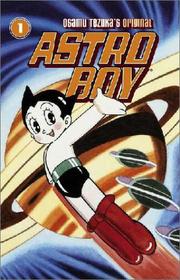
The famous one, and much odder than its reputation — a robot child built to replace a dead son, running on unresolved anxieties about technology and postwar Japan. This is the Dark Horse edition, which runs to twenty-three volumes and opens with Tezuka's own framing introductions, so start at volume one here.
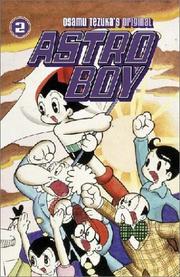
Continues directly from volume one and includes stories where the robot-rights material becomes explicit rather than implied. Several later volumes in this edition have no records here, so treat these two as a sample of the run rather than the run itself.

A standalone rather than part of a numbered run: the founding text of shojo manga, about a princess raised as a prince, and the reason a whole strand of the medium looks the way it does. Read after Astro Boy so you can watch the same cartoon vocabulary aimed at an entirely different audience.
Buddha
IntermediateRead the opening half of Tezuka's long-form religious epic, and understand why it is both his most celebrated work and a bad place to begin.
▸ Study plan for this stage
Pace: Four to five weeks for the first four volumes, about 1,500 pages: Kapilavastu is 400 pages, The Four Encounters 411, Devadatta 322 and The Forest of Uruvela 366. A volume a week is comfortable. The cataloguing convention matters here and is worth stating plainly: this work is catalogued under each v
- That the story opens long before Siddhartha is born, and with the caste system rather than with the man - the structural decision that defines the whole work
- The invented and expanded characters who carry as much of the narrative as the historical figures, and what a religious epic gains by giving most of its pages to people the tradition does not name
- The four encounters - age, sickness, death and the ascetic - as the traditional turning point, and how Tezuka stages a scene every reader already knows the ending of
- Devadatta and the series' real subject: the people around the Buddha whom his enlightenment does nothing for
- Tonal collision as method - slapstick inside tragedy, anachronistic jokes inside a sixth-century-BCE setting - and the argument that this is how Tezuka keeps a sacred subject human
- Nature drawing as a register of its own: the animal and landscape sequences are where he stops cartooning and shows what else he can do
- The difference between this and a devotional work: Tezuka is not writing scripture and takes considerable liberties with the tradition
- Why does Kapilavastu spend its opening on caste rather than on Siddhartha? What would be lost if it did not?
- Name three major characters in these four volumes who are not part of the traditional account. What is each of them for?
- How does Tezuka stage the four encounters, and how does he generate tension in a sequence whose outcome is fixed?
- What does Devadatta's role suggest about Tezuka's view of enlightenment as a solution to anything?
- Pick one place where a joke interrupts a solemn scene. Does it damage the scene? Argue it both ways.
- Mark every tonal break in one volume - every gag inside a serious sequence - and note what happens on the page immediately after. There is a pattern, and finding it is the single most useful thing you can do with this work.
- Take the four encounters sequence and compare it against any short account of the traditional version. List Tezuka's additions, omissions and inventions. The list is the argument about what kind of book this is.
- Follow one non-canonical character across all four volumes and write their story separately from the Buddha's. Most readers find that it is the more affecting of the two, which is the point Devadatta is making.
- Find the three or four pages in these volumes where the drawing changes most - usually animals or landscape - and study them against a typical page of Black Jack. Same cartoonist, twenty years apart, working at opposite ends of his range.
- Decide at the end of The Forest of Uruvela whether to continue, and write down the reason. The remaining four volumes are named in the schedule above and are available; the decision is a real one and worth making explicitly rather than by drift.
Next up: Buddha is Tezuka at his most expansive and most public; the last stage is the work most readers do not know exists, where he stops performing for a general audience entirely.
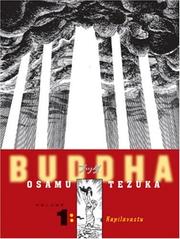
Buddha volume one. This work is catalogued here under each volume's own arc title rather than by number, so that is the convention this stage uses throughout — do not also buy a copy labelled volume one, it is the same book. It opens long before Siddhartha's birth, with the caste system rather than the man.
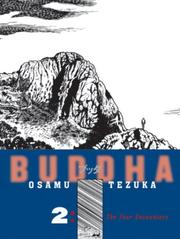
Volume two. The young prince meets age, sickness, death and an ascetic — the traditional turning point — told with Tezuka's usual willingness to break the mood with a gag two panels later.
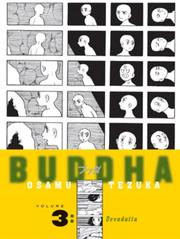
Volume three, and the one that establishes the series' real interest: the people around the Buddha, particularly the ones his enlightenment does nothing for.
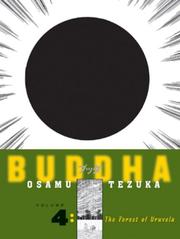
Volume four, the halfway point, and a fair place to decide whether to finish. The remaining four are Deer Park, Ananda, Prince Ajatasattu and Jetavana, all available under those titles — this path stops here rather than spending half its length on one work.
The Adult Tezuka
IntermediateRead the late standalone seinen work most readers never reach — the material that makes the case for Tezuka as a serious novelist rather than a beloved institution.
▸ Study plan for this stage
Pace: Six to eight weeks for about 2,600 pages, the heaviest stage on this path. Ode to Kirihito is 827 pages, MW 584, Apollo's Song 544 and Message to Adolf 630. Each is a single-volume novel rather than a serial, and each wants a week to ten days. Read them in the order given: Kirihito first because it
- Gekiga and the adult manga market of the late 1960s and 1970s, and what changed for a cartoonist who had built his career on children's serials
- The medical body as Tezuka's recurring subject - Kirihito's disease that turns people into animals is the same preoccupation as Black Jack pushed to allegory
- MW as a deliberate withholding: no moral centre, no redemptive turn, and how visible the choice is once you know his default register
- Reincarnation as narrative architecture in Apollo's Song - the same soul, a new setting, a fixed punishment - and how a chain of lives generates a structure a single plot cannot
- Message to Adolf's braided construction: three lives across three countries and thirty years, and Tezuka's tightest control of a long narrative
- The Holocaust and the founding of Israel handled by a Japanese cartoonist for a Japanese readership, and what that vantage does to the material
- Tonal control as the late achievement: the gags are still present, and by now they are doing precise work rather than reflex
- The full range in one path - episodic thriller, children's serial, religious epic, adult novel - and what remains constant across all four
- What is Ode to Kirihito's disease for, allegorically? The book offers more than one answer - name two.
- MW gives its protagonist no redeeming feature. What does the book gain by that, and what does it lose?
- How does the reincarnation structure of Apollo's Song generate its emotional effect, and could the same story be told once?
- In Message to Adolf, how do the three strands stay legible across thirty years? Name the specific devices.
- Having read all four, what is the single continuity between Astro Boy and MW - what does not change?
- Read the first twenty pages of Ode to Kirihito and the first twenty of Black Jack Vol. 5 in one sitting. Same subject matter, same profession, entirely different contract with the reader. Write a paragraph on where exactly the difference is located - it is not in the drawing.
- Diagram the three strands of Message to Adolf on a timeline, marking every point where two of them touch. It is his most controlled long structure and the diagram is the proof.
- Track one repeated image across Apollo's Song's successive lives and write down how its meaning shifts each time it returns. The book runs on such repetitions and they are easy to read past.
- Finish the star-system list you have been keeping since stage one, and go back through all four stages counting how many faces recur. Then write a paragraph on what the practice implies - a repertory company across children's serials, a life of the Buddha and a book about nerve gas.
- Write a one-page answer to the question this path opened with: where should a new reader start with Tezuka, and why not Buddha? You have now read four kinds of him and can answer it from evidence rather than from reputation.
Next up: This is the last stage, and it ends on his most controlled long narrative - the point at which everything the earlier work taught you about his handling of tone is finally being used deliberately.
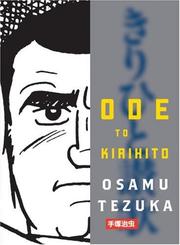
A single-volume novel about a doctor investigating a disease that turns people into animals, and the best entry to late Tezuka: still a page-turner, but with the sexual and political content the earlier work kept out.
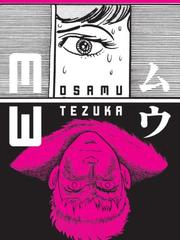
His bleakest book — a nerve-gas cover-up, a genuinely amoral protagonist, no redemption offered. Placed here because it only reads as a deliberate choice once you know what Tezuka's default register sounds like.
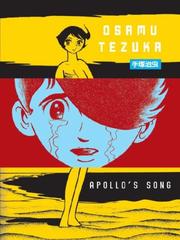
A young man condemned to lose love in every life he lives, told as a chain of reincarnations. The most formally strange book on this path, and the closest the buyable titles get to Phoenix, which uses the same reincarnation architecture across twelve volumes.
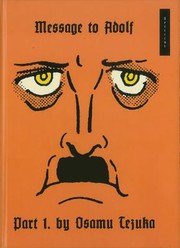
The last stop: three men named Adolf and a document about Hitler's ancestry, running from the 1936 Olympics to postwar Israel. His most controlled long narrative, and the right ending because it needs everything the earlier books teach you about how he handles tone.