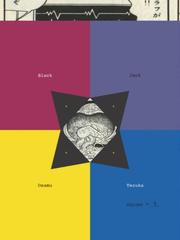
Start with Kapilavastu, the first volume of Buddha. It is an eight-volume retelling of the life of Siddhartha that opens not with him but with a slave boy and a hunted outcast, and it is the book that converts sceptics — propulsive, structurally ambitious, and doing something no other cartoonist was doing in 1972.
The obvious alternative is Astro Boy, because it is the famous one. Do not start there. Astro Boy is historically the most important thing Tezuka made and it reads exactly like what it is: a children's adventure serial from 1952. It will tell you why he mattered and almost nothing about how good he was. The other reasonable entry is Black Jack, which is episodic and works from any volume — a fair option, covered below.
Buddha: the only sequence here that needs an order
Kapilavastu, The four encounters, Devadatta, The Forest of Uruvela. Read in that order; the story is continuous.
Know what this is before you start. Tezuka's Buddha is not devotional and is not a reliable account of the historical Buddha. It invents major characters wholesale, compresses and rearranges freely, and drops slapstick gags into scenes of famine and mutilation. That last habit is deliberate and it never stops. Some readers find the tonal collisions the most sophisticated thing in the book; others find them unbearable. You will know within a hundred pages which you are.
This path holds four of the eight volumes. The remaining four — Deer Park, Ananda, Prince Ajatasattu and Jetavana — are not in our catalogue.
Black Jack: start anywhere, and that is not a compromise
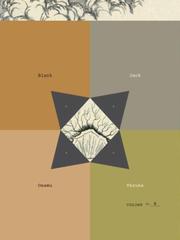
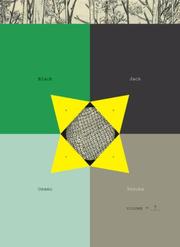
Black Jack, Vol. 5, Black Jack, Vol. 6, Black Jack, Vol. 7. An unlicensed surgeon of impossible skill charges extortionate fees and takes the cases nobody else will, in self-contained stories of about twenty pages. Tezuka wrote it from 1973, after the industry had largely written him off, and it revived his career.
Beginning at volume five costs you very little here, for two reasons: the stories are episodic with no continuity to lose, and the English edition is not in original Japanese publication order anyway — the volumes are curated selections rather than sequential chunks of the original run. So volume five is not the fifth part of anything.
Astro Boy, and Princess Knight
Astro Boy, Vol. 1 and Astro Boy, Vol. 2 are worth reading second or third, once you have a sense of what Tezuka became. Read them as founding documents. The cartooning is astonishing and the stories are for children, and both of those things are true at once.
Princess knight, from 1953, is about a princess raised as a prince, and is routinely named as the work that founded shoujo manga as a form. Like Astro Boy it matters more historically than it entertains — but it is short, and the historical claim is worth testing yourself.
The adult work
This is where Tezuka is at his most extreme, and it is the reason he is read seriously rather than affectionately.
Ode to Kirihito, from 1970, follows a doctor investigating a disease that progressively turns its sufferers dog-like, and is the pivot from children's cartoonist to gekiga author. MW, from 1976, is the coldest thing he wrote: a sociopathic banker and the priest bound to him. Readers divide sharply on whether it is a serious moral work or a provocation that got away from him. Apollo's Song, from 1970, is about a boy conditioned to be incapable of love, sentenced to relive the same doomed attachment across different lives.
Message To Adolf is the best of the late work and the most controlled: three men named Adolf, one German, one Japanese-German, one Hitler, and a document that could destroy the Nazi regime. It was published in English in two volumes; our catalogue holds a single record.
Content notes
The adult books contain sexual violence, and it is central rather than incidental — MW and Ode to Kirihito both. There is extensive medical gore in Black Jack. And Tezuka's work from the 1950s to the 1970s contains caricatured depictions of Black characters that English publishers have addressed in prefatory notes rather than by removing; you will encounter them.
What is missing
Phoenix, the twelve-part work he returned to across his whole career and never finished, is not in our catalogue and is the single largest absence. Nor are Dororo, Ayako or The Book of Human Insects. More like this on Discover.
One thing that will confuse you
Tezuka used what he called a star system: he cast recurring character designs as actors across unrelated books, so a face from Astro Boy appears in Buddha playing someone else. It is not continuity and it is not a shared universe. It is a repertory company.
Follow the full ordered path here: Osamu Tezuka Reading Order: Where to Start With the Godfather of Manga.