Occupational therapy: books to understand the field and prep for the path
This curriculum takes you from a grounded understanding of what occupational therapy is and why it matters, through the core theoretical and clinical frameworks that drive practice, into specialized settings and populations, and finally into targeted NBCOT exam preparation. Each stage builds the vocabulary, conceptual models, and clinical reasoning you need before tackling the next — so that by the time you reach exam prep, the content feels like consolidation rather than memorization.
Foundations: The Profession & Its Philosophy
BeginnerUnderstand what occupational therapy is, its history, core values, and the central role of 'occupation' in health and well-being — building the language and mindset for everything that follows.
▸ Study plan for this stage
Pace: 4–5 weeks, ~25–30 pages/day. Start with Willard & Spackman's foundational chapters (weeks 1–2), then move to The Texture of Life (weeks 3–4), with a final week for integration and reflection.
- Definition and scope of occupational therapy: how OT differs from other health professions and addresses the whole person
- The concept of 'occupation' as purposeful, meaningful activity central to human health, identity, and well-being
- Historical evolution of OT from its moral treatment roots through professionalization to contemporary practice
- Core philosophical values: holism, client-centeredness, and the therapeutic use of occupation
- The occupational therapy process: assessment, intervention planning, and outcomes tied to meaningful life roles
- How occupations are embedded in daily life contexts (work, leisure, self-care, social participation)
- The relationship between engagement in occupation and physical, mental, and social health outcomes
- Professional identity and the language of OT: understanding terms like 'occupational performance,' 'occupational justice,' and 'therapeutic use of self'
- What is occupational therapy, and how does it differ from physical therapy, psychology, or nursing in its approach to health?
- Why is 'occupation' central to OT philosophy, and what makes an activity 'occupational' rather than just exercise or activity?
- Trace the historical development of occupational therapy from its origins to the present day. What key events or figures shaped the profession?
- Explain the concept of occupational balance and how imbalance or deprivation of meaningful occupation affects health and well-being.
- What does it mean to use occupation therapeutically, and how does this differ from prescribing a generic activity?
- How do occupational therapists assess and address occupational performance across different life domains (work, leisure, self-care, social roles)?
- Map your own occupational profile: Document your daily occupations across work, leisure, self-care, and social participation. Reflect on which feel meaningful, which feel obligatory, and how balance or imbalance affects your well-being.
- Historical timeline exercise: Create a visual timeline of OT's development using key milestones from Willard & Spackman. Annotate how the profession's philosophy has evolved and why.
- Occupation vs. activity analysis: Select three everyday activities (e.g., cooking, gardening, socializing). For each, identify what makes it 'occupational' (purposeful, meaningful, contextual) versus a generic task.
- Case study reflection: After reading, write a brief narrative describing how an OT might approach a client with depression differently than a psychiatrist would, emphasizing the role of meaningful occupation.
- Interview or observation: If possible, interview an occupational therapist or observe a session (in person or via video). Document how they use occupation therapeutically and how their approach reflects the philosophy you've read.
- Concept mapping: Create a visual map showing how the key concepts (occupation, health, meaning, context, therapeutic use) interconnect. Use examples from both books to illustrate relationships.
Next up: This stage establishes the philosophical and historical foundation—the 'why' and 'what' of OT—preparing you to move into the next stage, which will likely focus on specific assessment tools, intervention strategies, and how occupational therapists apply these principles across different client populations and practice settings.
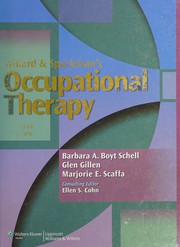
The definitive introductory textbook of the profession — read it first to get a panoramic view of OT's history, philosophy, domains, and practice areas before diving into any specialty.
Deepens your understanding of purposeful activities and occupations as therapeutic tools; reading it second solidifies the 'why' behind OT intervention after Willard & Spackman introduces the 'what'.
Theory & Frames of Reference
BeginnerLearn the major theoretical models and frames of reference that guide clinical reasoning, so you can understand why practitioners choose specific approaches for specific clients.
▸ Study plan for this stage
Pace: 8–10 weeks, ~25–30 pages/day (mix of dense theory and applied examples)
- Frames of reference as bridges between theory and practice—how they guide assessment and intervention selection
- Developmental, biomechanical, and sensorimotor frames of reference in pediatric OT and their distinct assumptions about change
- The Model of Human Occupation (MOHO) as a comprehensive systems-based framework emphasizing volition, habituation, and performance capacity
- How different frames of reference prioritize different aspects of client function (e.g., motor skills vs. motivation vs. sensory processing)
- The role of occupational performance and meaningful activity as the central outcome across all frames
- Clinical reasoning: matching client needs and contexts to appropriate frames of reference
- Adaptation and compensation strategies within different theoretical models
- What is a frame of reference, and how does it differ from a broader theoretical model? Why do occupational therapists need multiple frames rather than one unified approach?
- Describe at least three distinct frames of reference from Kramer's text and explain the core assumptions each makes about how people change or develop.
- How does the Model of Human Occupation conceptualize the relationship between volition, habituation, and performance capacity? Give a concrete example of how these three components interact in a client scenario.
- You are working with a child who has poor fine motor skills and low motivation to engage in self-care. Which frame(s) of reference would be most relevant, and why? How would your intervention differ depending on which frame you prioritized?
- What does MOHO mean by 'occupational identity' and 'occupational competence,' and how do these concepts inform goal-setting in therapy?
- How do the pediatric frames of reference in Kramer's work relate to or differ from the broader human occupation model presented by Kielhofner?
- Create a one-page comparison chart of 3–4 frames of reference from Kramer, listing assumptions, assessment methods, and typical interventions for each.
- Select a real or hypothetical pediatric case (e.g., a child with cerebral palsy, autism, or developmental delay). Identify which frame(s) of reference best fit the child's presentation and justify your choice in 1–2 paragraphs.
- Map out a client's volition, habituation, and performance capacity using MOHO language. Identify one strength and one barrier in each domain, then propose an intervention targeting one domain.
- Read a published OT case study or clinical vignette and annotate it to identify which frame of reference(s) the therapist appears to be using, even if not explicitly named.
- Design a simple assessment tool (checklist, observation guide, or interview prompt) based on one frame of reference that you could use in a real clinical setting.
- Reflect in writing: Describe a time you (or someone you know) engaged in a meaningful occupation. Analyze that experience through the lens of MOHO—what volitions, habits, and capacities were at play?
- Compare and contrast how Kramer's pediatric frames and Kielhofner's MOHO would each approach the same clinical goal (e.g., improving independence in dressing). What would each prioritize?
Next up: Understanding these foundational frames of reference and theoretical models equips you to recognize the 'why' behind clinical decisions, preparing you to learn specific assessment tools and intervention protocols in the next stage.
A clear, well-organized introduction to how frames of reference work in practice; even if you don't specialize in pediatrics, this book is widely praised for making abstract theory concrete and accessible.
MOHO is the most widely used conceptual model in OT worldwide — reading it after frames of reference gives you a rich, occupation-centered lens for understanding motivation, habits, and environment.
Clinical Practice: Skills, Settings & Populations
IntermediateApply OT theory to real practice contexts — physical rehabilitation, mental health, pediatrics, and community settings — and develop clinical reasoning skills across diverse populations.
▸ Study plan for this stage
Pace: 12–14 weeks, ~40–50 pages/day. Allocate 4–5 weeks per book with overlap for integration. Radomski (weeks 1–5), Cara (weeks 4–8), Scaffa (weeks 8–14). Dedicate 1 week at the end for cross-book synthesis and case study application.
- Biomechanical and motor control principles in physical rehabilitation: understanding impairment, activity limitation, and participation restriction across the disablement model
- Clinical reasoning frameworks: hypothesis-driven assessment, problem-solving, and dynamic adjustment of interventions based on client response
- Psychosocial factors in occupational performance: mental health conditions, coping mechanisms, occupational identity, and the therapeutic use of occupation
- Occupation-centered practice across diverse settings: adapting OT principles to physical rehabilitation, mental health, pediatrics, and community contexts
- Population health and social determinants: addressing health inequities, designing interventions for vulnerable populations, and prevention-focused practice
- Evidence-based assessment and outcome measurement: selecting appropriate standardized and non-standardized tools for different populations and settings
- Therapeutic relationship and client-centered collaboration: building trust, respecting client goals, and co-creating meaningful occupational interventions
- Contextual adaptation: modifying activities, environments, and approaches to match client capabilities, cultural values, and community resources
- How do you apply the disablement model (impairment, activity limitation, participation restriction) to assess a client with stroke in Radomski's framework, and how would you prioritize intervention targets?
- Describe the relationship between occupational identity and mental health recovery. How would you use meaningful occupation therapeutically with a client experiencing depression or psychosis?
- What are the key differences between individual-focused OT intervention and population/community-level OT practice? Provide examples from Scaffa's work.
- How do you integrate clinical reasoning across physical, psychosocial, and contextual factors when treating a pediatric client with both motor delays and behavioral challenges?
- Explain how social determinants of health (poverty, housing, discrimination) shape occupational participation and what OT strategies Scaffa recommends to address them.
- Compare assessment approaches across the three books: What standardized tools does Radomski emphasize for physical dysfunction, what psychosocial measures does Cara highlight, and what population-level metrics does Scaffa advocate?
- Complete a full case study analysis using Radomski's framework: select a physical dysfunction scenario (e.g., post-stroke, spinal cord injury), conduct a mock assessment using the disablement model, identify impairments and activity limitations, and design a 4-week intervention plan with measurable goals.
- Conduct a psychosocial occupational profile interview (real or simulated) using principles from Cara's work. Document occupational history, roles, values, and mental health factors. Analyze how occupational disruption relates to the client's current mental health status and propose occupation-based interventions.
- Design a community-level OT program using Scaffa's population health approach: identify a vulnerable population (e.g., homeless adults, rural elderly, low-income families), analyze social determinants affecting their occupational participation, and outline a prevention or health promotion intervention with measurable outcomes.
- Create a comparative case study: take one client scenario and develop three different intervention plans—one emphasizing Radomski's physical rehabilitation approach, one using Cara's psychosocial lens, and one integrating Scaffa's community/contextual perspective. Reflect on how each lens reveals different intervention priorities.
- Practice clinical reasoning in writing: document 3–4 client encounters (real or case-based) using a structured reasoning template that includes hypothesis generation, assessment findings, interpretation, and intervention adjustment. Explicitly note how you integrated physical, psychosocial, and contextual factors.
- Conduct a settings analysis: observe or research OT practice in three different settings (e.g., acute rehabilitation hospital, community mental health center, school or community center). For each, document how practitioners adapt assessment and intervention based on setting constraints, client populations, and available resources using concepts from all three books.
Next up: This stage grounds OT theory in applied clinical contexts across diverse populations and settings, building the clinical reasoning and contextual flexibility needed for advanced specialization, leadership, and evidence-based practice innovation in the next stage.
The gold-standard text for physical rehabilitation practice; it bridges theory and hands-on intervention and is essential reading before clinical fieldwork or exam prep.
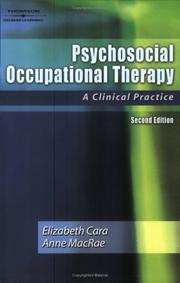
Covers mental health practice — a heavily tested and often underemphasized domain — giving you the conceptual and practical grounding to work confidently in psychosocial settings.
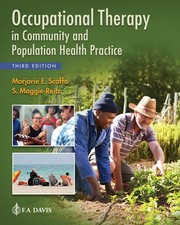
Expands your view beyond the clinic into community, public health, and emerging practice settings, reflecting the evolving scope of the profession.
Discussion
Keep reading
Paths that share books, cover the same subject, or open a related topic.