Best Books About Nikola Tesla, in Reading Order
Almost everything written about Tesla falls into one of two piles, and the reader's problem is telling them apart. He was a genuinely major electrical engineer — polyphase alternating current and the induction motor are his, and they are the basis of the modern grid — and he was also, from the 1940s onward, the subject of a mythology in which he invented death rays, free energy and things he never built. This path reads him in his own words first, then the popular biographies that carry the legend, then the scholarly work that separates the engineering from the claims, then the war of the currents as history, and finally the books that show where the mythology came from.
Tesla in His Own Words
BeginnerHear Tesla describe his own work and self-image, and notice how much of the later legend originates with him.
▸ Study plan for this stage
Pace: One week, and the shortest stage on this path: My Inventions is 108 pages of magazine essays and The Problem of Increasing Human Energy is 98, so both fit into a couple of evenings each. Read them slowly anyway, and read them as documents rather than as information. My Inventions was written for a p
- Tesla's own account of the rotating magnetic field and the induction motor, and the vividness with which he describes visualising machines complete before building them
- The distinction between the engineering he demonstrably did - polyphase alternating current, the induction motor - and the programme he announced but never delivered
- Wireless transmission of power as Tesla understood it: not radio signalling but the earth itself as a conductor, which is the physical premise everything at Wardenclyffe rested on
- The 'world system' of stage 1900 - global telegraphy, broadcast power, synchronised time - as a single connected proposal rather than a scatter of ideas
- Self-presentation as a genre: the childhood anecdotes, the sensory afflictions, the flashes of light, and what these are doing in a magazine serial
- Priority claims and how Tesla frames them, which is the seed of a century of arguments about who invented radio
- In his own telling, how did Tesla arrive at the rotating magnetic field, and what part of that account is a claim about method rather than about a machine?
- What, precisely, does The Problem of Increasing Human Energy propose to transmit, through what medium, and paid for by whom?
- Which claims in My Inventions are about things Tesla built and demonstrated, and which are about things he says he built?
- Who was the audience for each of these two texts, and how does the audience change the register?
- What would you need to see to confirm any of the later inventions Tesla mentions in passing here?
- Read My Inventions with two columns open: verifiable engineering on the left, unverifiable assertion on the right. Put every specific claim in one column or the other. Do not adjudicate the hard cases yet - carry the list forward to Carlson in stage three and see how many he resolves.
- Write a one-page summary of the Wardenclyffe proposal using only The Problem of Increasing Human Energy - what it would do, how, and what it needs. This page is the thing every later book on this path is either defending or dismantling, and having Tesla's own version in your own words is what lets you tell those two activities apart.
- Mark every place in My Inventions where Tesla gives a date, and build them into a timeline. Then leave a wide right-hand margin: Carlson works from the notebooks and will let you correct or confirm most of these entries.
Next up: You now have Tesla's account of Tesla in your own notes; the popular biographies that follow largely repeat it, and the point of reading them next is to watch how far a self-portrait travels.
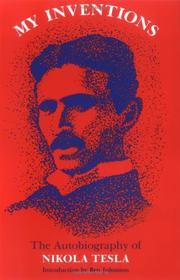
Tesla's autobiographical essays, written for Electrical Experimenter in 1919. Start here, but read it as self-presentation rather than record — the visions, the childhood anecdotes and the claims about later inventions are the primary source for most of what is now disputed.
His 1900 Century Magazine article, and the fullest statement of his own programme: wireless power, world telegraphy and a philosophy of human progress. Read it second, as the document Wardenclyffe was built to realise.
The Popular Biographies
BeginnerGet the narrative life — Smiljan to Manhattan to Colorado Springs to the Hotel New Yorker — and see the sympathetic reading of it.
▸ Study plan for this stage
Pace: Three to four weeks for a little over a thousand pages. Cheney's Tesla is 320 pages and the most readable narrative of the life; Cheney and Uth's Tesla, Master of Lightning is 184 large-format pages built around photographs of the apparatus and is closer to an evening's looking than a week's reading
- The narrative spine of the life: Smiljan, Budapest, Paris, the arrival in New York, Edison, Westinghouse, Colorado Springs, Wardenclyffe, the decades in hotels
- The apparatus as physical objects - the Colorado Springs magnifying transmitter, the Wardenclyffe tower, the Niagara installation - which Master of Lightning shows better than any text can describe
- Financing as the real constraint on Tesla's career: Westinghouse, then J. P. Morgan, and the pattern of projects abandoned when money stopped
- Where the archival record is thick (patents, correspondence, press coverage) and where it is thin (the later New York decades), and how each biographer handles the thin parts
- Seifer's contribution and Seifer's problem: genuinely new correspondence, and technical assessments that accept Tesla's later claims at face value
- The recurring structure of a Tesla biography - triumph, obstruction, neglect - and how a template shapes what gets included
- What actually happened between Tesla and Edison, according to Cheney, and what part of the standard story rests on Tesla's own later account?
- What was demonstrated at Colorado Springs, and what did Tesla say it demonstrated? Are those the same statement?
- Why did Morgan stop funding Wardenclyffe, and what does each of these three books offer as the reason?
- Which specific documents does Seifer use that Cheney does not, and does the new material change the life or only fill it in?
- Where do all three of these books rely on My Inventions as their source, and how would you know?
- Take the timeline you built from My Inventions and fill it in from Cheney, marking each entry as confirmed by an independent source, repeated from Tesla, or contradicted. By the end of this stage most entries will still be in the middle category, which is the finding.
- Study the photographs in Master of Lightning of the Colorado Springs installation and the Wardenclyffe tower, and write down what you can see: scale, materials, the position of the operator, what is and is not connected to what. Then compare your description against how the text biographies describe the same equipment, and note how much a written account leaves out.
- Pick three of Seifer's technical assessments - the particle beam is the obvious one - and write down exactly what evidence he cites for each. Leave space underneath. Carlson addresses several of these directly, and the comparison is the most instructive single exercise on this path.
- Read Cheney's chapter on the Westinghouse royalty contract and write a paragraph on the business logic of what happened to it. The financial thread is the one popular biographies compress hardest, and it is where the next stage does most of its correcting.
Next up: You have the life as the popular literature tells it, complete with the claims that literature does not test; the scholarly books next are the ones that go to the notebooks and say which parts are engineering.
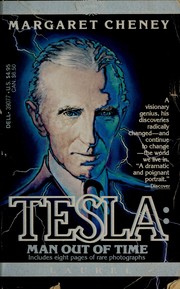
The 1981 biography that revived popular interest in Tesla and is still the most readable narrative account. Cheney is admiring and inclined to take his later claims at face value, so read it for the life and hold the assessments loosely.
Cheney and Robert Uth's illustrated companion to the PBS documentary, and the best visual account of the apparatus — the Colorado Springs coil, the Wardenclyffe tower, the Niagara installation. Worth having beside the text biographies.
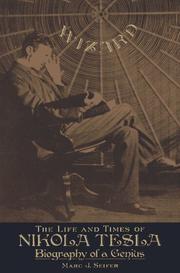
The longest and most heavily researched of the popular biographies, drawing on correspondence the earlier books did not use. Seifer is also the most credulous about Tesla's particle-beam and wireless-power claims, so read it for the archival detail and take the technical verdicts to the next stage. Its catalogue record displays with a trailing colon and no subtitle.
The Scholarly Corrective
IntermediateGet a historian of technology's assessment of what Tesla actually built, what he only proposed, and why several projects failed.
▸ Study plan for this stage
Pace: Three to four weeks, and the most important stage here. Carlson's Tesla: Inventor of the Electrical Age is 604 pages of academic history of technology working directly from the notebooks and patents, and it is denser than anything in the previous stage - budget a fortnight and read it with your two
- How a historian of technology works: the notebook and the patent as evidence, reconstructed against what was demonstrably known and buildable at the time
- Why polyphase alternating current and the induction motor are genuinely first-rank contributions, and what specifically they made possible
- The physical problem with earth-conduction power transmission, and why a plausible-sounding proposal in 1900 was not merely unfunded but unworkable
- Carlson's distinction between Tesla as an ideal-driven inventor and Tesla as an engineer of systems, and how that framing explains both the successes and the collapses
- The commercial dimension Munson foregrounds: patents assigned, royalties surrendered, backers lost, and companies that failed for ordinary reasons
- What responsible scepticism looks like on this subject - Carlson does not call Tesla a fraud and does not accept the claims, and the reader should be able to say why both positions are available to him
- What does Carlson establish from the notebooks about how Tesla actually developed the rotating magnetic field, and how does it differ from the account in My Inventions?
- State the physical objection to the Wardenclyffe transmission scheme in one paragraph, without using the word 'impossible'.
- Which of Tesla's later claims does Carlson treat as unresolved rather than refuted, and why does that distinction matter?
- Munson emphasises the business failures. Name three, and say for each whether the failure was technical, financial or personal.
- How many entries on your stage-one list has Carlson now settled, and how many remain open?
- Work through your two-column list from stage one entry by entry against Carlson, and move each claim to confirmed, refuted or unresolved. This is the single exercise the path is built around; do it in writing, and keep it.
- Take Seifer's evidence for one specific late claim and set it against Carlson's treatment of the same claim on the same page-turn. Write half a page on what each author counts as evidence. You are learning to read the difference between a well-researched popular biography and a work of scholarship, and this is the cleanest available example.
- Read Carlson's chapters on the polyphase system with a diagram in front of you and draw, from his description, how a two-phase or three-phase supply produces a rotating field in a motor. If you can draw it, you have the piece of engineering that all of Tesla's reputation legitimately rests on.
- Read Munson on the Westinghouse royalty episode against Cheney's version of the same events, and note where the two disagree about motive rather than about fact.
Next up: With the engineering separated from the assertions, the war of the currents stops being a personal rivalry and becomes what it was - an industrial contest that Tesla's patents mattered inside.
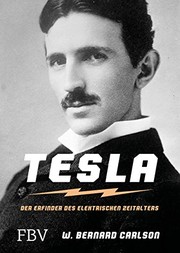
The essential book in this path. Carlson is a historian of technology and works from the notebooks: he takes the induction motor and polyphase system entirely seriously, and shows precisely where the Wardenclyffe scheme was physically and commercially unworkable. Its catalogue record displays as simply Tesla.

A shorter modern biography that reaches similar conclusions by a different route, with more attention to the business and financial failures. Read it after Carlson as confirmation and for the crisper narrative; it also catalogues under the bare title Tesla.
The War of the Currents
IntermediatePlace Tesla inside the industrial conflict he is most famous for, and see how much of it was Westinghouse's fight rather than his.
▸ Study plan for this stage
Pace: Five to six weeks; this is the longest stage, at roughly two thousand pages. Jonnes's Empires of Light is 448 pages and the standard popular history, and it is the one to read first. McNichol's AC/DC is 208 pages and the concentrated version of the same story - a few evenings. Klein's The Power Make
- Why alternating current won: transformers, voltage step-up, and transmission losses over distance - the technical fact underneath the whole contest
- That Tesla's patents mattered commercially because Westinghouse bought them and defended them in court, which is a fact about a company rather than about a man
- The Niagara Falls contract as the decisive commercial verdict on the two systems
- The publicity campaign against AC, including the electrocution demonstrations and the electric chair, and what it tells you about how technical standards actually get settled
- Edison as an industrial organiser rather than a lone inventor - the laboratory as a system for producing patents
- Klein's wider frame: electricity as one phase in a century of building American power infrastructure, in which the currents war is an episode rather than the story
- Why Tesla's popular reputation is so often built by contrast with a caricature of Edison, and what Morris's biography does to that caricature
- Give the physical reason alternating current was better suited to long-distance distribution, in terms a non-engineer would follow.
- What exactly did Westinghouse buy from Tesla, and what would have happened to those patents had Westinghouse gone under?
- What role did the electrocution demonstrations play in the commercial contest, and did they work?
- Reading Morris, what is wrong with the version of Edison that circulates in Tesla enthusiasm?
- Klein places electrification in a longer industrial history. What does that reframing take away from the heroic account of any single inventor?
- Build one dated timeline of 1880 to 1895 from Jonnes, then read McNichol straight through and add nothing but corrections and omissions in a second colour. Where the short book contradicts the long one, note it - you now have three independent accounts of the same decade and can see which details are stable.
- Read Morris's Edison starting from its final section and working forwards, then reread the opening in the order it is printed. Write a paragraph on what the reverse structure conceals and what it reveals; it is the most formally unusual book on this path and worth thinking about as a construction.
- Take a single day - the Niagara decision, or the first execution by electric chair - and write the account of it that each of Jonnes, McNichol and Klein would give. The differences are entirely about what each book thinks the subject is.
- Return to your Carlson notes and answer one question in writing: which of Tesla's contributions would still have mattered had Westinghouse never existed? The answer is what the currents war is actually evidence about.
Next up: Having seen the industrial history as history, you are ready for the two books that turned it into a legend, and equipped to see exactly where they leave the record.
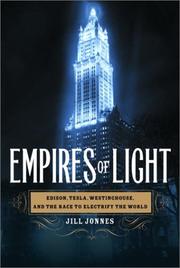
The standard popular history of the AC-versus-DC contest, told through Edison, Westinghouse and Tesla together. The best single book for understanding that Tesla's patents mattered because Westinghouse bought and defended them.
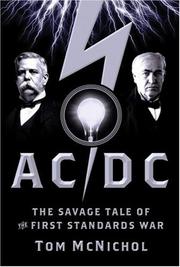
Shorter and sharper on the propaganda campaign itself, including the electrocution demonstrations and the electric chair. Read it as the concentrated version of the story Jonnes tells at length.

The wider industrial history — steam, then electricity, and the building of American power infrastructure across a century. It puts the currents war in the context of an industry rather than a rivalry.

Placed here deliberately, because much of Tesla's popular reputation is built by contrast with a caricature of Edison. Morris's biography is the corrective to that caricature; note that it is told in reverse chronological order, which some readers find difficult.
Where the Legend Came From
BeginnerRead the books that created the mythology, as evidence about the mythology rather than about Tesla.
▸ Study plan for this stage
Pace: Two weeks for a little under six hundred pages. O'Neill's Prodigal Genius is 326 pages, written in 1944 by a science journalist who had known Tesla, and Hunt and Draper's Lightning in His Hand is 269 pages, published in 1964 and built from Colorado Springs local sources. Both are readable and both g
- How a legend is assembled: an acquaintance's memoir, an unrecoverable late period, and claims that cannot be checked because the apparatus never existed
- The specific inventions that enter the popular story here - the particle beam or death ray above all - and the total documentary basis for them
- The lone-genius frame and what it requires you to leave out: Westinghouse, the patent system, the engineers who built the machines
- Regional legend formation in Hunt and Draper: what Colorado Springs remembered about a year of experiments, and how local memory works as a source
- Sixty years of accretion between O'Neill in 1944 and the internet Tesla of the present, and how much of it is already present in these two books
- Why a false story about a real engineer is worth understanding rather than only correcting
- What is O'Neill's actual source for each of the late claims - Tesla's conversation, Tesla's press statements, or a document?
- Which elements of the modern popular Tesla are already fully formed in the 1944 book, and which are later additions?
- How does Hunt and Draper's use of local Colorado Springs recollection differ as evidence from O'Neill's personal acquaintance?
- What did Tesla himself do, in his lifetime, to encourage the version of himself that appears in Prodigal Genius?
- Having read the whole path: which three sentences would you write to someone who has just seen a video claiming Tesla invented free energy?
- Read Prodigal Genius with Carlson beside you, and mark in the margin every claim you can now place: documented, contradicted, or unsupported and unfalsifiable. Count the three categories at the end. The proportions are the argument of this whole path.
- Trace one single claim - the particle beam is the best candidate - from Tesla's own remarks in stage one, through Seifer's treatment, through Carlson's assessment, to O'Neill's version, and write the sequence as a short history of a story. One page, five sources, in order.
- Read Hunt and Draper on the Colorado Springs year against Carlson's account of the same experiments, and list what the local sources add that the notebooks do not, and what they get wrong. Local memory is not worthless as evidence; the exercise is deciding what it is evidence of.
- Write the finished version of the list you started in stage one: everything Tesla demonstrably did, everything he proposed and did not build, and everything attributed to him by others. Three columns, one page. That page is the deliverable of this path.
Next up: This is the last stage, and it closes the path where it opened: with Tesla's own self-portrait, now readable as the first draft of a legend that the engineering behind it never needed.

The 1944 biography by a journalist who knew Tesla, and the origin of most of the enduring legend — the death beam, the suppressed inventions, the lone misunderstood genius. Read it after Carlson so you can see exactly where the record stops and the story starts.

Hunt and Wanetta Draper's 1964 account, focused on the Colorado Springs year and written from local sources. End on it as a study in how a regional legend forms around a real set of experiments.