If you read one book about Nikola Tesla, read W. Bernard Carlson's Tesla - Inventor of the Electrical Age, catalogued in some records under the bare title Tesla. Carlson is a historian of technology working from the notebooks and correspondence: he takes the polyphase alternating-current system and the induction motor entirely seriously — they are Tesla's, and they are the basis of the modern grid — and he shows precisely where the Wardenclyffe wireless-power scheme was physically and commercially unworkable. That combination is what most of the literature lacks.
It matters because almost everything written about Tesla falls into one of two piles. He was a genuinely major engineer, and he was also, from the 1940s onward, the centre of a mythology in which he invented free energy, death rays and suppressed technologies. Those claims are not evenly distributed across the books, and the order below is arranged so that you can see where each account sits before you decide what to believe.
Tesla in his own words
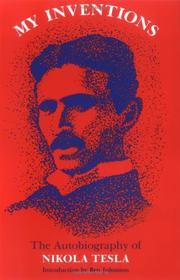
My inventions collects the autobiographical essays Tesla wrote for Electrical Experimenter in 1919. Start here, but read it as self-presentation rather than as record: the visions, the childhood anecdotes and the claims about later inventions are the primary source for most of what is now disputed. The Problem of Increasing Human Energy, his 1900 article for Century Magazine, is the fullest statement of his own programme — wireless power, world telegraphy, and a philosophy of human progress — and it is the document Wardenclyffe was built to realise.
The popular biographies, and what they do with the claims
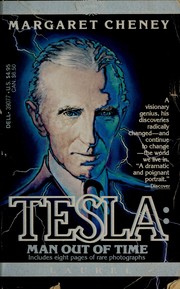
Margaret Cheney's Tesla, published in 1981, revived popular interest and is still the most readable narrative account of the life. Cheney is admiring and inclined to take Tesla's later claims at face value, so read it for the biography and hold the technical assessments loosely. Tesla, master of lightning, her illustrated companion to the PBS documentary, is the best visual account of the apparatus — the Colorado Springs coil, the Wardenclyffe tower, the Niagara installation — and belongs beside the text biographies. Marc Seifer's Wizard is the longest and most heavily researched of the popular lives, drawing on correspondence the earlier books did not use; it is also the most credulous about the particle-beam and wireless-power claims. Take the archival detail and carry the technical verdicts forward to Carlson.
The scholarly corrective
After Carlson, Richard Munson's Tesla reaches similar conclusions by a different route, with more attention to the business and financial failures, and it also catalogues under the bare title. Reading these two after the popular biographies is the point of the whole sequence: you can see exactly which episodes survive contact with the archive and which do not.
The war of the currents
Jill Jonnes's Empires of Light is the standard popular history of the alternating-versus-direct-current contest, told through Edison, Westinghouse and Tesla together, and it is the best single book for understanding that Tesla's patents mattered commercially because Westinghouse bought and defended them. Tom McNichol's AC/DC is shorter and sharper on the propaganda campaign, including the electrocution demonstrations and the electric chair. Maury Klein's The Power Makers widens the frame to a century of American power infrastructure, which puts the currents war in the context of an industry rather than a personal rivalry. Edmund Morris's Edison is placed here deliberately, because much of Tesla's popular reputation is built by contrast with a caricature of Edison; note that Morris tells the life in reverse chronological order, which some readers find hard going.
Where the legend came from
John J. O'Neill's Prodigal genius, published in 1944 by a journalist who knew Tesla, is the origin of most of the enduring story — the death beam, the suppressed inventions, the lone misunderstood genius. It is worth reading, but read it after Carlson and read it as a document rather than as evidence: it is where the record stops and the mythology starts. Inez Hunt and Wanetta Draper's Lightning in His Hand, from 1964, focuses on the Colorado Springs year and is written from local sources, and it makes a good final study in how a regional legend forms around a real set of experiments.
On the disputed claims themselves, the honest summary is that Tesla announced a particle-beam weapon and a system of wireless power transmission, that no working device was ever demonstrated or found among his papers, and that historians of technology including Carlson conclude the transmission scheme could not have worked as described. Seifer, Cheney and O'Neill treat those claims far more sympathetically. Follow the full path to read the two traditions against each other.
Follow the full ordered path here: Nikola Tesla Books: Which Ones to Trust, and in What Order.