Ngaio Marsh books in order: where to start with Roderick Alleyn
Thirty-two Roderick Alleyn mysteries across forty-eight years is a wall to a new reader. Marsh was a theatre director as well as a novelist, and the theatrical books are the ones worth arriving for. This path gives you the debut for context, then the Troy books, then the theatre.
Start here
BeginnerBegin at the beginning — it is short and it establishes Alleyn.
▸ Study plan for this stage
Pace: A few evenings. A Man Lay Dead is 191 pages and a fast 1934 country-house plot; there is no reason to slow down for it.
- The murder game as premise, and Marsh's starting point in 1934 convention
- Alleyn introduced as a gentleman policeman, deliberately kept light
- Nigel Bathgate as the Watson figure and the reader's stand-in
- Golden-age clueing in its most standard form
- The Russian-society subplot as a period liability worth naming
- Why the debut is short on the qualities she is actually read for
- How is Alleyn characterised on his first appearance, and how much of it sticks?
- What function does Bathgate serve, and how does the book use him structurally?
- Which parts of the plot are pure 1934 convention rather than Marsh?
- What is the murder game doing beyond providing a setup?
- Were the clues fairly given before the solution?
- Note every physical detail given about Alleyn and hold the list against his appearance in Artists in Crime
- Diagram the house and the timetable as you read, the way the novel assumes you will
- Read the solution chapter twice and check each clue back against the page it appeared on
Next up: The debut gives you the detective as a device; the Troy books give him something to lose.
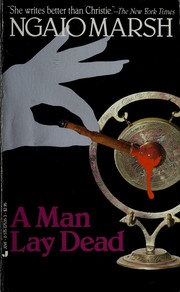
The 1934 debut. A murder game at a country house weekend turns real. Slight compared to what follows, and the fastest way to meet the detective.
Alleyn meets Troy
BeginnerRead the books where the series acquires its emotional centre.
▸ Study plan for this stage
Pace: 2-3 weeks, one novel a week. Both are longer than the debut at 300 and 350 pages, and both spend real time building the world before a body appears; that section is the point, not the delay.
- Troy introduced on shipboard, then a murder inside her own studio
- Marsh's serious painting behind the exactness of the art-school world
- Alleyn in love, and what that does to his detection
- The London season and blackmail as the social map of Death in a White Tie
- The death of a character Alleyn genuinely cares for, and its consequences for the series
- The point at which the sequence acquires an emotional centre
- How does the studio setting supply both the means and the suspects in Artists in Crime?
- What does Troy actually think of Alleyn by the end of each book?
- How does the blackmail plot organise the season's social hierarchy?
- What changes in Alleyn once he can be hurt?
- Which of the two is the better novel, as opposed to the better puzzle?
- Read the model-posing scene in Artists in Crime and note how much technical painting detail is load-bearing for the solution
- Track Lord Robert Gospell's last evening hour by hour before the book gives you the answer
- Compare Alleyn's manner in A Man Lay Dead with the same character in the ballroom scenes four years later
Next up: With Troy in place, the theatre novels can use her professionally and put her inside the crime scene.
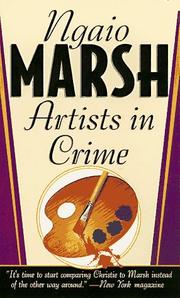
Alleyn meets the painter Agatha Troy on a ship, then a murder happens in her studio. Marsh painted seriously herself and the art-school world is exact.
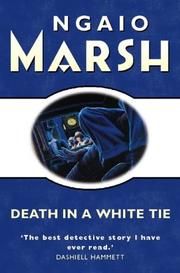
The London season, blackmail, and the death of a character Alleyn genuinely loves. The best of the thirties books.
The theatre novels
BeginnerThe books that use what she actually knew — Marsh directed Shakespeare professionally for decades.
▸ Study plan for this stage
Pace: About 2 weeks, one a week. Opening Night's long backstage opening is worth reading slowly rather than skimming to the murder, because the murder depends on it.
- Marsh's decades of professional Shakespeare directing behind the backstage detail
- Final Curtain: Troy commissioned to paint Sir Henry Ancred at his own family home
- The Ancreds as a family who perform themselves continuously
- Opening Night's outsider viewpoint, a New Zealand actress arriving in the West End
- Company hierarchy functioning as a suspect list
- Theatre treated as a workplace rather than as glamour
- How does Troy's commission put her physically inside the crime?
- What does Final Curtain do with a family who cannot stop acting?
- Whose viewpoint carries Opening Night, and why is it not Alleyn's?
- Which backstage details could only come from someone who had run a production?
- How does knowing the theatre change what Marsh can hide from you?
- Read the first eighty pages of Opening Night before the murder and list everything you have learnt about how a production is run
- Note every reference to painting in Final Curtain and set it against the studio scenes of Artists in Crime
- Map the theatre's geography in Opening Night; the solution turns on who could be where
Next up: After two books that use what Marsh knew professionally, one pure village puzzle shows the formula she could produce at will.
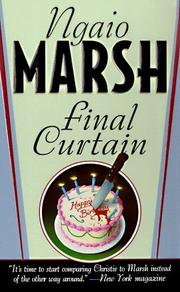
Troy is commissioned to paint a monstrous theatrical knight at his family home, and he dies. The family is the point.
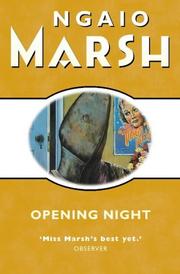
A young New Zealand actress takes a job in a West End theatre. The backstage detail is unmatched in crime fiction because Marsh had lived it.
One more of the golden-age puzzles
IntermediateA representative village mystery, for readers who want the classic shape.
▸ Study plan for this stage
Pace: About a week for 324 pages. The parish-hall setup is slow and the mechanism repays reading carefully rather than fast.
- The booby-trapped piano as pure golden-age mechanism
- Village society as a motive generator: spinsters, the rector, the squire
- The amateur production supplying a closed cast of suspects
- Fair-play clueing at its most explicit
- Where Marsh's class attitudes show, and how to read them at this distance
- The formula book standing beside the theatre books for comparison
- How does the murder mechanism work, and at what page did you have everything needed to reconstruct it?
- What are the village's factions, and how does each generate motive?
- How does this book differ in ambition from Final Curtain?
- What does the amateur production reveal about each character that dialogue does not?
- Which of the six books on this path contains the most actual detection?
- Stop at the discovery of the body and write out your own solution from the clues given, then check it against hers
- Compare the amateur production here with the professional company of Opening Night: the same author on the same activity, done well and done badly
- Put the six books in order by how much detection each contains, and see whether that matches your order of preference
Next up: Six of the thirty-two Alleyn novels, read in order, are enough to choose your own route through the rest, including the New Zealand-set books this path leaves out.
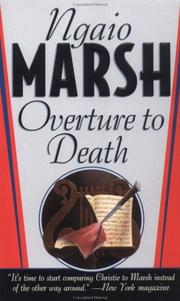
A parish hall, an amateur production and a booby-trapped piano. The most purely golden-age of her plots.