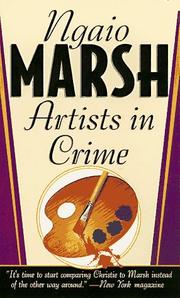
Start with Artists in Crime. Alleyn meets the painter Agatha Troy on a ship, a murder follows in her studio, and the series acquires the relationship that gives it an emotional centre for the next forty years. Marsh painted seriously herself, and the art-school world in it is exact in a way the country-house books never manage.
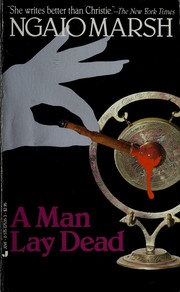
The obvious alternative is A Man Lay Dead, the 1934 debut, and it is the wrong first book. It is competent and it is slight — a murder game at a country house weekend that turns real, written before Marsh had worked out what she was good at. It is worth reading eventually, for how quickly she improved, but starting there gives a false impression of a novelist who got substantially better.
Read the series honestly, not completely
Thirty-two Alleyn novels published between 1934 and 1982 are not thirty-two equally good books, and pretending otherwise is the main way readers bounce off Golden Age crime. Marsh had one enormous advantage over her contemporaries: she directed Shakespeare professionally for decades, and when she writes about the theatre she is writing about the thing she actually knew. The theatre novels are the reason to read her. Several of the middle-period country-house puzzles are competent and forgettable, and the last few, written in her eighties, are noticeably tired.
You do not need to read them in order. Alleyn ages barely at all, cases do not carry over, and the only continuity worth preserving is the Troy relationship — which is why Artists in Crime comes before the books that assume it.
The Troy books
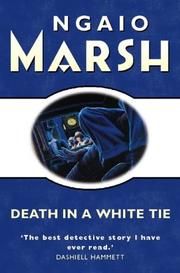
After Artists in Crime, read Death in a White Tie. The London season, blackmail, and the murder of a character Alleyn genuinely loves. Most readers rate it the best of her 1930s novels, and it is the one where the social world stops being wallpaper and starts mattering to the detection.
The theatre novels
Final Curtain sends Troy to paint a monstrous theatrical knight at his family home, and he dies. The mystery is decent; the family is the point, and they are horrible in a way that stays with you.
Opening night follows a young New Zealand actress who takes a job in a West End theatre. The backstage detail is unmatched in crime fiction, because Marsh had lived every hour of it — the hierarchy, the superstition, the specific exhaustion of a company in rehearsal. If you only read one Ngaio Marsh novel after the entry point, read this one.
One classic village puzzle
Overture to Death is a parish hall, an amateur production and a booby-trapped piano. It is the most purely Golden Age of her plots and a good test of whether you want the puzzle form at all. If it delights you, the middle of the series has plenty more like it. If it feels mechanical, stay with the theatre books and the Troy novels and you will lose nothing.
Where to stop
Six books is a fair whole reading of Marsh unless she becomes a habit. Readers who continue usually work outward from the theatre novels, and the New Zealand-set entries — she was a New Zealander, and set several books there — are the next most rewarding cluster.
The honest advice about the late novels: they exist, they are slower, and the 1970s and 1980s books are for completists. Nothing in the series builds to them. Browse more crime reading orders on Discover, or see the Ngaio Marsh hub.
Follow the full ordered path here: Ngaio Marsh books in order: where to start with Roderick Alleyn.