Myron Bolitar Reading Order: Where to Start with Harlan Coben
Harlan Coben's Myron Bolitar novels are standalone mysteries stacked on a single continuous personal story, which is the argument for reading them in order rather than picking one up at random. The cases resolve inside each book; the friendships, the family and the consequences of what Myron and Win do to people carry forward and are never reset. Start at the beginning — the early books are lighter than the later ones, and that contrast is the point.
Start Here: The Sports Agent
BeginnerMeet Myron, Win and Esperanza, and get the series' comic register before it darkens.
▸ Study plan for this stage
Pace: About 3 weeks for roughly 1,120 pages: Deal Breaker (381 pages), Drop Shot (368 pages) and Fade Away (368 pages). These are fast commercial thrillers and a week each is comfortable; the early run is the lightest in the series and the pace reflects that. Read them in published order — the personal st
- The sports-agency premise as a plot engine: it gives Myron a professional reason to be present at crimes he has no official standing to investigate
- The three-hander at the centre of the series — Myron, Win and Esperanza — and how each is introduced
- Windsor Horne Lockwood III as comic eccentric first and something considerably worse later, a transition that begins inside Drop Shot
- Coben's structure: a case that resolves within the book, sitting on a personal story that does not reset
- The comic register of the early books — the banter, the pop-culture riffs, the deliberate lightness — and why it is being established so firmly
- Myron's ruined basketball career as the wound the series keeps returning to, made explicit in Fade Away
- First-person voice as a limiting device: you only ever know what Myron knows, which is how Coben hides Win
- What does Myron's job actually let him do that a private investigator's would not?
- Where in Drop Shot does Win stop reading as merely eccentric? Identify the specific scene.
- What happened to Myron's basketball career, and how does Fade Away use it structurally rather than just as backstory?
- How does Coben close each case while leaving the personal material open? Describe the pattern from the three endings.
- What is Esperanza's history, and what does the series gain by making her a professional equal rather than an assistant?
- Keep a running two-column note across all three books: 'case closed' and 'not undone'. The second column is the argument for reading the series in order and it will be a page long by the end of the path.
- Mark every scene in Deal Breaker and Drop Shot where Win does something the narration treats as a joke, then reread those same scenes after Fade Away. Coben is showing you exactly who Win is while Myron laughs it off.
- Note the sport at the centre of each of the three books and what the sport is being used for thematically — Coben changes it every time and it is never decorative.
- Write down your reading of Myron's character after Deal Breaker in three sentences. You will test it against Promise Me in stage three.
Next up: With the three principals and the case-plus-continuity structure established, the next run is where Coben settles the formula and starts letting the consequences pile up.

The first book and the right entry point without qualification. A quarterback's missing girlfriend turns up in a magazine, and the case introduces the sports-agency premise that gives Myron a reason to be anywhere.

Tennis, and a murder that reaches back into a case from years earlier. The plotting is tighter than the debut and Win begins to become genuinely disturbing rather than merely eccentric.

The one that won the Edgar, and the first book that is really about Myron — his ruined basketball career, and what he lost when it ended. If the first two did not convince you, this is the one to test the series on.
The Series Finds Its Shape
BeginnerFollow the run where Coben settles the formula and starts letting consequences accumulate.
▸ Study plan for this stage
Pace: About 3 weeks for roughly 1,100 pages: Back Spin (384 pages), One False Move (352 pages) and The Final Detail (362 pages). Read Back Spin directly after Fade Away — it deliberately mirrors that book's structure with a different sport, and the echo is lost if you leave a gap. One False Move ends hars
- Formula as craft: Coben settles into a repeatable shape here, and watching a formula being set is more interesting than watching one being followed
- Win's family money and what it purchased — Back Spin is the first serious look at the Lockwood side of the series
- The turn away from purely comic material: One False Move gives the series real racial and class weight
- Endings that are allowed to stand, which is the structural promise this stage makes and the later books keep
- Esperanza's arrest in The Final Detail, and a plot that only works because five previous books built the relationships it threatens
- Myron working against his own office — the series' first sustained use of its own continuity as the source of jeopardy
- Coben's use of a missing or dead young person as the recurring engine, visible once you have three books to compare
- How does Back Spin mirror Fade Away structurally, and what does Coben change in the mirror?
- What does One False Move do that the previous four books avoid, and what is the ending's refusal to console the reader for?
- Why can The Final Detail's plot only exist at book six? Name the specific relationships it draws on.
- What have you learned about Win's family, and what does the series suggest his money has bought?
- By the end of this stage, what is the fixed structure of a Myron Bolitar novel? Write it as a five-step outline.
- Write out the shared skeleton of Back Spin, One False Move and The Final Detail as a numbered outline, then mark the one element each book breaks. The breaks are where Coben is actually working.
- Reread the last chapter of One False Move immediately after finishing it, then check at the end of the path whether any later book undoes it. It does not, and confirming that yourself is the point.
- Add to the 'not undone' column you started in stage one. By the end of The Final Detail it should contain at least four items that later books will assume you remember.
- Track Esperanza across the six books read so far and write a paragraph on how her role changed. The Final Detail depends entirely on that change.
Next up: The consequences have now accumulated far enough that the next stage can charge the series' running joke its actual price.
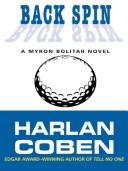
Golf, a kidnapping, and the first serious look at Win's family money and what it purchased. Read it after Fade Away — it deliberately mirrors that book's structure with a different sport.
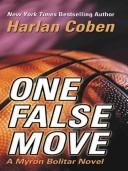
Women's basketball and a case with real racial and class weight, which is where the series stops being purely comic. The ending is the harshest of the early run and it is not undone later.
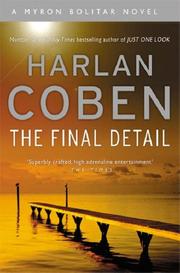
Esperanza is charged with murder and Myron has to work against his own office. The book depends entirely on relationships built over the previous five, so it is the clearest reason not to read out of order.
The Dark Turn
IntermediateRead the books where the personal cost of the series' running joke comes due.
▸ Study plan for this stage
Pace: 3–4 weeks for roughly 1,160 pages: Darkest Fear (347 pages), Promise Me (431 pages) and Long Lost (379 pages). Read Darkest Fear and Promise Me back to back deliberately, because the six-year publishing gap between them is legible in the books themselves. Darkest Fear turns on a seriously ill child
- Darkest Fear as a written ending: Coben published no Bolitar novel for six years after it, and the book reads like a closing rather than a pause
- Paternity and obligation as the series' subject once the comedy is stripped out
- Promise Me's central move — Myron being hated by people who are, on the evidence, right
- The cost of the series' running joke: the promise to intervene, the assumption of competence, and what happens when both fail
- Long Lost as the most conventional thriller plot in the run, and what still works underneath a straight international story
- How a returning series re-establishes itself, visible in the first fifty pages of Promise Me
- The shift in Myron's relationship to his own certainty, which is the through-line of all three books
- Why does Darkest Fear read like an ending? Identify what it closes rather than what it resolves.
- In Promise Me, what exactly does Myron do wrong, and does the novel agree with the people who hate him for it?
- What is different about the six-years-later Myron in the first chapters of Promise Me compared with the Myron of The Final Detail?
- Long Lost takes Myron furthest from home and uses the least of the series' continuity. What still carries it?
- Across these three books, what has happened to the banter? Track where it appears and who it is protecting.
- Read the last chapter of Darkest Fear and the first chapter of Promise Me consecutively and write down what the gap between them contains. Coben wrote nothing in between and the books are shaped by that silence.
- In Promise Me, mark every accusation levelled at Myron and write beside each whether the novel supports it. This is the most honest reckoning the series does with its own hero and it is easy to read past.
- Compare a comic set piece from Deal Breaker with the equivalent beat in Promise Me. Same construction, different function — work out what changed.
- Retrieve the three-sentence reading of Myron you wrote in stage one and rewrite it now. Keep both versions.
Next up: With the personal cost paid, the last stage closes the arc that opened in Deal Breaker and hands the series over to Win.
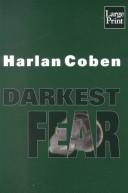
A former girlfriend tells Myron he has a son who needs a bone-marrow donor. Coben wrote no Bolitar novel for six years after this one, and it reads like an ending.
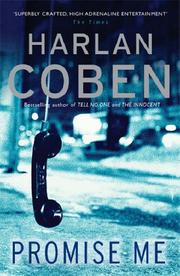
The return, and the best book in the series. A promise to two teenagers goes wrong and Myron spends the novel being genuinely hated by people who are right. Read it directly after Darkest Fear to feel the gap Coben left.
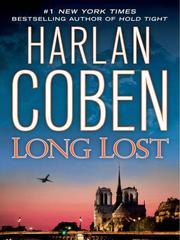
The most conventional thriller plot of the run, and the one that takes Myron furthest from home. Notable mainly for how much the series' emotional machinery still works underneath a straight international story.
Later Myron, and the Spin-Off
IntermediateFinish the main sequence and decide whether to carry on into Win's own book.
▸ Study plan for this stage
Pace: 3–4 weeks for roughly 1,230 pages: Live Wire (384 pages), Home (416 pages) and Win (432 pages). Live Wire is the natural stopping point if you want one, so decide there whether to continue. Home requires Promise Me specifically — reread the last thirty pages of Promise Me before starting it if there
- Myron's brother and the family history the earlier books kept at the edges, brought forward in Live Wire
- Live Wire as the deliberate closing of the arc begun in Deal Breaker, and what it resolves about the Bolitars specifically
- Home as the one late book that genuinely requires an earlier one — a decade-later sequel to Promise Me
- Win as a narrator: Windsor Horne Lockwood III telling his own story in his own voice, with Myron barely present
- What the change of narrator exposes about the first-person limitation the whole series ran on
- The answer to the question the series has been raising since Drop Shot about what Win actually is
- Reading a spin-off as a coda rather than a continuation — Win is not a Bolitar novel and does not pretend to be
- What does Live Wire close that Deal Breaker opened? Be specific about the family thread rather than the case.
- Why does Home fail as a standalone? Name what a reader who skipped Promise Me would not feel.
- How does Win's narration differ from Myron's in what it notices, what it withholds and what it finds funny?
- Does Win confirm or complicate the reading of Win you formed in stage one? What is the novel's own verdict on him?
- Having finished, what would you tell someone who wanted to read one Myron Bolitar novel and only one?
- Before starting Home, reread the final chapter of Promise Me. The decade between the two books is real and the resolution turns on a detail you will have half-forgotten.
- Read the first chapter of Deal Breaker and the last chapter of Live Wire on the same evening. The arc between them is the series' actual spine and it is only visible from both ends.
- While reading Win, keep a note of every moment where Win explains something Myron narrated differently earlier in the series. The disagreements between the two narrators are the point of the spin-off.
- Return to your 'not undone' column, now eleven books long, and write a paragraph on what the series has permanently spent. That column is the reason not to read Coben out of order and it is the best summary of what the run was doing.
Next up: This closes the path: the main sequence is finished and Win's own book is the coda, so anything further is Coben's standalone thrillers rather than more Myron.
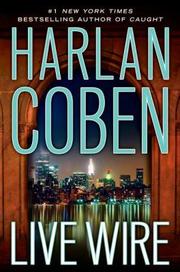
Myron's brother, and the family history the earlier books kept at the edges. It closes the arc that began in Deal Breaker and is the most satisfying stopping point if you want one.

Picks up the abduction from Promise Me a decade on, which makes it the one late book that genuinely requires an earlier one. Read Promise Me first or the resolution means nothing.
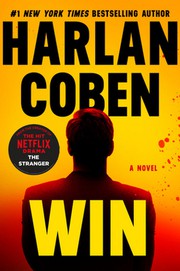
Not a Bolitar novel — Windsor Horne Lockwood III narrates his own book, and Myron is barely in it. Read it last, as a coda: it is the answer to the question the whole series raises about what Win actually is.
Discussion
Keep reading
Paths that share books, cover the same subject, or open a related topic.