Harlan Coben books in order: where to start with Myron Bolitar
Coben writes two things: the Myron Bolitar series, which must be read in order because Myron and Win change permanently across it, and the standalone thrillers, which can be read in any order at all. The complication is that several standalones quietly share characters with the series and with each other, so this path interleaves them at the point where that stops being a spoiler. It opens with the first four Bolitar novels, continues through the middle run, breaks to the standalone that changed Coben's career, and returns to the later Bolitar books, which assume everything before them.
Myron Bolitar, the first four
BeginnerMeet Myron, Win and Esperanza, and learn the series' engine — a sports agency that keeps turning into a missing-persons investigation
▸ Study plan for this stage
Pace: 4-5 weeks. Deal Breaker 381pp, Drop Shot 368pp, Fade Away 368pp and Back Spin 384pp — about 1,500 pages, but these are fast-moving 1990s paperback thrillers with short chapters and heavy dialogue, so a book a week is comfortable and a book a weekend is normal. Read strictly in order; the series chan
- The series engine: a sports agency that keeps turning into a missing-persons investigation
- Myron as an athlete whose career a knee injury ended, which is the wound the whole run is built on
- Win — Windsor Horne Lockwood III — as the series' most useful invention: the violence Myron will not do and half the comedy
- Esperanza and the office as the domestic ballast that makes the recurring cast work
- Old money and its damage as a recurring Coben preoccupation, opened up in Back Spin
- The Coben chapter ending: short chapters that each close on a turn, which is the mechanical basis of the reputation for unputdownability
- Sport as setting rather than subject — football, tennis, basketball and golf, one per book
- What does Win let Coben do that Myron alone could not, morally and structurally?
- How does Fade Away use Myron's ended basketball career, and why is it the book that converts readers?
- What does the sports-agency premise supply that a private-investigator premise would not?
- Where in Deal Breaker does Coben establish the emotional rules the series will keep for eleven books?
- Drop Shot is the slightest of the four. What does it nevertheless set up that later books require?
- Read the last paragraph of ten consecutive chapters in Deal Breaker and note how many end on a reversal or a withheld fact. The proportion is Coben's signature technique and it is easy to miss while being carried by it.
- Keep a one-line log per book of what changes permanently for Myron, Win or Esperanza. By book four the log is short — which is exactly what changes in the next stage.
- Note every time Win solves a problem Myron cannot. The pattern is the series' recurring moral argument and it is never quite settled.
- After Fade Away, write down what you think the series is about. Revisit that note after Live Wire in the last stage.
Next up: The first four books restore the status quo at the end; the next three deliberately stop doing that, and the change is the making of the series.

Book one, 1995, and the correct starting point. A quarterback client, a woman presumed dead, and the introduction of Windsor Horne Lockwood III — the character who does most of the damage and half the comedy across the whole series.

Book two, set in the tennis world. Slighter than the first but it establishes Esperanza properly and the office dynamic that carries the run. Read it in sequence rather than skipping to the better-known later books.

Book three, and the first genuinely good one — Myron returns to the basketball career an injury ended, which is the wound the whole series is built on. If a reader is going to commit to Bolitar, this is the book that does it.

Book four, a golf kidnapping, and the volume that opens Win's family up. The series' interest in what old money does to people starts here and never really stops.
The middle Bolitars
BeginnerFollow the run through its darkest stretch, where the consequences stop resetting between books
▸ Study plan for this stage
Pace: 3-4 weeks. One False Move 352pp, The Final Detail 362pp and Darkest Fear 347pp. These three must be read consecutively and without gaps — The Final Detail opens with Myron already in flight from the ending of One False Move and is unreadable out of sequence. Darkest Fear turns on a child's life-thre
- Consequence that persists — the first Bolitar novels where the ending does not reset
- One False Move as the turning point, and the ending that changes Myron permanently
- The Final Detail as direct continuation: Myron abroad and out of the story, Esperanza charged with murder
- Esperanza and Win carrying a book without Myron at its centre, which tests how much the supporting cast can hold
- Darkest Fear moving the stakes inside Myron's own family, and the discovery of a thirteen-year-old son
- The series' darkest stretch, and why Coben stopped after it
- How a long-running series changes when the protagonist can be damaged
- What is the ending of One False Move, and why can the series not go back afterwards?
- The Final Detail sidelines its protagonist for a stretch. What does that reveal about which characters the books actually run on?
- How does Darkest Fear differ in kind from the earlier books — what has replaced the sports-world plot as the engine?
- Why would an author stop a successful series here, and what does the six-year gap suggest about where he thought it had got to?
- Across these three, what does Coben do with Win that he had not risked in the first four?
- Read the final chapter of One False Move and the first chapter of The Final Detail consecutively as one sequence. They are written as a single hinge and reading them apart wastes both.
- Track Esperanza's page count and agency across the three books. She goes from office manager to the plot's centre, and the shift is measurable.
- List what Myron has lost by the end of Darkest Fear against what he had at the end of Back Spin. The comparison is the argument for reading in order.
- Note where Coben lets a resolution be genuinely unsatisfying. These are the first books in the run that do it, and they are more interesting for it.
Next up: With the series paused, Coben moved to the standalone form that made him an international bestseller — and read at this point in the run it functions as the break he himself took.

Book five, and the turning point — a women's basketball star, a decades-old crime, and an ending that changes Myron permanently. The first Bolitar novel that does not restore the status quo.

Book six, opening with Myron having fled the country after the previous book, and Esperanza charged with murder. Unreadable out of order; it is a direct continuation.

Book seven, in which Myron learns he has a thirteen-year-old son who needs a bone marrow donor. The most personal of the run, and the point after which Coben paused the series for six years.
The standalone that changed everything
BeginnerRead the three early standalones, starting with the one that made Coben an international bestseller, and see the form he moved to
▸ Study plan for this stage
Pace: 4 weeks. Tell No One 353pp, Gone for Good 420pp and No Second Chance 416pp. These read faster than the Bolitar books because they carry no series baggage, and each is designed to be finished in as few sittings as possible. They can be read in any order at all — the ordering here is chronological so
- The Coben hook: a settled life, and one piece of information that proves the past was not what it seemed
- The presumed-dead loved one as the engine of all three books, deployed three different ways
- Ordinary-person protagonists — a doctor, a brother, a father — rather than a professional investigator
- First-person narration in Tell No One and what it lets Coben conceal fairly
- Deliberate self-repetition: Gone for Good uses the same machine as Tell No One knowingly, not accidentally
- Relentless pacing in No Second Chance, and Coben's willingness to keep escalating past the point most thrillers rest
- Why the standalones need no reading order while the series does — nothing carries forward
- State the Coben hook in one sentence. Then check it against all three books; where does each vary it?
- How does first-person narration in Tell No One let Coben withhold information without cheating the reader?
- Gone for Good reruns the formula. What has been refined, specifically?
- What does No Second Chance do differently in its pacing, and does the relentlessness cost it anything?
- Why did the standalone form suit Coben's strengths better than the series at this point in his career?
- Write down the hook of each of the three books in one sentence before starting it, from the back cover alone. Then check afterwards how much of the novel was already implied by that sentence.
- In Tell No One, mark every point where the narrator knows something he does not tell you. Coben plays fair in first person, and finding the seams is the craft lesson.
- Compare the midpoint reversal in Tell No One and Gone for Good. They occupy the same structural slot and do slightly different jobs.
- After all three, list the recurring components — the reopened past, the loyal friend, the corrupt authority figure — and then predict them in the next Coben you read. Being right is the point.
Next up: Coben returned to Bolitar after six years with the standalone form's lessons applied — and the later books assume every consequence the middle run set in motion.

The 2001 standalone that reset his career: a doctor gets an email apparently from his wife, murdered eight years earlier. The purest example of the Coben hook, and the natural break point in the Bolitar run. Later filmed in France as Ne le dis a personne.

The second standalone, on the same engine — a brother presumed dead for a decade. Read it after Tell No One to see the formula being deliberately repeated and refined rather than accidentally.

A doctor shot and his infant daughter taken, with a ransom that goes wrong. The most relentless of the early standalones, and the one that shows Coben's willingness to keep a plot moving past the point most thrillers would rest.
Bolitar returns
IntermediateRead the later Bolitar novels, which assume the whole earlier run, and understand how the standalones connect back
▸ Study plan for this stage
Pace: 5-6 weeks. Promise Me 431pp, Long Lost 379pp, Live Wire 384pp and Home 416pp — roughly 1,600 pages spread over eleven years of publication, so gaps between the books are built into the material. All four assume the earlier run; Live Wire in particular closes threads running back to book one. Home re
- The series' second start: Promise Me as a deliberate reintroduction six years on
- Myron aged into a different role — no longer the young agent, and the books know it
- Mickey Bolitar's world opening up, which is where the young-adult spin-off begins
- Long Lost taking the plot to a scale the series does not usually attempt, and dividing readers for that reason
- Live Wire finally opening Myron's own family, and closing threads set up in Deal Breaker
- Cross-series continuity: how the standalones and the young-adult books quietly connect back, and why Home needs one of them
- Win as the natural next step — the 2021 standalone narrated by Windsor Lockwood himself, which assumes everything above
- How does Promise Me reintroduce a series that had been dormant, and what does it assume the reader remembers?
- Long Lost changes genre partway through. Does the series earn that, and why do readers split on it?
- What does Live Wire resolve that goes back to book one, and how long has Coben been holding it?
- How does Home handle a plot strand that originates outside the Bolitar novels, and is it fair to a reader who has not read them?
- Having read eleven Bolitars and three standalones, what does the series do that the standalones cannot?
- Before starting Live Wire, write down every unresolved question you still hold from Deal Breaker. Then check them off as the book closes them; this is the clearest possible demonstration of why the series demands order and the standalones do not.
- Track Win across all eleven Bolitar novels for the moments he is allowed interiority. They are rare and they are concentrated late, which is what makes the Win standalone a plausible next book.
- Note where Home relies on the Mickey Bolitar novels and decide, from the text alone, whether you would recommend reading those first.
- Compare the opening chapter of Deal Breaker with the opening chapter of Home. Twenty-one years apart, same character, and the differences in prose and pacing are the whole career in miniature.
Next up: This is the end of the ordered path: Win, the standalone narrated by Windsor Lockwood, is the natural next book, and the remaining standalones can be read in any order you like.
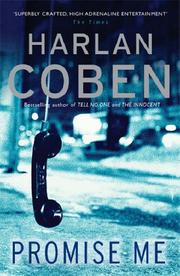
Book eight, six years after Darkest Fear, and the series' second start: Myron promises two teenage girls a lift home at any hour, and one disappears. Introduces Mickey Bolitar's world and reads as a deliberate reintroduction.
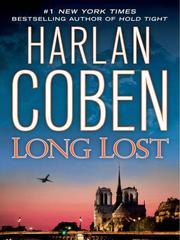
Book nine, in which a woman from Myron's past resurfaces in Paris and the plot goes somewhere much larger than the series usually does. Divisive for that reason, and it needs the earlier books to land.
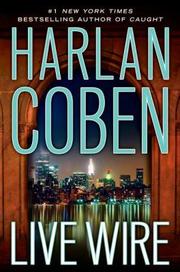
Book ten, and the one that finally opens Myron's own family. It closes threads running back to book one, which is precisely why the reading order matters for this series and not for the standalones.

Book eleven, five years later, resolving a kidnapping introduced in the Mickey Bolitar young-adult novels. A good stopping point — and the natural bridge to Win, the 2021 standalone narrated by Windsor Lockwood himself, which assumes everything above.
Discussion
Keep reading
Paths that share books, cover the same subject, or open a related topic.