My Hero Academia Reading Order: Where to Start and What Order to Read It In
My Hero Academia has one spine and no ordering puzzle: read the numbered volumes in order, starting at volume one. What a guide can usefully do is mark the arc boundaries — this is a long shonen series that changes shape several times — and tell you where the spin-offs go. Vigilantes and Team-Up Missions are separate series with their own numbering; read them after the main run rather than interleaved, because Vigilantes in particular spoils reveals from the spine. This path covers the opening sixteen volumes, which is where the series establishes everything the later arcs pay off.
Start Here: Izuku Midoriya
BeginnerMeet the quirkless boy, the inheritance that changes him, and the school the series is named after.
▸ Study plan for this stage
Pace: About a week for 591 pages across three volumes — Vol. 1 (191 pages), Vol. 2 (204 pages) and Vol. 3 (196 pages). Manga reads fast; a volume an evening is normal and the arc breaks fall neatly at volume ends here. Read them consecutively rather than spaced out, because Vol. 3 is the volume that tells
- The premise stated in the first chapter: a world where almost everyone has a quirk, and one boy who does not
- One For All as an inherited power rather than an innate one, and what inheritance costs Midoriya physically
- U.A. High and the school-story frame that the whole series is built on
- All Might's dual form and the gap between the symbol and the man
- The Midoriya–Bakugo rivalry as the series' actual engine, set up in Vol. 2's battle trial
- The USJ attack in Vol. 3, where the villains stop being an idea and become an organisation
- Horikoshi's pacing: how far past the setup Vol. 1 gets compared with most shonen openings
- What is a quirk, how are quirks regulated, and what does the profession of hero actually consist of in this world?
- What is One For All, how is it transferred, and what happens to a body that receives it unprepared?
- Why does Bakugo react to Midoriya the way he does? State his grievance in his own terms rather than as simple bullying.
- What does the USJ attack establish about the League of Villains that the earlier chapters only implied?
- What is All Might's condition, who knows about it, and why does the series make it a secret?
- Read the battle trial in Vol. 2 twice — once for the fight, once tracking only what each of the four combatants believes about the others. The rivalry is constructed in dialogue, not in the punches.
- List every named classmate introduced across the three volumes with their quirk. Vol. 4 will add twenty more, and having the first list already written is the difference between following the Sports Festival and drowning in it.
- Compare the opening ten pages of Vol. 1 with the opening ten of Vol. 3 and note how much less explaining Horikoshi does the second time. The series teaches you its own conventions fast.
- Mark where Vol. 3 ends relative to the USJ attack and write one sentence on what the villains gained and lost. It is the first time the series keeps score.
Next up: With Class 1-A's core relationships and the villain threat established, the next stage is the tournament arc that turns twenty background students into characters.

The only place to begin. Everything about the series' premise — a world where almost everyone has a power and one boy does not — is set up in the first chapter, and Horikoshi's pacing is fast enough that the volume ends well past the setup.
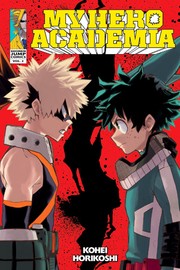
The battle trial and the first real fight between Midoriya and Bakugo, which establishes the rivalry the whole series runs on. Read straight on from volume one.

The USJ attack, and the point where the villains stop being an idea and become an organisation. This is the volume that tells you whether the series is for you.
The Sports Festival
BeginnerWork through the tournament arc that introduces most of the supporting cast and the series' best early character writing.
▸ Study plan for this stage
Pace: About a week for 578 pages: Vol. 4 (196 pages), Vol. 5 (192 pages) and Vol. 6 (190 pages). These three run continuously and are best read in two or three sittings rather than six. Note that Vol. 5's catalogue record displays without the comma before the volume number and Vol. 6's displays under the
- The tournament arc as shonen's most conventional structure, and what Horikoshi uses it for instead — mass character introduction
- Todoroki's inherited damage, which is the series' first serious statement that power and family are the same subject
- The Midoriya–Todoroki fight in Vol. 5 as the early series' best sequence, and why it is won by an argument rather than by a technique
- Quirk design as characterisation: twenty classmates given distinct powers, limitations and motives at once
- Uraraka's match as the arc's quiet demonstration that the gap between students is not one of will
- The transition from festival to internships at the end of Vol. 6, and the shift from school to professional world
- Public spectacle as a structural element — heroism in this series is performed for an audience
- What does the Sports Festival exist for inside the world, and what is Horikoshi using it for as a writer?
- State Todoroki's position at the start of his fight with Midoriya and what changes it. What is Midoriya actually arguing?
- Which classmates get their defining moment in this arc, and what does each moment establish?
- What does the festival's public broadcast tell you about how heroes are made and marketed in this world?
- How does the internship arc that begins in Vol. 6 change what the students are being measured against?
- Take your Vol. 1–3 roster of classmates and add, for each, the moment in Vols. 4–6 where the character becomes distinct. Anyone with a blank line is someone Horikoshi deliberately held back.
- Reread the Midoriya–Todoroki fight with the sound off, so to speak — read only the art on one pass and only the dialogue on another. The fight is won in the dialogue, which is unusual for the genre and worth noticing.
- Chart the tournament bracket as you read and predict each outcome before turning the page. Where Horikoshi surprises you, work out what the upset was for.
- Write one paragraph on Endeavor from the evidence available by the end of Vol. 6 only. Keep it; the series spends the next thirty volumes complicating it.
Next up: The festival makes the students public, which is precisely what makes them targets in the arc where the series' politics arrive.
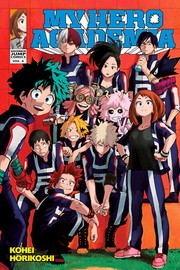
The Sports Festival begins. Tournament arcs are shonen's most conventional structure and Horikoshi uses this one almost entirely to give twenty classmates distinct powers and motives at once.

The Midoriya and Todoroki fight, widely regarded as the best single sequence in the early series. It is also where the story's interest in inherited damage rather than inherited power first surfaces.

Closes the festival and begins the internship arc. Read on without pausing — the two run together. This volume's catalogue record displays under the bare series title rather than a volume number.
Stain, and the Raid on Kamino
IntermediateFollow the arc where the series' politics arrive and the consequences become permanent.
▸ Study plan for this stage
Pace: About a week. Vol. 7 (190 pages) and Vol. 8 (191 pages) read straight on from the festival. Note that Vol. 9 is not in our catalogue as a single volume, so this stage jumps from 8 to 10 — read Vol. 9 from another source before continuing, because the Stain arc resolves in it.
- Stain the Hero Killer as the first antagonist with an argument rather than a grievance
- The critique of professional heroism — heroes as salaried celebrities — which is the idea the back half of the series is built on
- Iida's revenge arc, and the series' explicit position that a hero acting on personal vengeance stops being one
- How a villain's ideology spreads after his defeat, which is the real consequence of Vol. 7
- The quiet structural work Vol. 8 does between two major arcs, and why skimming it costs you later
- Licensing, provisional authority and the legal apparatus around who is allowed to fight
- The training camp setup as the point where the students stop being safe by default
- What exactly is Stain's argument about heroism? State it in a form he would accept.
- Why is Iida's arc structured as a failure rather than a triumph, and what does the series say about vengeance through it?
- What happens to Stain's ideology after Stain, and who benefits from it?
- What does Vol. 8 set up that pays off in the arcs immediately following it?
- How does the internship structure change the relationship between the students and the professional heroes?
- Write out Stain's argument as a numbered case, then write the strongest reply the series itself gives him. Horikoshi does not simply refute him, and finding where the counter-argument actually lands is the work.
- Track every appearance of the word 'hero' in Vol. 7 and note who is using it and about whom. The volume is a sustained argument about the definition of a single word.
- Reread the last twenty pages of Vol. 8 immediately before starting the next volume in sequence. It is the setup volume that most readers skim and the one the following arc assumes entirely.
- Check the volume number printed on the spine against the listing before you order — mixed single-volume and box-set listings are common for this series, and the numbering on a collected edition will not match.
Next up: With Stain's critique loose in the world and the training camp compromised, the series moves to the arc that ends its first era.

Stain the Hero Killer, the first antagonist with an argument rather than a grievance. His critique of professional heroism is the idea the back half of the series is built on.

The fallout from Stain and the setup for the training camp. A quieter volume that does necessary work — do not skim it on the way to the next fight.
The Symbol of Peace
IntermediateRead the sequence that ends the series' first era and changes the world the students are training into.
▸ Study plan for this stage
Pace: About a week for 592 pages: Vol. 10 (192 pages), Vol. 11 (208 pages) and Vol. 12 (192 pages). Read Vols. 10 and 11 in one sitting if you can — the Kamino raid and its aftermath are one story split across a spine, and the break between them is a printing decision rather than a narrative one.
- The Kamino raid as the most consequential sequence in the series to this point
- All For One as the answer to what One For All has been in opposition to all along
- The end of the Symbol of Peace, and the series' argument that a society organised around one person is fragile by construction
- How public confidence in heroes changes after Kamino, and why that is the actual plot rather than a mood
- The provisional licence exam in Vol. 12 as the widening of scope from one classroom to a profession
- Shigaraki's promotion from disciple to principal, and what he inherits
- The generational handover as the series' central structure — every major character in it is receiving something from someone older
- What happens at Kamino, and what is different about the world on the page after it that was not before?
- What is All For One, and what is its relationship to One For All beyond simple opposition?
- Why does the series insist that the loss at Kamino is a societal event rather than a personal one?
- What does the provisional licence exam measure that the Sports Festival did not?
- Who has actually inherited what by the end of Vol. 12 — list the handovers, and there are several.
- Read the last chapter of Vol. 10 and the first of Vol. 11 as one continuous unit, then reread All Might's introduction in Vol. 1. The two scenes are written to be held against each other.
- Track public reaction — news broadcasts, crowd panels, background dialogue — across Vols. 10 to 12. The series tells you the state of society in panels most readers skip.
- Compare the Vol. 12 licence exam against the Vol. 4 Sports Festival on structure: who competes, what is being tested, and what winning gets you. The change measures how much the story has grown.
- Write a paragraph on Shigaraki using only what Vols. 10–12 establish, and set it beside the paragraph you wrote about Endeavor after Vol. 6. Both are characters the series is deliberately withholding.
Next up: With the Symbol of Peace gone and the class licensed to act, the series enters the arc most readers name as its peak.

The Kamino raid — the single most consequential arc in the series so far. Read volumes ten and eleven in one sitting if you can; they are one story split across a spine.

The aftermath, and the beginning of the version of the series that runs from here on. Everything about how the public relates to heroes is different after this volume.

The provisional licence exam begins and the class is measured against students from other schools. The scope widens from one classroom to a profession.
Where the Path Leaves You
BeginnerReach the Shie Hassaikai arc, the point where the series is fully itself, and know how to continue.
▸ Study plan for this stage
Pace: A few days for 400 pages: Vol. 14 (208 pages) and Vol. 16 (192 pages). Note that this stage is a sampling rather than a run — Vols. 13 and 15 fall between the two books listed and belong in the sequence, so read the numbered volumes in order and use these two as the markers for where the Shie Hassai
- The Shie Hassaikai arc as the point where the series is fully itself — the tonal and structural endpoint of everything the first thirteen volumes built
- Eri and Overhaul, and quirk-erasure as a plot device with an argument attached about what a quirk is
- The joint operation structure: students, pros and police working one case, which is new for the series
- Mirio Togata and the series' willingness to impose permanent costs on characters who did nothing wrong
- The shift from school arcs to operations, which is the shape the series keeps from here on
- How to continue: the main series runs to forty-two volumes in the same numbering, straight on from here
- Where the spin-offs go — Vigilantes and Team-Up Missions are separate series with their own numbering, and Vigilantes in particular spoils reveals from the spine, so save both until you have caught up
- What does Overhaul want, and what does his plan imply about how quirks are understood in this world?
- What is done to Eri, and how does the arc's resolution treat the cost of it?
- How does the joint-operation structure change how fights are written compared with the Sports Festival?
- What permanent consequences does this arc leave in place, and how does the series make clear they will not be undone?
- What is the reading order from here, including where the two spin-off series belong?
- Read the numbered volumes in order rather than skipping to the two listed here — Vols. 13 and 15 sit inside this arc and it does not survive being read with holes in it.
- Compare a fight in Vol. 14 or 16 with the Vol. 2 battle trial on construction alone: number of participants, panel density, how much of the outcome is decided by planning rather than by power. The series changed genre somewhere in between and this is where you can see it.
- Write down the state of the world at the end of Vol. 16 — heroes, villains, public confidence, the class — as a briefing for yourself before you continue to Vol. 17.
- Set your continuation order now: the main run to Vol. 42 first, then Vigilantes, then Team-Up Missions. Writing it down is the cheapest way to avoid the spoiler problem.
Next up: This is where the path stops rather than the series: keep going straight into the numbered volumes from here, with the spin-offs held back until the main run is finished.

The Shie Hassaikai arc opens, introducing Eri and Overhaul. This is the darkest material in the series to date and the arc most readers name as its peak.
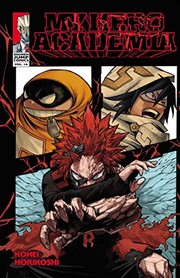
The climax of that arc, and a good place to stop and take stock. The series runs to forty-two volumes and continues in the same numbering — keep going straight from here, and save Vigilantes and Team-Up Missions until after you have caught up.