Military Careers: The Best Books on Serving and Leading, in Order
Books cannot enlist you, commission you or pass a fitness test, and no reading list substitutes for talking to a recruiter and to people who have actually served. What books can do is answer the question a recruiter will not: what the job is like from the inside, and what it asks of you over twenty years rather than four. This path moves from recruit training, through the commissioning routes, to the specific demands of junior leadership, to what the work costs, and finally to the transition home and the wider question of what military service does to the people who choose it. It is deliberately weighted toward first-hand accounts and toward the American services, which is where the honest literature is thickest.
What basic training actually is
BeginnerUnderstand recruit training as a designed process — what it is trying to do to you and why — from two reported accounts written by observers who were given full access.
▸ Study plan for this stage
Pace: Two to three weeks. Ricks' Making the Corps is 320 pages and Da Cruz's Boot 302 — both fast reads, a week each. Read Ricks first regardless of which service interests you, then Da Cruz. Note the standpoints: Ricks was a Wall Street Journal defence correspondent given access to follow one Marine recr
- What recruit training is for, which is not fitness and not skills: it is the replacement of an individual civilian identity with a group one, and both books are explicit that this is the design rather than a side effect.
- The phased structure — receiving, initial drill and discipline, marksmanship and field skills, the culminating event, and graduation — and the deliberate sequencing of stress and relief.
- The drill instructor as an institutional role rather than a personality: selected, trained, scripted within limits, and operating under supervision that the recruits cannot see.
- Attrition and who fails. Both books follow recruits who do not graduate, and the reasons — injury, unfitness, refusal, fraudulent enlistment — are worth knowing before enlisting.
- Marine Corps distinctiveness, since both books are about Parris Island: the Corps trains longer and invests more in identity formation than the other services, and its recruit training is not a template for Army, Navy or Air Force basic.
- Ricks' second argument, about a growing cultural distance between the military and the society it serves, which he draws out of the platoon's post-graduation trajectories.
- What happens after graduation, which Ricks follows and most accounts do not: the fleet, the first unit, and the several recruits whose problems begin rather than end at graduation.
- The gap between recruiting material and the thirteen weeks, which is the practical reason this stage comes first.
- What is recruit training actually designed to produce? State it without using the word 'discipline'.
- Trace one recruit through Ricks' book from arrival to graduation. At which points was the outcome genuinely uncertain?
- Which recruits fail, and for what reasons? Are the reasons predictable at enlistment?
- What is Ricks' civil-military argument, what evidence does he give for it, and does the platoon's story actually support it?
- Da Cruz was writing in 1987 and Ricks in the late 1990s. Which of the specifics they describe are plainly dated, and which parts of the structure are unchanged?
- Build a week-by-week outline of Marine recruit training from the two books combined, marking where they agree and where the decade between them shows a change.
- Follow three named recruits in Ricks' platoon and write a short profile of each: why they enlisted, what happened, where they were at the end of the book.
- Check the two books' descriptions against a current official recruit training schedule you can find published, and list what has changed.
- Write down, before starting stage 2, what you currently think a military career consists of. You will revise this at the end of stage 5.
Next up: Enlisted training is one route in; the next stage is the other one, and the specific responsibilities a commission carries.
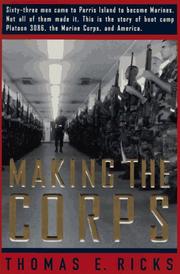
A Wall Street Journal defence correspondent followed one Marine recruit platoon through Parris Island from arrival to graduation. The best available account of what boot camp is for, and Ricks is also serious about the resulting gap between military and civilian culture. Start here regardless of which service interests you.
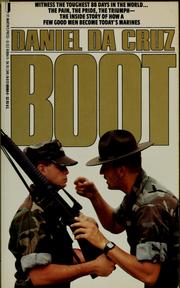
The earlier classic on Marine recruit training, from 1987, and the more granular of the two on the day-to-day mechanics of the thirteen weeks. Read second, and read both knowing that training details change — the structure and intent have held, the specifics have not.
The commissioning routes
BeginnerCompare the three main paths to becoming an officer — a service academy, ROTC and officer candidate school — and see what each actually selects for.
▸ Study plan for this stage
Pace: Four to five weeks. Absolutely American is 317 pages, In a Time of War 365 and One Bullet Away 391 — roughly ten days each. Read them in the listed order: the academy experience, then what that class went on to, then the alternative route through Officer Candidate School. Lipsky was a journalist emb
- The four commissioning routes and what actually distinguishes them: the service academies, ROTC, Officer Candidate School, and direct commission for professionals. Each has different selection, different obligation length, and different standing inside the institution.
- The academy as a four-year total institution — the plebe system, the honour code, the cadet chain of command, and the fact that cadets run much of the discipline themselves.
- Attrition and the honour code in practice. Lipsky covers cadets separated for honour violations and the arguments about whether the code's single-sanction rigour is defensible.
- The service obligation as a contract: years owed after commissioning, and the financial and legal consequences of leaving. This is the least romantic and most decision-relevant fact in the stage.
- The 2002 cohort as a natural experiment. Murphy's class entered before September 11 and graduated into two wars, and the book is the clearest available account of what a peacetime commissioning decision can turn into.
- OCS as the alternative, compressed and later: Fick arrives as a college graduate, is trained in months rather than years, and is candid about the difference in preparation and in institutional confidence.
- What a new lieutenant is actually responsible for, which Fick states more clearly than anything else on this path: roughly forty people, their equipment, their training, their lives, and decisions made with incomplete information at speed.
- The gap between commissioning and competence, and the role of the senior enlisted adviser — a platoon sergeant with fifteen years' experience working for a twenty-three-year-old — which is the central structural oddity of junior officer life.
- Compare the four commissioning routes on selection, length, obligation and cost. Which produces what?
- What is the honour code's single sanction, and what are the arguments for and against it that Lipsky records?
- In Murphy's book, what does the class of 2002 discover that their training had not prepared them for?
- Fick describes what a new platoon commander is responsible for. List it concretely — people, equipment, decisions — and estimate the value and the headcount.
- How does a twenty-three-year-old lieutenant work with a platoon sergeant twice his experience? What do the books say about how that relationship succeeds or fails?
- Lipsky and Murphy are journalists and Fick is a participant. Where does the difference show?
- Produce a comparison table of the commissioning routes with columns for entry requirements, duration, service obligation, cost or compensation, and the branch options each opens.
- Track one cadet through Lipsky's four years and write down every decision point at which they could have left, and what held them.
- Take Murphy's class of 2002 and list what each followed officer he profiles was doing two years after graduation. The distribution is the honest answer to what a commission leads to.
- From One Bullet Away, write out a new lieutenant's actual duty list — administrative, training, tactical, personal — in the order Fick encounters them.
- Find the current service obligation terms for one commissioning route and write them out precisely. The books will not give you current numbers and this is the number that matters.
Next up: You now know how someone becomes an officer; the next stage is what the institution says the job requires, in its own words and in its own handbooks.
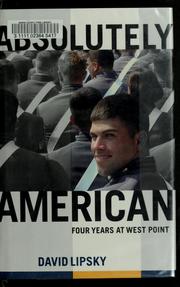
Lipsky spent four years embedded at West Point following one class from plebe year to commissioning. The definitive book on the service academy experience, and honest about the attrition, the hazing debates and the cadets who leave. Read it first in this stage.
Follows the West Point class of 2002 — the last to enter before September 11 — from graduation into Iraq and Afghanistan, and in several cases into being killed. The necessary sequel to Lipsky: what the training was preparation for.
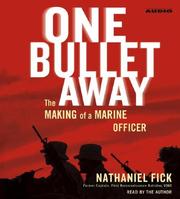
A Dartmouth classics graduate goes to Marine Officer Candidate School and ends up leading a reconnaissance platoon in Afghanistan and Iraq. The best account of the OCS route and the clearest description on this path of what a brand-new lieutenant is actually responsible for.
What junior leadership demands
IntermediateMove from observation to the professional literature — the doctrinal texts on the officer's role and the leadership books the services themselves assign.
▸ Study plan for this stage
Pace: Three to four weeks. The Armed Forces Officer has no page count in this record and is a short formal document read in an afternoon — read it first. The Army Officer's Guide is 592 pages of handbook material organised for reference rather than reading; skim the structure and read the chapters relevan
- The commission as a legal and moral instrument: the oath, the authority it confers, and the specific obligations it attaches — this is the content of The Armed Forces Officer and it is the institution's own answer.
- The officer's obligations in the official formulation: to the Constitution, to subordinates, to the mission, and to the profession, and the order in which the document places them.
- The unglamorous administrative reality the memoirs skip entirely: evaluation reports, awards, counselling, property accountability, career timelines, promotion boards and assignment mechanics. This is most of the job most of the time.
- Malone's core argument that leadership at squad and platoon level is a set of specific observable behaviours rather than a quality of character, and that it can therefore be taught and assessed.
- Standards, expectations and enforcement: Malone's insistence that a standard not enforced is a standard revoked, and the practical mechanics of correction.
- Knowing your people, in the concrete sense Malone means — names, families, problems, capabilities — and the connection between that knowledge and unit performance.
- The transferability question. Malone's book is assigned in professional military education and is also the most directly useful book on this path for anyone who will lead a small team in any setting.
- The difference between what the institution says it expects and what the memoirs in stages 2 and 4 describe actually happening, which is a productive comparison rather than a debunking.
- What does The Armed Forces Officer say an officer's first obligation is, and to whom? Quote it.
- The document is the institution's self-description. Where does it describe an ideal rather than a practice?
- From the Officer's Guide, describe the evaluation report process and what it means for an officer's career. Why do the memoirs never mention this?
- State Malone's leadership behaviours as a list. Which of them require authority and which do not?
- What does Malone say about enforcing a standard, and what does he say happens when you do not?
- Compare Malone's account of small-unit leadership with what Fick describes actually doing in stage 2. Where do they match and where does the handbook fall short?
- Read The Armed Forces Officer in one sitting and write a one-page summary of what the institution claims to expect. Keep it and check it against every memoir in stages 4 and 5.
- Take the Officer's Guide's chapter on evaluation reports and write out an officer's first five years as a timeline of administrative events.
- Convert Malone's leadership behaviours into a checklist and apply it to a team you have actually led or been part of, scoring honestly.
- Find the current oath of office and the current version of The Armed Forces Officer, and compare the current text with the older edition you read. What has the institution changed its mind about?
- Write a page on the gap between the official documents and Fick's account of the same job, without deciding which is more accurate.
Next up: The handbooks describe the job; the next stage is three officers describing what it actually cost them to do it.

The Department of Defense's own statement of what commissioning means, originally drafted by the military historian S. L. A. Marshall and issued to officers of every service. Short, formal and worth reading precisely because it is the official answer: it is what the institution says it expects.
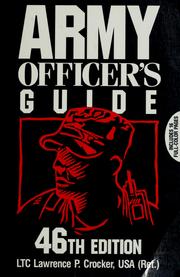
The practical handbook — customs, courtesies, career progression, evaluation reports, the mechanics of a commission. Read it for the unglamorous administrative reality of the job, which the memoirs skip entirely. Editions are frequently revised; get a current one if the details matter to you.

A short, blunt book on leading a squad or a platoon, written by a colonel and still assigned in professional military education. The most directly useful book here for anyone who will lead a small team, in or out of uniform.
What the job costs
IntermediateRead first-hand accounts of combat leadership and of the psychological weight of the work, from people who chose the career deliberately and wrote honestly about it afterwards.
▸ Study plan for this stage
Pace: Four to five weeks. The Unforgiving Minute is 386 pages, Joker One 336 and What It Is Like to Go to War 272 — roughly ten days each, though the last should be read slowly. Read them in the listed order. All three are participant accounts by officers writing about their own service. Mullaney's book r
- The full arc of an officer's formation in one book: Mullaney takes it from application through commissioning, advanced training and deployment to a first casualty, which is why it heads the stage.
- Responsibility as the actual subject. All three books are about the specific weight of having been the person who gave the order, and none of them resolves it.
- Joker One as the concrete version of what Small Unit Leadership describes in the abstract — read Campbell's daily platoon management directly against Malone's checklist.
- Ramadi in 2004 as a specific tactical and political situation, and the way an urban counterinsurgency reduces to a lieutenant's judgement on a street corner.
- Marlantes on killing: the distinction he draws between the act, the training that permits it, and the meaning that has to be made of it afterwards, none of which the institution addresses.
- The absence of ritual. Marlantes' central practical claim is that societies that send people to kill have historically provided ceremonies for their return, and that this one does not.
- Moral injury as distinct from post-traumatic stress — harm from having done something rather than from having had something done to you — which Marlantes describes at length before the term became common.
- The gap between the official documents of stage 3 and these accounts, which is not that the documents are wrong but that they describe obligations without describing what discharging them feels like.
- Mullaney covers the whole formation pipeline. Which stage of it did the most to prepare him for the moment the book builds toward, and which did the least?
- Take Campbell's daily platoon responsibilities and check them against Malone's behaviours from stage 3. What does Malone's model omit?
- What decisions does a platoon commander in Ramadi make that no training can specify in advance? Give three from Joker One.
- What does Marlantes mean by moral injury, and how does he distinguish it from post-traumatic stress?
- Marlantes argues for ritual. What specifically does he propose, and is it the kind of thing an institution can supply?
- All three are officers writing about their own decisions with the outcomes known. Where should you allow for retrospective reconstruction?
- Read Mullaney's account of the casualty in his platoon and write down the sequence of decisions leading to it, marking which were his, which were above him, and which were nobody's.
- Take one week from Joker One and log everything Campbell did — administrative, tactical, personal, disciplinary — then compare it with the duty list you built from Fick in stage 2.
- Set Marlantes' chapters on killing beside The Armed Forces Officer's account of an officer's obligations, and write a page on what the official document does not address.
- List the rituals Marlantes says are missing and note whether anything in Mullaney's or Campbell's account served the same function informally.
- Revise the answer you wrote at the end of stage 1 about what a military career consists of, and mark which of these three books forced each change.
Next up: All three books end with the author still in uniform; the last stage is the part of a career that recruiting material does not cover.
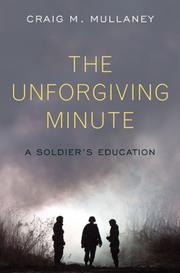
West Point, Rhodes Scholarship, Ranger School, then a platoon in Afghanistan and a soldier killed under his command. The most complete single account of an officer's formation from application to first casualty, which is why it sits at the head of this stage.

A Marine platoon commander in Ramadi in 2004, writing about forty men he was responsible for. Read it as the concrete version of what Small Unit Leadership describes in the abstract.
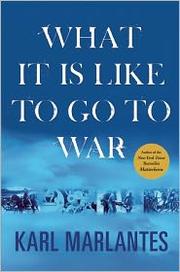
A Marine officer in Vietnam, writing forty years later about killing, guilt, and the absence of any ritual for coming home. The most reflective book on this path and the one most worth reading before enlisting rather than after.
Coming home, and the longer view
IntermediateConsider the transition out, which is where most of a service career's difficulty is concentrated, and finish with the novel officers have recommended to each other for fifty years.
▸ Study plan for this stage
Pace: Six to eight weeks. Thank You for Your Service is 272 pages, Tribe 168, and Once an Eagle 960 — the novel is nearly as long as the other two combined and should have a month to itself. Read Finkel first, then Junger directly after, then Myrer. Finkel followed the soldiers of his earlier book The Goo
- Transition as the part of a military career that recruiting material does not cover, and Finkel's demonstration that it can be harder and longer than the deployment.
- The specific conditions Finkel documents: traumatic brain injury, post-traumatic stress, the collapse of marriages under care burdens, the Veterans Affairs claims process, and suicide.
- The caregiver's position. Finkel gives sustained attention to spouses and families, who carry much of the transition and appear almost nowhere else on this path.
- Institutional response as reported rather than as advertised: what the VA and the Army actually did in these cases, including the programmes that worked.
- Junger's cohesion thesis and its two halves — that combat units supply belonging, and that modern civilian society does not — and the anthropological evidence he marshals for the second half, which is where his argument is most contested.
- The uses and limits of Junger's argument: it offers veterans a non-pathologising account of their own difficulty, and it has been criticised for romanticising cohesion and for underweighting trauma. Both readings are available in the text.
- Myrer's Sam Damon and Courtney Massengale as the two poles of a career — the soldier and the careerist — and the fact that the novel is didactic and knows it.
- The career as the actual unit of analysis. Once an Eagle covers half a century, two world wars and the beginnings of Vietnam, which makes it the only book here about the question a prospective officer is actually asking.
- What does Finkel show about the VA claims process, and what does he show about the programmes that helped?
- Whose lives does Finkel document besides the veterans', and what does the inclusion change about the picture?
- State Junger's thesis in one sentence. What is his evidence, and where is it weakest?
- Junger and Finkel are describing the same population. Where do their accounts conflict, and can both be true?
- What separates Damon from Massengale in Myrer's novel? Are the differences ones of character, of choice, or of the system that rewards them?
- Having read all five stages: what does a military career consist of, and what parts of it would you want to know more about before deciding?
- For each veteran Finkel follows, list the specific obstacles between them and a functioning civilian life, and mark which were medical, which bureaucratic and which social.
- Take Junger's argument and test it against three of Finkel's cases. Write down where it explains something and where it does not.
- Chart Damon's and Massengale's careers side by side across the novel's fifty years, marking each promotion and each decision point. The comparison is Myrer's whole argument in one page.
- Set Myrer's implicit definition of integrity beside The Armed Forces Officer's explicit one from stage 3 and write a page on the difference.
- Write your final revision of the note you began in stage 1 about what a military career consists of, and place beside it a short list of the questions you would now ask a recruiter that you would not have asked before.
- Look up current transition, education and healthcare benefits for one service, and check them against what Finkel's subjects were actually able to obtain.
Next up: The path closes here, on the whole career rather than one deployment: from this point the natural continuations are the service-specific professional reading lists, unit and campaign histories, and the current literature on veteran transition and moral injury.

Finkel followed the soldiers of his earlier book The Good Soldiers home, into traumatic brain injury, marriage breakdown, the Veterans Affairs bureaucracy and suicide. The hardest book here and the most necessary: transition is the part of a military career that recruiting material does not cover.

A short argument that what veterans often miss is not combat but the cohesion, and that civilian society is unusually bad at providing it. Read it directly after Finkel as the interpretive frame — and read it critically, since Junger is arguing a thesis rather than reporting one. Junger's earlier book War covers the deployment itself.

A 1968 novel following two officers across half a century — one a soldier, one a careerist — and long on professional reading lists as the fullest statement of what military integrity is supposed to mean. Closes the path because it is about the whole career rather than one deployment, which is the question anyone considering service is actually asking.