Michael Crichton books in order: where to start
Crichton wrote standalones. There is no shared universe, no continuing cast and, with exactly one exception, no sequels — so reading order is a question of taste rather than continuity, and nobody needs to start at the beginning. This path is arranged so that each stage answers a different question: what the technothriller template looks like at its purest, what Crichton did before he settled into it, which of the blockbusters actually hold up, which of the issue novels are worth your time, and where to go once you have exhausted the famous ones. The single ordering rule that matters is that Jurassic Park comes before The Lost World.
Start here
BeginnerRead the two early novels that define the Crichton method — a plausible technology, a small team, a countdown, and documentary apparatus in place of characterisation.
▸ Study plan for this stage
Pace: Two weeks. The Andromeda Strain is 295 pages and The Terminal Man 279 — both short, both fast, and a week each is generous. Read them in order. These two establish the method and the test: if the novel-as-declassified-report mode does not work for you in The Andromeda Strain, it never will, and the
- The documentary apparatus as Crichton's actual invention: the novel presented as an after-action report, complete with a fake bibliography, computer printouts, diagrams, timestamps and an acknowledgements section that is part of the fiction.
- Compressed time as a structural device. The Andromeda Strain runs five days and is organised hour by hour, and the countdown structure does the work that character normally does.
- Characters as functions. Crichton's people are specialists selected for the problem, and the books are frank about this — they exist to know things and to argue about them, and the argument is the plot.
- The competence-and-failure pattern: a rigorous system designed by intelligent people fails in a way nobody modelled, and the failure follows from the design rather than from stupidity or malice.
- The Terminal Man as the same technique applied to neuroscience rather than microbiology — implanted electrodes, a feedback loop nobody anticipated, and the most disciplined plotting in the early books.
- Scientific authority earned rather than asserted. The technical detail is not researched decoration; Crichton was training as a physician while writing these, and the difference shows against imitators.
- The information dump handled as evidence rather than as exposition — a memo, a transcript, a graph — which is the trick that makes the lectures readable.
- The recurring thesis both books state: technology deployed faster than its consequences are understood. Every later Crichton novel is a variation on it.
- List every documentary device in The Andromeda Strain — bibliography, printouts, diagrams, the framing note — and say what each one is doing to your credence.
- The Wildfire facility fails. Trace the failure precisely: whose design decision, made for what reason, produced it?
- How does the hour-by-hour structure change the reading experience compared with ordinary chaptering?
- In The Terminal Man, what exactly is the feedback loop, and at what point in the book does it become inevitable?
- Both novels use scientists as their cast. Name one place in each where a character is doing something other than supplying information.
- Go through The Andromeda Strain's bibliography and references and check which are real and which are invented. The proportion, and where he chose to be plausible, is the whole method in miniature.
- Chart the Wildfire facility's five levels and containment protocols as the book describes them, then mark the exact point where the protocol that fails was specified.
- Take the neurological explanation in The Terminal Man and write it out as a one-paragraph mechanism. Then find every page where Crichton restates it and note how he varies the delivery.
- Start a running list of Crichton's documentary devices, one line per device with the book it appears in. You will extend it through all five stages and it becomes the map of his career.
Next up: Having seen the technique in its native setting, the next stage shows Crichton taking the same documentary trick somewhere it has no business working — a Victorian heist and a tenth-century manuscript.

A satellite brings back a microorganism and five days pass in an underground lab. Written while Crichton was still at Harvard Medical School, and still the purest example of what he invented: the novel presented as a declassified report, complete with fake bibliography and printouts. Start here, and if the mode does not work for you it never will.
Electrodes implanted in a violent epileptic's brain, and the feedback loop nobody anticipated. Read second: it is the same technique applied to neuroscience rather than microbiology, and it is the most disciplined of the early books.
The 1970s experiments
BeginnerSee the range before the formula hardened — a Victorian heist, a mock scholarly edition of Beowulf, and a work of documentary nonfiction — and understand that Crichton was a more restless writer than his later reputation suggests.
▸ Study plan for this stage
Pace: Three weeks. The Great Train Robbery is 317 pages, Eaters of the Dead 220 and Five Patients 237 — all short. Read them in the listed order. These are the three books that show what Crichton could do when he was not writing technothrillers, and they are the strongest evidence that the documentary app
- Historical research as the same apparatus in period dress: The Great Train Robbery is built from court records and contemporary journalism, and the Victorian criminal slang is quoted rather than invented.
- The 1855 gold robbery as a competence story — the plot is a procedure, and the pleasure is watching a plan assembled from parts you have been shown.
- Crichton's evident enjoyment of Victorian social detail, which is the one place in the bibliography where he writes about people for their own sake, and the reason readers often name this his best-written book.
- The Eaters of the Dead conceit: a scholarly edition with footnotes, textual apparatus and a translator's preface, all fabricated, wrapped around a retelling of Beowulf. Written on a bet that he could make Beowulf entertaining.
- The real Ibn Fadlan account of the Rus, which Crichton uses genuinely at the start before extending it — a deliberate blurring of a real source into an invented one, and the most aggressive use of the documentary method in his work.
- Five Patients as clinical reportage: five case histories at Massachusetts General used to examine what American hospital medicine had become in 1970, including its economics and its technology.
- The physician's eye that Five Patients exposes and that the novels rely on — cost, institutional behaviour, and the gap between what medicine can do and what it does.
- The pattern across all three: Crichton's real subject is the reliability of documents, and the technothrillers are only one application of it.
- How much of The Great Train Robbery is drawn from the actual trial record? Where does Crichton say so, and where does he leave it ambiguous?
- In Eaters of the Dead, at what point does Ibn Fadlan's genuine account end and the invention begin? Could you have found the seam without being told?
- What is gained by retelling Beowulf as a manuscript with footnotes rather than as a novel?
- Five Patients is thirty years older than most readers. Which of its criticisms of American hospital medicine have dated and which have not?
- These three books have almost nothing in common in setting. What do they share in method?
- Look up the real 1855 Great Gold Robbery and compare the outline with Crichton's novel, listing what he kept, compressed and invented.
- Read a translation of the actual Ibn Fadlan risala alongside the opening chapters of Eaters of the Dead and mark the point of departure. Then read Beowulf's Grendel episode and map it onto Crichton's version.
- Take one of the five cases in Five Patients and write down every institutional fact it reveals — cost, staffing, technology, decision-making — then find the equivalent detail in a later Crichton novel.
- Add these three books to your running list of documentary devices, and note which device is doing the most work in each.
Next up: The experiments end when the technothriller becomes a commercial machine, and the next stage is the four books that made Crichton a brand.

A historical novel about the 1855 gold robbery, researched from court records and written with obvious pleasure in Victorian criminal slang. Nothing like the technothrillers, and often named by Crichton readers as his best-written book.
Beowulf retold as the annotated manuscript of a tenth-century Arab traveller, footnotes and scholarly apparatus included. Written on a bet that he could make Beowulf entertaining. The strangest thing in his bibliography and the clearest evidence of how much the documentary trick meant to him.
Nonfiction, from 1970: five case histories at Massachusetts General used to examine what American hospital medicine had become. Placed here because it is the source of Crichton's authority — he was a qualified physician, and the medical detail in the novels is not researched, it is remembered.
The blockbuster years
BeginnerRead the four novels that made him the best-selling technothriller writer alive, and see the template at full commercial power.
▸ Study plan for this stage
Pace: Five to six weeks. Congo is 348 pages, Sphere 385, Jurassic Park 455 and The Lost World 419 — longer than anything before, and a week to ten days each. Read Congo first as the palate-setter, then Sphere, then Jurassic Park and The Lost World in that order. The Jurassic Park ordering is the only real
- The expedition structure that all four share: a team assembled, transported to an isolated location with a communications constraint, and reduced by attrition. It is the Andromeda Strain shape moved outdoors.
- Congo as the lightest and most straightforwardly adventurous of the run — a lost city, a sign-language-trained gorilla, and the technology-versus-jungle framing that carries the book.
- Sphere as the outlier: a psychologist who was only ever meant to write a report, a habitat everyone is trapped inside, and a mechanism that makes it the closest thing Crichton wrote to a horror novel.
- Ian Malcolm and the chaos-theory argument in Jurassic Park, delivered as extended lectures with fractal illustrations between sections. The book is arguing a thesis about the unpredictability of complex systems, and the dinosaurs are the demonstration.
- Crichton's corporate villain type, fully formed here: InGen and its successors are not evil so much as commercially incentivised to skip the step where someone asks whether this should be done.
- The film-shaped misreading. Jurassic Park's reputation as source material understates the novel, which is more violent, more argumentative and considerably less reassuring about its own ending.
- The Lost World as a sequel Crichton wrote because the film's success demanded one, by his own account, and the only sequel in his career — worth reading as an example of an author working against his own preference.
- Escalation and formula. Across these four the documentary apparatus thins out and the set piece takes over, which is the trade Crichton made for the mass audience.
- What does Malcolm's chaos-theory argument actually claim, and does the plot of Jurassic Park demonstrate it or merely illustrate it?
- Sphere is trapped-in-a-box and the others are expeditions. What does the enclosure let Crichton do that the jungle and the island do not?
- Compare the novel and the film of Jurassic Park on one specific point — Hammond's characterisation, or the ending — and say what the difference does to the argument.
- Why does The Lost World need the first book's ending? Name the specific dependency.
- Across these four, track what happens to the documentary apparatus. Where has it gone?
- Congo is the lightest of the four. What is it missing that the others have, and is the book worse for it?
- Diagram the expedition structure for all four books side by side — team composition, isolation mechanism, communications failure, order of attrition — and identify the one book that breaks the pattern.
- Extract every Malcolm lecture in Jurassic Park, read them consecutively as a single essay, and write a page on whether the argument holds without the novel around it.
- Read Jurassic Park's ending, then watch or recall the film's, then read The Lost World's opening. Write down what the sequel had to undo.
- Take the fractal illustrations that head each section of Jurassic Park and describe what each is claiming about the stage of the plot it introduces.
- Update your documentary-device list: mark for each of these four books which devices survive and which have been replaced by conventional narration.
Next up: By the 1990s Crichton was using the thriller to argue explicitly about public questions, and the next stage is the two books where the argument is the point.
A lost city, a sign-language-trained gorilla and an expedition into the Zaire rainforest. The most straightforwardly adventurous of the run and the lightest; read it first among the four as the palate-setter.
A spacecraft on the seafloor, a psychologist who was only ever meant to write a report, and a habitat everyone is trapped in. The most psychologically interesting of the blockbusters and the one that most resembles a horror novel. Its catalogue record lists a translator alongside Crichton, which is an edition artefact.
The book everyone knows, and it is genuinely better than its reputation as film source material: colder, more argumentative about chaos theory and corporate science, and considerably more violent than the film. Read it before The Lost World, which is the only ordering constraint in the whole bibliography.
The only sequel Crichton ever wrote, and by his own account written because the film's success demanded one. Read it directly after Jurassic Park or not at all — it assumes the first book's ending and its argument. Note that Conan Doyle's 1912 novel shares the title deliberately.
The issue novels
IntermediateSample the later books, in which Crichton used the thriller form to argue a position, and read them knowing that the arguments are contested and in one case were rejected by the relevant scientists.
▸ Study plan for this stage
Pace: Two to three weeks. Rising Sun is 399 pages and Prey 464; roughly a week each with some rereading. Read Rising Sun first as the earlier and cruder example, then Prey as the best-executed. These are the books where Crichton uses the thriller as an argumentative vehicle, with a position stated in an a
- The afterword-with-bibliography as Crichton's mature move: the novel ends and an authorial argument begins, with sources, and the reader is invited to treat the fiction as evidence for a real position.
- Rising Sun's structure as a procedural in which the investigation doubles as an education — Connor explains Japanese business practice to Smith and to the reader in the same breath.
- The xenophobia controversy, which is a fact about the book's reception: critics argued it trafficked in national stereotype and economic threat narrative, defenders argued it targeted trade policy rather than a people, and Crichton's afterword takes an explicit position on American industrial policy
- Period specificity. Rising Sun's premise depends on an early-1990s expectation of Japanese economic dominance that did not materialise, which makes it unusually legible as a period document.
- Prey's nanotechnology premise — self-replicating swarms escaping a desert lab — and its combination of three anxieties: distributed intelligence, biotechnology, and corporate secrecy.
- Prey as the best-integrated of the late novels, where the science-lecture passages are woven into the plot rather than parked between set pieces.
- Emergent behaviour and agent-based modelling as Prey's actual subject, and the way the book uses a domestic narrator to make the technical material land.
- The pattern of the issue novels generally: a real debate, a fictional worst case, and an afterword that says which side the author is on. Crichton's positions on several of these subjects were contested at the time and have been argued about since.
- What is the argument in Rising Sun's afterword, separate from the novel's plot? Would you have identified it without the afterword?
- The xenophobia charge was made and disputed. What in the text supports each reading?
- Rising Sun's economic premise did not come true. Does the book still work, and as what?
- In Prey, what is the mechanism by which the swarm becomes dangerous? Restate it as a technical claim and assess its plausibility.
- Compare how the technical material is delivered in Prey and in Jurassic Park. What has Crichton learned?
- The issue novels put a real position behind a fictional worst case. What does that gain rhetorically, and what does it cost in honesty?
- Read Rising Sun's afterword and bibliography first, then the novel, and note where the plot is engineered to demonstrate a point from the afterword.
- Find one contemporary review of Rising Sun making the xenophobia charge and one defending the book, and write a page laying out both cases without deciding between them.
- Take Prey's account of emergent swarm behaviour and check it against a plain-language source on agent-based models. List what is accurate, what is extrapolated, and what is invented.
- Compare the delivery of exposition in one Prey chapter with one Jurassic Park chapter, counting how many lines are lecture and how many are scene.
- Update your documentary-device list with the afterword-plus-bibliography move, and note which earlier book it descends from.
Next up: The last stage goes back to the beginning of the career, to the books written under other names to pay for medical school, and forward to the one book where Crichton wrote about himself.
A murder in a Japanese corporate tower in Los Angeles, wrapped around an argument about Japanese economic penetration of the United States. The first of the explicitly polemical novels, and it was accused of xenophobia on publication — read it as a document of early-1990s American anxiety as much as a thriller.

Self-replicating nanotechnology escaping a desert lab. The best-constructed of the late novels and the one where the science-lecture passages are best integrated. Of the remaining issue books, Disclosure takes on sexual harassment, Airframe the aviation industry and the press, Timeline quantum physics and medieval history, and Next genetic patenting.
The pen names and the nonfiction
BeginnerFinish with the books published under other names while he was a medical student, and the memoir that is the least characteristic thing he ever wrote.
▸ Study plan for this stage
Pace: Two to three weeks. A Case of Need is 334 pages, Zero Cool 219 and Travels 377 — read them in that order and finish with Travels, which is the natural end of the path. A Case of Need is a hospital murder mystery about an illegal abortion, published in 1968 under the pen name Jeffery Hudson and winne
- The pen names as an economic fact: a medical student writing pulp thrillers under John Lange for money, and a genre mystery under Jeffery Hudson because a student was not supposed to be publishing novels.
- A Case of Need's subject, an illegal abortion in Boston in 1968, and the specificity of its hospital politics — the strongest early evidence of what Crichton's medical training gave him.
- The Edgar as a data point: the mystery establishment awarded its prize to a writer whose identity it did not know, before the documentary technothriller existed.
- Zero Cool as deliberately disposable work, and worth reading as such — short, fast, and useful for seeing what Crichton's prose looked like when he was writing to a length and a deadline.
- Travels as the exception to the whole career: the only book where Crichton is not hiding behind documentary apparatus, and the closest he came to writing about himself.
- The medical school chapters in Travels, which supply the autobiographical background to Five Patients and to the clinical eye in every novel, including his account of why he left medicine.
- The final section on psychics, spoon-bending and paranormal experience, presented as first-person testimony and without the sceptical framing his novels would have applied to the same material.
- The unresolved tension the memoir leaves: a writer whose fiction is built on evidentiary apparatus and scientific authority, offering personal experience as sufficient on subjects where he would have demanded data from anyone else.
- A Case of Need won the Edgar under a pseudonym. What in the book earned it, and what in it already looks like the later Crichton?
- How is the abortion material handled, and what does the 1968 publication date explain about the way the plot is constructed?
- Zero Cool was written for money at speed. What does that reveal about Crichton's baseline craft?
- In Travels, what reason does Crichton give for leaving medicine, and does it square with what Five Patients showed?
- The final section of Travels presents paranormal experience as personal testimony. How does that sit with the epistemology of The Andromeda Strain?
- Across the whole path: is Crichton's documentary apparatus a device for credibility, a genuine interest in the reliability of documents, or both?
- Read A Case of Need's hospital scenes alongside a case from Five Patients and mark every detail that appears in both. That overlap is the medical training showing.
- Time yourself reading Zero Cool, then take one chapter and count sentences, scene changes and lines of description. Compare with a chapter of Prey to quantify what thirty years changed.
- Read the medical school chapters of Travels immediately after Five Patients and write a page on what the memoir adds to and contradicts in the reportage.
- Take the paranormal section of Travels and apply The Andromeda Strain's own evidentiary standards to it, item by item. Write down the result without editorialising.
- Complete your documentary-device list across all five stages, then write a two-page account of the career it describes — where the technique came from, what it was for, and where it went.
Next up: The path closes here with the only book where Crichton speaks in his own voice: from this point the remaining issue novels — Disclosure, Airframe, Timeline, Next — and the posthumous Pirate Latitudes, Micro and Dragon Teeth are for readers who want the complete bibliography.
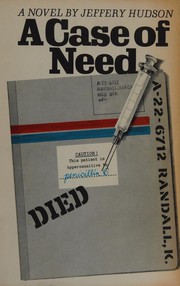
A hospital murder mystery about an illegal abortion, published in 1968 under the pen name Jeffery Hudson and winner of the Edgar Award — the first prize Crichton ever won, for a book nobody knew was his. Later editions carry his real name, which is why the catalogue credits Michael Crichton.
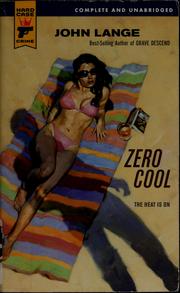
One of eight pulp thrillers Crichton wrote as John Lange to pay for medical school: an American radiologist on holiday in Spain, a body, and a chase. Short, disposable and genuinely fun; the same note applies about the byline, since reissues restore his real name.
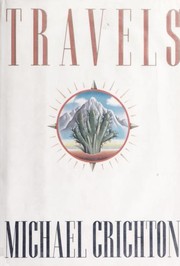
A memoir, and the closest Crichton came to writing about himself: medical school, the end of his first marriage, climbing Kilimanjaro, and a long final section on psychics and spoon-bending that he presents without irony. Closes the path because it is the only book here where he is not hiding behind documentary apparatus. After this, the posthumous novels — Pirate Latitudes, Micro and Dragon Teeth — are for completists.