Start with Jurassic Park. The famous book is genuinely the best entry point, which is not usually how this works: it is Crichton's formula at full strength, with the technical briefing, the escalating systems failure and the scientist who explains why it was always going to fail. The obvious alternative is to begin at the beginning with The Andromeda Strain, and that is a colder, more procedural book with almost no characterisation — a documentary reconstruction of a laboratory containment, complete with invented citations and printouts. It is the more influential novel and the less inviting one.
The good news is that order barely matters. Crichton wrote standalones. Exactly one pair is a sequence: Jurassic Park comes before The Lost World, which he wrote after the film's success. Everything else can be read in any order you like.
The techno-thriller spine
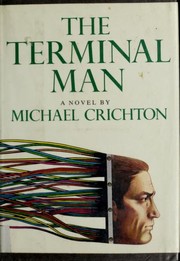
This is what people mean by a Crichton novel. The Andromeda Strain (1969) invented the shape: a scientific emergency, a sealed facility, real-sounding documentation. The Terminal Man is a psychosurgery story that has aged into an interesting period piece about brain implants. Congo sends an expedition after industrial diamonds and a lost city, with a signing gorilla; it is the pulpiest thing here and knows it. Sphere is a spacecraft on the seabed and a psychological pressure-cooker, and it is the one most readers rank second after Jurassic Park. Prey (2002) is the late entry worth reading — self-replicating nanoparticle swarms, and a tighter book than his other 2000s work.
The historical novels
The Great Train Robbery is a Victorian heist based on the real Great Gold Robbery of 1855, written in a mock-scholarly register, and it is much funnier than his reputation suggests. Crichton directed the film himself.
Eaters of the Dead retells Beowulf as the travel account of an Arab emissary, Ibn Fadlan, sent north among the Norse. Crichton wrapped it in a fake scholarly apparatus with invented sources and footnotes, and later acknowledged the hoax openly. It was filmed as The 13th Warrior.
The early pseudonymous work
Crichton wrote paperbacks to pay for medical school. A Case of Need was published under the name Jeffery Hudson and won the Edgar Award for best novel — a medical thriller about an illegal abortion, and the strongest of the early books by a distance. Zero Cool appeared under the name John Lange and is straight pulp: a holidaying radiologist, Spain, a corpse. Read it for completeness or not at all.
The nonfiction
Five Patients (1970) is reportage from a Boston teaching hospital, tracing five cases through the machinery of American medicine, and it is a serious piece of health-policy writing rather than a curiosity. Travels is a memoir — medical school, the dissection room, and then a long second half about psychics, spoon-bending and aura reading that surprises readers who came for the thrillers. He presents those episodes as his own experience and does not argue for them as science.
The contested one
Rising Sun (1992) is a thriller about Japanese corporate power inside the United States, and it was widely criticised on publication as trading in anti-Japanese sentiment; Crichton rejected that reading and said the book was about American complacency. Both positions are on the record. His later State of Fear, which is not in our catalogue, attracted the same kind of argument about climate science.
Where to stop, and what is missing
Most readers find the run from The Great Train Robbery to Jurassic Park the strongest stretch, and the novels after Prey the weakest. Stopping at the end of the 1990s costs you little.
This list holds fourteen titles and Crichton published a good deal more. Disclosure, Airframe, Timeline, State of Fear, Next and the posthumous books are all absent here. He died in 2008. More author orders sit on Discover; the Michael Crichton hub has the full path.
Follow the full ordered path here: Michael Crichton books in order: where to start.