Methodism: the best books to read, in order
Methodism began as a mockery — the name was an insult aimed at a group of Oxford undergraduates for their methodical devotional habits — and became, within a century, the largest Protestant movement in the United States and a global church of tens of millions. This path starts with two short overviews that establish the shape of the whole story, then turns to John Wesley himself in biography and in his own words, then to the movement he actually built and how it worked, then to the theology that distinguishes it, and finally to its American career, which is where the numbers and much of the modern denomination come from.
Start here
BeginnerGet the whole arc quickly — revival, field preaching, the class meeting, the break with the Church of England, and the global expansion — before committing to a full biography.
▸ Study plan for this stage
Pace: Three to four weeks. Abraham's Methodism: A Very Short Introduction runs to roughly a hundred and fifty pages in the Oxford series format and can be read in two or three sittings — do that first, since it is the map everything else fills in. Hempton's Methodism is 304 pages and is a scholarly interp
- Methodism's origin as a renewal movement inside the Church of England rather than as a dissenting sect, and the long, awkward, never-quite-intended separation that followed.
- The core doctrinal cluster Abraham lays out: universal atonement against Calvinist election, assurance, the new birth, and Christian perfection or entire sanctification, which is the distinctively Methodist and most contested item.
- The connexional principle — a system of itinerant preachers, circuits and an annual Conference rather than settled independent congregations. This is Methodism's organisational signature and it explains most of what follows.
- Hempton's thematic frame: enthusiasm, opposition, money, women, empire. Reading the movement through these rather than through a chronology of events is his central methodological choice.
- The comparative question Hempton keeps asking — why Methodism and not the other eighteenth-century revival movements — and his answers about mobility, organisation, lay agency and emotional accessibility.
- Methodism as a transatlantic and then a global movement, with the numerical centre of gravity moving from Britain to America and later well beyond both.
- The internal disputes Abraham refuses to smooth over: the Calvinist controversy with Whitefield, the Arminian settlement, the later holiness and Pentecostal offshoots, and the present-day divisions.
- Lay preaching and women's preaching as organisational innovations before they were theological positions — Methodism licensed people to speak that the established church would not.
- What did the Methodists initially claim to be, and at what point does the claim to be a movement within the Church of England become untenable?
- State the doctrine of Christian perfection as Abraham gives it. What is it not claiming, and why did it attract so much objection?
- Explain the connexional system concretely — circuits, itinerancy, Conference — and what each part solved.
- Hempton asks why Methodism spread when comparable movements did not. Summarise his answer and identify the weakest link in it.
- Abraham is writing from inside the tradition and Hempton from outside it. Find one topic they both cover and describe how the standpoint shows.
- Build a one-page reference sheet from Abraham: the doctrinal distinctives, the organisational structures, the major schisms and reunions, and the current major bodies. You will use it for the rest of the path.
- Take Hempton's five thematic chapter subjects and write a sentence for each on what Abraham's survey says about the same theme. The gaps are where a thematic history sees what an introduction cannot.
- Draw a rough timeline of Methodism's institutional separation from the Church of England, marking the specific decisions — ordinations, chapels, licensing — that made it irreversible.
- Write down, before starting the biographies, your own one-sentence answer to Hempton's question about why Methodism spread. You will revise it after stage 3.
Next up: The survey tells you Methodism was a movement with a founder; the next stage is the founder himself, in three increasingly unflattering versions and then in his own words.

A hundred and fifty pages covering origins, doctrine, worship, polity and worldwide spread, by a Methodist theologian who is candid about the tradition's internal disputes. Read it first; it is the map everything else fills in.
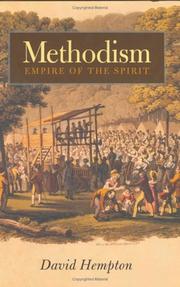
The best single-volume interpretation of Methodism as a transatlantic mass movement, treating it thematically — enthusiasm, opposition, money, women, empire — rather than as a march of events. Hempton is a historian rather than a partisan, and he takes seriously the question of why this movement spread when comparable ones did not. Catalogued under the bare title 'Methodism'.
Wesley himself
BeginnerMeet John Wesley as a person — Epworth, Oxford, the failed Georgia mission, Aldersgate, and fifty years on horseback — and then read him directly.
▸ Study plan for this stage
Pace: Six to eight weeks. Tomkins' John Wesley is 192 pages and reads in a week — start the biographies here. Hattersley's A Brand from the Burning is 451 pages and needs three weeks. The Journal is 512 pages in the standard abridgement and should be read last and selectively, dipping across the decades r
- The Epworth rectory fire of 1709 and the phrase Wesley applied to himself, a brand plucked from the burning, which supplies Hattersley's title and Wesley's own sense of being providentially preserved.
- The Holy Club at Oxford, the origin of the nickname Methodist as an insult, and the disciplined practice — fixed hours, prison visiting, self-examination — that the name described.
- The Georgia mission and its failure, including the Sophy Hopkey affair, which Wesley's own Journal treats very differently from how the Savannah court did.
- The Moravian encounter and the Aldersgate Street meeting of May 1738, where Wesley recorded that his heart was strangely warmed. The weight to place on Aldersgate is genuinely disputed among Wesley scholars — whether it was a conversion, a stage, or a moment later inflated by Methodist memory — and
- Field preaching from 1739, taken up reluctantly after Whitefield's example, and the decision that turned a devotional society into a mass movement.
- Wesley's relationships with women — Grace Murray, and the marriage to Mary Vazeille — which every modern biographer treats as a catalogue of bad faith and bad judgement.
- The authoritarian streak. Wesley governed the connexion personally and did not share power easily, and both Tomkins and Hattersley are direct about it.
- The Journal as a genre: apologetic, selective, written to defend the work against critics, and enormously valuable precisely as the record of what he wanted on record.
- What actually happened in Georgia, and how does Wesley's Journal account of it differ from what the biographies reconstruct?
- How much weight does each of Tomkins and Hattersley put on Aldersgate, and what is the argument between them?
- Why did Wesley resist field preaching, and what changed his mind?
- Hattersley writes from outside the church. Name two judgements he makes that a Methodist biographer would be unlikely to make.
- The Journal was published in Wesley's lifetime and edited by him. Give a specific instance where you can see the editorial hand.
- What did Wesley's authoritarianism let the movement achieve, and what did it cost?
- Take the Georgia episode and read it three ways — Tomkins, Hattersley, and Wesley's own Journal entries — then write a page on where the three accounts diverge and what each is protecting.
- Read the Journal entries around 24 May 1738 in full, then read what Tomkins and Hattersley each say about them. Write your own two-sentence assessment of what Aldersgate was.
- Sample the Journal at ten-year intervals — 1740, 1750, 1760, 1770, 1780, 1790 — reading a week of entries each time, and note what changes in his tone, his health and what he thinks worth recording.
- Build a timeline of Wesley's travel and preaching from the Journal for a single year, counting sermons and miles. The number is the argument for why the itinerancy worked.
- List every occasion in the biographies where Wesley overrules a colleague or a Conference decision, and note the stated reason in each case.
Next up: Biography explains the man but not the movement's growth; the next stage is the scholarship on the organisation that made a preacher into a denomination.
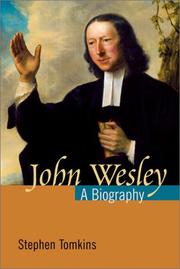
The most readable modern life: short, wry, and unillusioned about Wesley's disastrous relationships with women and his authoritarian streak, without losing what made him extraordinary. Start the biographies here. Catalogued under the bare title 'John Wesley'.

A biography by a British politician and writer from outside the church, which makes it unusually good on Wesley's social and political consequences and unusually free of hagiography. Note an edition trap: it was published in the United States as John Wesley: A Brand from the Burning, and both titles exist as separate catalogue records for the same book — buy one.

Wesley in his own voice, across five decades of travel, preaching and controversy, including the Aldersgate entry where his heart was strangely warmed. Read it after a biography so you know what he is not telling you. The commonly available version is the Percy Livingstone Parker abridgement of the full journals, which is what the catalogue record here describes.
The movement he built
IntermediateUnderstand Methodism as an organisation rather than a biography — societies, classes, bands, itinerant preachers, the Conference — and how that machinery produced the growth.
▸ Study plan for this stage
Pace: Three to four months. Heitzenrater's Wesley and the People Called Methodists is 316 pages and is the standard scholarly account of the movement's development — read it first, over about a month. Rack's Reasonable Enthusiast is 658 pages and is the major critical biography: longer and harder than Tom
- The class meeting as the movement's actual engine: a dozen people, a weekly meeting, a lay leader, and a compulsory account of one's spiritual state. Heitzenrater's central point is that Methodism grew because of this structure, not only because of its preacher.
- The quarterly ticket as a membership technology: renewable, refusable, and the mechanism by which discipline was actually exercised at scale.
- The connexional structure in operation — circuits, the itinerant preachers moved on a fixed rotation, the annual Conference, and the Model Deed that kept chapel property under connexional control.
- Lay preachers as the growth constraint solved: Wesley could not be everywhere, and licensing unordained men to preach was the decision that made the connexion scalable and made separation from the Church of England eventually inevitable.
- Rack's title as his thesis: Wesley as simultaneously a child of the Enlightenment and a promoter of exactly the enthusiasm the age most distrusted, and awkwardly both at once.
- Rack's contextual method — Wesley placed inside eighteenth-century Anglicanism, medicine, science and politics rather than inside a Methodist story about himself.
- The 1784 ordinations for America and the Deed of Declaration, the two decisions that settled the movement's future as a separate body regardless of Wesley's stated intentions.
- Outler's editorial argument, including the Wesleyan quadrilateral — scripture, tradition, reason, experience — which is Outler's own formulation of Wesley's method and has been debated since as much as it has been used.
- Describe a class meeting in operation: who was there, what happened, and what could get you excluded.
- What problem did the quarterly ticket solve that preaching could not?
- Heitzenrater argues organisation explains Methodist growth. What is the strongest counterargument, and does Hempton from stage 1 agree with him?
- In what sense is Rack's Wesley a reasonable enthusiast? Give an instance where both halves are visible in the same episode.
- What did the 1784 ordinations actually do, and did Wesley intend the consequence?
- The Wesleyan quadrilateral is Outler's formulation rather than Wesley's phrase. Does the framework fit the primary texts in Outler's own selection?
- Diagram the whole connexional structure from Heitzenrater — society, class, band, circuit, district, Conference — with the officer responsible at each level and the frequency of meeting.
- Take one of Wesley's sermons in Outler's selection and read it alongside Rack's account of the controversy it belongs to. Write down what the context explains that the text alone does not.
- Compare Rack's treatment of Aldersgate with Tomkins' and with the Journal entry itself, and produce a short historiographical note on how the assessment has shifted.
- Using Outler's primary texts, test the quadrilateral: find one passage where Wesley appeals to each of the four, and one where the four conflict and he has to choose.
- Revise the answer you wrote in stage 1 to Hempton's question about why Methodism spread, and mark which of Heitzenrater's mechanisms forced the change.
Next up: You now have the organisation; the next stage is the doctrine it existed to propagate, and the modern scholarship that argues about what Wesley actually taught.
The standard scholarly account of the movement's development, and the book that explains the class meeting, the band and the connexional structure as the actual engine of Methodist growth. Read it as the corrective to biography: Methodism succeeded because of its organisation, not only its preacher.
The major critical biography and the deepest treatment of Wesley in his eighteenth-century context — Anglican, Enlightenment, and awkwardly both reasonable and enthusiastic. Longer and harder than Tomkins or Hattersley; read it once you want the scholarship rather than the story.

Outler's Library of Protestant Thought volume, an edited selection of Wesley's writings with a long interpretive introduction by the twentieth century's most influential Wesley scholar. The bridge from the movement's history to its theology, and the standard classroom source for Wesley's primary texts.
The theology
IntermediateGrasp what is doctrinally distinctive — prevenient grace, assurance, Christian perfection, the Arminian rejection of predestination — and why these produced a movement rather than a school of thought.
▸ Study plan for this stage
Pace: Three months. Collins' The Theology of John Wesley is 423 pages and is the most straightforwardly explanatory of the three — read it first, over about a month. Maddox's Responsible Grace is 416 pages and is denser: a constructive scholarly reading rather than an exposition, and the book contemporary
- Prevenient grace, the doctrine that does the most work in Wesley's system: grace operating in every person before any response, which is how he holds together universal atonement and genuine human response without conceding to either Calvinism or Pelagianism.
- The order of salvation — prevenient grace, repentance, justification, the new birth, sanctification, and entire sanctification — as a process rather than a single event.
- Christian perfection, the most contested Wesleyan doctrine, and Maddox's reframing of it as perfect love rather than sinless flawlessness, which is the move that makes it comprehensible.
- Collins' integrating theme of holy love, and his argument that Wesley's theology is unified by it rather than being the ad hoc collection of positions his critics allege.
- Maddox's core claim: Wesley as a practical theologian rather than a systematician, whose writing was occasional, pastoral and aimed at forming people, and whose apparent inconsistencies follow from that.
- Responsible grace as Maddox's formulation — grace that genuinely requires and enables a response, with neither the divine initiative nor the human answer collapsed into the other.
- The means of grace: prayer, scripture, the Lord's Supper, fasting and Christian conference, and Wesley's insistence that they are instituted rather than optional, which links the theology directly to the class-meeting structure from stage 3.
- The Calvinist controversy with Whitefield over predestination and the Arminian settlement that resulted, which is the doctrinal reason British Methodism took the shape it did.
- Define prevenient grace and explain exactly what problem it solves for Wesley. What would his system look like without it?
- How does Maddox reinterpret Christian perfection, and does the reinterpretation preserve what Wesley actually claimed or soften it?
- Collins organises everything around holy love and Maddox around responsible grace. Where do these two readings actually diverge in substance rather than emphasis?
- Wesley calls the means of grace instituted. What follows practically, and how does that connect to the disciplinary structures Heitzenrater described?
- What was at stake in the dispute with Whitefield, and what did the Arminian settlement commit Methodism to?
- Which Companion chapter most changes what you thought after Collins and Maddox, and why?
- Draw Wesley's order of salvation as a diagram, marking at each stage what God does, what the person does, and what can be lost.
- Take one Wesley sermon from Outler's selection in stage 3 and analyse it twice, once through Collins' holy-love frame and once through Maddox's practical-theology frame, then write a paragraph on which reading the text supports better.
- Write out the strongest Calvinist objection to Wesley's account of grace, then write Wesley's reply using his own arguments as Collins presents them.
- Using the Companion's chapters on slavery and gender, assemble the evidence for and against Wesley's record on each, without resolving it into a verdict.
- Take the Companion's further-reading suggestions and build your own next-five-books list, with a line on why each one follows from what you have just read.
Next up: British Methodism is only part of the story, and the last stage turns to the country where the movement became the largest denomination and where its distinctive theology met slavery, revival and the frontier.
The clearest systematic exposition of Wesley's theology, organised around holy love as its integrating theme. Read it first in this stage: it is the most straightforwardly explanatory of the three.
The most influential modern reading of Wesley as a practical theologian rather than a systematician, built on the idea of grace that genuinely requires a response. This is the book contemporary Wesleyan scholarship argues with, and it reframes the doctrine of Christian perfection in a way that makes it comprehensible.
Maddox and Vickers' edited volume, with specialist chapters on Wesley and scripture, sacraments, ethics, gender, slavery and global Methodism. Read last in this stage as the survey of where the scholarship currently stands and as a guide to what to read next.
Methodism in America
IntermediateFollow the movement's largest and strangest success — the American frontier, camp meetings, the circuit riders, and the splits over slavery — and its wider social consequences.
▸ Study plan for this stage
Pace: Three to four months. Wigger's American Saint is 560 pages and is the definitive biography of Francis Asbury — start the American story here, over about six weeks, because Asbury matters more to what Methodism became than Wesley does. Hatch's The Democratization of American Christianity is 312 pages
- Asbury as the decisive American figure: a reported quarter of a million miles on horseback, personal knowledge of the preachers, and the transplanting of the itinerancy to a continent-sized frontier.
- The Christmas Conference of 1784 and the founding of the Methodist Episcopal Church, and the episcopacy Asbury took on over Wesley's objection — the first real assertion of American independence from Wesley's control.
- The circuit rider as an institutional solution to a demographic problem: a mobile ministry that could follow a moving population, at a cost in preachers' health and lifespan that the sources record plainly.
- Hatch's argument that early-republic religion was remade from below by movements that trusted ordinary people over educated clergy — Methodists foremost among them — and that this populism, not doctrine, explains their growth.
- The link between Hatch's populism and Wesleyan theology: universal atonement and available assurance are democratic doctrines in a way predestination is not, which is why they travelled so well in a republic.
- Slavery and schism. Wesley opposed slavery explicitly; American Methodism accommodated it, split over it in 1844, and the Methodist Episcopal Church South existed until 1939. The Richey history covers this at length and does not tidy it.
- Black Methodism: the African Methodist Episcopal Church, the AME Zion Church and the CME Church, founded out of exclusion from white congregations and constituting a major strand of the tradition in their own right.
- The twentieth-century mergers and the shape of the current denominational landscape, plus the holiness movement's departure and its Pentecostal descendants.
- What did Asbury do differently from Wesley, and where did he defy him outright?
- Why did the circuit system work in America on a scale it never reached in Britain? Give the demographic and geographic reasons, not just the organisational one.
- State Hatch's thesis precisely. What is his evidence, and what does his account underweight?
- Wesley condemned slavery and American Methodism split over it. Trace the sequence from his position to the 1844 division.
- How and why were the AME, AME Zion and CME churches founded? What does their existence say about the denomination they left?
- Taking the whole path: what best explains Methodism's growth — the theology, the organisation, the populism, or the individuals? Argue for one and say what it fails to explain.
- Build a comparative table of Wesley and Asbury: authority, mobility, relation to the state church, attitude to lay leadership, and stance on slavery. The differences are the whole American story in one page.
- Take Hatch's populism thesis and test it against Heitzenrater's discipline thesis from stage 3 on a single question — how a new society was actually founded on the American frontier — and write which mechanism does more work.
- Use the Richey history to construct a schism-and-merger chart for American Methodism from 1784 to the present, with the cause of each split named.
- Read the Richey chapters on slavery alongside the Cambridge Companion chapter on the same subject, and write a page on where a denominational history and a scholarly essay collection differ in what they are willing to say.
- Write a final two-page synthesis for the whole path answering Hempton's original question — why this movement and not the others — drawing on the theology from stage 4, the organisation from stage 3, and the American evidence here.
- Pick one living Methodist or Wesleyan body anywhere in the world and trace its descent back through the schisms and mergers to a specific eighteenth-century decision.
Next up: The path closes here, with the reference history in hand: from this point the natural continuations are the primary sources in the bicentennial edition of Wesley's works, the scholarship on global and postcolonial Methodism the Cambridge Companion points to, and the histories of the holiness and Pentecostal movements that came out of this tradition.

The definitive biography of Francis Asbury, who rode a reported quarter of a million miles and turned American Methodism from a few hundred people into the country's largest denomination. Start the American story here: Asbury matters more to what Methodism became than Wesley does. Open Library files it under the shortened display title 'American Saint'.

Hatch's award-winning argument that early-republic religion was remade from below by movements — Methodists foremost among them — that trusted ordinary people over educated clergy. The essential context for why Methodism outgrew every established church in America.
The standard comprehensive narrative history of American Methodism, by Richey, Rowe and Schmidt, running from the eighteenth century through the slavery schisms, the Black Methodist denominations and the twentieth-century mergers. Closes the path as the reference work: read selectively rather than straight through. Its catalogue record renders the authors' names inaccurately.