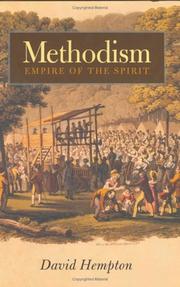
The name began as an insult, aimed at a group of Oxford undergraduates for their methodical devotional habits, and within a century it belonged to the largest Protestant movement in the United States. Start with Methodism: A Very Short Introduction by William J. Abraham, which covers origins, doctrine, worship, polity and worldwide spread in the compact format that series uses, and is candid about the tradition's internal disputes. Then read Methodism by David Hempton, the best single-volume interpretation of the movement as a transatlantic phenomenon, organised thematically around enthusiasm, opposition, money, women and empire rather than as a march of events. Hempton is a historian rather than a partisan and takes seriously the question of why this movement spread when comparable ones did not; note that it is catalogued under the bare title, so buy by author.
Everything after those two is optional in the sense that you can enter at whichever stage interests you — the life, the organisation, the theology, or the American story. Nothing assumes prior theological training, though the theology stage is written for readers who already know the outline of the life.
Wesley himself, and one edition trap
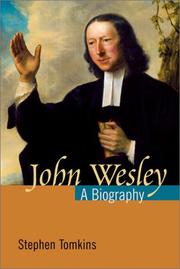
John Wesley by Stephen Tomkins is the most readable modern life at under two hundred pages: short, wry and unillusioned about Wesley's disastrous relationships with women and his authoritarian streak. One warning about the catalogue record — its ISBN belongs to a German publisher, so the link may land on a German-language edition rather than the English original. Check the listing before ordering.
A brand from the burning by Roy Hattersley is a biography by a British politician and writer from outside the church, unusually good on Wesley's social and political consequences and unusually free of hagiography. It was published in the United States as John Wesley: A Brand from the Burning, and both titles exist as separate catalogue records for the same book. Buy one, not both.
The journal of the Rev. John Wesley is Wesley in his own voice across five decades of travel, preaching and controversy, including the Aldersgate entry where his heart was strangely warmed. Read it after a biography so you know what he is not telling you. The commonly available version, and the one this record describes, is the Percy Livingstone Parker abridgement rather than the full journals, which run to many volumes.
The movement he built, and the theology
Wesley and the people called Methodists by Richard P. Heitzenrater is the standard scholarly account of the movement's development, and it explains the class meeting, the band and the connexional structure as the actual engine of growth. Read it as the corrective to biography: Methodism succeeded because of its organisation, not only its preacher. Reasonable enthusiast by Henry D. Rack is the major critical biography and the deepest treatment of Wesley in his eighteenth-century context, at 658 pages — longer and harder than Tomkins or Hattersley, and the one for when you want the scholarship rather than the story. John Wesley by Albert C. Outler is an edited selection of Wesley's writings with a long interpretive introduction; it shares its display title with the Tomkins biography above, so this is the second place on the path where you must buy by author.
The theology stage runs in order of difficulty. The theology of John Wesley by Kenneth J. Collins is the clearest systematic exposition, organised around holy love as its integrating theme. Responsible grace by Randy L. Maddox is the most influential modern reading of Wesley as a practical rather than a systematic theologian, and it reframes Christian perfection in a way that makes the doctrine comprehensible; it is also the book contemporary Wesleyan scholarship argues with. The Cambridge companion to John Wesley, edited by Maddox and Jason E. Vickers, has specialist chapters on scripture, sacraments, ethics, gender, slavery and global Methodism, and works best last as a survey of where the scholarship stands.
The American career
American Saint by John Wigger is the definitive biography of Francis Asbury, who rode a reported quarter of a million miles and turned American Methodism from a few hundred people into the country's largest denomination. Start the American story here — Asbury matters more to what Methodism became than Wesley does. The democratization of American Christianity by Nathan O. Hatch is the award-winning argument that religion in the early republic was remade from below by movements that trusted ordinary people over educated clergy, and it explains why Methodism outgrew every established church.
Close with The Methodist Experience in America, the comprehensive account by Richey, Rowe and Schmidt covering the slavery schisms, the Black Methodist denominations and the twentieth-century mergers. Two cautions on this one: the catalogue record credits only the first author, and its date and 756-page length match the documentary sourcebook volume rather than the narrative history published later. Check which volume a seller is actually offering, and read it selectively rather than straight through.
Follow the full ordered path here: How to Read About Methodism: The Best Books, in Order.