Mercy Thompson Reading Order: Where to Start with Patricia Briggs
Patricia Briggs writes two series in one world, and the question every new reader hits is what to do about them. Mercy Thompson is the main sequence — a Volkswagen mechanic in the Tri-Cities who happens to be a coyote shapeshifter — and it should be read in publication order, which is also its internal chronology. Alpha and Omega runs in parallel with different leads, and it does not follow on: it starts partway through the Mercy books and stays roughly level with them. This path reads the first six Mercy novels straight, picks up Alpha and Omega at the point where it becomes load-bearing, and then alternates, which is how the two series were actually written and released.
The opening three
BeginnerMeet Mercy, the Columbia Basin pack, the local vampire seethe and the fae reservation, and get through the trilogy that establishes every relationship the rest of the series runs on.
▸ Study plan for this stage
Pace: Two to three weeks. Moon Called is 306 pages, Blood Bound 342 and Iron Kissed 320 — all fast first-person reads, roughly one per five days. Read them strictly in order and without gaps: this series is sequential in a way most urban fantasy is not, and the relationship arc in particular does not surv
- What Mercy is, as the books define it in Moon Called: a walker, a coyote shapeshifter of Native American descent, raised in a werewolf pack but not a werewolf, and immune to most magic without possessing much of her own.
- The three supernatural powers and their separate rules — werewolf packs with Alphas and dominance hierarchy, vampire seethes with their own politics, and the fae with bargains, obligations and true names. All three rule sets are laid down in Moon Called and none of them is re-explained later.
- The out-of-the-closet premise: the fae have publicly revealed themselves and live on reservations, the werewolves have not yet. That asymmetry is the political engine of the entire shared world.
- The garage and the Tri-Cities as the series' anchor. Mercy fixes Volkswagens next door to the local Alpha, and the domestic, working-class specificity is what separates these books from their genre neighbours.
- Pack magic and the bonds it creates — a mechanic Briggs introduces early and escalates steadily, and one that later books make load-bearing.
- Mercy's immunity as a plot constraint rather than a superpower: it makes her useful in situations no wolf can enter and useless in a fight, which is the shape most of her plots take.
- The single-viewpoint first person, and its consequence — you know only what Mercy knows, and the series routinely exploits that.
- Iron Kissed as the pivot. It is widely regarded as the strongest of the early run, and it changes both the tone of the series and the trajectory of every character relationship in it.
- Set out the rules of pack dominance as Moon Called gives them. What can an Alpha compel, and what can he not?
- What exactly is Mercy immune to, and what is she not? The distinction matters in every book after this.
- The fae are public and the werewolves are not. What does each group gain and lose from its position?
- Iron Kissed is called the book that changes the series. Name three specific things that are different afterwards.
- Briggs writes Mercy in first person throughout. Find a scene where the limitation is used deliberately against the reader.
- Keep a rules ledger from page one, with a section each for wolves, vampires and fae, and add every rule as it is first stated. Briggs plays fair with these and later plots turn on them; the ledger is what lets you see the turn coming.
- Track the werewolf pack roster across the three books — who is where in the hierarchy and how you know. The dominance order is information the books convey by behaviour rather than by statement.
- Note every fae bargain made in Iron Kissed, with its exact terms, and check later books against them. Briggs does not forget bargains.
- Write a one-paragraph description of the series' formula after Moon Called — the shape of a Mercy plot. You will test it against Alpha and Omega in stage 3 and against the later run in stage 5.
Next up: Iron Kissed ends mid-consequence, and the next three books are the working-out of what it did to Mercy, the pack and the fae.

Mercy is a walker — a coyote shapeshifter raised by werewolves — and she fixes cars next door to the local Alpha. Start here, without exception: the world's rules about pack hierarchy, fae bargains and vampire politics are all laid down in this book and never re-explained.
The vampires move to the centre, and Mercy's immunity to most magic gets its first real test. Read second — the series is strictly sequential and the relationship arc in particular does not survive being read out of order.
The fae reservation book, and the one that changes the series. Widely regarded as the strongest of the early run, and it carries a serious content warning: it contains a rape and its aftermath, which the following books treat as a real and lasting injury rather than resolving it in a chapter.
Settling into the world
BeginnerFollow the consequences of Iron Kissed, watch Mercy's place in the pack change formally, and see Briggs open the world out beyond the Tri-Cities.
▸ Study plan for this stage
Pace: Two to three weeks. Bone Crossed is 309 pages, Silver Borne 314 and River Marked 324 — same pace as stage 1. Read Bone Crossed immediately after Iron Kissed with no gap at all; it is the second half of that book's story more than a fresh case, and the aftermath is its actual subject. Silver Borne in
- Aftermath as plot. Bone Crossed refuses the genre's usual reset — the injury from Iron Kissed is still operating, and Briggs makes the recovery a subject rather than a backstory.
- Vampire politics escalating from local to regional: Marsilia, the seethe's internal order, and the arrival of outside vampire authority.
- Pack politics turning inward. Silver Borne is the book where the pack's resistance to Mercy stops being background friction and becomes the plot.
- The relationship arc reaching its settled state, and what that does to the series' engine — Briggs deliberately closes the will-they question and has to find a new source of tension, which is why the later books escalate outward.
- River Marked and the walker mythology: what Mercy actually is, drawn from Native American traditions of the Columbia River, with Coyote as a character rather than a reference.
- The genre pivot. Up to River Marked these are urban fantasy procedurals with a case per book; after it there is a larger mythology behind the series and the stakes stop being local.
- Place as method. The Tri-Cities, the Columbia, the reservation and the desert are specific real geography, and River Marked is where the setting stops being backdrop and becomes source material.
- Briggs' handling of Native American material — she draws on Columbia Plateau traditions for Mercy's nature, and River Marked is where that choice is most visible and most discussed by readers.
- What has Bone Crossed changed about Mercy's standing with the vampires by its end, and what obligation is she left carrying?
- In Silver Borne, what is the pack's actual objection to Mercy? Separate the stated reason from the structural one.
- River Marked explains what a walker is. Restate the explanation, and note what it does and does not account for about her immunity.
- The relationship question is settled by the end of Silver Borne. What replaces it as the source of tension?
- Compare the plot shape of Moon Called with that of River Marked. What has changed in what a Mercy book is?
- Extend your rules ledger with everything River Marked adds about walkers, and then go back to Moon Called and mark which of Mercy's early abilities the new explanation covers and which it does not.
- Chart the vampire hierarchy across Blood Bound, Bone Crossed and Silver Borne, noting who gains and loses position in each book.
- Read the closing chapters of Iron Kissed and the opening chapters of Bone Crossed back to back and write down every consequence carried forward. This is the clearest demonstration available of why the series must be read in order.
- Revise the formula paragraph you wrote in stage 1 to account for River Marked, and mark exactly which sentence no longer holds.
Next up: The world is now larger than Mercy's viewpoint can cover, and the next stage steps into the companion series that has been running alongside it from the start.
The direct aftermath of Iron Kissed, with a vampire queen taking an interest. Read immediately after; it is the second half of that book's story more than a fresh case.
A fae book of power, a suicidal werewolf, and pack politics turning on Mercy directly. The series' relationship arc reaches its settled state here.
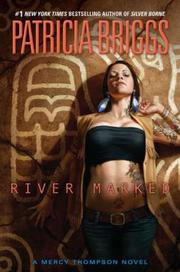
The book that finally explains what a walker is, drawing on Native American traditions of the Columbia River. Read sixth; it is the pivot from urban fantasy procedural to something with a larger mythology behind it.
Where to pick up Alpha and Omega
BeginnerCross into the companion series at the right moment — after River Marked, before Frost Burned — and understand how the two sequences interleave rather than follow one another.
▸ Study plan for this stage
Pace: Two to three weeks. On the Prowl is 352 pages but you are reading one novella inside it; Cry Wolf is 320 pages and Hunting Ground 320. Read them in this order. Be clear about what On the Prowl is: a four-author paranormal romance anthology in which only the Briggs novella, Alpha and Omega, belongs t
- Omega wolves as Briggs' addition to werewolf mechanics: outside the dominance hierarchy entirely rather than at the bottom of it, with a calming effect on other wolves. This is a rule Mercy's books had not needed and the shared world now runs on.
- The Marrok, Bran Cornick, as the continent's werewolf authority, and Charles as his son and enforcer — a role that puts the series' romantic lead in the position of executioner.
- Register change. Alpha and Omega is third person, quieter, more romance-forward and considerably more interior than Mercy's first-person action plots. It is a different reading experience by design.
- The Aspen Creek setting in Montana as the werewolves' actual centre of power, which the Mercy books only glimpse from the Tri-Cities.
- Charles' magic — Native American-derived, distinct from both pack magic and Mercy's walker abilities — and the way the shared world keeps several incompatible magical traditions running at once.
- The publication-versus-chronology problem in miniature. These books were written alongside the Mercy novels and are set earlier in the run, and the interleaved order is a real reading decision rather than a formality.
- European werewolf politics introduced in Hunting Ground, which the later Mercy novels depend on and which is the practical reason this stage cannot be skipped.
- Formula comparison. Anna is a damaged outsider rescued by recognition; Mercy is a competent independent who refuses rescue. The two series are built on opposite protagonist premises.
- What is an Omega, mechanically, and how does the concept change what you understood about pack dominance from stage 1?
- What is Charles' actual job, and what does the series do with the fact that its romantic lead kills people on his father's order?
- How does the third-person narration of Alpha and Omega change what you can see compared with Mercy's first person?
- Hunting Ground introduces the European werewolf leadership. Which specific factions and figures does it establish, and where do they turn up later?
- Anna and Mercy are opposite kinds of protagonist. What does each premise let Briggs write that the other does not?
- Build an interleaved timeline placing the three Alpha and Omega instalments against the six Mercy novels by internal chronology, then mark the publication order alongside. Keep it; stage 4 depends on it.
- Add an Omega section to your rules ledger, then reread one pack scene from Silver Borne and note what an Omega's presence would have changed.
- Compare the opening chapter of Moon Called with the opening chapter of Cry Wolf and describe the difference in voice, pacing and how much interiority each gives you.
- List every European werewolf named in Hunting Ground with their affiliation, and check the list against the later Mercy books when you reach them.
Next up: The two series have been running in parallel; the next stage is the pair of books where they collide and the shared world changes permanently.

A four-author paranormal romance anthology whose Briggs novella, Alpha and Omega, is where Anna and Charles Cornick begin. It is not a novel and the other three stories are by other writers, but the novella is genuinely required: Cry Wolf opens mid-situation and assumes it. Buy it for the Briggs story, or find that story in the Shifting Shadows collection.

The first full Alpha and Omega novel, following the novella directly. Charles is the Marrok's son and enforcer, Anna is a damaged Omega wolf, and the register is quieter and more romance-forward than Mercy's. Chronologically this sits back around the second Mercy book, which is why it reads as a step sideways rather than forward.
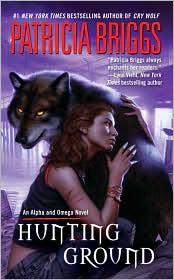
Anna and Charles in Seattle for a summit of European werewolf leaders, and the book that builds out the international politics the later Mercy novels depend on. Read directly after Cry Wolf.
Where the two series converge
BeginnerRead the Alpha and Omega novel that sets up a major Mercy plot, then return to Mercy for the book that pays it off — the clearest demonstration of why the series interleave.
▸ Study plan for this stage
Pace: Ten days to two weeks. Fair Game is 293 pages and Frost Burned 331 — read them back to back with no gap between, because they are effectively consecutive despite being in different series. Fair Game is the one Alpha and Omega book that is genuinely mandatory for Mercy readers: skip it and the next M
- The event at the end of Fair Game and its legal consequence — the status of the fae across the entire shared world changes, and every subsequent book in both series operates under the new arrangement.
- Human institutions entering the world properly: the FBI, federal task forces and, in Frost Burned, a government operation against the pack. The supernatural is no longer a private matter between factions.
- Charles' arc reaching its crisis. The cumulative cost of being the Marrok's enforcer is what Fair Game is actually about underneath the serial-killer plot.
- Cross-series causation as a structural technique: Briggs writes an event in one series that becomes the initial condition of the other, and this is the moment where reading only one of them stops being possible.
- Mercy without the pack. Frost Burned strips away every support the series has built and tests what she can do alone, which is the clearest statement yet of what her immunity is actually good for.
- Pack bonds as a vulnerability rather than a resource — the mechanic introduced in stage 1 turned against the wolves.
- The fae's withdrawal and what it means politically: the reservations, the bargain with the human government, and the beginnings of the confrontation the later Mercy books build toward.
- Escalation in what the series is about. Stages 1 and 2 were cases; from here the books are about the standing of supernatural people in a human polity.
- State precisely what changes for the fae at the end of Fair Game, and who made the decision.
- Why can a Mercy reader not skip Fair Game? Name the specific things in Frost Burned that would be unintelligible.
- What has the enforcer role cost Charles by the end of Fair Game, and how does Briggs show it rather than state it?
- In Frost Burned, what does the government operation want, and what does it reveal about how much the human authorities already know?
- The pack bonds are used against the wolves here. Go back to your rules ledger — was this consistent with the rules as originally stated?
- Update your interleaved timeline with Fair Game and Frost Burned, and mark the exact point at which the two series become one story.
- Read the final chapter of Fair Game and the first chapter of Frost Burned consecutively, and write down every element of the second that depends on the first.
- Trace Charles across all four of his appearances so far and describe the change in him as a sequence rather than a state.
- Go through your rules ledger and mark every rule that Fair Game or Frost Burned has now altered, suspended or made political rather than magical.
Next up: With the world's rules rewritten, the final stage is the run of Mercy novels that operate under the new order — and the point at which the series settles into its long form.

Anna and Charles hunt a serial killer targeting supernaturals, and the ending changes the legal status of the fae across the entire shared world. This is the one Alpha and Omega book that is genuinely mandatory for Mercy readers — skip it and the next Mercy novel opens on a situation you cannot account for.
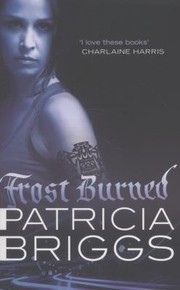
Mercy's pack is taken and she is on her own against a government operation, in a world reshaped by the end of Fair Game. Read it immediately after; the two books are effectively consecutive despite being in different series.
Continuing the run
BeginnerCarry on through the middle Mercy novels, by which point the reading pattern is established and the rest of the shelf can be read in publication order without further guidance.
▸ Study plan for this stage
Pace: Two to three weeks. Night Broken is 341 pages, Fire Touched 342 and Silence Fallen 371 — the same pace the series has kept throughout. Read in order. Silence Fallen changes narrative structure partway, alternating Mercy's first person with another viewpoint, which is a deliberate break from the seri
- The Tri-Cities used fully. Night Broken is the book that most exploits the actual geography and the domestic texture — Adam's ex-wife in the house is as much of the plot as the volcano god is.
- Mythology from a third tradition. Having drawn on European werewolf and fae lore and on Columbia Plateau walker traditions, Briggs brings in a Latin American figure, and the series' pluralism becomes explicit.
- The territorial declaration in Fire Touched — Mercy claims the Tri-Cities as pack territory in front of the fae — which is the single largest escalation in the run and the premise everything after it operates under.
- Consequences of the declaration: the pack is now a polity with obligations to humans in its territory, which is a completely different kind of story from the garage-and-a-case books of stage 1.
- Silence Fallen's structural experiment, and what alternating viewpoints let Briggs do that ten books of Mercy's first person could not.
- European vampire politics in Prague and Milan, picking up the international apparatus that Hunting Ground established back in stage 3.
- Series formula at book twelve: compare a late plot with Moon Called and the drift is unmistakable — from a case Mercy stumbles into, to a political situation she created.
- The state of the shared world at the pause point: fae withdrawn, wolves public, a declared territory, and a human government that knows more than it did. That is the standing brief for everything after Silence Fallen.
- What does Mercy actually claim in Fire Touched, in whose hearing, and what obligations does the claim create?
- Night Broken runs a domestic plot and a mythological one side by side. Do they connect, and if so where?
- Why does Silence Fallen break the series' single-viewpoint rule? What information could not have been delivered otherwise?
- Trace the European vampire and werewolf politics from Hunting Ground through to Silence Fallen. What has changed on that front while Mercy was busy at home?
- Compare the Mercy of Silence Fallen with the Mercy of Moon Called. What is different about what she can do, what she is responsible for, and what the books are about?
- Having read twelve books in interleaved order: was the interleaving worth it, or would you now advise a new reader to read each series straight through?
- Complete your interleaved timeline through Silence Fallen and write a one-paragraph reading-order recommendation for a new reader, justifying each place you would deviate from publication order.
- Finalise the rules ledger and mark every entry that has been changed, broken or politically overtaken since stage 1. The surviving entries are the series' actual constants.
- Take the formula paragraph you have been revising since stage 1 and write a final version, then set it beside your first and describe the drift in one page.
- Reread the opening chapter of Moon Called immediately after finishing Silence Fallen and note which sentences now read as setup for things Briggs plausibly had not planned yet.
- Draw up the state of the shared world as of the end of Silence Fallen — factions, standing agreements, open threats — as a one-page brief you could hand to someone starting Storm Cursed.
Next up: The path closes at a genuine resting point: from here the run continues with Storm Cursed, Smoke Bitten and Soul Taken on the Mercy side and Dead Heat, Burn Bright and Wild Sign on the Alpha and Omega side, alternating in publication order, with Shifting Shadows collecting the shared-world short fiction.
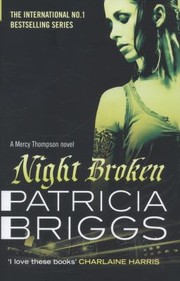
A volcano god, and Adam's ex-wife moving into the house. Domestic and mythological in equal measure, and the book where the Tri-Cities setting is most fully used.

Mercy claims the Tri-Cities as pack territory in front of the fae, which is the single largest escalation in the series. Everything after this book operates under that declaration.

Mercy kidnapped to Europe, and the vampire politics of Prague and Milan. A good stopping point and a good continuing point: from here the run carries on through Storm Cursed, Smoke Bitten and Soul Taken on the Mercy side and Dead Heat, Burn Bright and Wild Sign on the Alpha and Omega side, alternating in publication order. The collection Shifting Shadows gathers the shared-world short fiction.