Marguerite Yourcenar Reading Order: Where to Begin with Her Novels
Yourcenar was the first woman elected to the Académie française and wrote historical novels of extreme compression — a life in two hundred pages, with no wasted sentence and no concession to the reader who wants a scene explained. Order matters more than usual here, because the two major novels teach you how to read her.
Start here
IntermediateRead the book that made her, and one of the great historical novels in any language.
▸ Study plan for this stage
Pace: 2-3 weeks. Read the novel first without touching the Reflections, then read the composition notes bundled into our record afterwards; they are effectively a second short book about writing the first.
- The whole novel as a letter from the dying Hadrian to the young Marcus Aurelius
- Extreme compression: a reign and a life carried in a few hundred pages
- Antinous and grief as the structural hinge of the second half
- A constructed historical consciousness rather than a costumed modern one
- The one foot in erudition and one in magic method she sets out in the Reflections
- Historical fiction that summarises where a conventional novel would dramatise
- Who is Hadrian writing to, and how does that choice govern what he bothers to explain?
- Where is Antinous's death placed in the book, and why there?
- What does the Reflections say about the thirty years of drafts and destroyed manuscripts?
- Where does the narration summarise rather than stage a scene, and what is gained by it?
- How much of the emperor's public career does the novel simply decline to cover?
- Read the first ten pages, then reread them after finishing; the frame reads differently once you know how it closes
- Read the Reflections and then go back to any three passages it names and reread them with her account in mind
- Copy out one paragraph by hand and mark the clause joints; the compression is only visible at sentence level
- Set a page of Hadrian's summary narration against a scene from any conventional historical novel you have read and describe the difference
Next up: Hadrian teaches you to read her compression in the first person, which is exactly what The Abyss withdraws.
The dying emperor writes to the young Marcus Aurelius. She worked on it for nearly thirty years and the compression shows in every line. Our record bundles it with her essay on composing it, which is a genuine bonus rather than an artefact.
The second major novel
BeginnerMove to the harder companion piece.
▸ Study plan for this stage
Pace: 3-4 weeks for 390 pages. Denser than Hadrian, so 20-25 pages a sitting is realistic, and the middle section rewards slowing further rather than pushing through.
- Zeno as physician, alchemist and heretic held in one figure
- Sixteenth-century Europe tearing itself apart over religion, mostly in the background
- The alchemical scheme behind the book's three-part structure
- Third-person narration arriving after Hadrian's first person, and what it withholds
- The prison sequence and the deliberate quiet of the ending
- Free thought as a capital offence rather than a temperament
- How does the third person change what you are permitted to know about Zeno?
- Which alchemical stages does the structure borrow, and where does each begin?
- How does the religious violence stay offstage and still determine every decision Zeno makes?
- Why is Zeno's end written the way it is, and what would be lost if it were dramatised?
- Is this the greater book than Hadrian, and what would that claim rest on?
- Read Hadrian's death passage and Zeno's on the same day and write the difference in one paragraph
- Track Zeno's movements on a map of the sixteenth-century Low Countries and the empire; the geography is the plot
- Mark every passage of medical or alchemical detail and check how much of it is doing character work rather than period decoration
Next up: With both long novels behind you, the short early fiction stops looking slight and starts looking like the same method at a smaller scale.
A physician-alchemist in the sixteenth century, moving through a Europe tearing itself apart over religion. Denser than Hadrian and, for some readers, the greater book.
The short early novels
IntermediateThe compressed early fiction, which reads very differently after the two big books.
▸ Study plan for this stage
Pace: One week for both. Around 250 pages in total, but each is a single sustained confession and each is better read in one or two sittings than spread over evenings.
- The confession addressed to one named listener: Alexis to his wife, Eric to his hearers
- Yourcenar at twenty-four in Alexis, with the voice already fully formed
- Homosexuality written in 1929 entirely through indirection
- Eric von Lhomond as an unreliable narrator who is not trying to be liked
- The Baltic civil wars after 1918 as the setting for a private cruelty
- The very short book as her most natural form
- What is Alexis unable to name directly, and how does the prose carry it anyway?
- How does Coup de Grace want you to judge Eric, and what tells you so?
- What do these two share formally with Memoirs of Hadrian?
- What does reading them after the two big novels reveal that reading them first would not?
- Where does Alexis's argument to his wife stop being an explanation and start being a defence?
- Read Alexis in one sitting and write down afterwards everything he never names
- Compare the first page of Alexis with the first page of Hadrian: the same device, ten years and one masterpiece apart
- Mark every point in Coup de Grace where Eric excuses himself, and decide in each case whether the novel agrees with him
Next up: Having seen how far she can compress a novel, the last stage shows what she does when the form is not a novel at all.
A young man's letter to his wife explaining why he is leaving her. Written when she was twenty-four. Note the bare title returns the French record; this is the form that resolves in English.
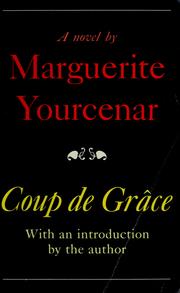
A love triangle in the Baltic during the post-1918 civil wars, narrated by a man who is not trying to make himself sympathetic.
The other work
BeginnerThe prose poems, the tales, and the family memoir.
▸ Study plan for this stage
Pace: 3-4 weeks. Read Fires and Oriental Tales a piece at a sitting rather than straight through, since both are short and dense; then give Dear Departed a fortnight, because at 346 pages it is a slow family reconstruction.
- Fires as prose poems written out of a personal crisis, and the one openly emotional book she published
- Classical figures used as masks for a contemporary self
- Oriental Tales as retold legend from across Asia and the Balkans
- Dear Departed reconstructing a mother who died at her birth
- The family memoir written as history rather than autobiography
- The range: how far these three sit from Hadrian and The Abyss
- What does Fires do that the two novels refuse to do?
- Which of the Oriental Tales stand furthest from their source material, and how can you tell?
- How does Dear Departed narrate a world that ended before she was born?
- Where in these three books is the Hadrian method still visible?
- Which of them would you give a reader who found Hadrian forbidding?
- Read one Fires sequence next to its classical source, whether Phaedra, Antigone or Sappho, and note what she keeps
- Read How Wang-Fo Was Saved first and use it to decide whether Oriental Tales is for you
- Read the opening of Dear Departed and the opening of Hadrian together; both begin from a death
- Hand Oriental Tales to someone who has read none of her and see whether it works as the entry point it appears to be
Next up: Having read across the novels, the tales and the memoir, the obvious continuation is the rest of the family cycle that Dear Departed opens.
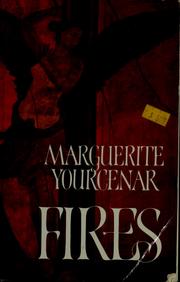
Prose poems on classical figures, written out of a personal crisis. The most nakedly emotional thing she published.
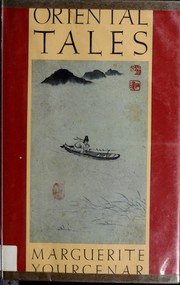
Retold legends from across Asia and the Balkans. The lightest entry point in the whole list, if the novels feel forbidding.
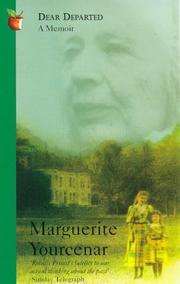
The first volume of the family memoir, which reconstructs her mother's world before her own birth.